Dr. Florian Börgel

Seestrasse 15
18119 Rostock
 https://orcid.org/0000-0003-3294-667X
 About
I am a senior research scientist at the Leibniz Institute for Baltic Sea Research in Warnemünde. Since January 2025 I lead the Junior Research Group Large-Scale Circulation and North European Climate Variability.
Research Interests
My research centers on understanding the interactions between large-scale ocean-atmosphere systems and regional climate variability, with a focus on the Baltic Sea and Northern Europe. I use computational and modeling tools to examine:
- Regional Climate Patterns and Teleconnections: Investigating how conditions in the North Atlantic influence climate in Northern Europe and the Baltic Sea region.
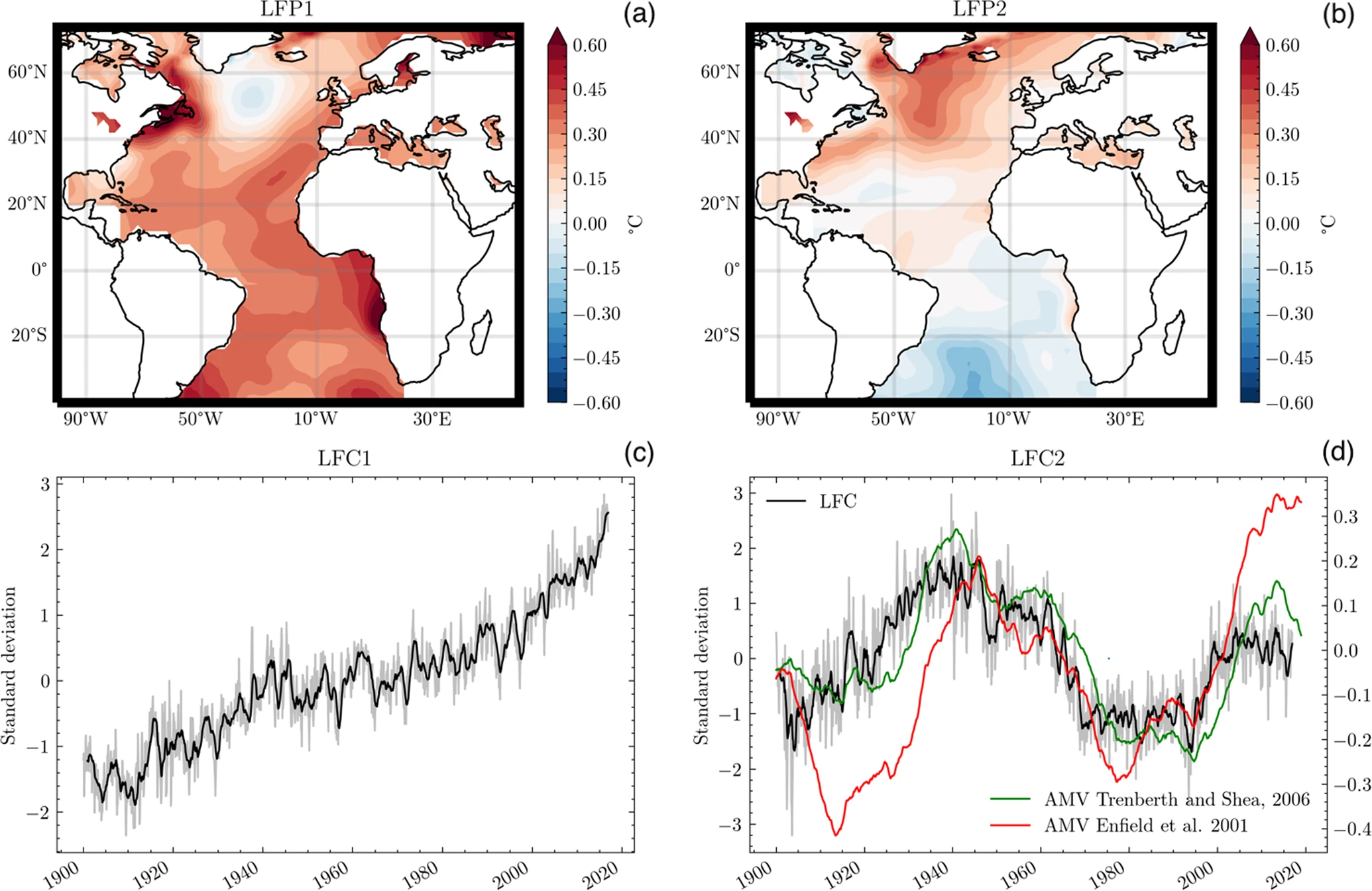
- Influence of Large-Scale Climate Drivers: Studying the impacts of phenomena like the Atlantic Multidecadal Variability on regional weather and marine environments.
- Machine Learning in Climate Science: Developing methods to improve oceanographic models and forecast river runoff more accurately.
- Climate Model Analysis: Analyzing relationships between the North Atlantic and variables such as sensible heat fluxes, sea surface temperatures, and the Atlantic Meridional Overturning Circulation in CMIP6 models.
Professional Employment
Show details
- since Jan. 2025 – Junior Research Group Leader, Large-Scale Circulation and North European Climate Variability, Leibniz Institute for Baltic Sea Research Warnemünde (IOW), Rostock, Germany
Understanding large-scale circulation and extreme events
Enhancing climate predictions with high-resolution climate modeling - since 2024 – Senior Scientist, Dynamics of Regional Climate Systems, Leibniz Institute for Baltic Sea Research Warnemünde, Rostock, Germany
Implementation of a ConvLSTM network architecture for river runoff prediction into the Baltic Sea
Initiated and led the development of a two-way nested configuration using local grid refinement of the Baltic Sea using NEMO 4.2 - 2021–2023 – Tenure-track Researcher, Dynamics of Regional Climate Systems, Leibniz Institute for Baltic Sea Research Warnemünde, Rostock, Germany
Regional climate variability and the teleconnection between the North Atlantic and Northern Europe
Ocean oxygen variability during the last millennium - 2019–2020 – Parental leave (13 months), Berlin, Germany
- 2017–2020 – Research Scientist, Dynamics of Regional Climate Systems, Leibniz Institute for Baltic Sea Research Warnemünde, Rostock, Germany
- 2016–2017 – Research Assistant, Biogeochemical Modeling, Leibniz Institute for Baltic Sea Research Warnemünde, Rostock, Germany
- 2015–2016 – Research Assistant, Energy Systems Analysis, Fraunhofer Institute for Manufacturing Technology and Applied Materials, Bremen, Germany
- 2014–2015 – Technical Support, EWE Baskets Oldenburg, Oldenburg, Germany
- 2013–2014 – Student Assistant, Engineering company for environment and climate action plans for cities, energieLenker GmbH, Münster, Germany
Education
Show details
- 09/2017–10/2020 – Ph.D. in Physics (Physical Oceanography), with honors (summa cum laude), Leibniz Institute for Baltic Sea Research Warnemünde
Thesis title: Long-term climate variability of the Baltic Sea. - 10/2014–09/2017 – M.Sc. Engineering Physics (Computational Physics), very good (1.2), University of Oldenburg
Thesis title: The influence of sea ice on Baltic inflows. - 09/2010–02/2014 – B.Eng. Energy Engineering, good (2.0), Münster University of Applied Sciences
Thesis title: Planning of a local area heating system in the historic city of Warendorf.
External Funding
Show details
- 2025 – Federal Ministry for the Environment, Climate Action, Nature Conservation and Nuclear Safety, consortium lead, 1,745,961 € total, 986,435.89 € to IOW, project SEAGUARD, AI Lighthouses for Environment, Climate, Nature, and Resources, joint project by IOW, University of Kiel and EOMAP GmbH & Co. KG
- 2025 – WWF Germany, PI, 120,174 €, SEAGUARD HighRes, Ph.D. position: High resolution study of seagrass potential in the Greifswalder Bodden
- 2024 – NVIDIA Academic Grant Program, lead PI, 34,000 €, Accelerating Marine Ecosystem Simulations: GPU-Optimized Climate Modeling and Surrogate Calibration for the Baltic Sea
- 2021–2025 – Computational resources at HLRN, 266,184 €, several successful proposals to the HLRN supercomputing center for allocating computation time
- 2021 – Google Cloud Research Grant, 2,500 €, Forecasting River Runoff using Recurrent Neural Network
Honors and Relevant Responsibilities
Show details
- since 2024 – Spokesperson of the Scientific Council of the Leibniz-Institute for Baltic Sea Research Warnemünde
- since 2023 – Member of the Pool of Experts of the Third World Ocean Assessment, WOA III, by the United Nations
- 2025 – Leibniz Leadership Academy, Developing leadership skills
- Working group member “Data Analysis” in the Coupled Model Intercomparison Project, CMIP, application through “Fresh Eyes on CMIP”, an early career working group of CMIP7
- Co-Speaker, Baltic Earth Working Group on the impact of the North Atlantic on the Baltic Sea
- 2023 – Outstanding Early Career Scientist Award, Ocean Science Division, European Geosciences Union, EGU awards & medals
- since 2022 – IOW appointee for the Deutsches Klima-Konsortium, DKK, representing leading players of German climate and climate impact research
- 2014 – Fulbright Scholarship, full scholarship to study in the United States for one year, not attended for personal reasons
Appointment Procedures
Show details
- 2025 – Short list for W2 Professor for Earth System Modeling and Tropical Coastal Systems at the Leibniz Centre for Tropical Marine Research, ZMT
- 2024 – Short list for W1/Assistant Professor, tenure track W2, for Energy Meteorology at the University of Cologne
Software Development
Show details
- Baltic River Prediction – A Convolutional Long Short-Term Memory network combining convolutional neural networks, CNNs, and LSTM units to predict river runoff into the Baltic Sea using atmospheric fields.
Repository: git.io-warnemuende.de/phy_drcs/runoff_prediction - pyTEF – Python package to apply the total exchange flow analysis framework to analyze the exchange flow of an estuary.
Repository: github.com/florianboergel/pyTEF - Twitter API – Twitter bot @ozeanforscher built using the Twitter API, posting job offers related to marine science, about 1,800 followers.
Teaching
Show details
- WS 2024/2025 – Climate of the Earth System, University of Rostock, master level, co-instructor
Course page - WS 2023/2024 – Climate of the Earth System, University of Rostock, master level, co-instructor
- WS 2022/2023 – Climate of the Earth System, University of Rostock, master level, co-instructor
- WS 2021/2022 – Baltic Earth Winter School, University of Rostock, master and Ph.D. students, interactive lecture on wavelet analysis and statistics
Baltic Earth Winter School - WS 2021/2022 – Climate of the Ocean, University of Rostock, master level, co-instructor
- WS 2020/2021 – Climate of the Ocean, University of Rostock, master level, co-instructor
- WS 2018/2019 – Baltic Earth Winter School, University of Rostock, interactive lecture about wavelet analysis
- WS 2018/2019 – Climate of the Ocean, University of Rostock, master level, co-instructor
Supervising
Show details
- 2025 – Master student Marti Wolff, co-supervisor
Thesis: Climate predictability in the Baltic Sea region - 2023 – Bachelor student Marti Wolff, co-supervisor
Thesis: Analysis of Baltic Sea climate based on climate model data from 6000 BCE to 1850 CE - 2022–2025 – PhD student Leonie Barghorn, co-supervisor
Thesis: Understanding Baltic Sea saltwater inflow dynamics under changing climate
Scientific Presentations
Show details
- 2025 – EGU General Assembly, Speaker, From weather data to river runoff: using spatiotemporal convolutional networks for discharge forecasting
- 2024 – Baltic Earth Conference, Speaker, The impact of Atlantic Multidecadal Variability on Baltic Sea temperatures limited to winter
- 2024 – EGU General Assembly, Poster session, The impact of Atlantic Multidecadal Variability on Baltic Sea temperatures limited to winter
- 2023 – IUGG, Speaker, Tracing the fingerprint of multidecadal fluctuations in the Baltic Sea
- 2023 – EGU General Assembly, Speaker, medal lecture, Atlantic Multidecadal Variability and the Implications for North European climate
- 2022 – Research Unit Climate Modeling, University of Hamburg, Speaker, Atlantic Multidecadal Variability and the implications for North European Climate
- 2022 – Baltic Earth Conference, Speaker, Atlantic Multidecadal Variability and the implications for North European Climate
- 2021 – University of Bremen, Physics Seminar, Speaker, Atlantic Multidecadal Variability and the implications for North European Climate
- 2021 – EGU General Assembly, Speaker, The Atlantic Multidecadal Oscillation controls the impact of the North Atlantic Oscillation on North European climate
- 2019 – EGU General Assembly, Poster session, The impact of the Atlantic Multidecadal Oscillation on Baltic Sea variability
- 2018 – Baltic Earth Conference, Speaker, The impact of the Atlantic Multidecadal Oscillation on Baltic Sea variability
- 2017 – Baltic Sea Science Congress, Poster session, The influence of sea ice on Baltic inflows
Outreach
Show details
- 2024 – Academic annual reception of the University of Rostock, speaker, The perspective of AI in regional climate research at IOW
- 2024 – Leibniz im Bundestag, exchange with Ralph Lenkert, MdB and Ina Latendorf, MdB
- 2024 – Open Ship Day, presented ongoing research about marine heatwaves in the Baltic Sea
- 2024 – Visit by Claudia Müller, Parliamentary State Secretary, BMEL at IOW
- 2023 – Interview by the radio station MDR about the ongoing heatwave in the Baltic Sea and the North Sea, see mdr.de
- 2023 – Visit of Steffi Lemke, Federal Minister for the Environment, Nature Conservation, Nuclear Safety, and Consumer Protection, and Bettina Martin, State Minister for Science, Culture, Federal and European Affairs. Presented ongoing climate research and was actively involved in the invitation of Steffi Lemke.
- 2023 – Press release about research on the seasonal impact of the AMV on the Baltic Sea region, see idw-online
- 2022 – Visit of Katrin Zschau, Member of the German Bundestag, presented ongoing activities related to climate modeling
- 2021 – Contributor to the Baltic Sea Climate Change Fact Sheets published within EN-CLIME, a joint expert network by HELCOM and Baltic Earth
- 2020 – Visit of Dr. Ingrid Nestle, Member of the German Bundestag, invited Dr. Nestle and organized her visit to the Leibniz Institute for Baltic Sea Research
- 2019 – Reviewer for the IPCC Special Report on the Ocean and Cryosphere in a Changing Climate, SROCC
- 2019 – Coastal Research on Tour, presented research to a broad audience, organized by Helmholtz Center Hereon
- 2019 – Warnemünder Abende, presenting research to a broad audience, organized by Leibniz Institute for Baltic Sea Research Warnemünde
- 2019 – Rostock’s Eleven, science communication challenge, nominee for the Leibniz Institute for Baltic Sea Research
- 2018 – Create your own #Scicomm bot, speaker and host of an interactive session at Forum Wissenschaftskommunikation, German forum science communication
Publications
2026
- Börgel, F., I. Ruvalcaba Baroni, L. Barghorn, L. Borchert, B. Cahill, C. Dutheil, L. Esters, M. Falarz, H. L. Filipsson, M. Gröger, J. Hänninen, M. Hieronymus, E. Jakobson, M. P. Karami, K. Kuliński, T. Liblik, H. E. M. Meier, G. Messori, L. Naumov, T. Neumann, P. Post, G. Rehder, A. Rutgersson and G. S. Voelker (2026). Large-scale atmospheric circulation and its impact on the Baltic Sea region: controls, predictability and consequences. Earth Syst. Dynam. 17: 415–450, doi: 10.5194/esd-17-415-2026
- Gröger, M., F. Börgel, C. Dutheil, S. Karsten, H. E. M. Meier, K. Safonova and G. S. Völker (2026). The world’s enclosed seas highlight the need for urgent emission reductions and societal adaptation. Commun. Earth Environ. online, doi: 10.1038/s43247-026-03412-3
2025
- Barghorn, L., F. Börgel, M. Gröger and H. E. M. Meier (2025). Atlantic multidecadal variability control on European sea surface temperatures is mainly externally forced. Environ. Res. Lett. 20: 034044, doi: 10.1088/1748-9326/adb6bf
- Börgel, F., S. Karsten, K. Rummel and U. Gräwe (2025). From weather data to river runoff: using spatiotemporal convolutional networks for discharge forecasting. Geosci. Model Dev. 18: 2005-2019, doi: 10.5194/gmd-18-2005-2025
2024
- Ahola, M., L. Bergström, M. Blomqvist, D. Boedeker, F. Börgel, I. Carlén, T. Carlund, J. Carstensen, J. P. A. Christensen, J. De La Cueva, M. Futter, E. Gaget, O. Glibko, M. Gröger, V. Dierschke, C. Dieterich, M. Frederiksen, A. Galatius, B. Gustafsson, C. Frauen, A. Halkka, C. Halling, N. Heibeck, J. Holfort, M. Huss, K. Hyytiäinen, K. Jürgens, M. Jüssi, M. Kallasvuo, M. Kankainen, B. Karlson, A. M. Karlsson, M. Karlsson, A. Kiessling, E. Kjellström, A. Kontautas, D. Krause-Jensen, A. Kremp, K. Kuliński, S. Kuningas, J. Käyhkö, J. Laht, A. Laine, M. Labrenz, G. Lange, A. Lappalainen, T. Laurila, M. Lehtiniemi, K.-O. Lerche, U. Lips, G. Martin, M. McCrackin, H. E. M. Meier, N. Mustamäki, B. Müller-Karulis, R. Naddafi, L. Niskanen, A. Nyström Sandman, J. Olsson, O. Outinen, D. Pavón-Jordán, J. Pålsson, M. Rantanen, A. Razinkovas-Baziukas, G. Rehder, J. H. Reißmann, M. Reutgård, S. Ross, A. Rutgersson, J. Saarinen, L. Saks, O. Savchuk, G. Schernewski, J. Schumacher, M. Sofiev, K. Spich, G. Srėbalienė, S. Suikkanen, J. Särkkä, M. Viitasalo, J. Vielma, J. Virtasalo, I. Wallin, R. Weisse, J. Wikner, W. Zhang, E. Zorita and Ö. Östman (2024). Climate Change in the Baltic Sea 2024 Fact Sheet. HELCOM Baltic Marine Environment Protection Commission - Helsinki Commission. https://helcom.fi/wp-content/uploads/2024/10/Baltic-Sea-Climate-Change-Fact-Sheet_2024.pdf
- Dutheil, C., S. Lal, M. Lengaigne, S. Cravatte, C. Menkès, A. Receveur, F. Börgel, M. Gröger, F. Houlbreque, R. Le Gendre, I. Mangolte, A. Peltier and H. E. M. Meier (2024). The massive 2016 marine heatwave in the Southwest Pacific: An “El Niño–Madden-Julian Oscillation” compound event. Sci. Adv. 10: eadp2948, doi: 10.1126/sciadv.adp2948
- Gröger, M., C. Dutheil, F. Börgel and M. H. E. Meier (2024). Drivers of marine heatwaves in a stratified marginal sea. Clim. Dyn. 62: 3231-3243, doi: 10.1007/s00382-023-07062-5
- Gröger, M., F. Börgel, S. Karsten, H. E. M. Meier, K. Safonova, C. Dutheil, A. Receveur and P. Polte (2024). Future climate change and marine heatwaves - Projected impact on key habitats for herring reproduction. Sci. Total Environ. 951: 175756, doi: 10.1016/j.scitotenv.2024.175756
2023
- Aue, L. and F. Börgel (2023). From “Bangtan Boys” to “International Relations Professor”: Mapping self‐identifications in the un’s twitter public. Politics Gov. 11: 120-133, doi: 10.17645/pag.v11i3.6769
- Börgel, F., M. Gröger, H. E. M. Meier, C. Dutheil, H. Radtke and L. Borchert (2023). The impact of Atlantic Multidecadal Variability on Baltic Sea temperatures limited to winter. npj Clim. Atmos. Sci. 6: 64, doi: 10.1038/s41612-023-00373-8
- Börgel, F., T. Neumann, J. Rooze, H. Radtke, L. Barghorn and H. E. M. Meier (2023). Deoxygenation of the Baltic Sea during the last millennium. Front. Mar. Sci. 10: 1174039, doi: 10.3389/fmars.2023.1174039
- Dutheil, C., H. E. M. Meier, M. Gröger and F. Börgel (2023). Warming of Baltic Sea water masses since 1850. Clim. Dyn. 61: 1311-1331, doi: 10.1007/s00382-022-06628-z
- Meier, H. E. M., L. Barghorn, F. Börgel, M. Gröger, L. Naumov and H. Radtke (2023). Multidecadal climate variability dominated past trends in the water balance of the Baltic Sea watershed. npj Clim. Atmos. Sci. 6: 58, doi: 10.1038/s41612-023-00380-9
2022
- Börgel, F., H. E. M. Meier, M. Gröger, M. Rhein, C. Dutheil and J. M. Kaiser (2022). Atlantic multidecadal variability and the implications for North European precipitation. Environ. Res. Lett. 17: 044040, doi: 10.1088/1748-9326/ac5ca1
- Dutheil, C., H. E. M. Meier, M. Gröger and F. Börgel (2022). Understanding past and future sea surface temperature trends in the Baltic Sea. Clim. Dyn. 58: 3021-3039, doi: 10.1007/s00382-021-06084-1
- Gröger, M., M. Placke, H. E. M. Meier, F. Börgel, S.-E. Brunnabend, C. Dutheil, U. Gräwe, M. Hieronymus, T. Neumann, H. Radtke, S. Schimanke, J. Su and G. Väli (2022). The Baltic Sea Model Intercomparison Project (BMIP) – a platform for model development, evaluation, and uncertainty assessment. Geosci. Model Dev. 15, 22: 8613-8638, doi: 10.5194/gmd-15-8613-2022
- Meier, H. E. M., M. Kniebusch, C. Dieterich, M. Groger, E. Zorita, R. Elmgren, K. Myrberg, M. P. Ahola, A. Bartosova, E. Bonsdorff, F. Borgel, R. Capell, I. Carlen, T. Carlund, J. Carstensen, O. B. Christensen, V. Dierschke, C. Frauen, M. Frederiksen, E. Gaget, A. Galatius, J. J. Haapala, A. Halkka, G. Hugelius, B. Hunicke, J. Jaagus, M. Jussi, J. Kayhko, N. Kirchner, E. Kjellstrom, K. Kulinski, A. Lehmann, G. Lindstrom, W. May, P. A. Miller, V. Mohrholz, B. Muller-Karulis, D. Pavon-Jordan, M. Quante, M. Reckermann, A. Rutgersson, O. P. Savchuk, M. Stendel, L. Tuomi, M. Viitasalo, R. Weisse and W. Y. Zhang (2022). Climate change in the Baltic Sea region: a summary. Earth Syst. Dynam. 13: 457-593, doi: 10.5194/esd-13-457-2022
2021
- Lehmann, A., K. Myrberg, P. Post, I. Chubarenko, I. Dailidiene, H. H. Hinrichsen, K. Hüssy, T. Liblik, U. Lips, H. E. M. Meier and T. Bukanova (2021). Salinity dynamics of the Baltic Sea. Earth Syst. Dynam. Discuss. 2021, preprint: 1-36, doi: 10.5194/esd-2021-15
- Meier, H. E. M., C. Dieterich, M. Gröger, C. Dutheil, F. Börgel, K. Safonova, O. B. Christensen and E. Kjellström (2021). Oceanographic regional climate projections for the Baltic Sea until 2100. Earth Syst. Dynam. Discuss. 68, preprint: 1-66, doi: 10.5194/esd-2021-68
2020
- Börgel, F., C. Frauen, T. Neumann and H. E. M. Meier (2020). The Atlantic Multidecadal Oscillation controls the impact of the North Atlantic Oscillation on North European climate. Environ. Res. Lett. 15: 104025, doi: 10.1088/1748-9326/aba925
- Meier, H. E. M., F. Börgel, C. Frauen and H. Radtke (2020). Commentary: Lake or Sea? The unknown future of central Baltic Sea herring. Front. Ecol. Evol. 8: 55, doi: 10.3389/fevo.2020.00055
2019
- Kniebusch, M., H. E. M. Meier, T. Neumann and F. Börgel (2019). Temperature variability of the Baltic Sea since 1850 and attribution to atmospheric forcing variables. J. Geophys. Res. Oceans 124: 4168-4187, doi: 10.1029/2018JC013948
- Radtke, H., F. Börgel, S.-E. Brunnabend, A. Eggert, M. Kniebusch, H. E. M. Meier, D. Neumann, T. Neumann and M. Placke (2019). Validator - a web-based interactive tool for validation of ocean models at oceanographic stations. J. Open Source Software 7: 18, doi: 10.5334/jors.259
2018
- Börgel, F., C. Frauen, T. Neumann, S. Schimanke and H. E. M. Meier (2018). Impact of the Atlantic Multidecadal Oscillation on Baltic Sea variability. Geophys. Res. Lett. 45: 9880-9888, doi: 10.1029/2018gl078943
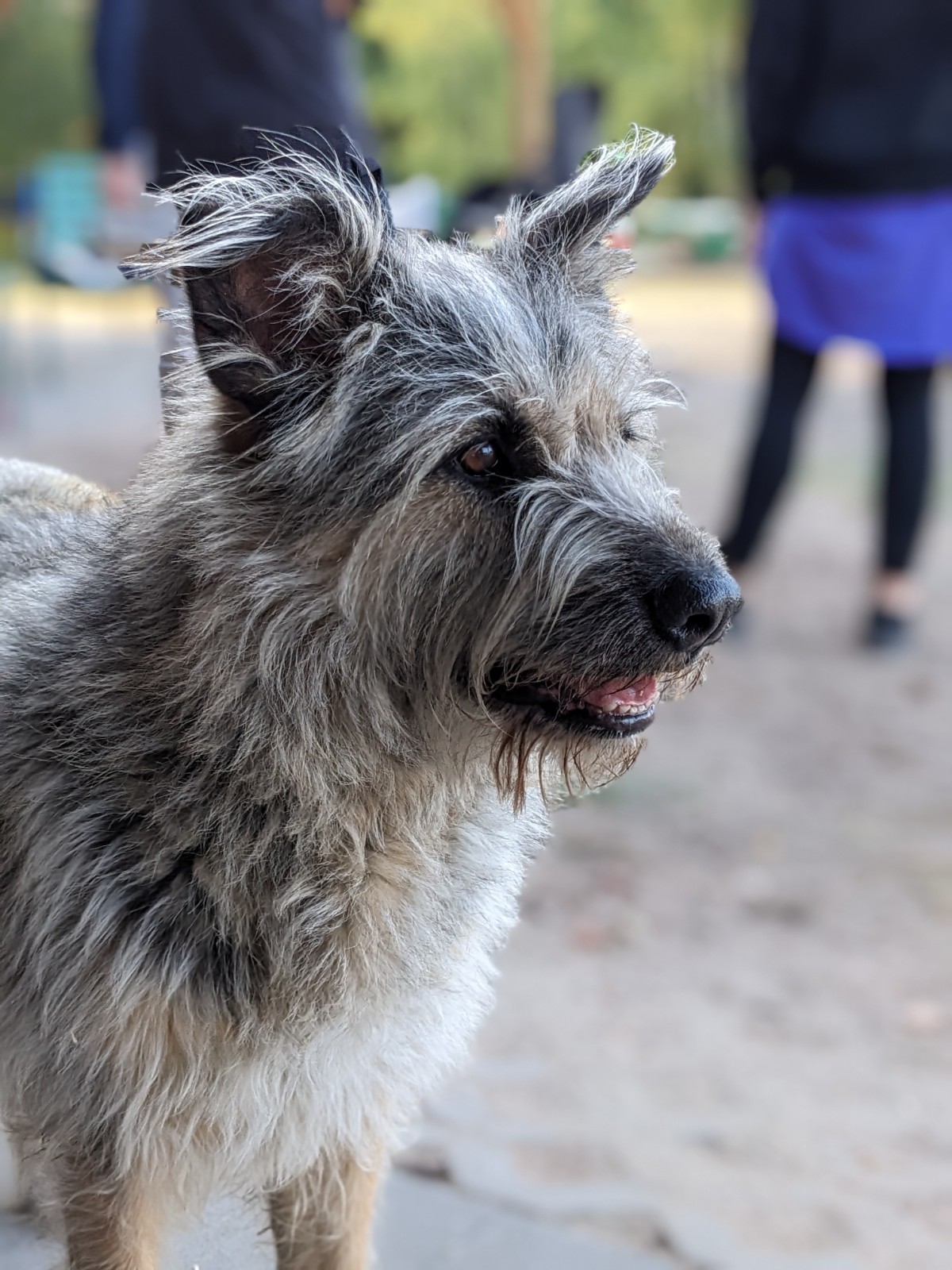
About Lolle
Hey everyone, my name is Lolle and I am from Russia. Nowadays I am assisting Flo, so my focus shifted to physical oceanography. However, I am a theoretical physicist by training. My previous research involves string theory, supersymmetric quantum field theory, and quantum gravity.
Since dogs have a hard time in the scientific field, I chose to publish under random pseudonyms.