Sea level dynamics
Sea level variability could not only affect the air-sea exchanges via surface ocean dynamics but also risk the coastal communities/cities from hazards such as inundation, erosion and retreat. Changes of sea level are governed by various processes on small to large scales, both in space and time, e.g., wind waves, tides, meteo tsunamis, storm surges, mean sea level rise etc. We study these sea level changes as well as their interaction with hydrodynamics, turbulence and sediment transport in estuaries and coastal seas.
Read more … Sea level dynamics

 Estuaries comprise of the region within coastal water bodies where terrestrial fresh water interacts with oceanic salt water. Classically, the turbulent mixing between these water masses results in an inflow of saline water and an outflow of fresh water – the estuarine circulation or exchange flow. This basic circulation is a wide-spread phenomenon of the coastal ocean, occurring in river mouths, underneath floating glaciers and even in the Baltic Sea as a whole. Under certain conditions, such as in regions with intense evaporation, with a strong wind-driven circulation or ice cover, the classical circulation pattern may be altered or even inverted.
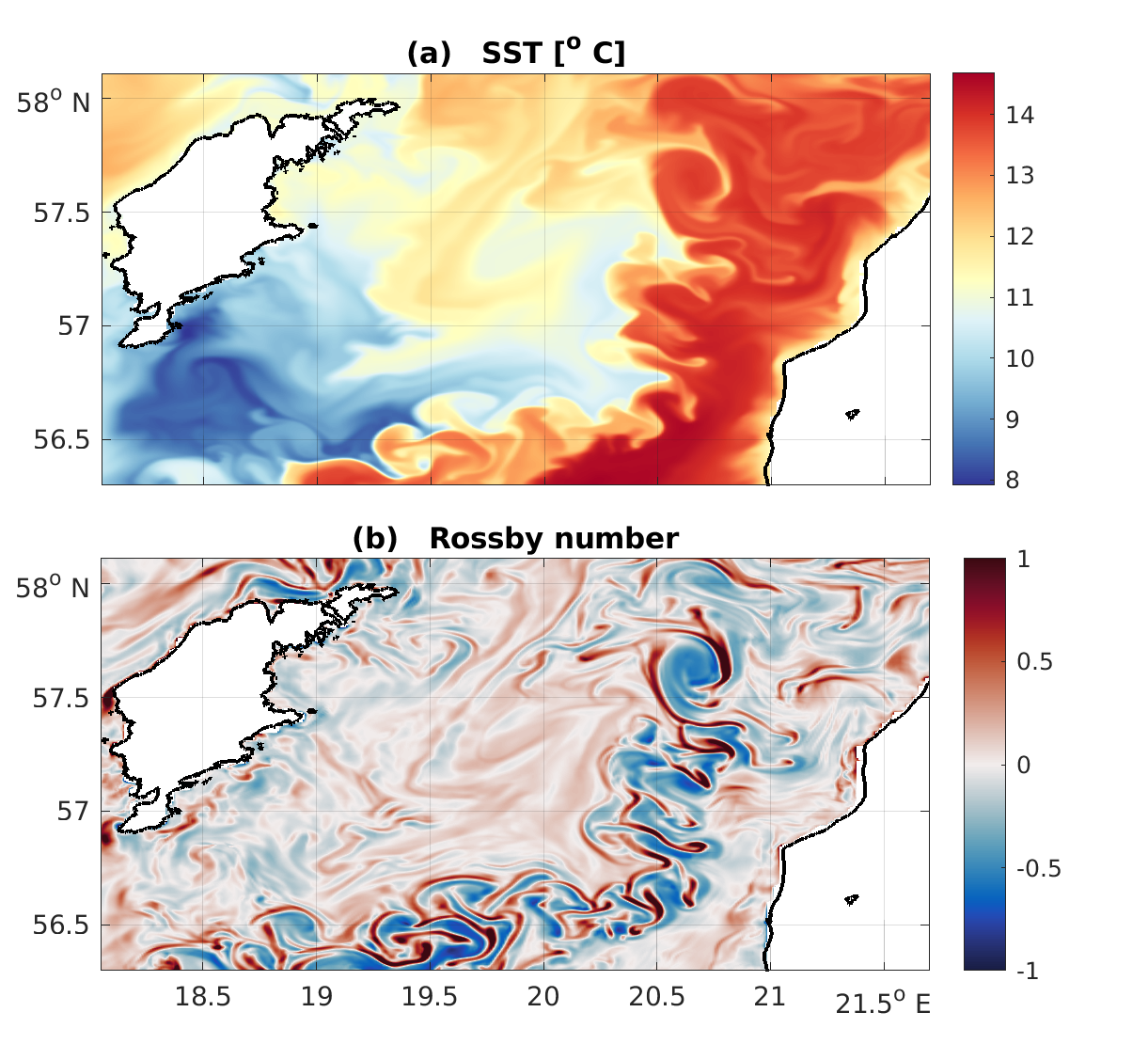 We study how fronts, filaments, and eddies shape air–sea exchange by controlling stratification, mixing, and vertical transport in the ocean’s surface boundary layer (SBL). This upper layer, typically characterized by relatively weak density stratification, connects the atmosphere to the ocean interior by mediating fluxes of momentum, heat, freshwater, and gases, while strongly influencing the light–nutrient environment that regulates primary productivity.
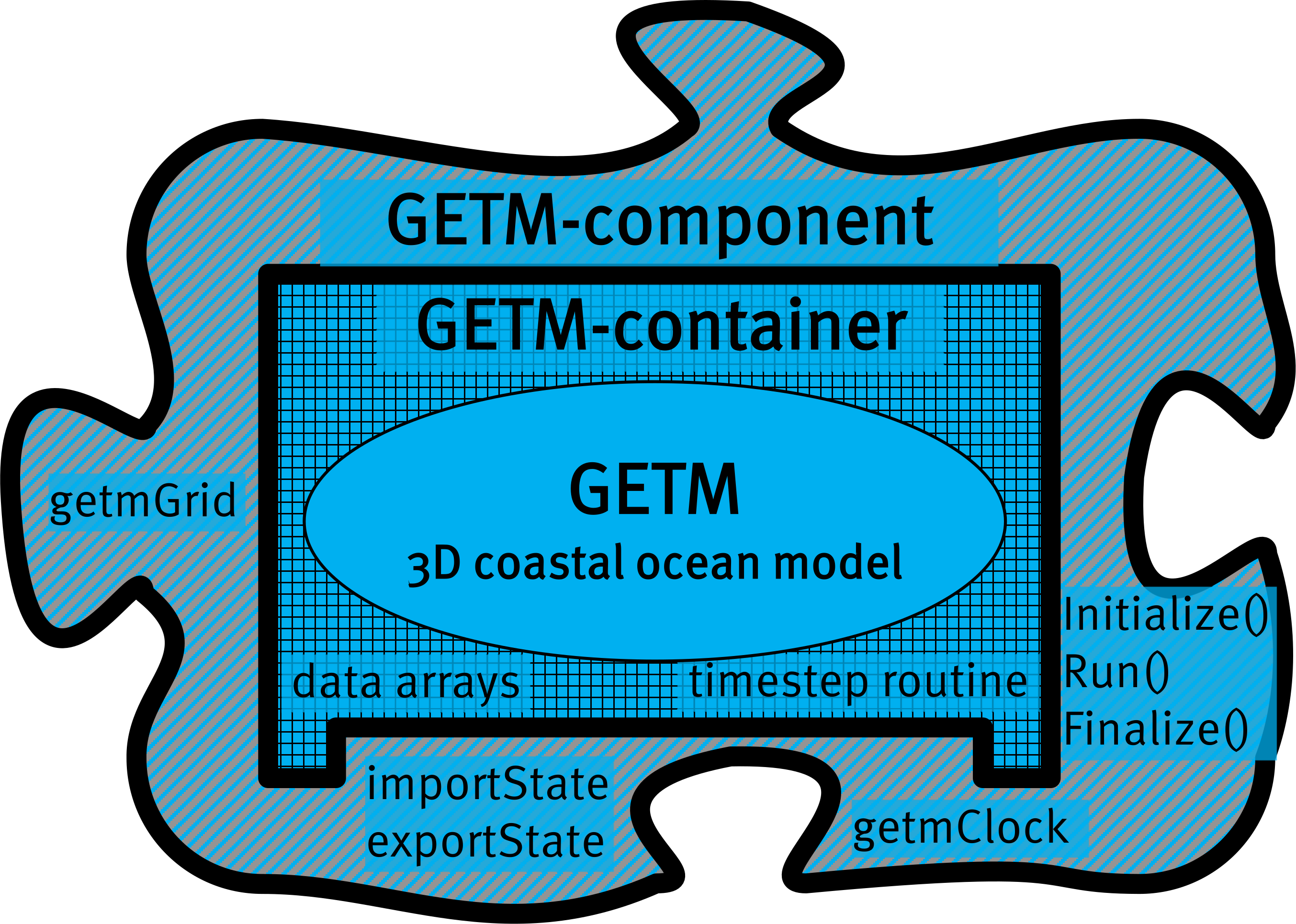 Coastal oceans are complex ecosystems. Their description requires an interdisciplinary approach. In addition to detailed measurements, realistic model simulations are necessary to understand the sophisticated interplay of all relevant processes. For this we develop advanced model techniques and diagnostics.