
Suboxic and anoxic regions in the Baltic Sea deep waters
Due to the restricted water exchange with the North Sea and the permanent haline stratification in the central Baltic Sea, stagnation periods occur regularly in the deep basins.
Stagnation periods are characterized by the depletion of nitrate, increasing phosphate and ammonium concentrations and decreasing salinity and oxygen content in the deep water, sometimes culminating in the formation of considerable hydrogen sulphide concentrations. A renewing of the deep water can only take place by extreme inflow events into the Baltic Sea - termed major Baltic inflows - which transport salt and oxygen rich water into the deep basins.
Current publications:
Naumov L, Meier HEM (2026): Major Baltic Inflows do not have long-lasting consequences for 20th-century hypoxia in the central Baltic Sea. Commun. Earth Environ. 7: 205 doi: 10.1038/s43247-026-03245-0
Kuss J, Gräwe U, Cahill B, Mohrholz V, Naumann M, Mars R, Krüger S, Schulz-Bull DE, Waniek JJ (2025): Highly variable bottom water oxygen concentration in the shallow Arkona Basin (Baltic Sea). J. Mar. Syst. 252: 104134, doi: 10.1016/j.jmarsys.2025.104134
Distribution maps 1969 - 2026
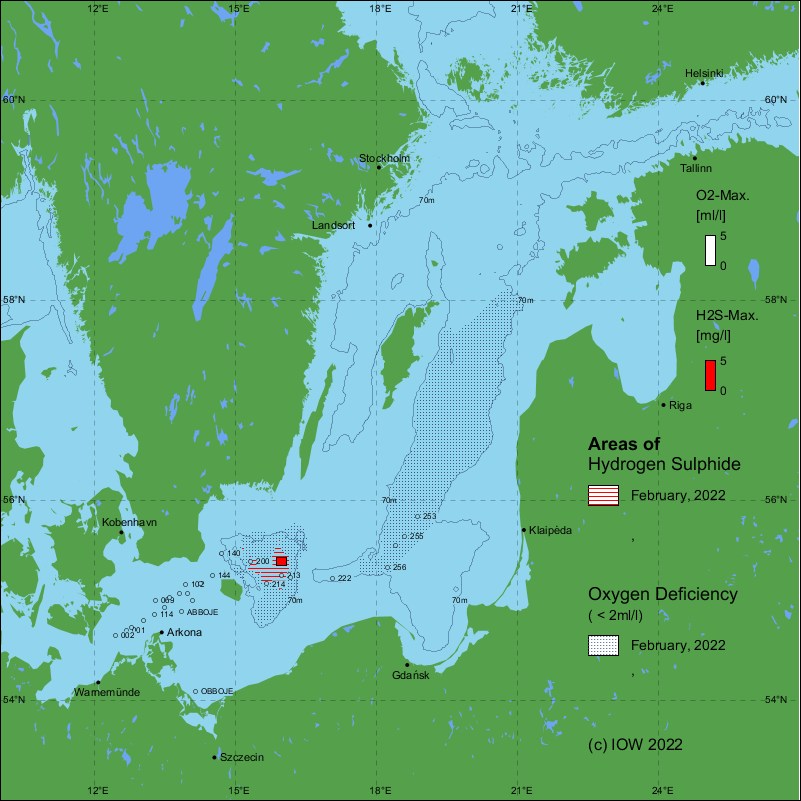
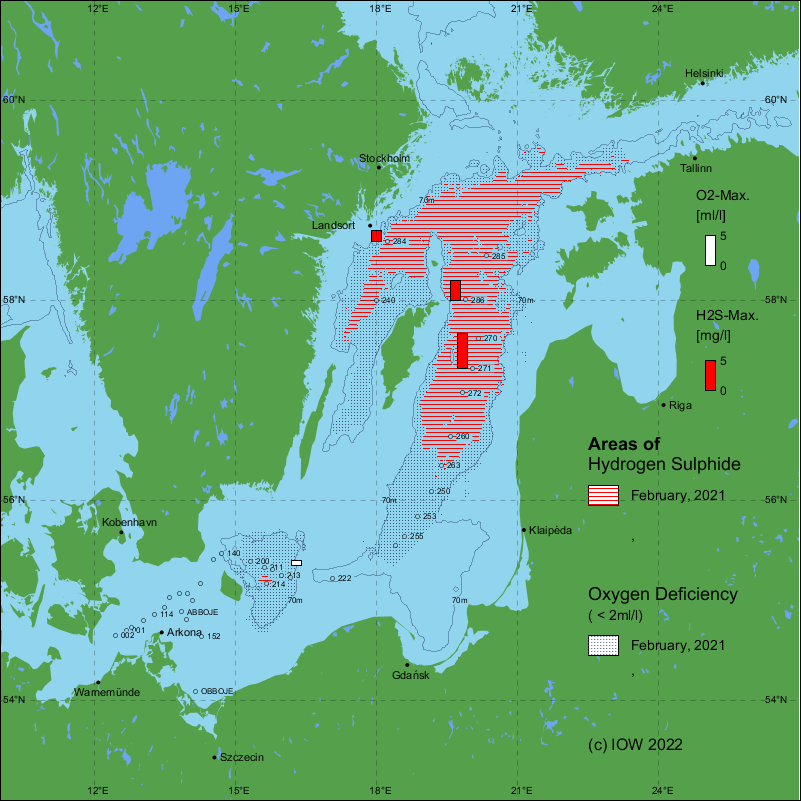
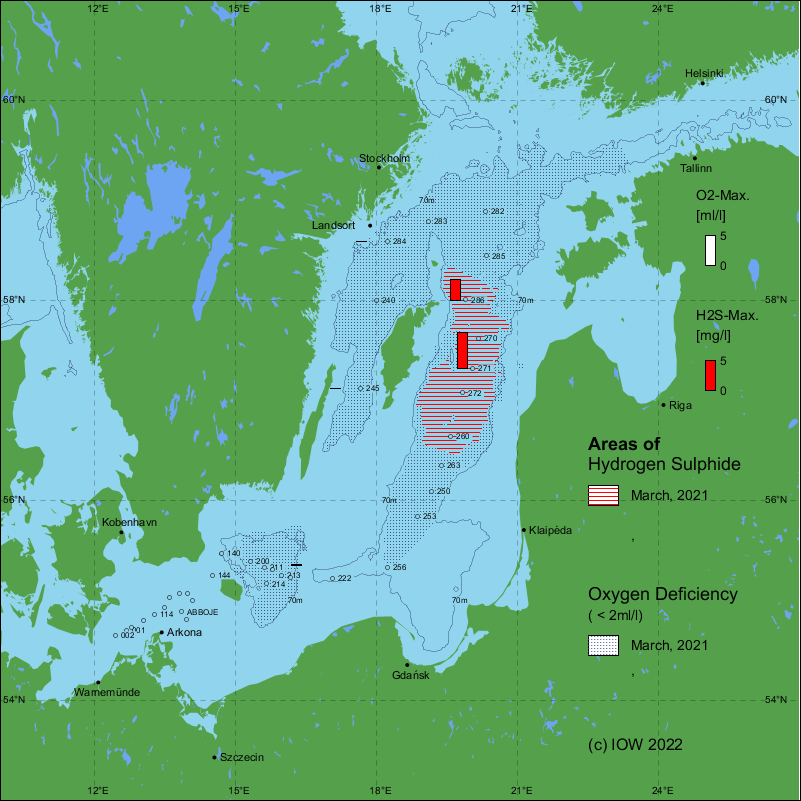
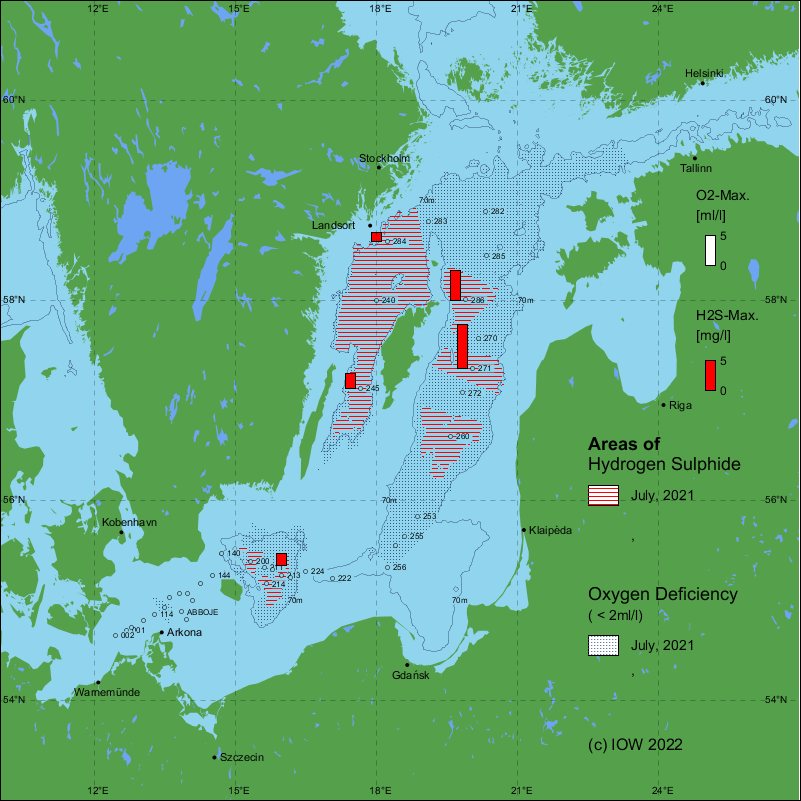
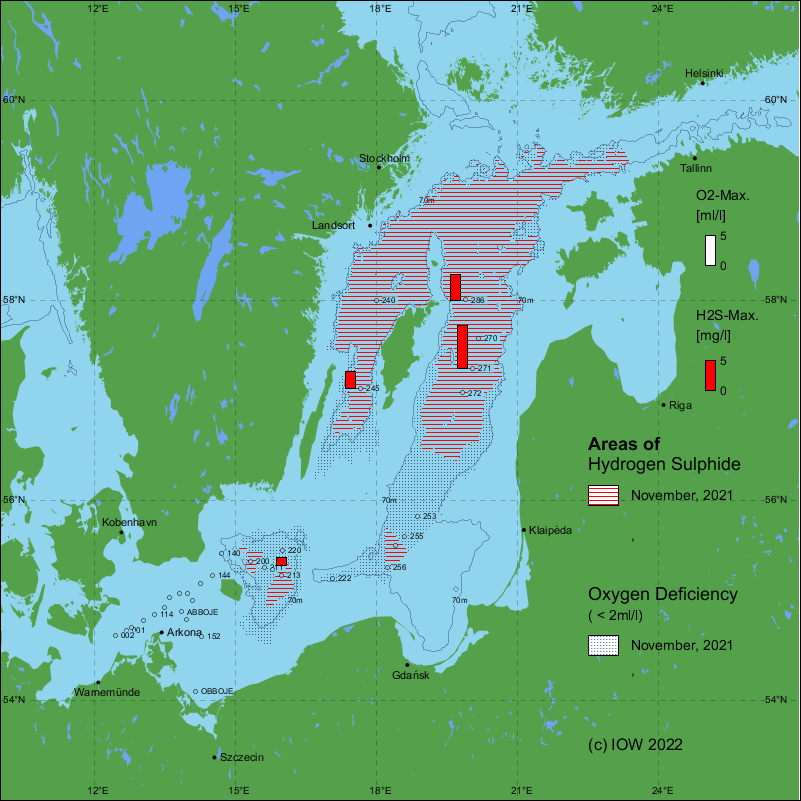
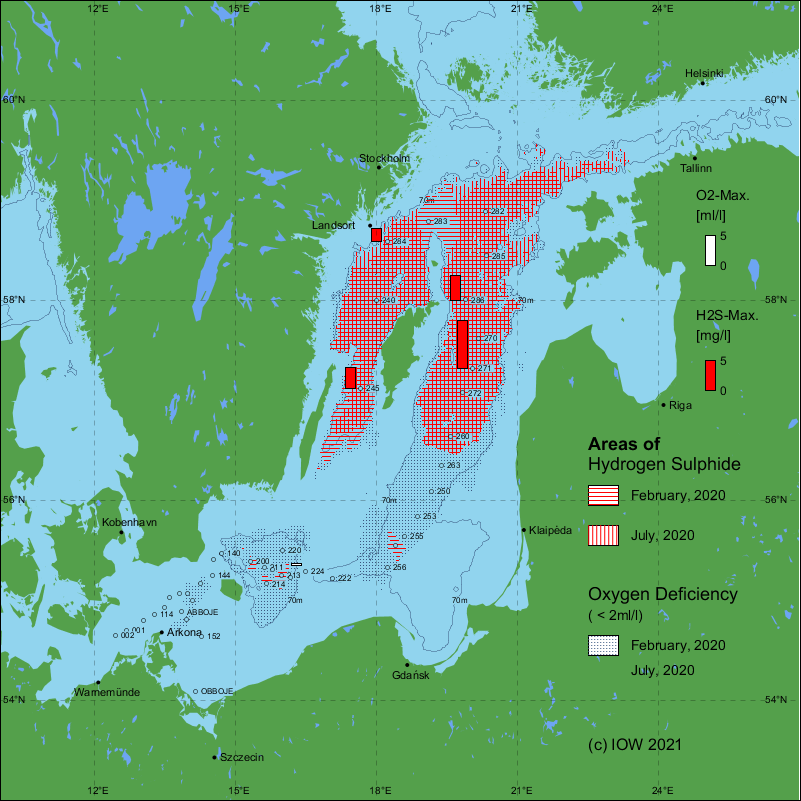
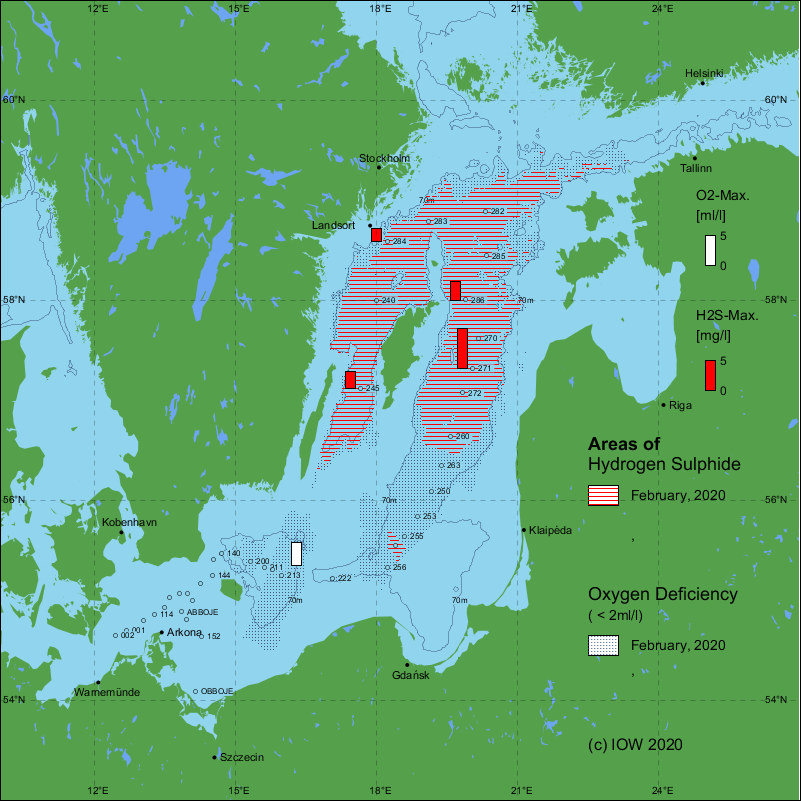
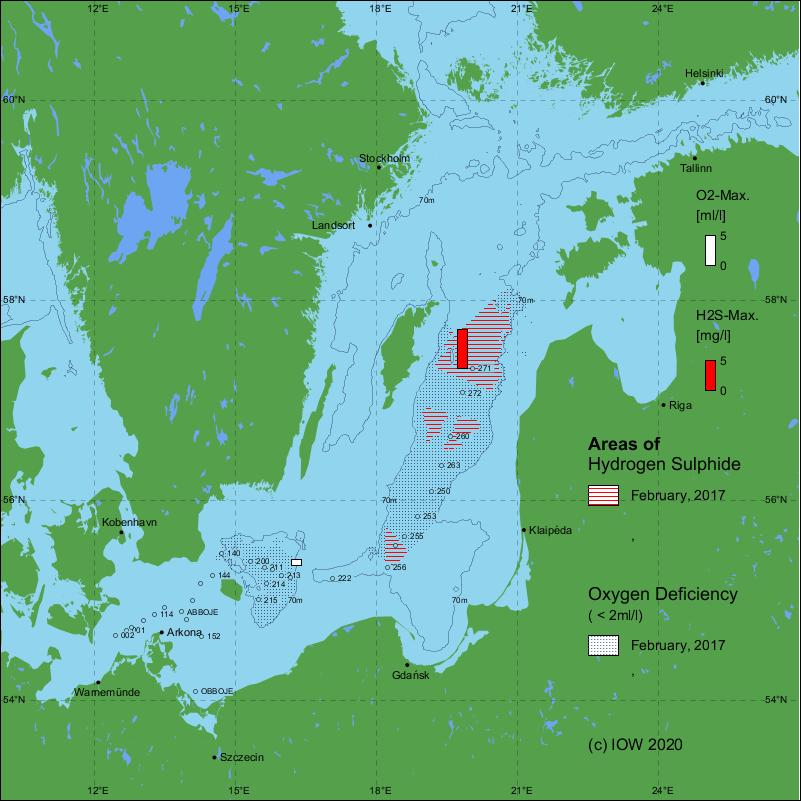
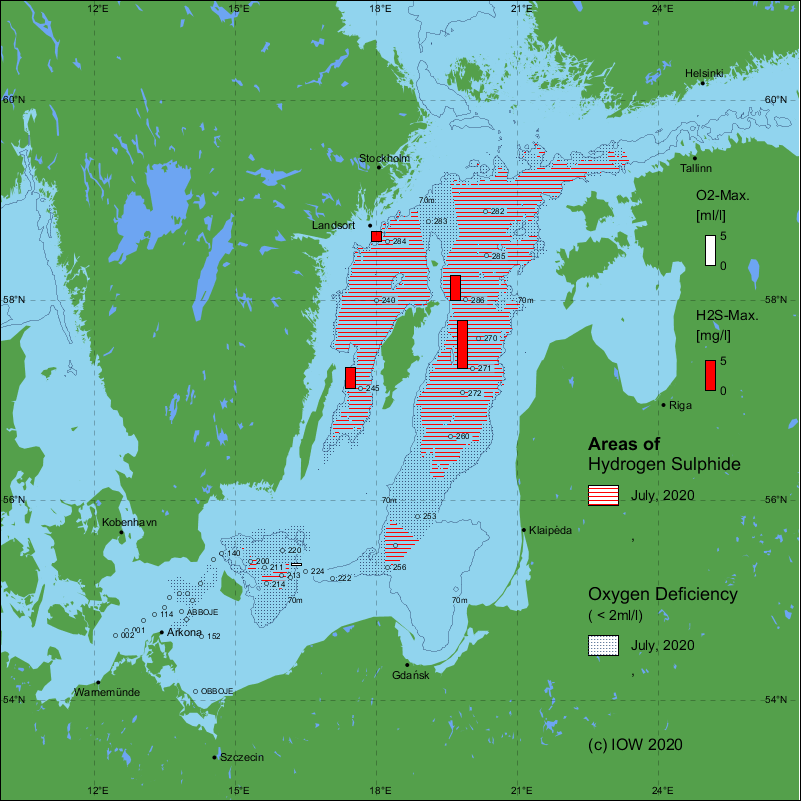
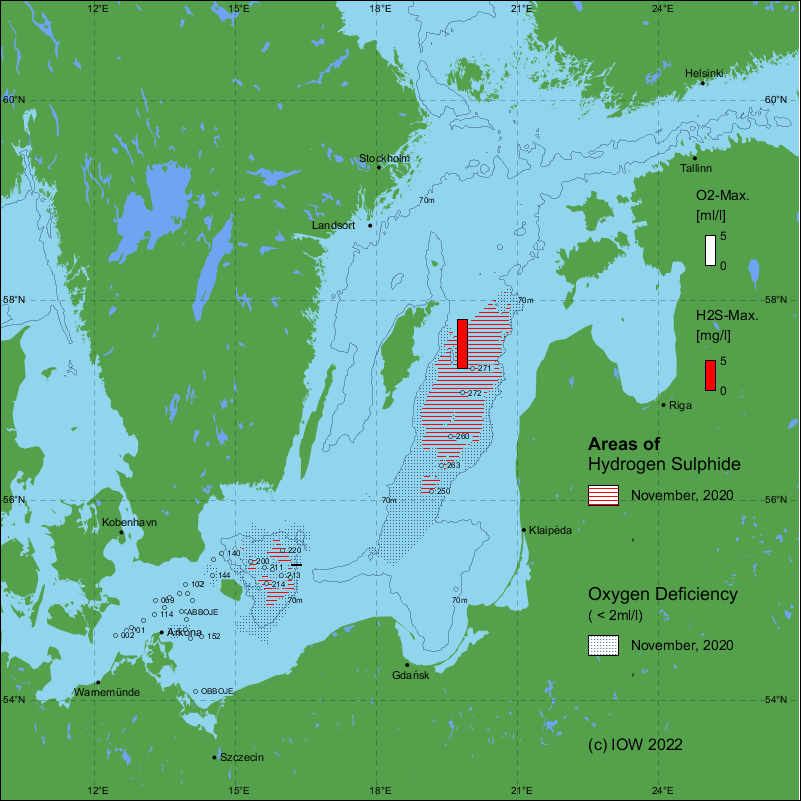
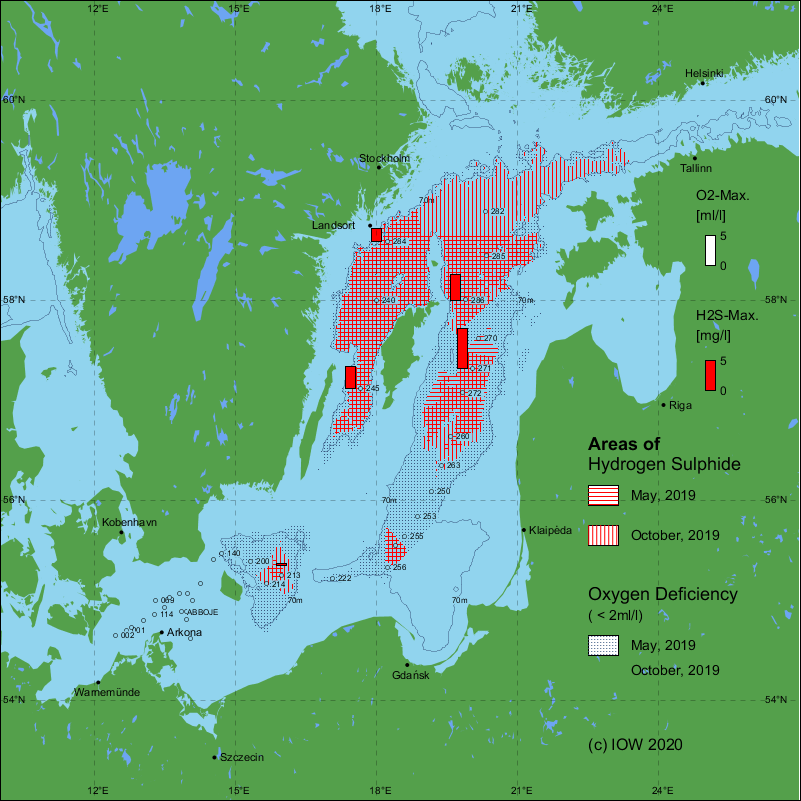
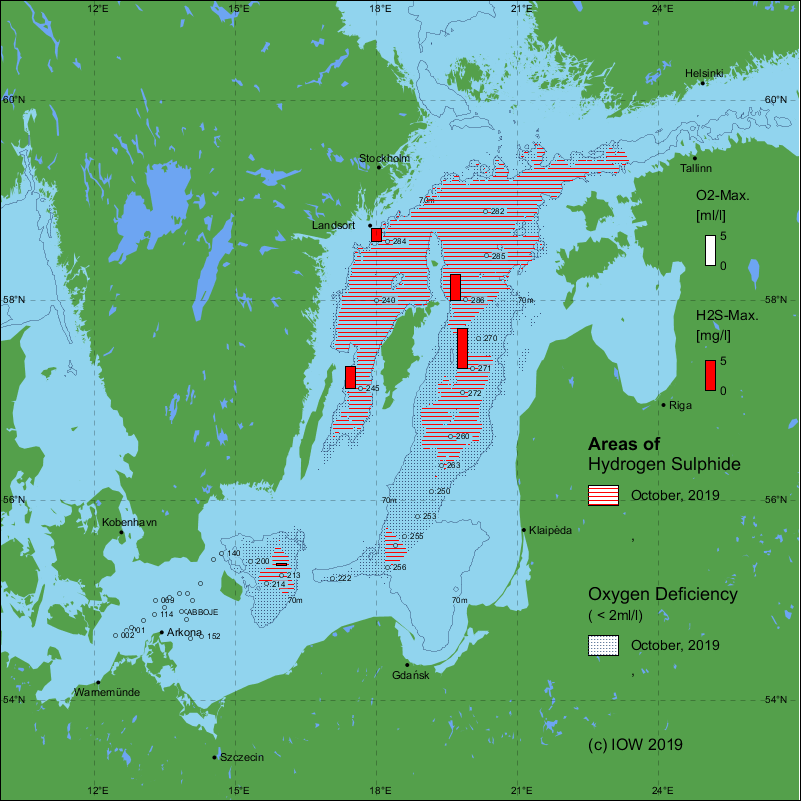
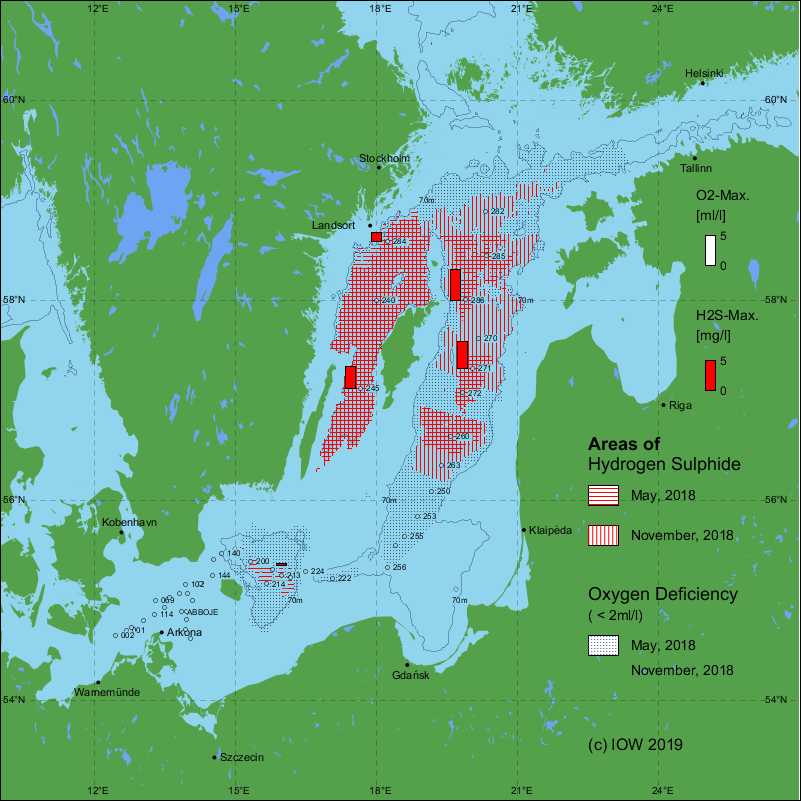
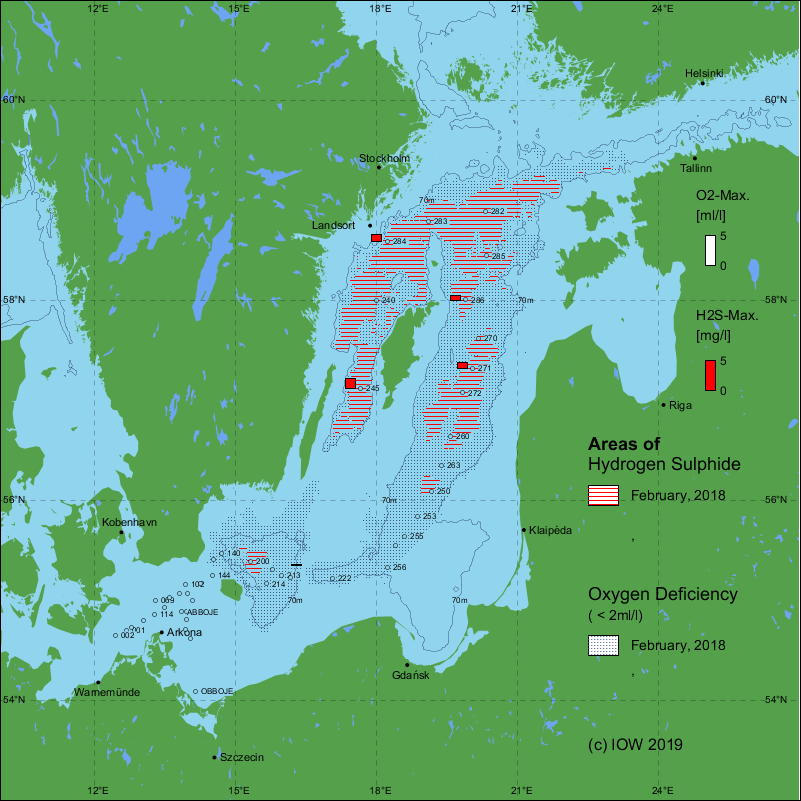
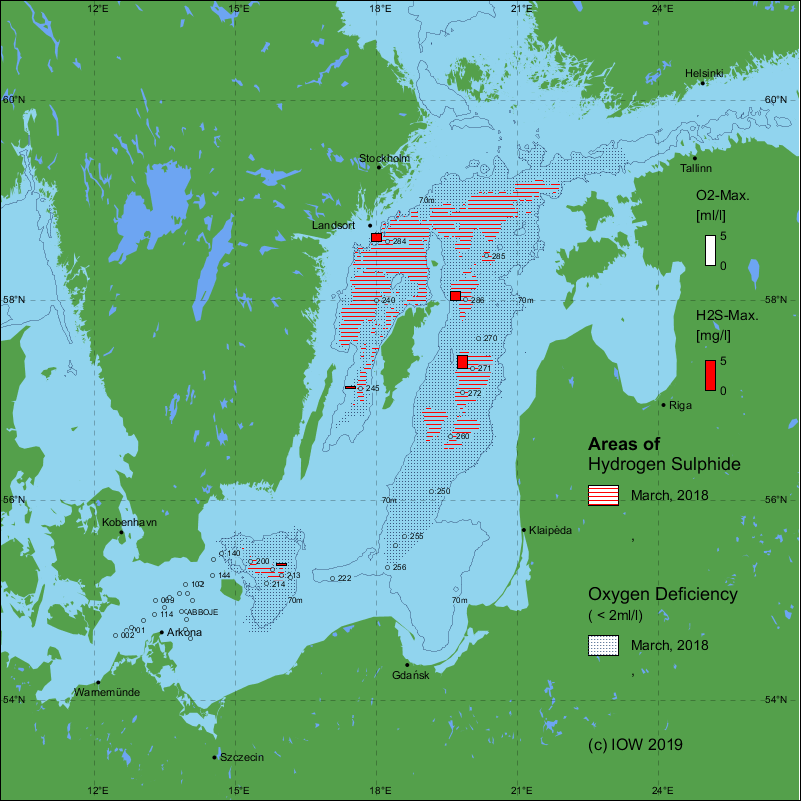
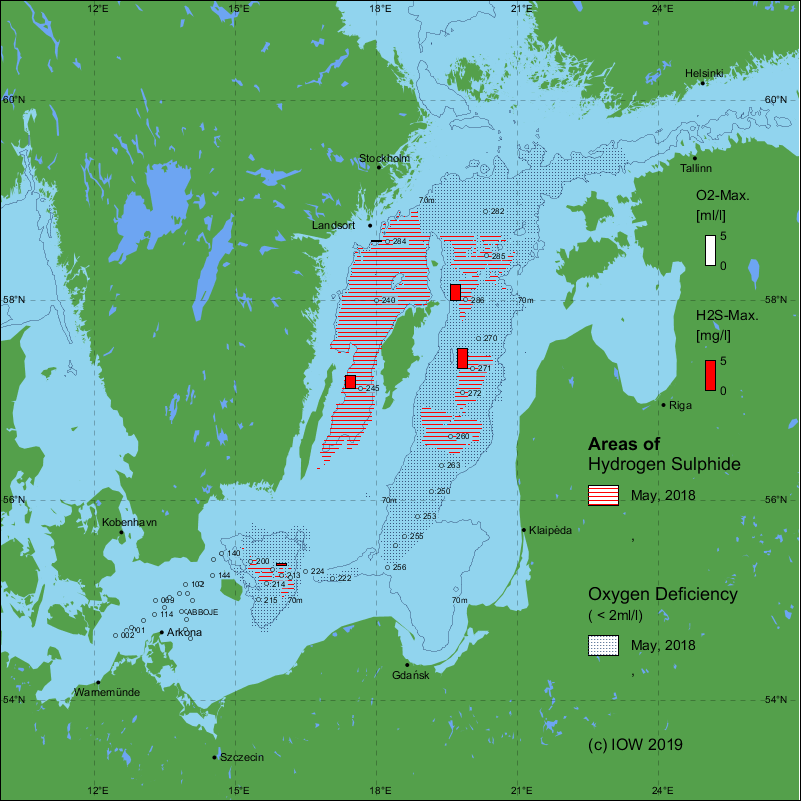
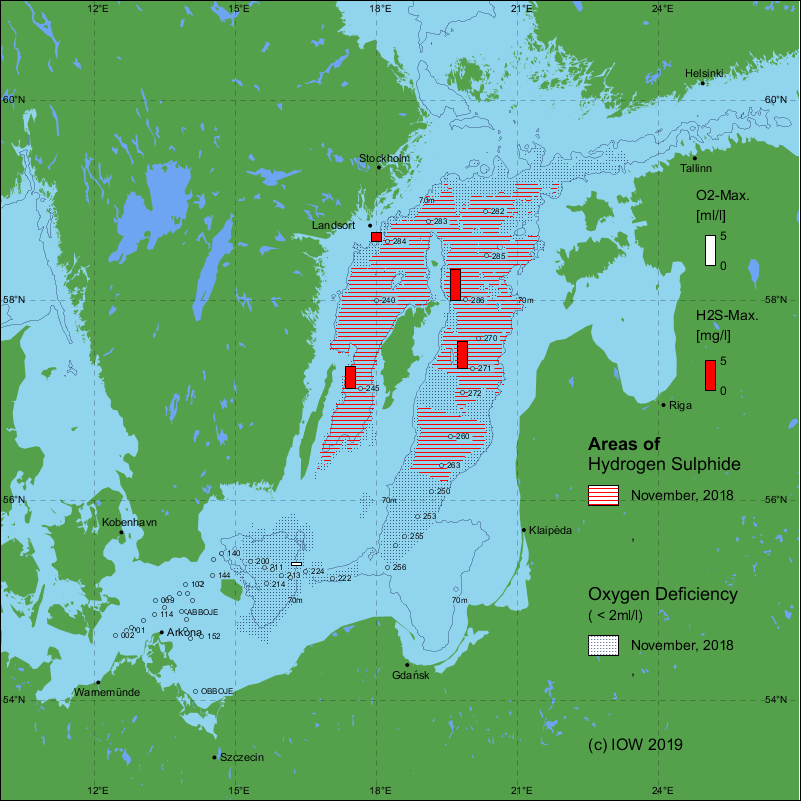
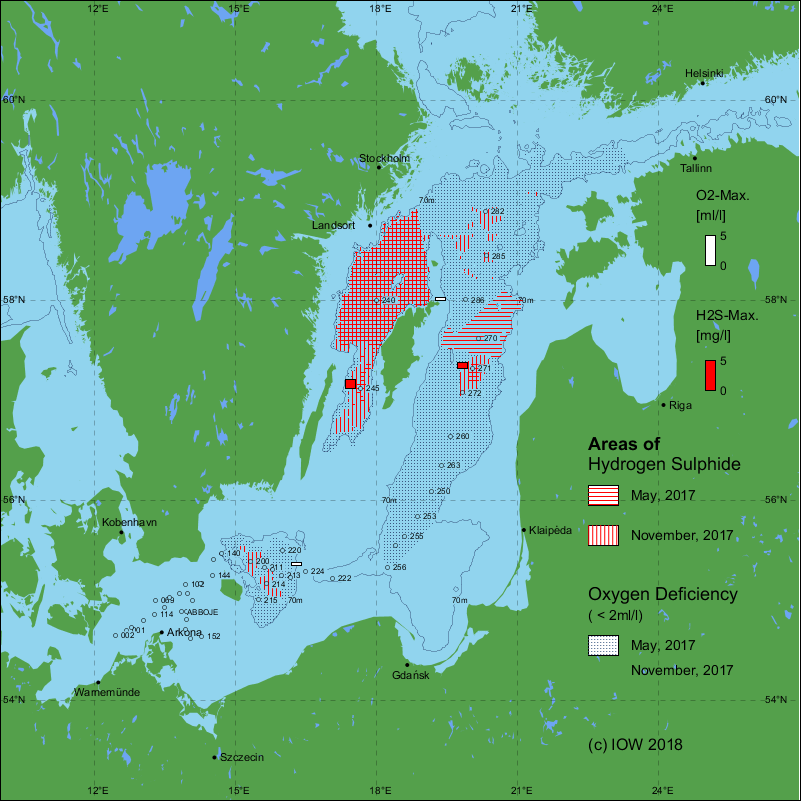
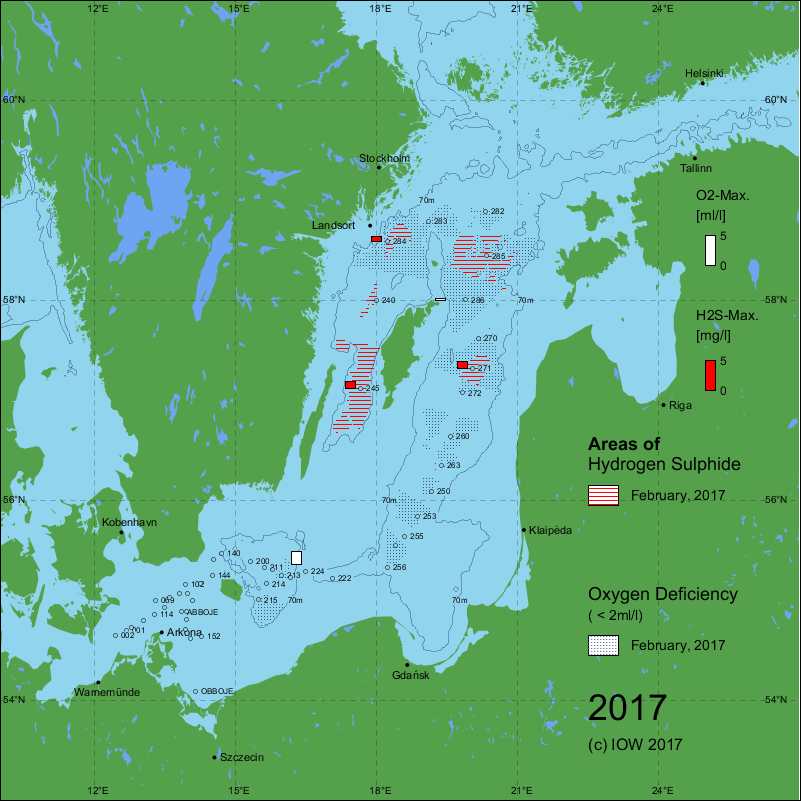
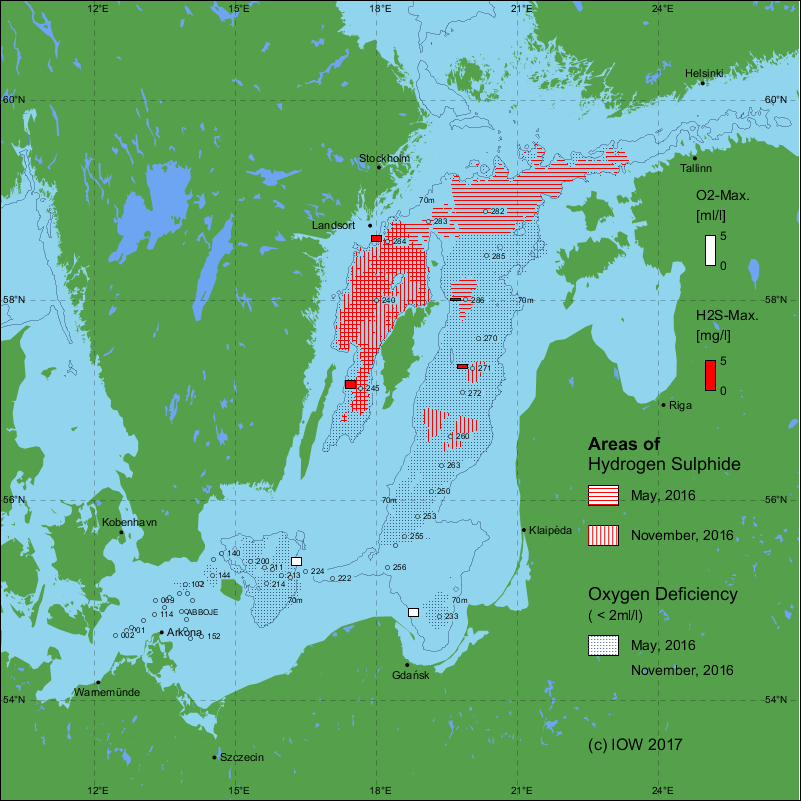
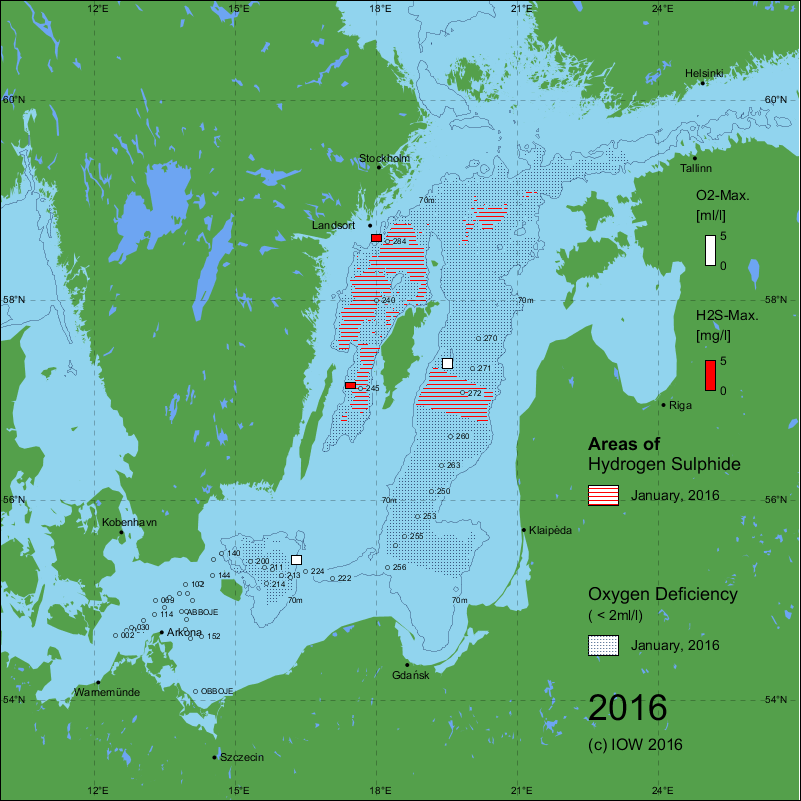
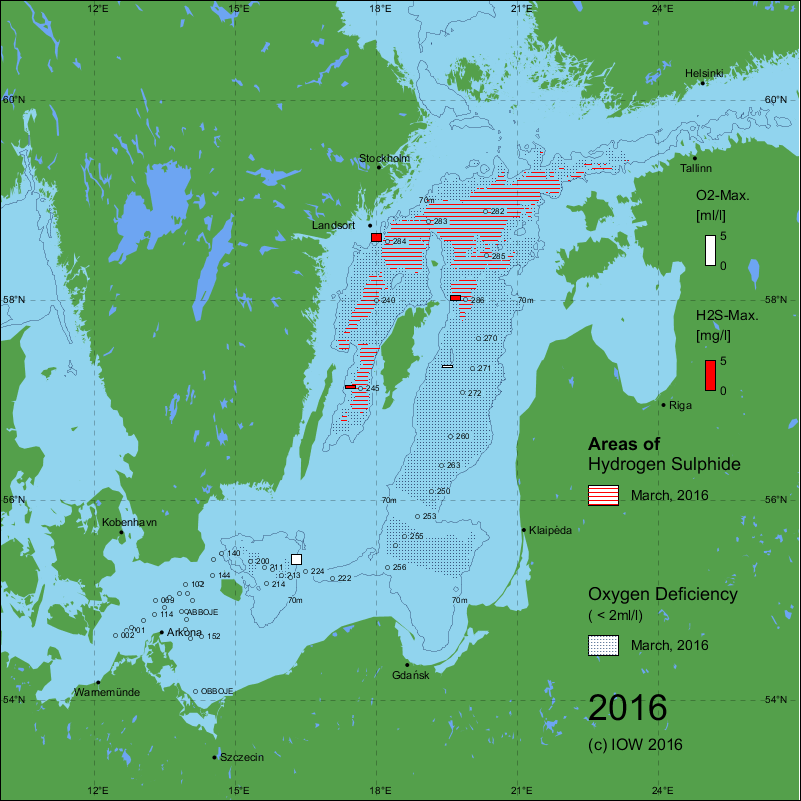
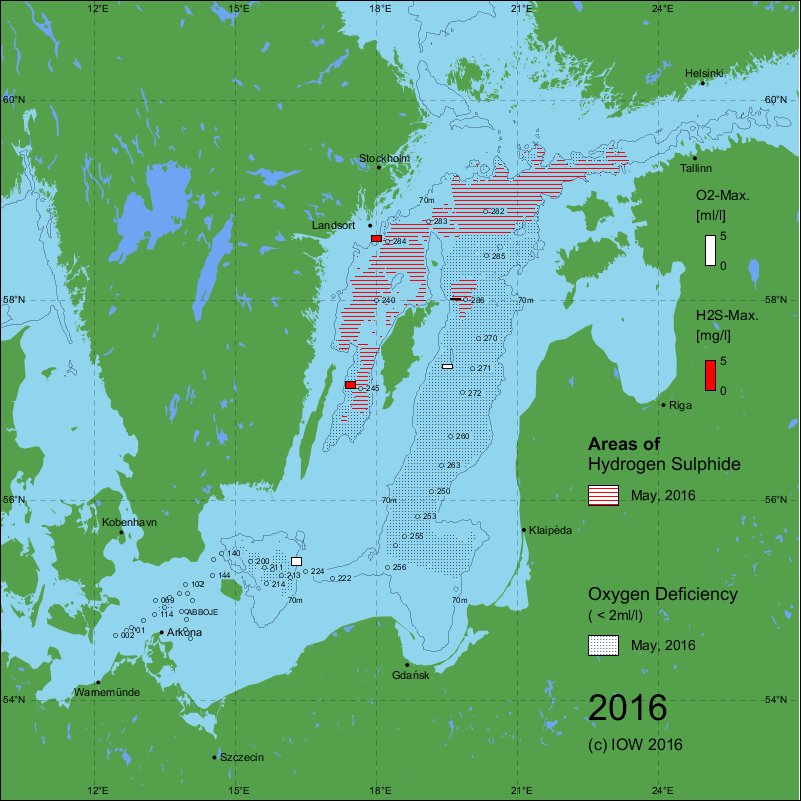
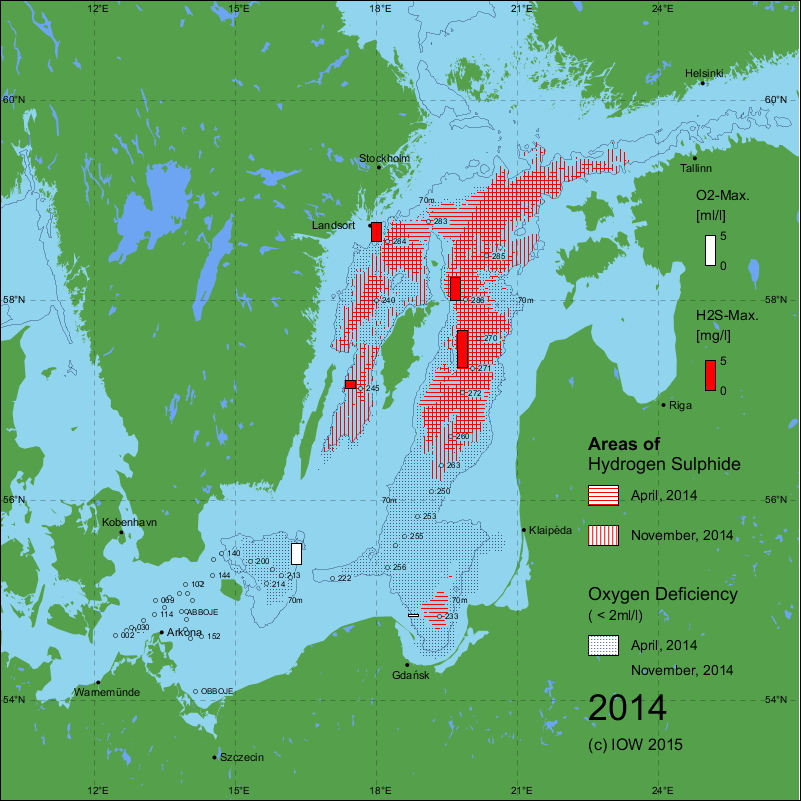
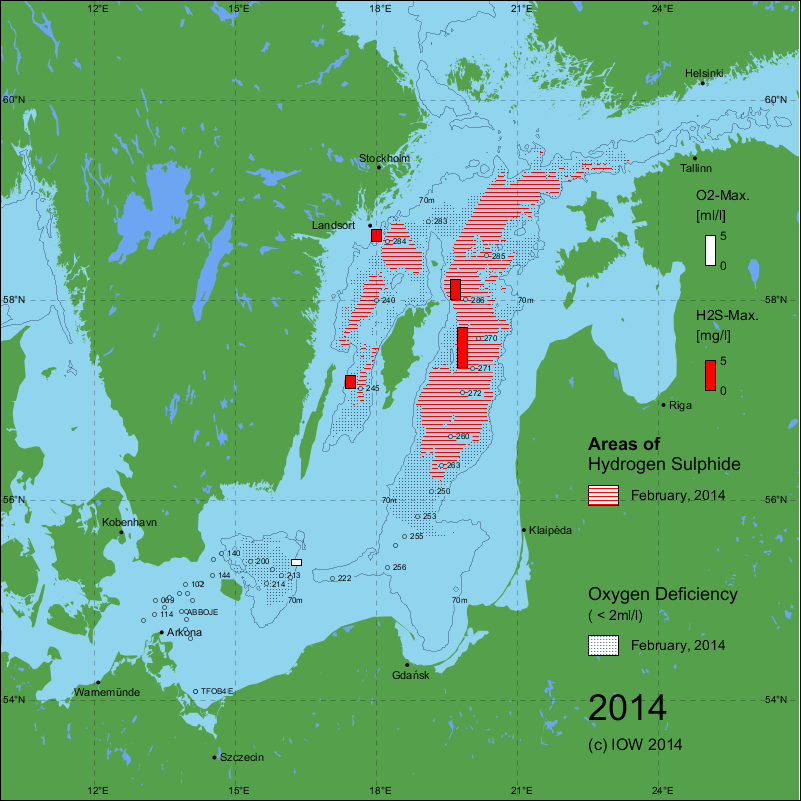
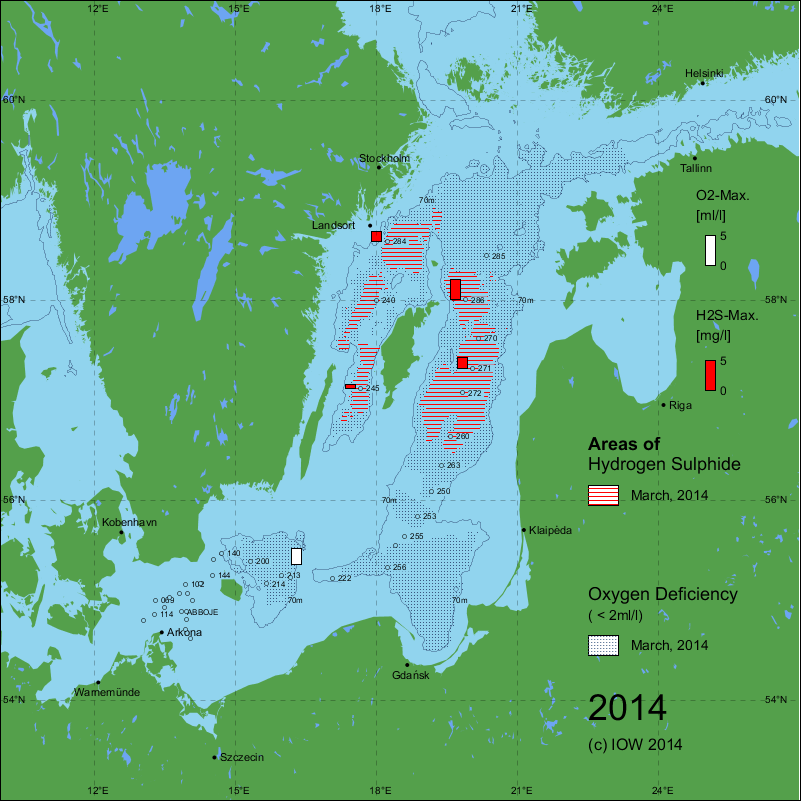
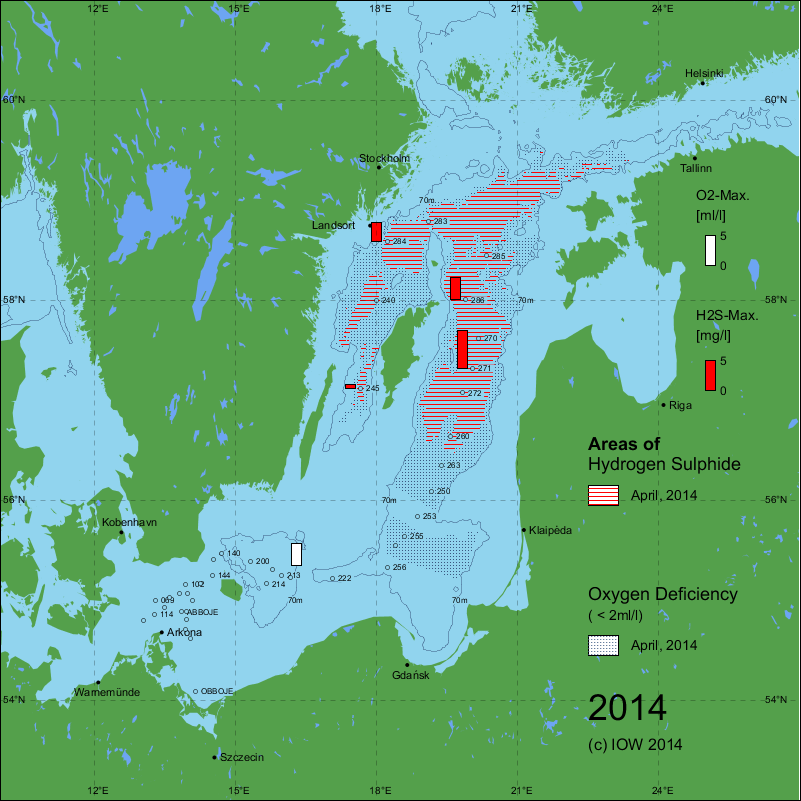
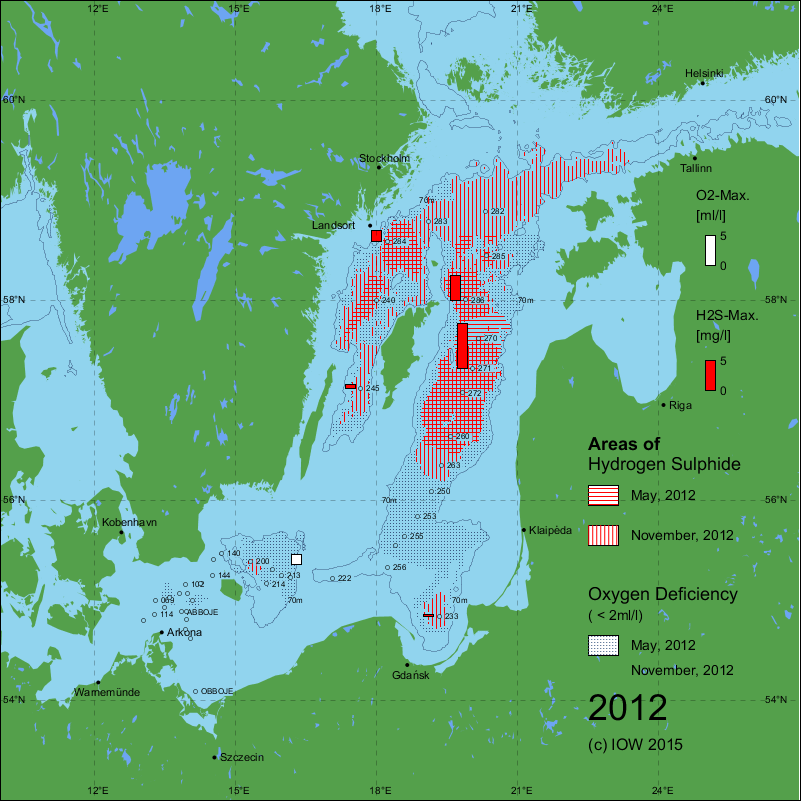
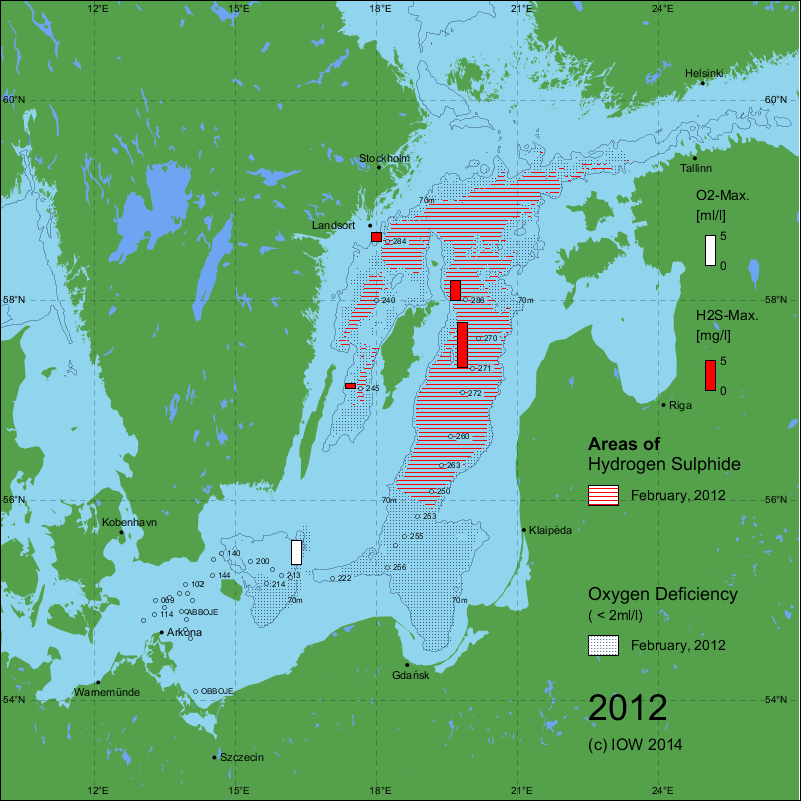
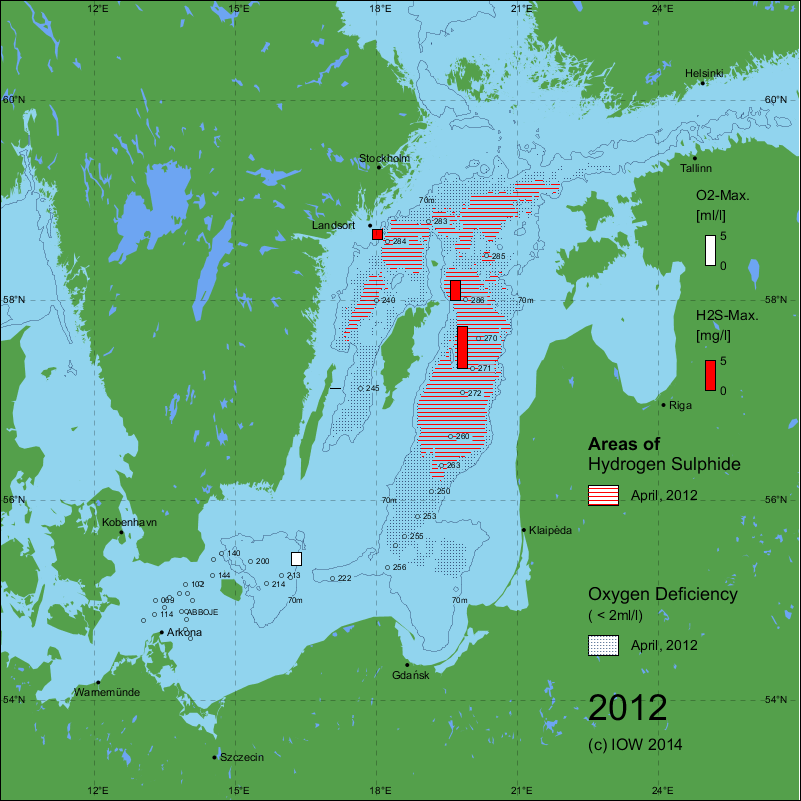
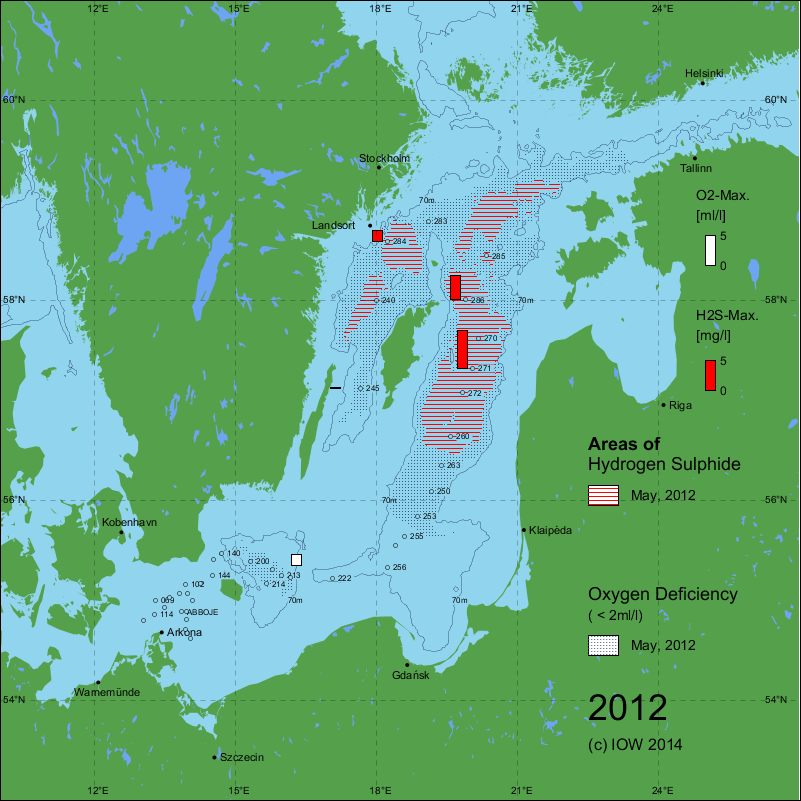
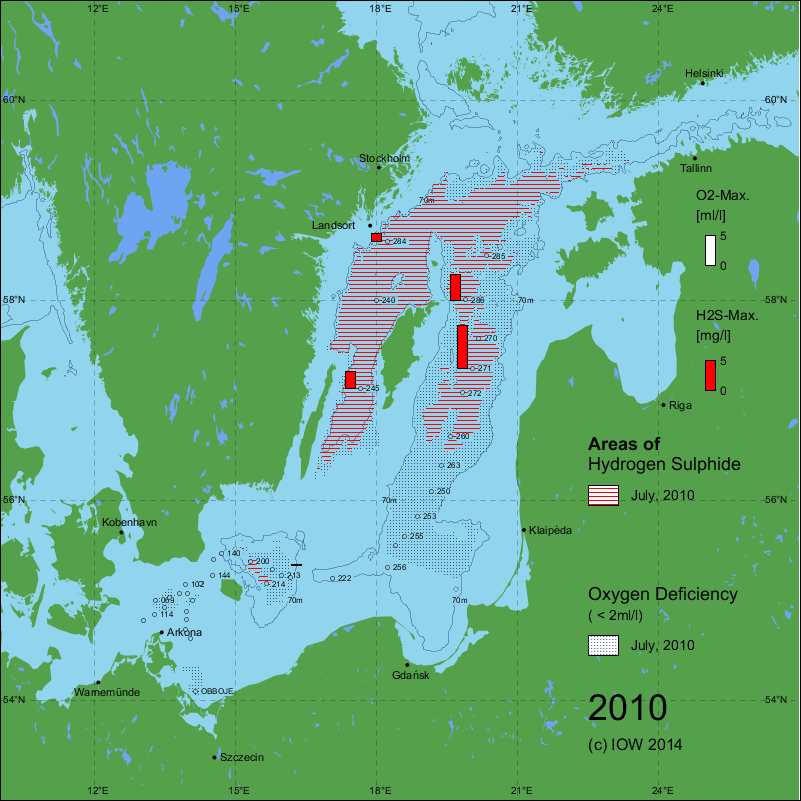
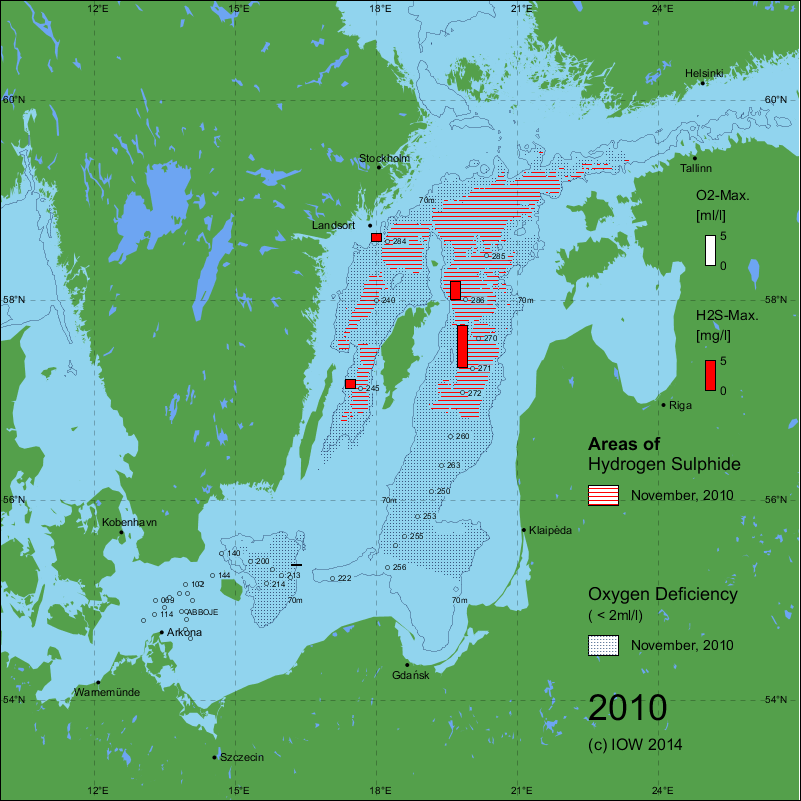
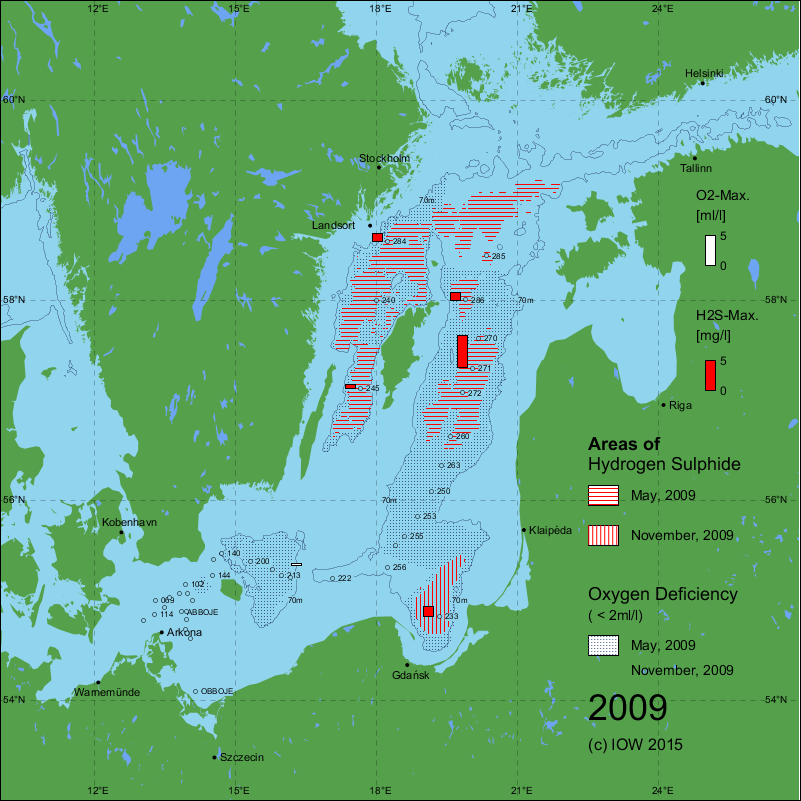
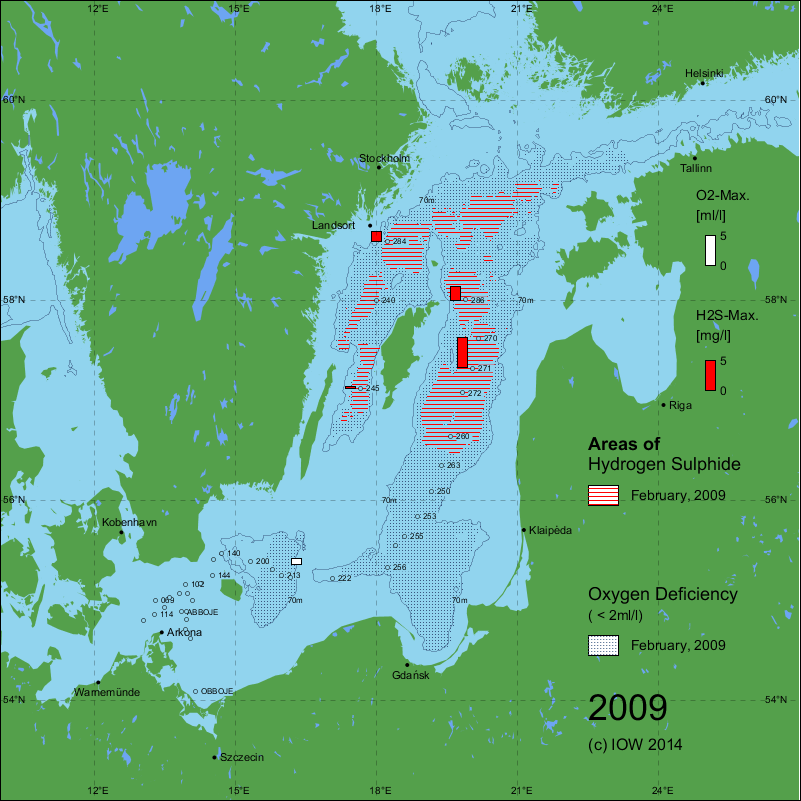
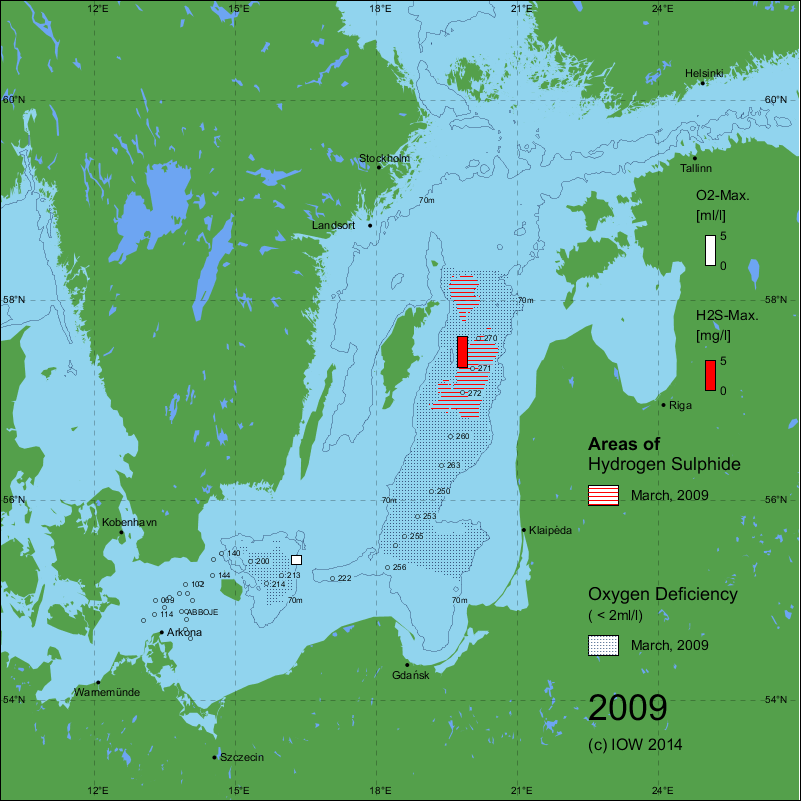
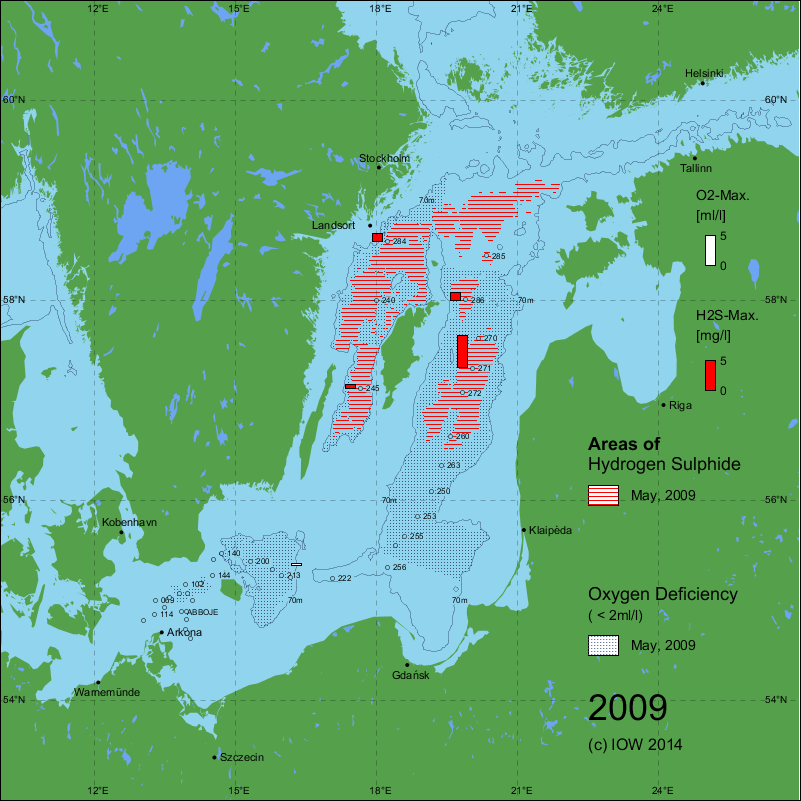
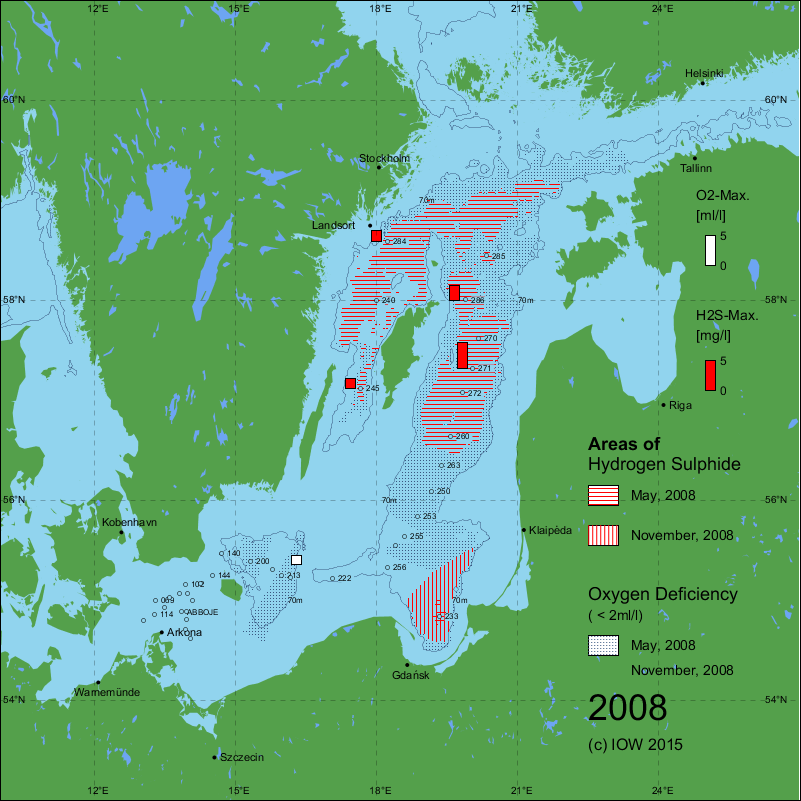
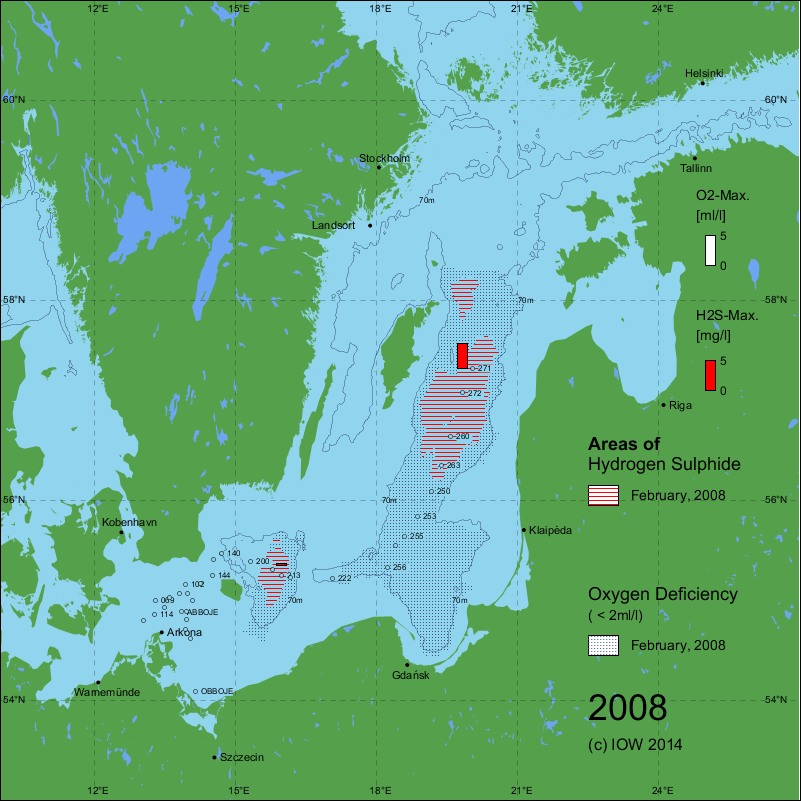
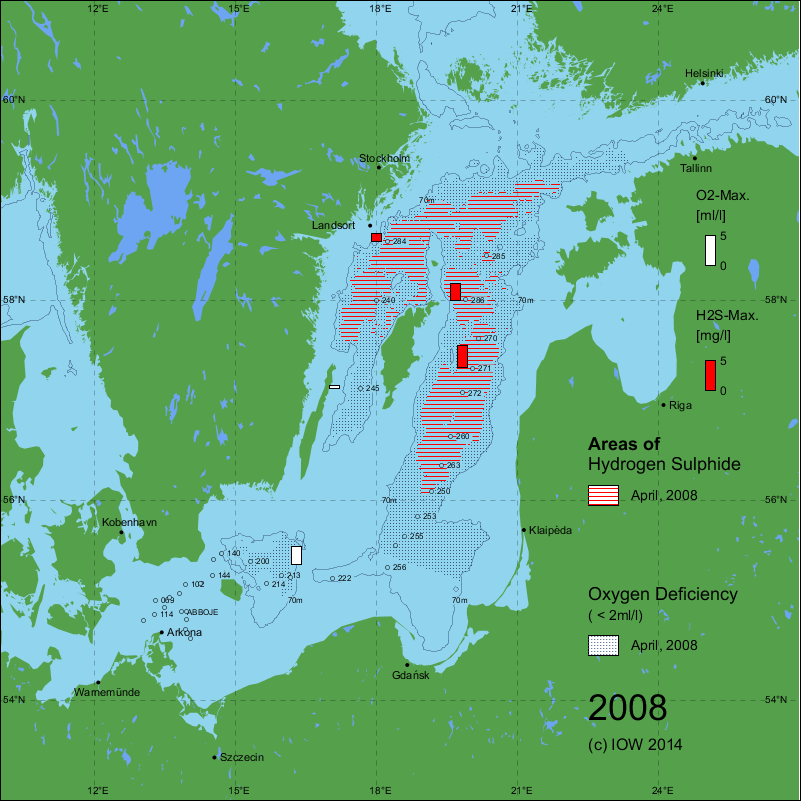
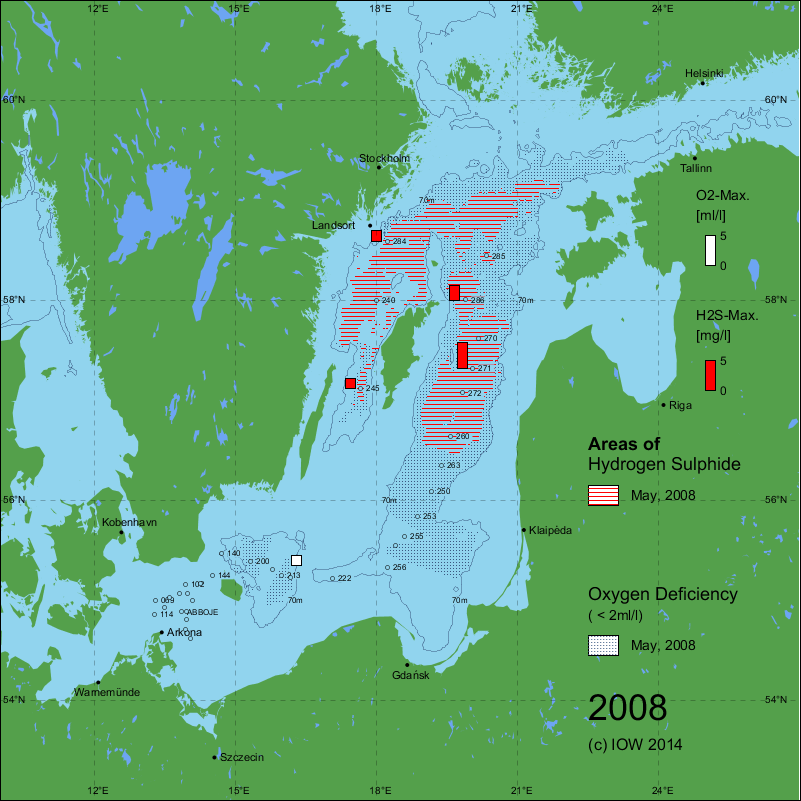
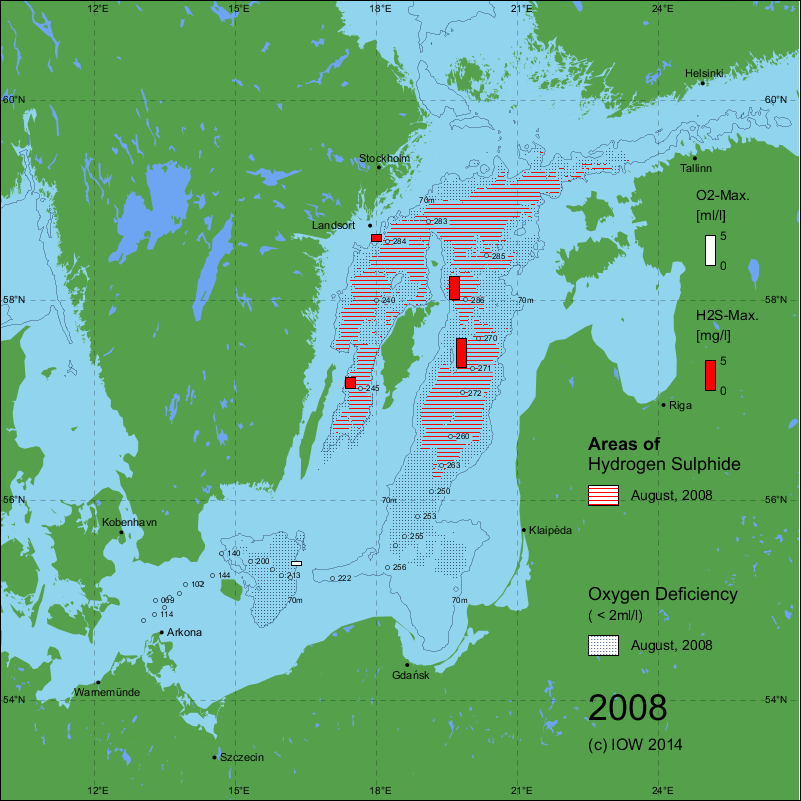
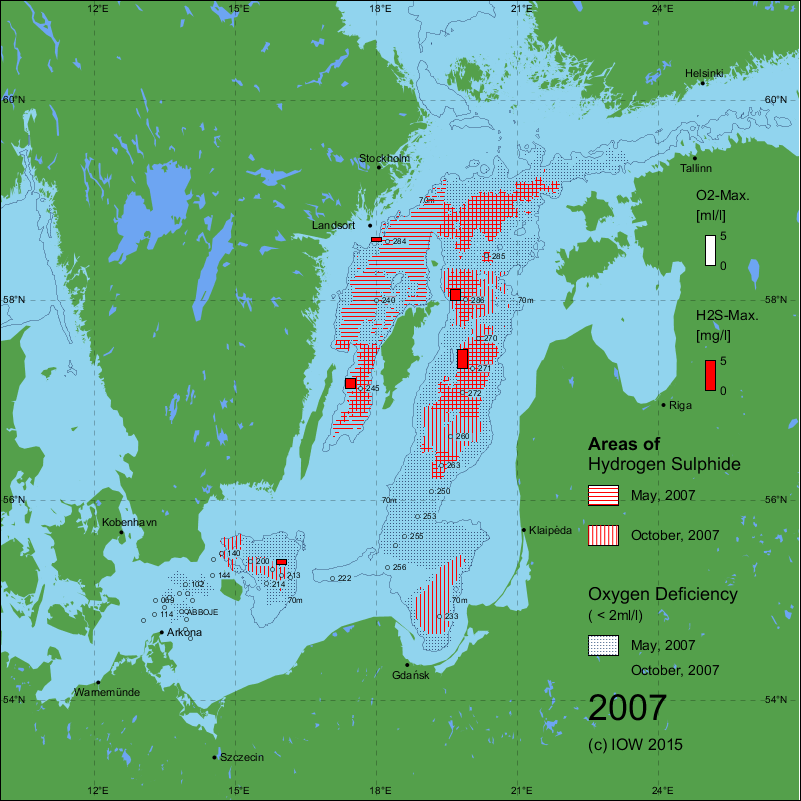
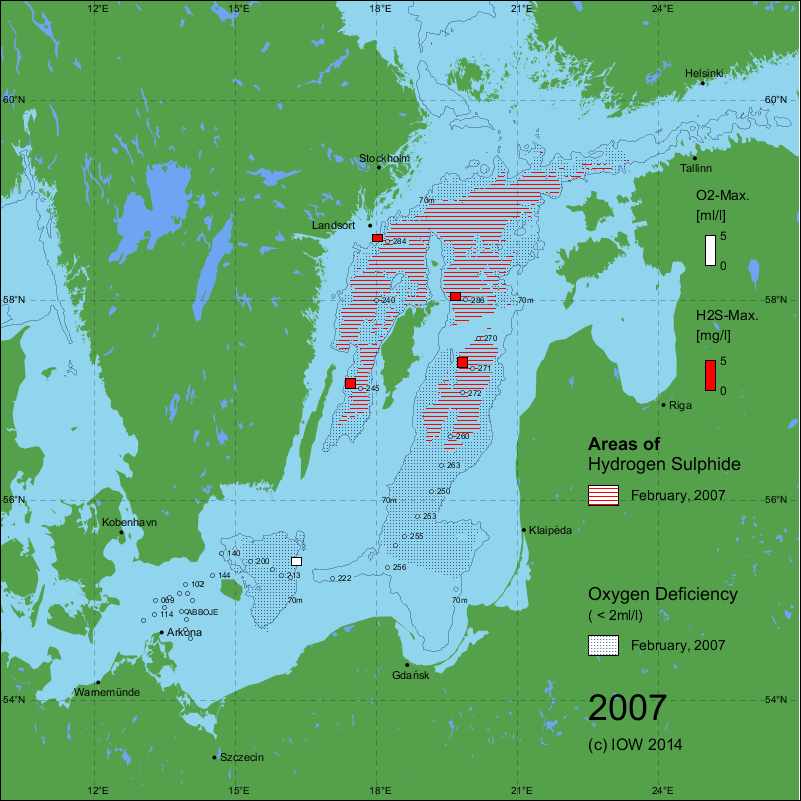
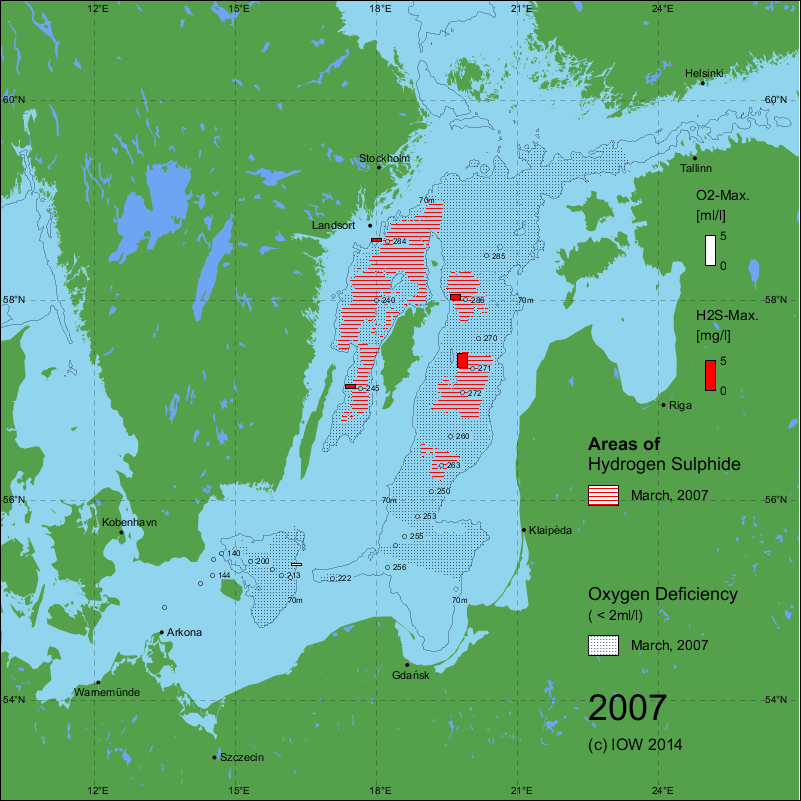
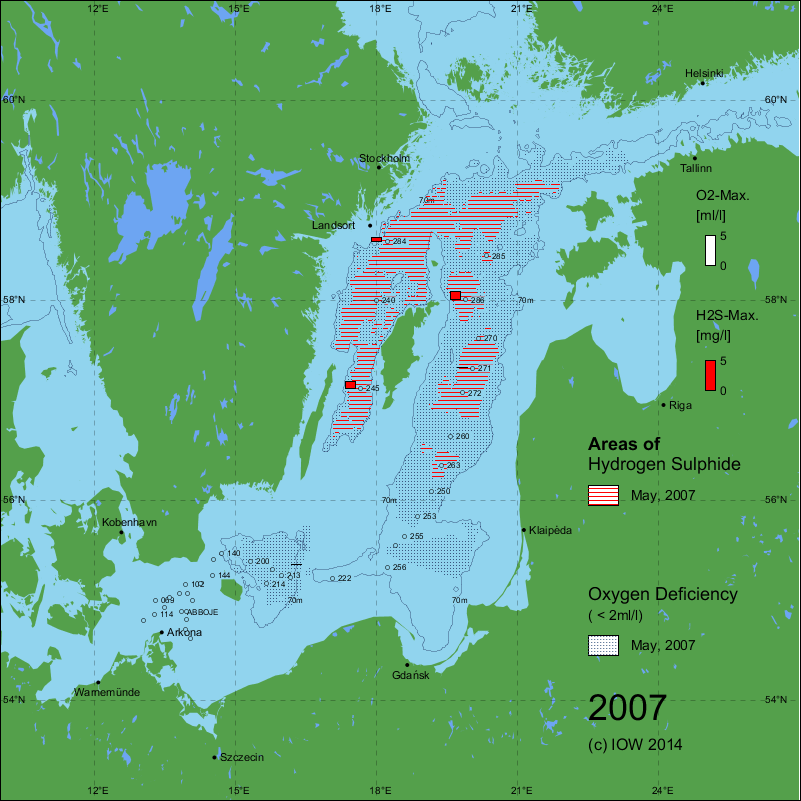
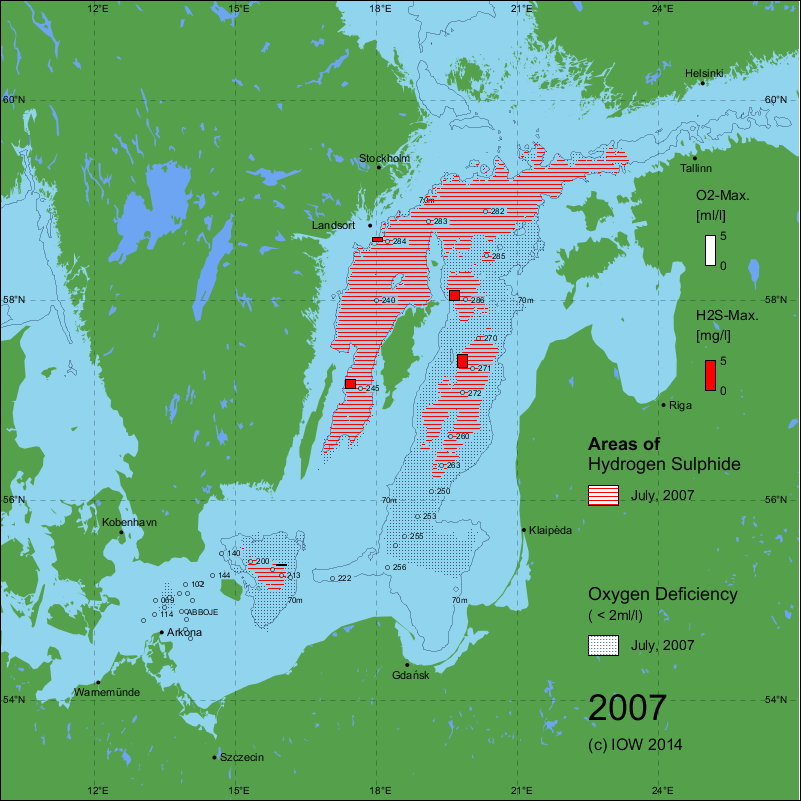
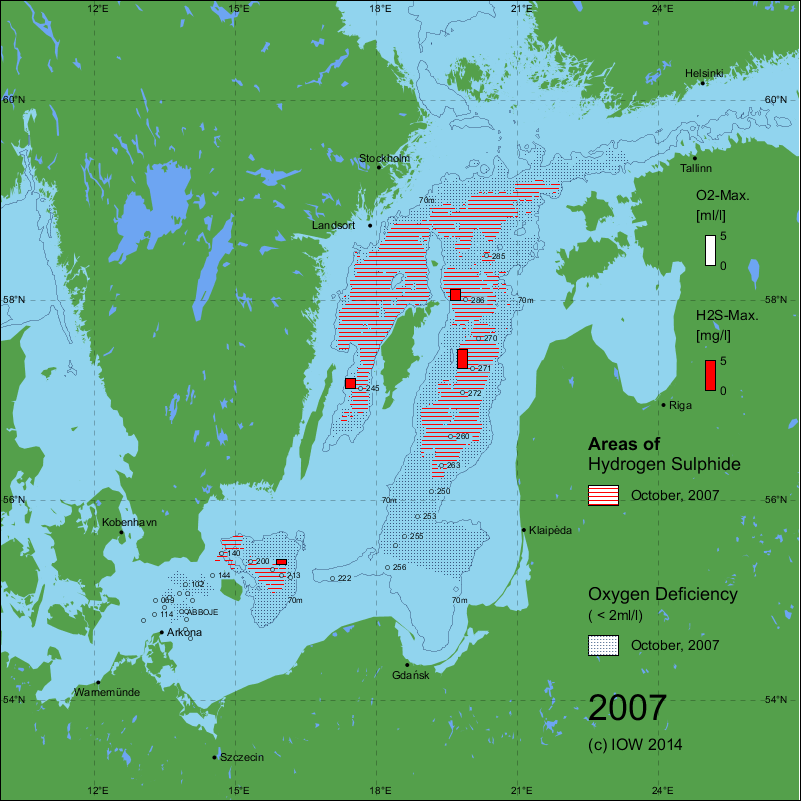
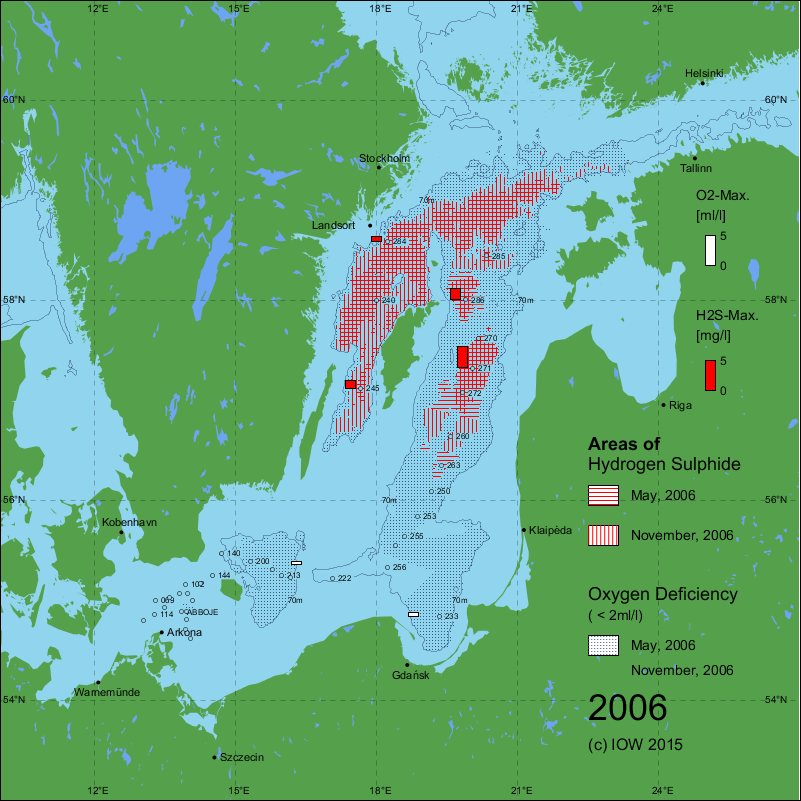
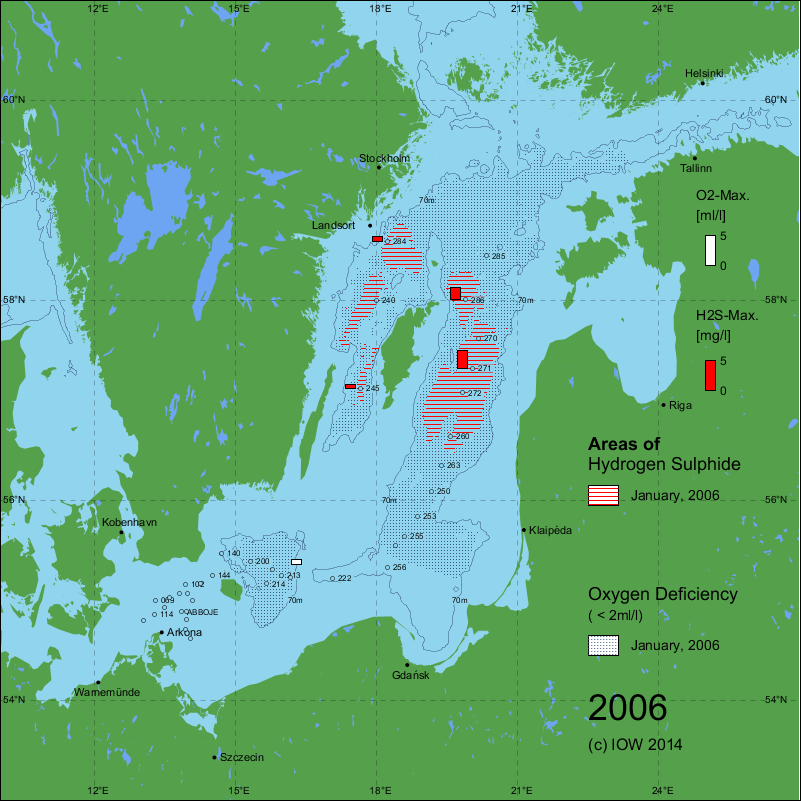
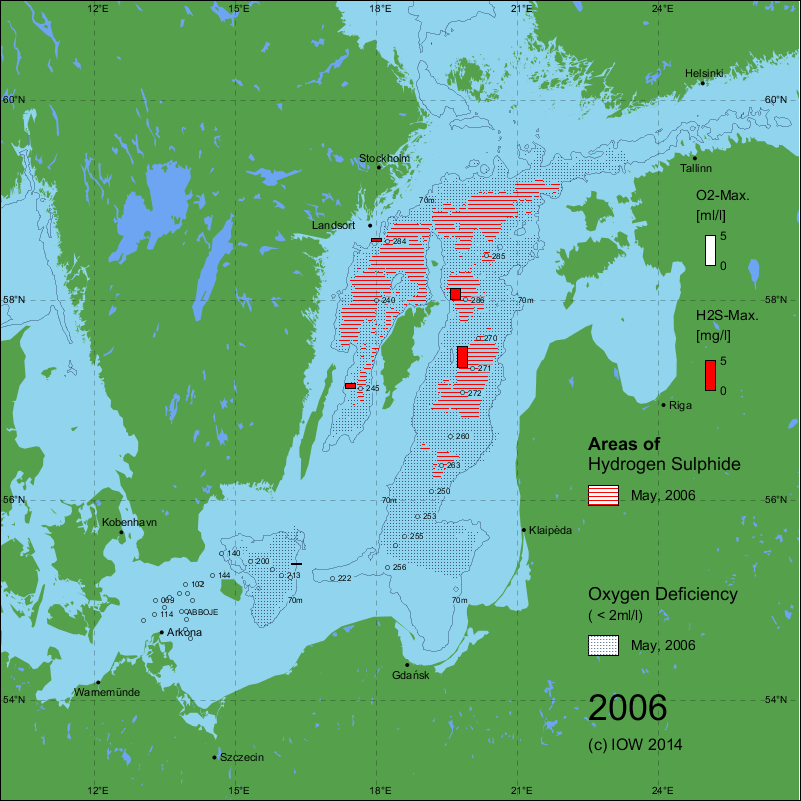
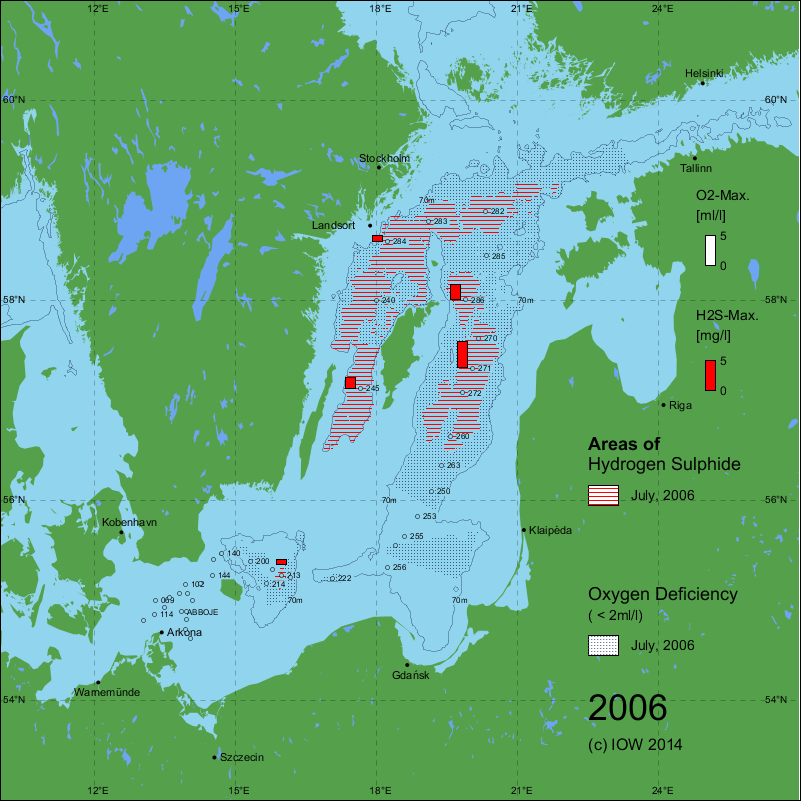
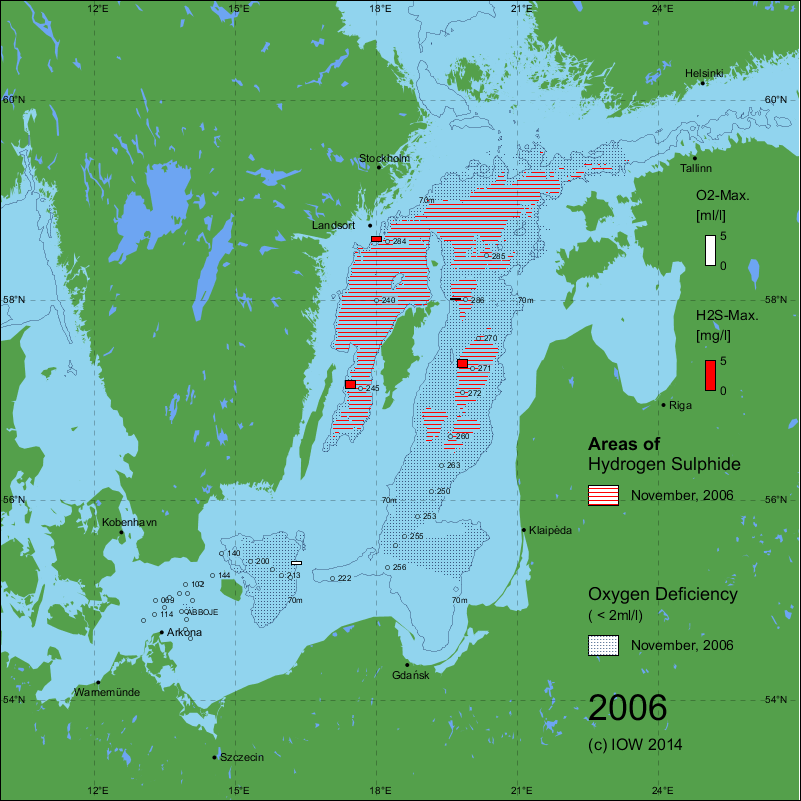
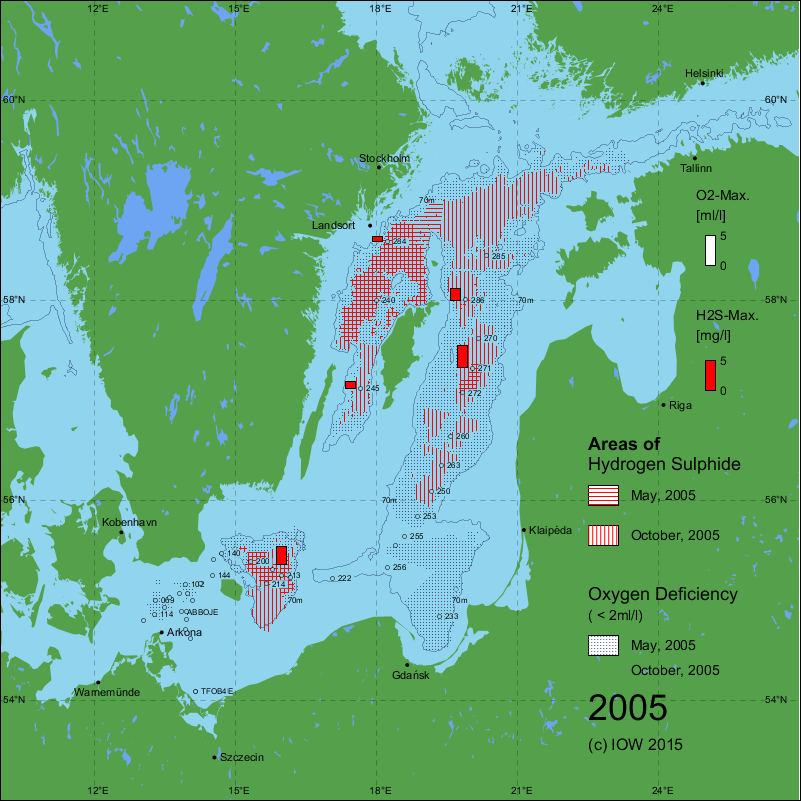
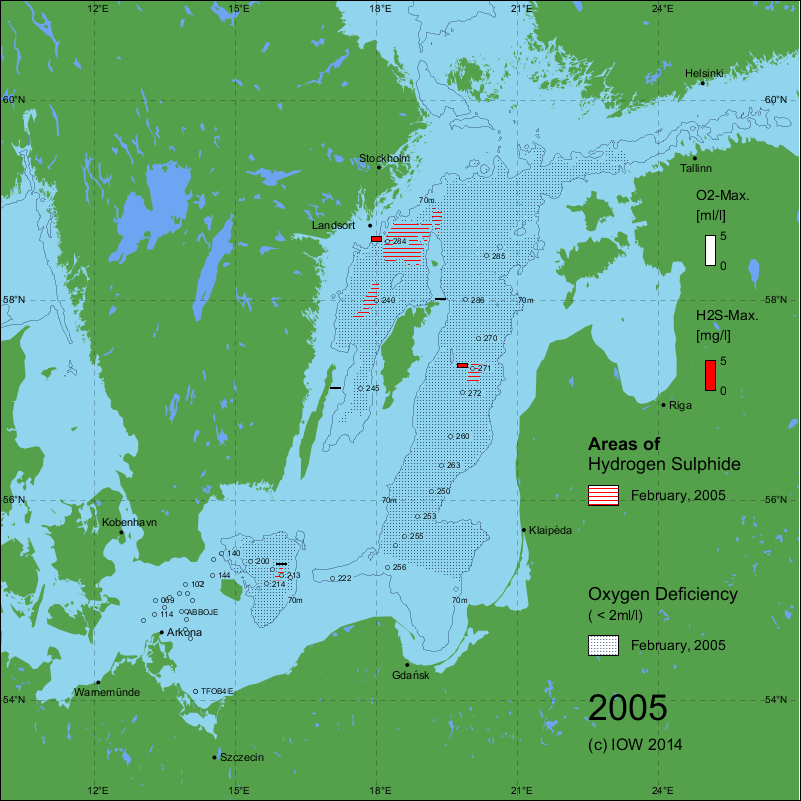
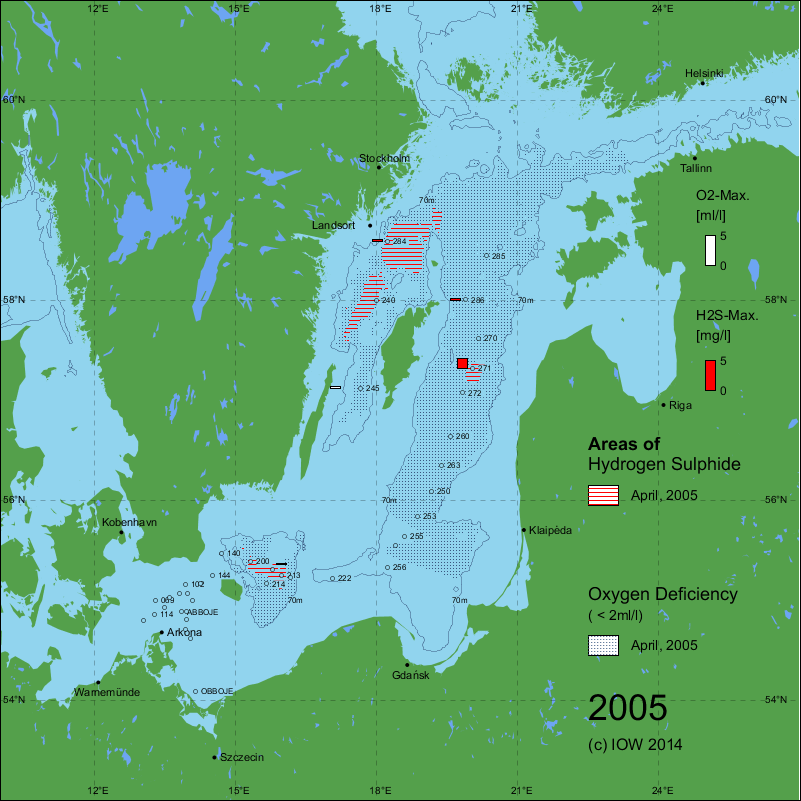
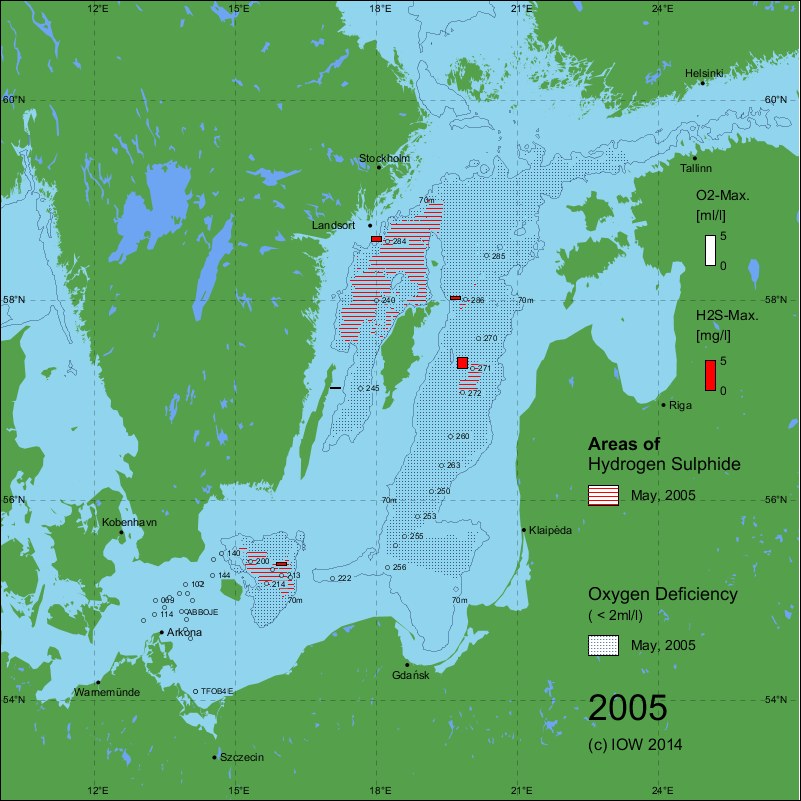
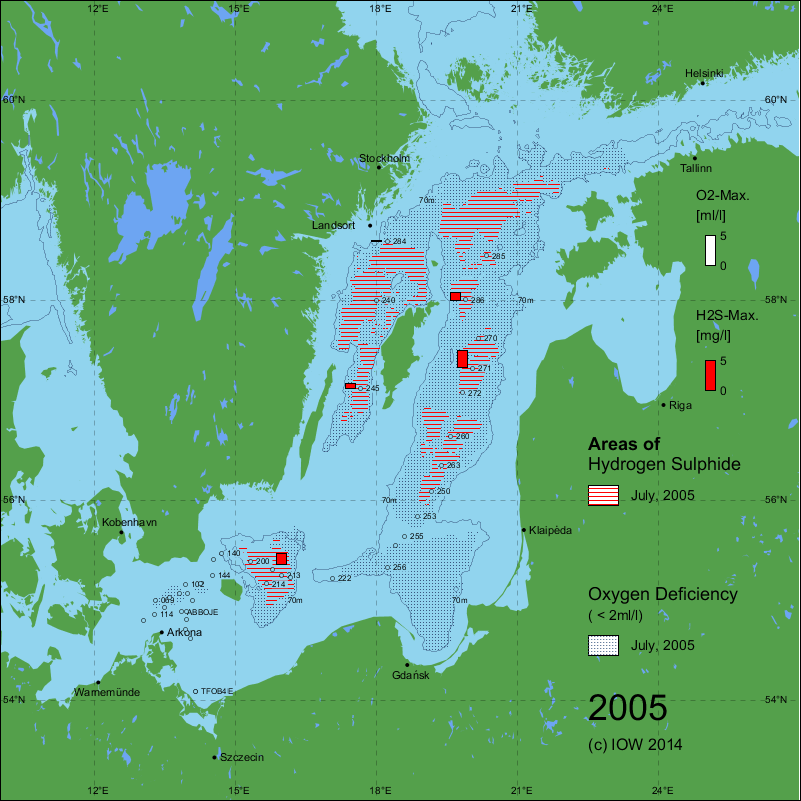
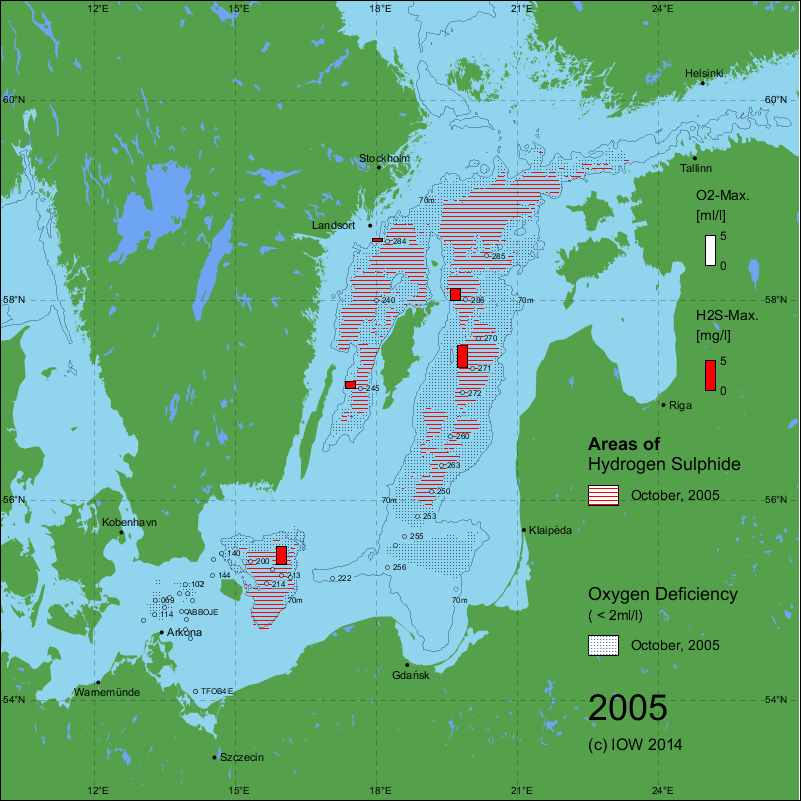
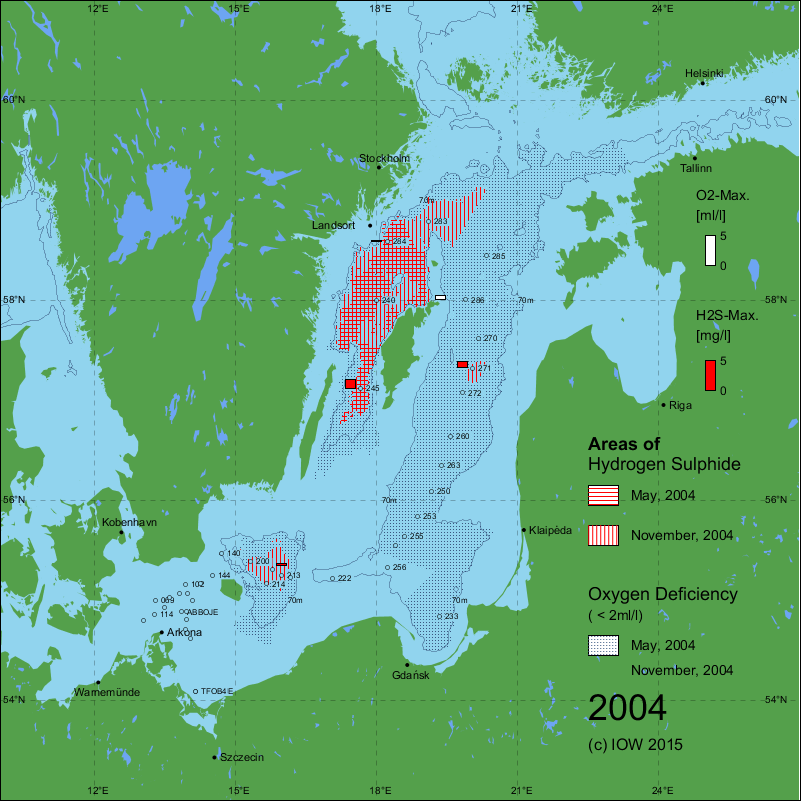
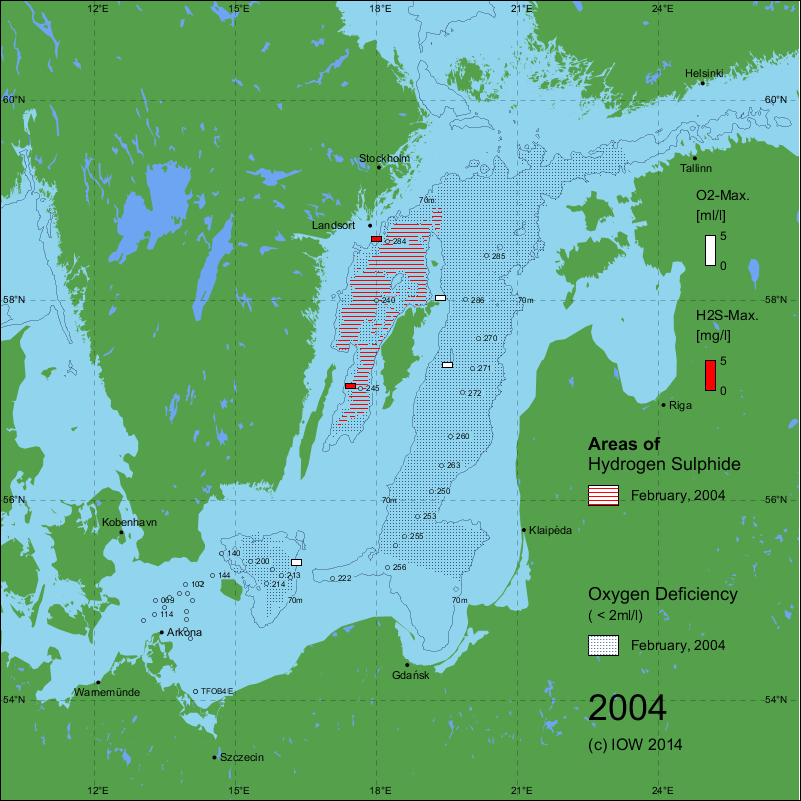
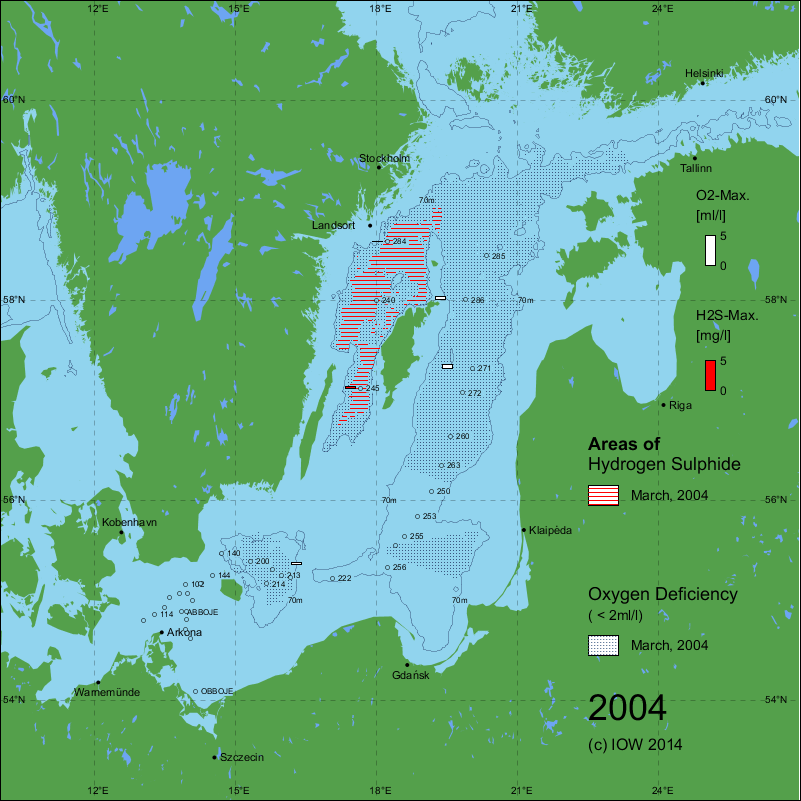
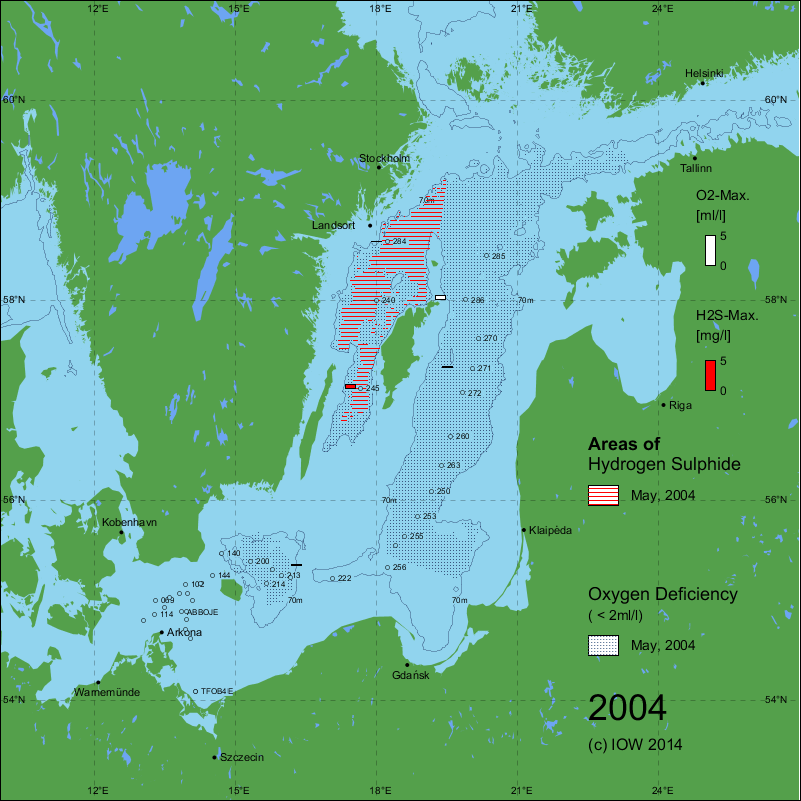
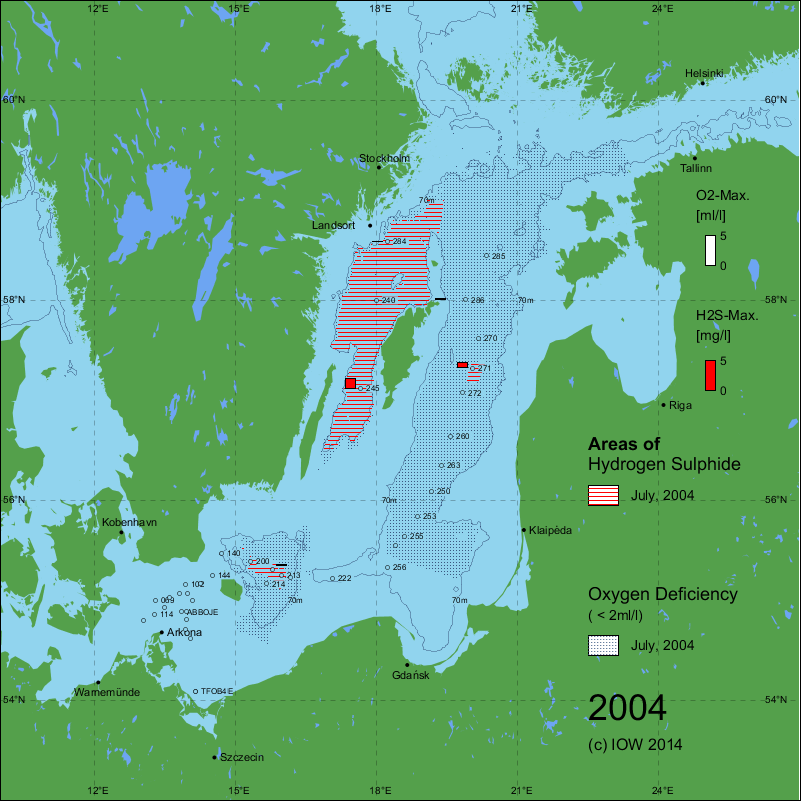
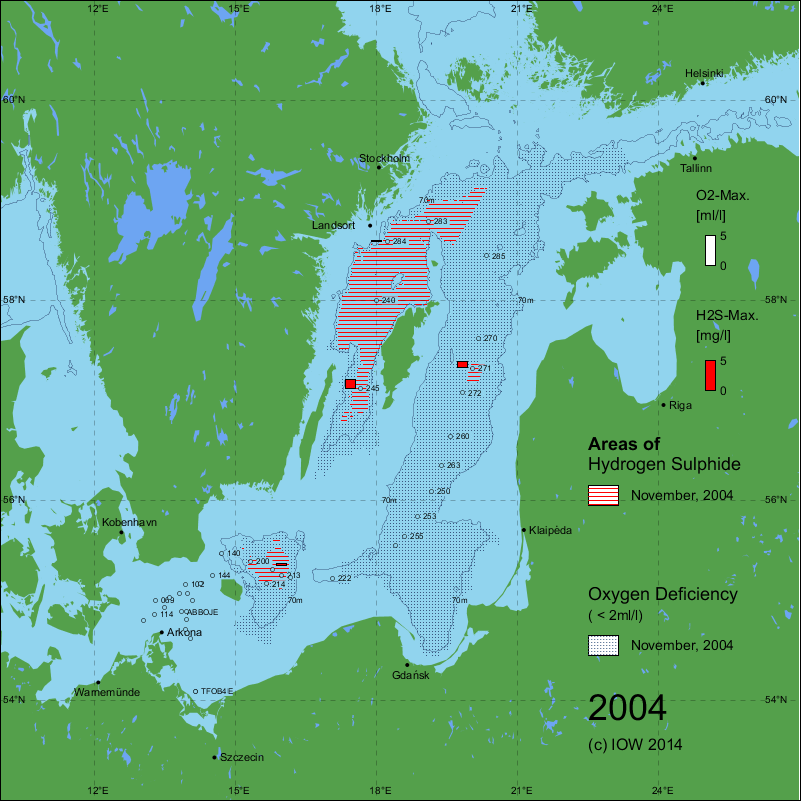
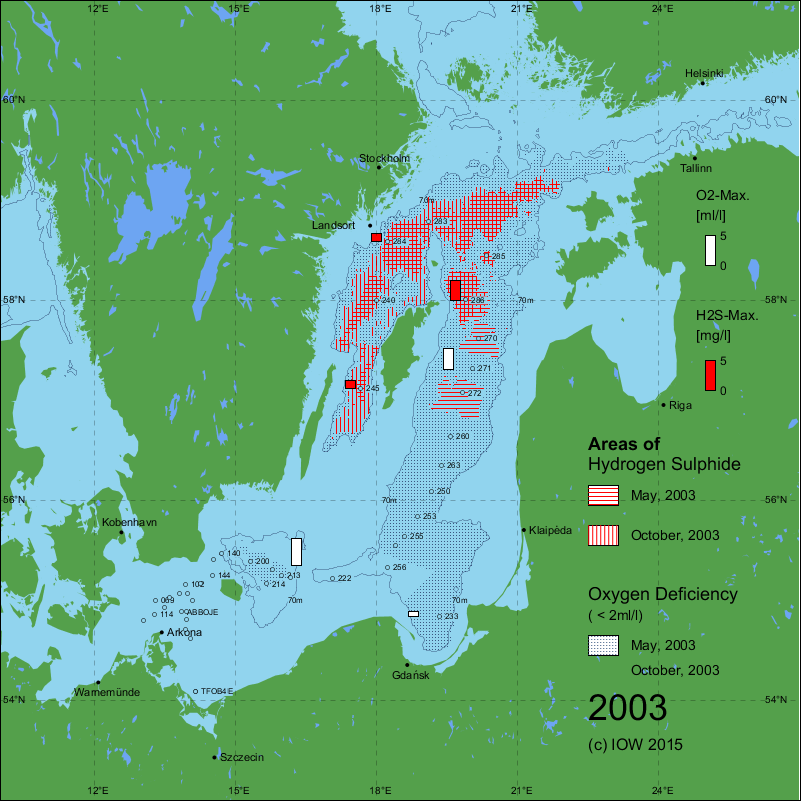
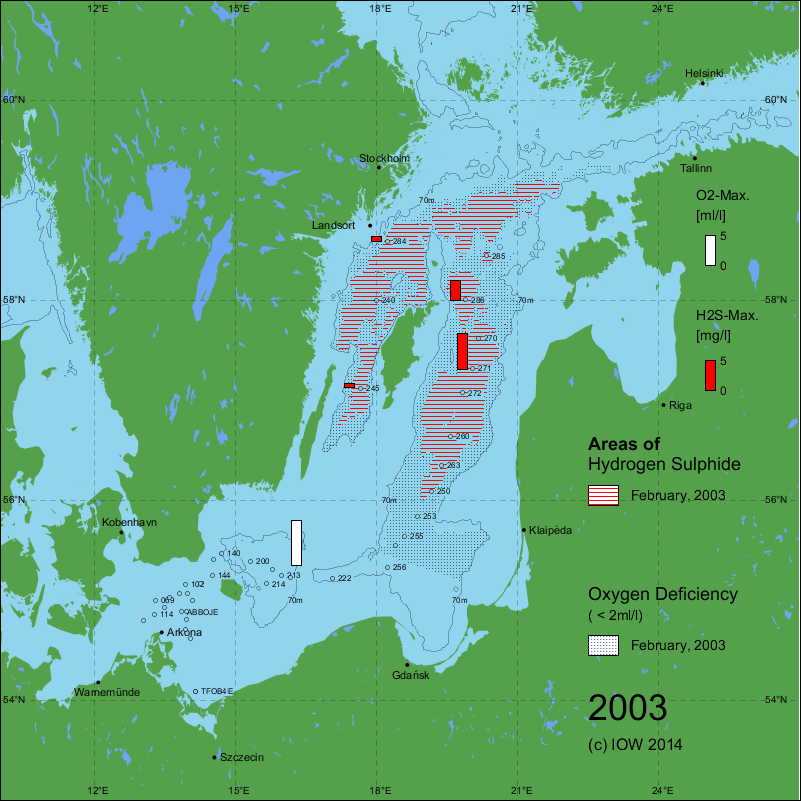
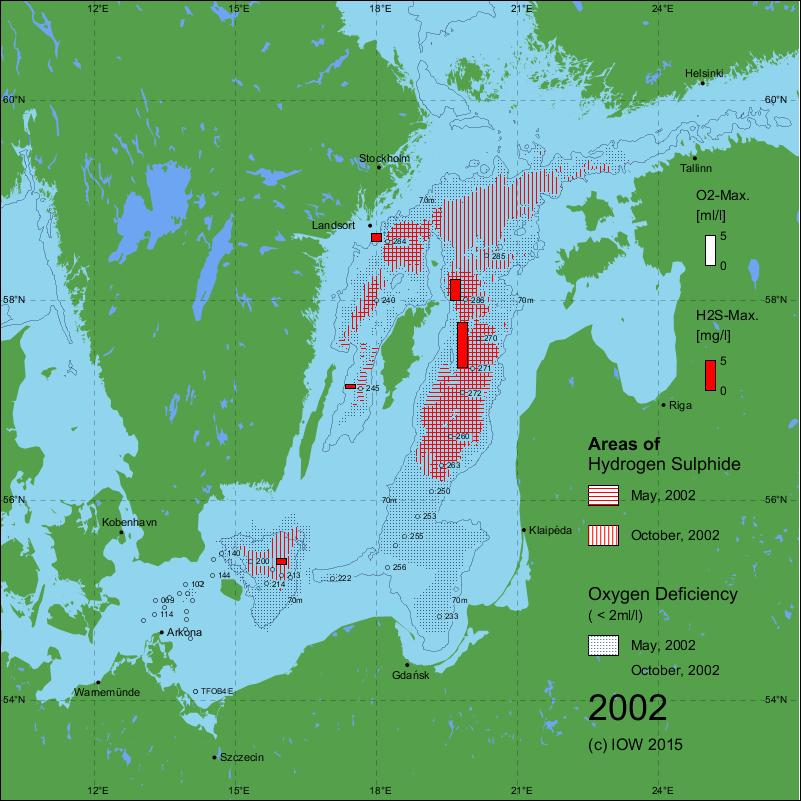
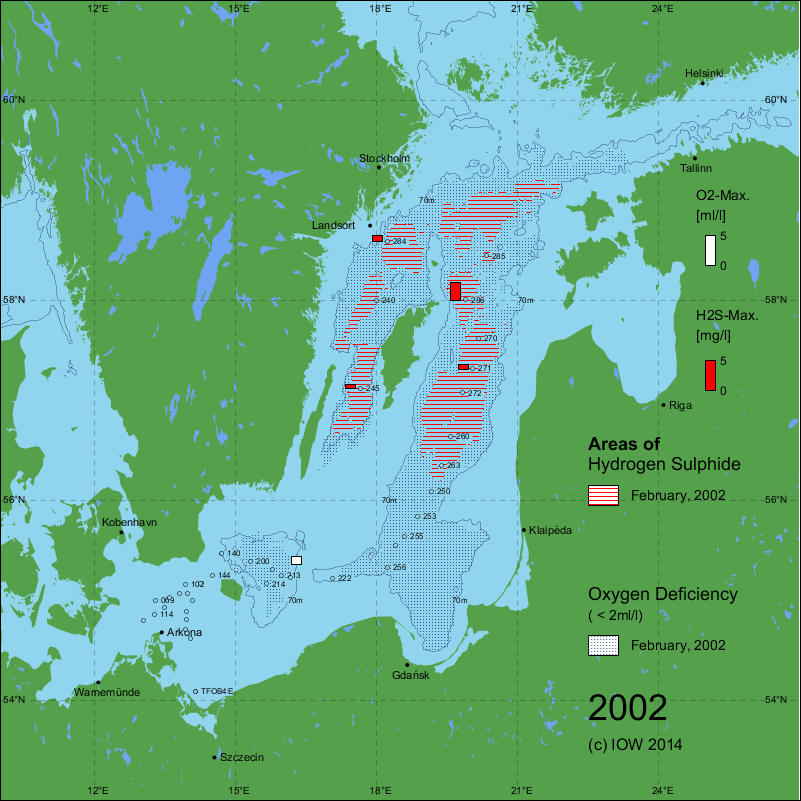
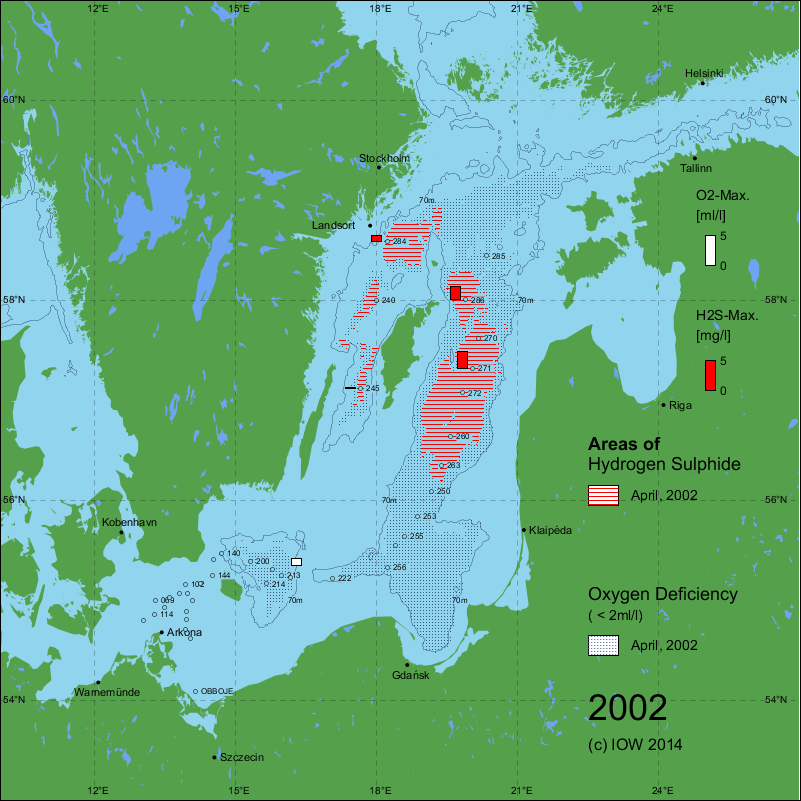
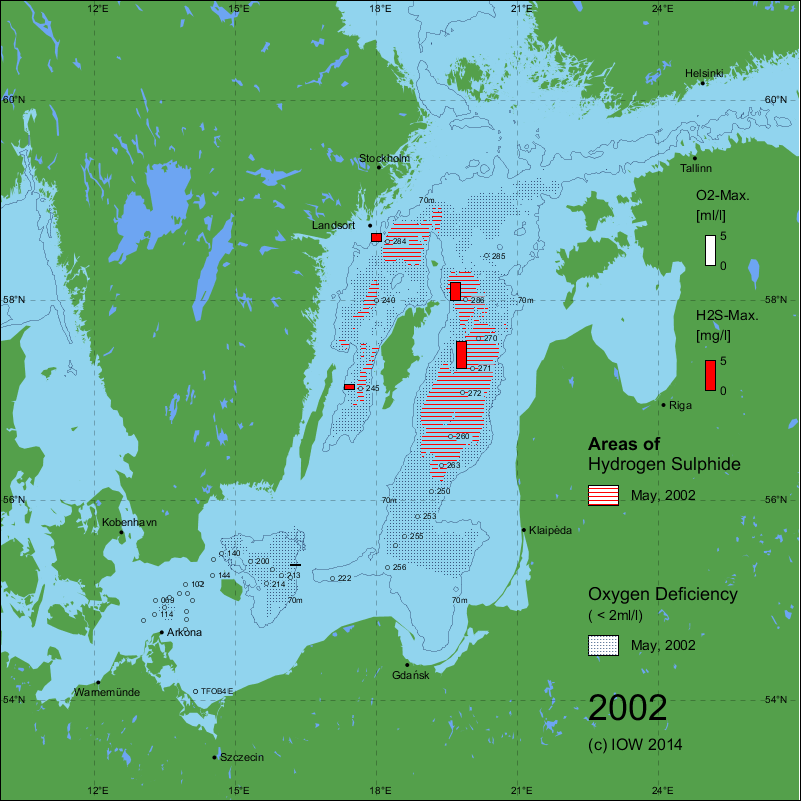
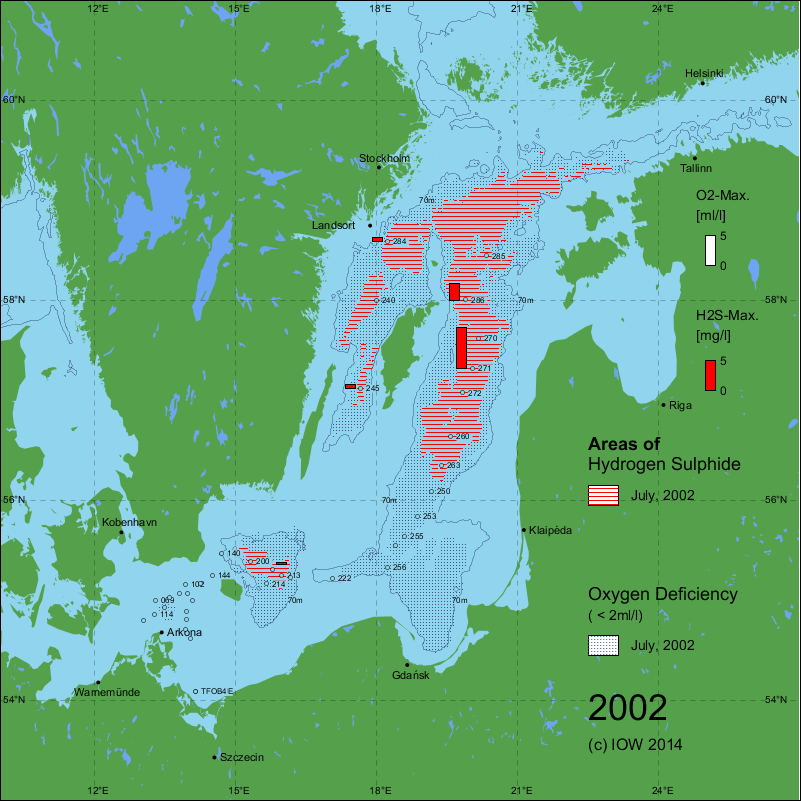
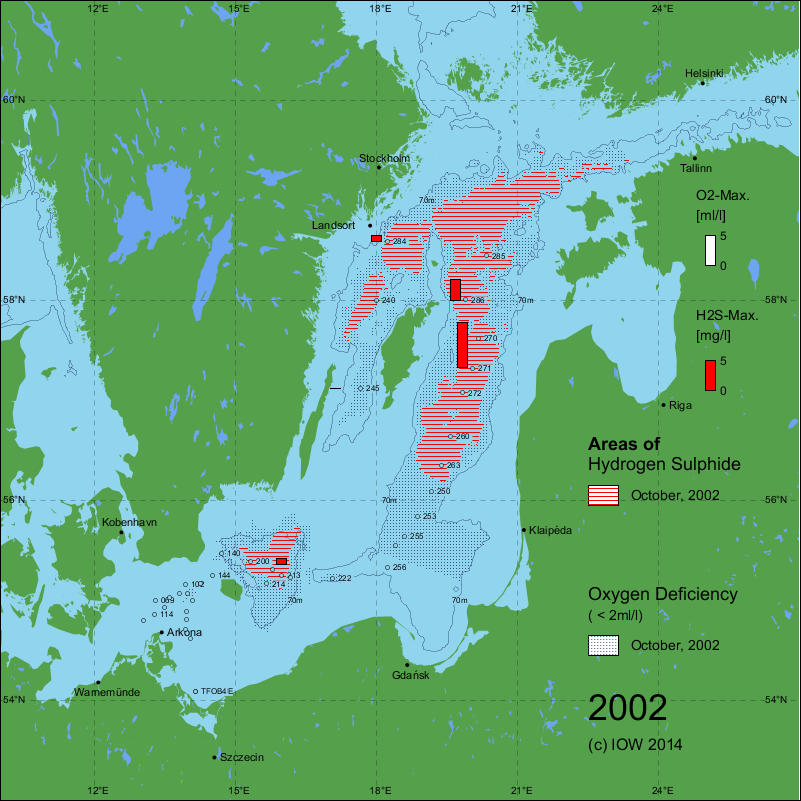
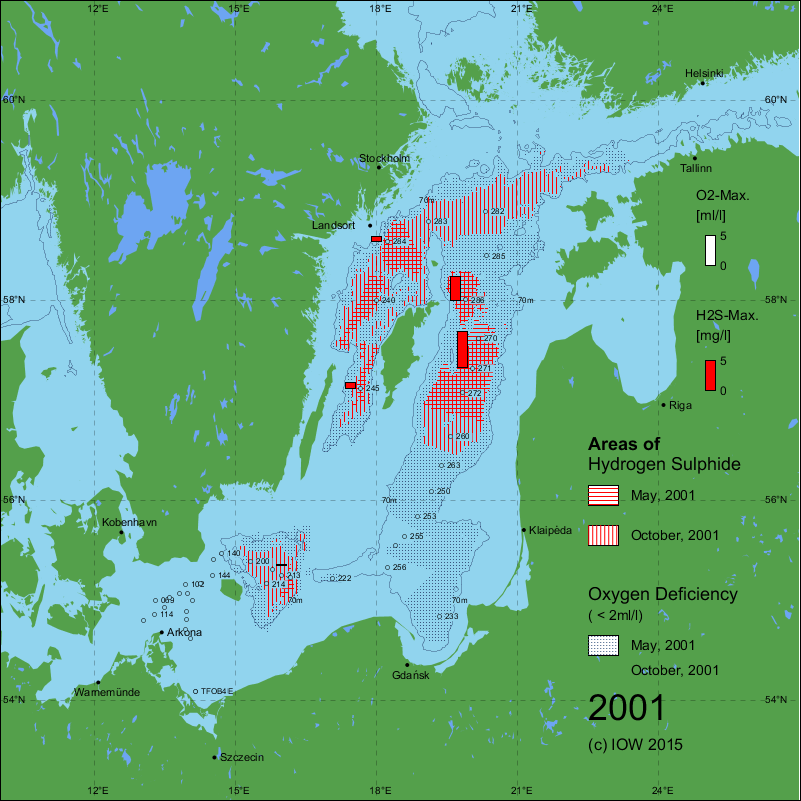
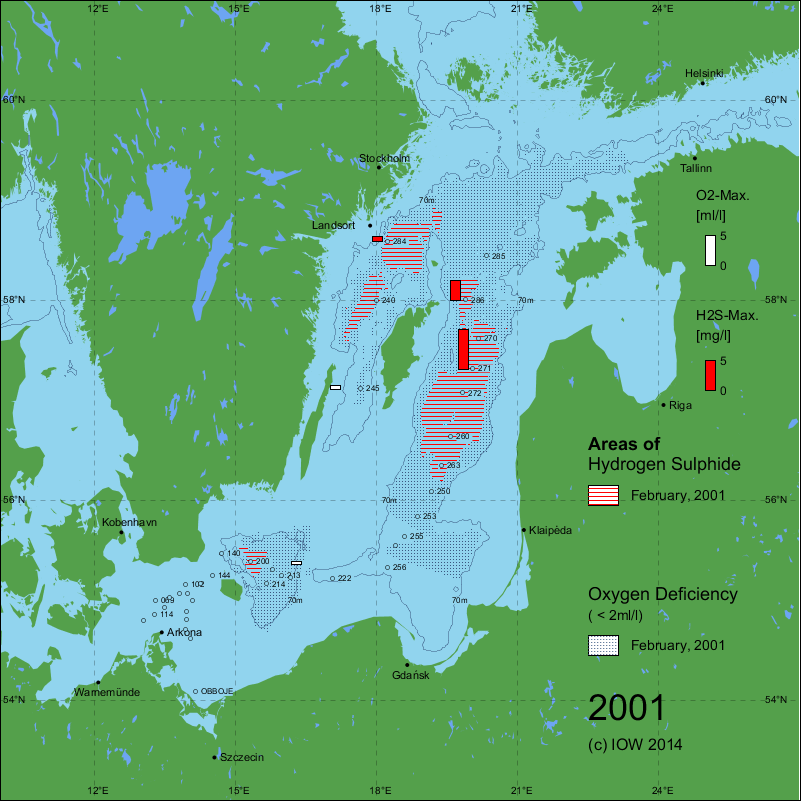
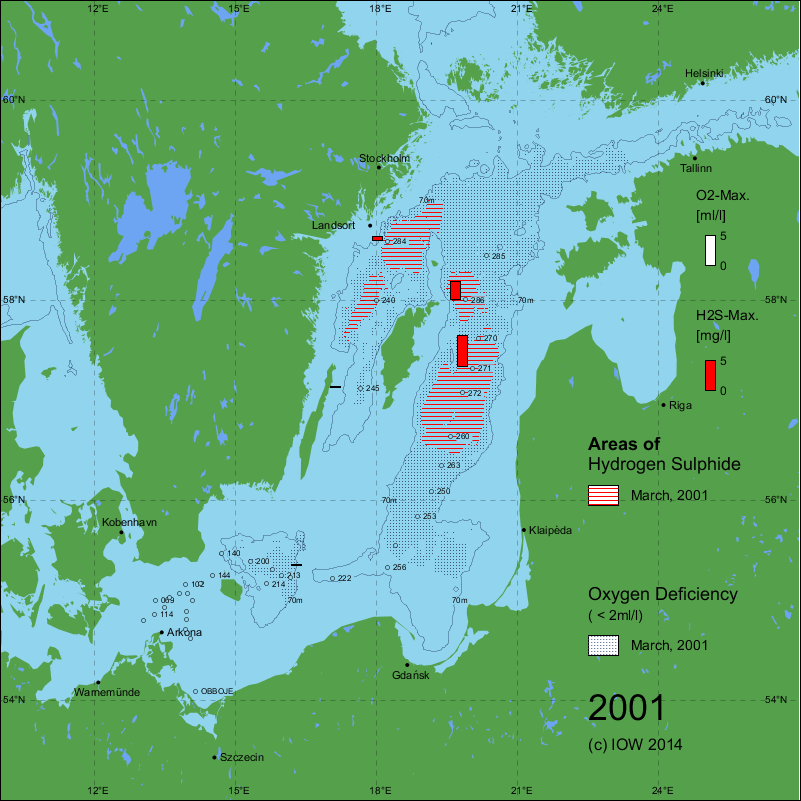
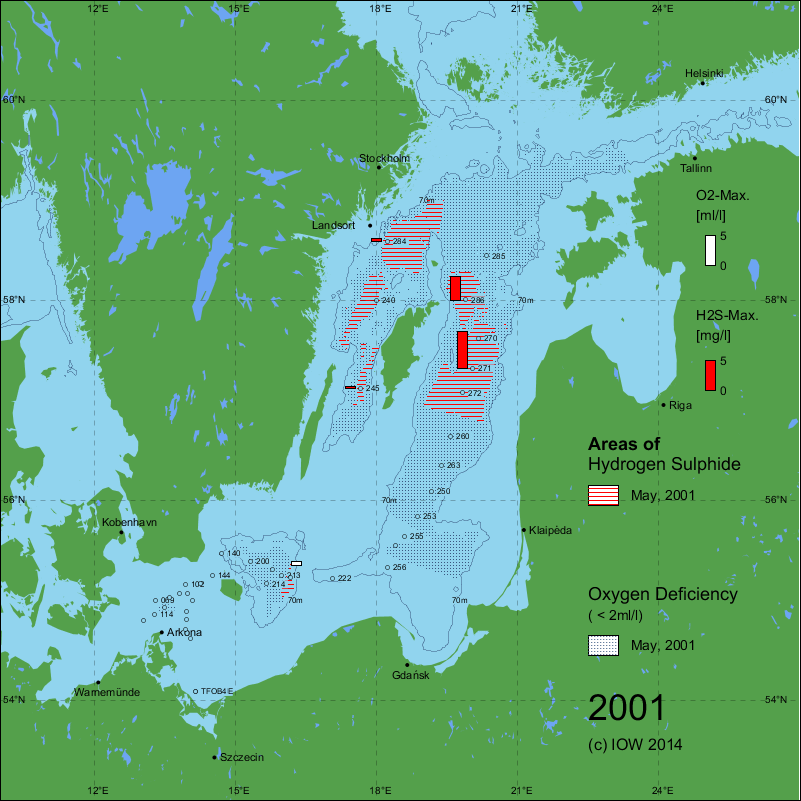
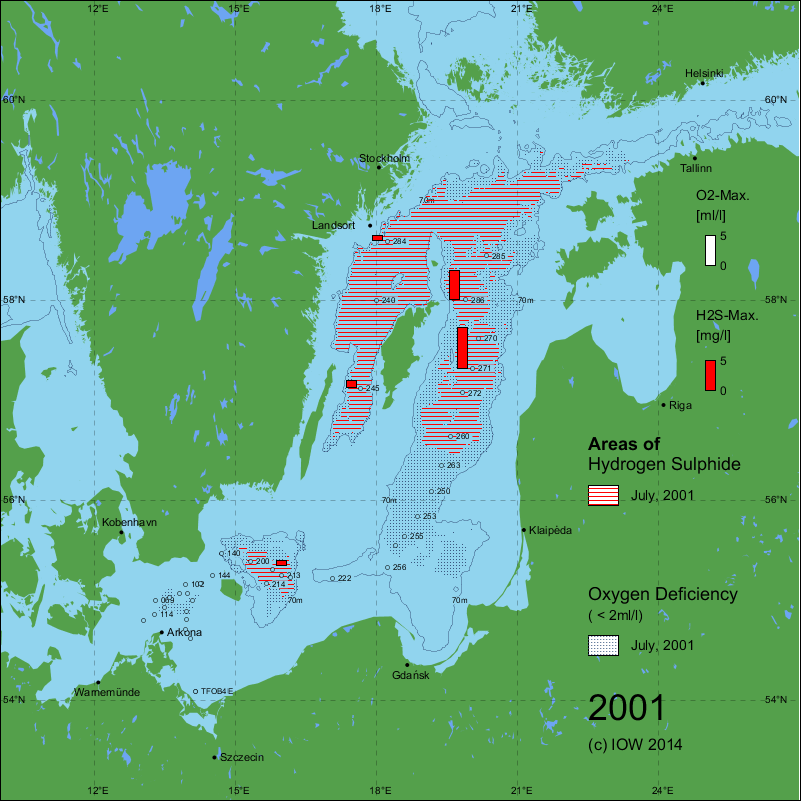
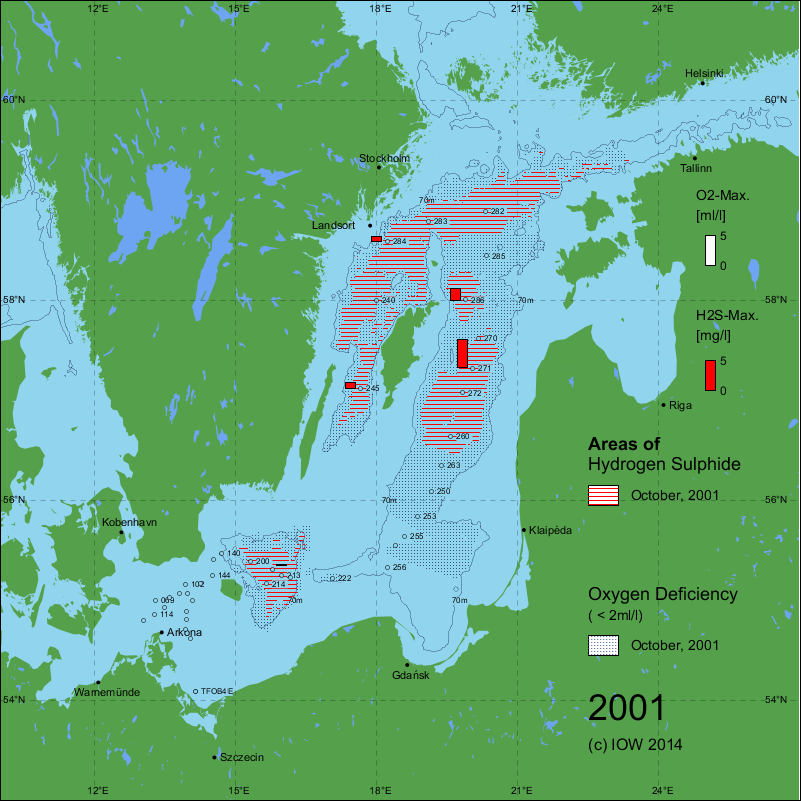
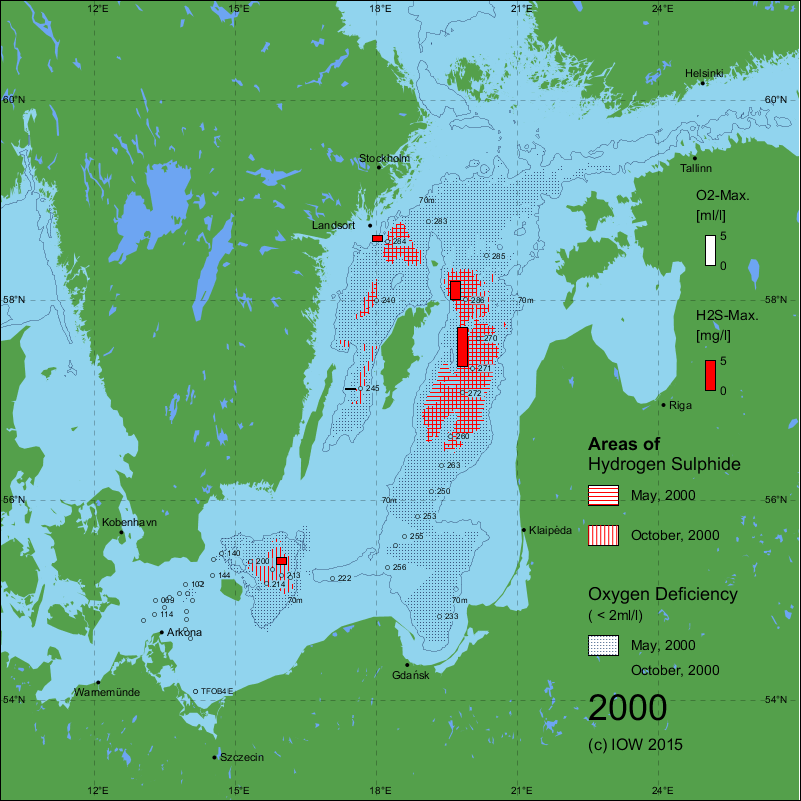
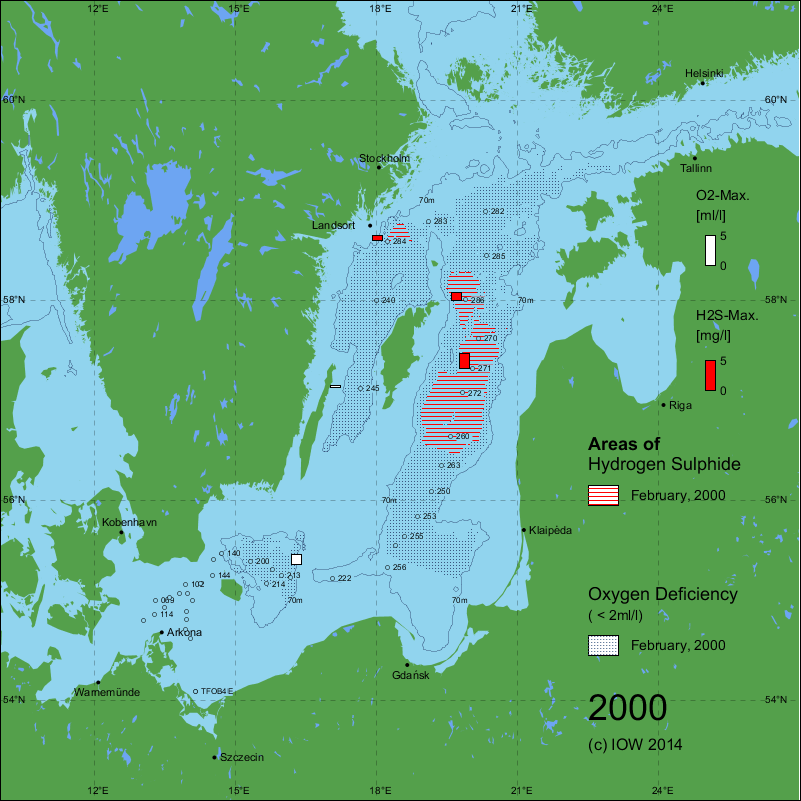
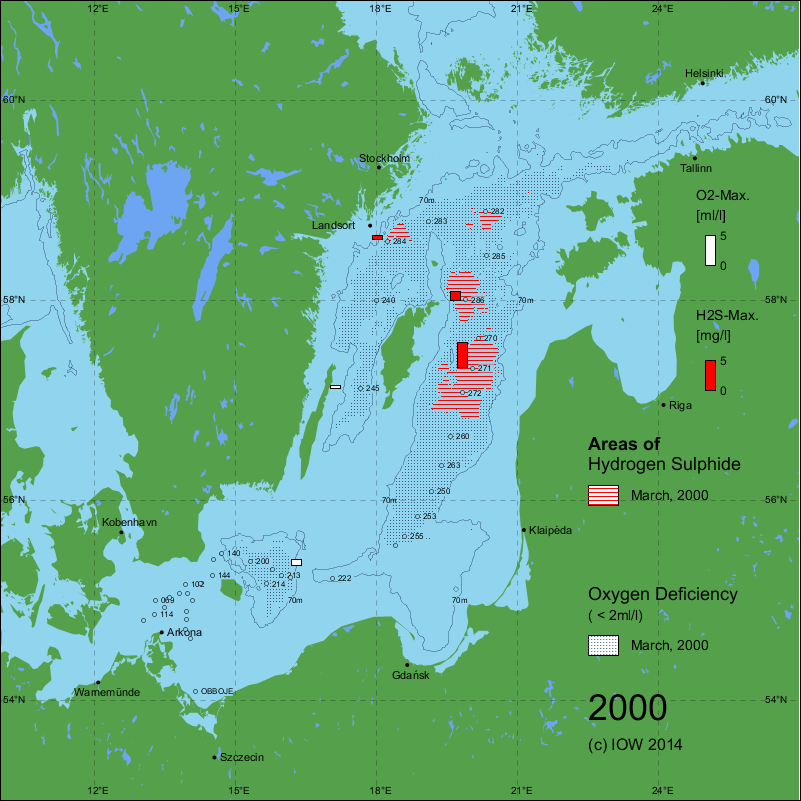
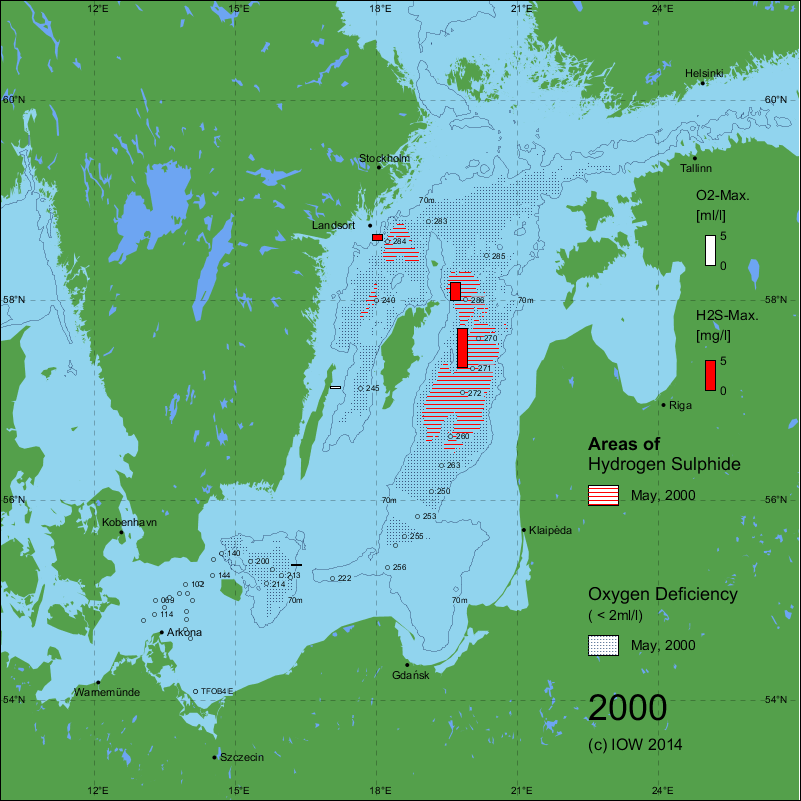
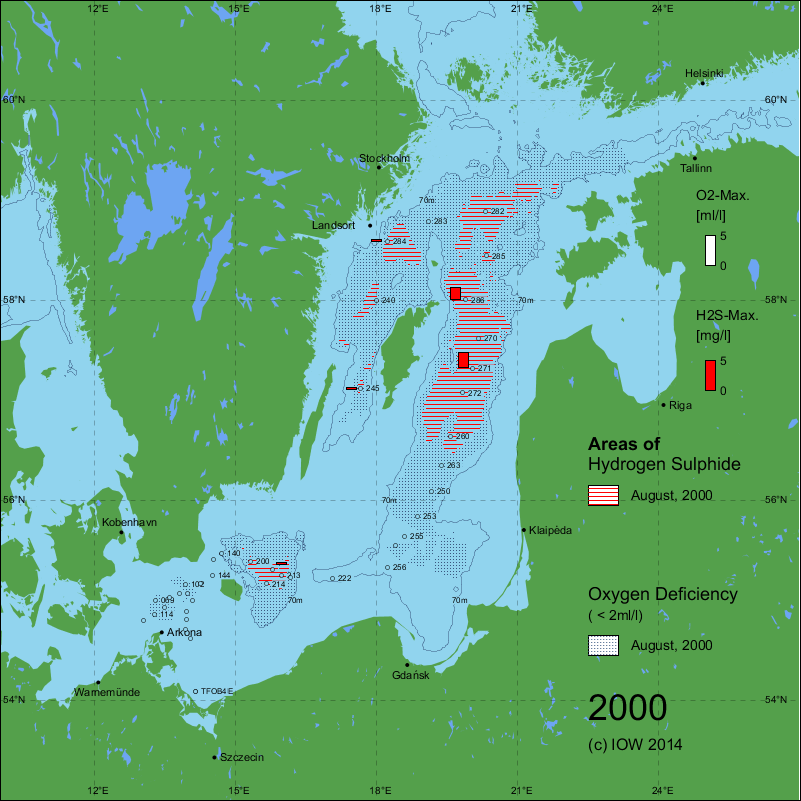
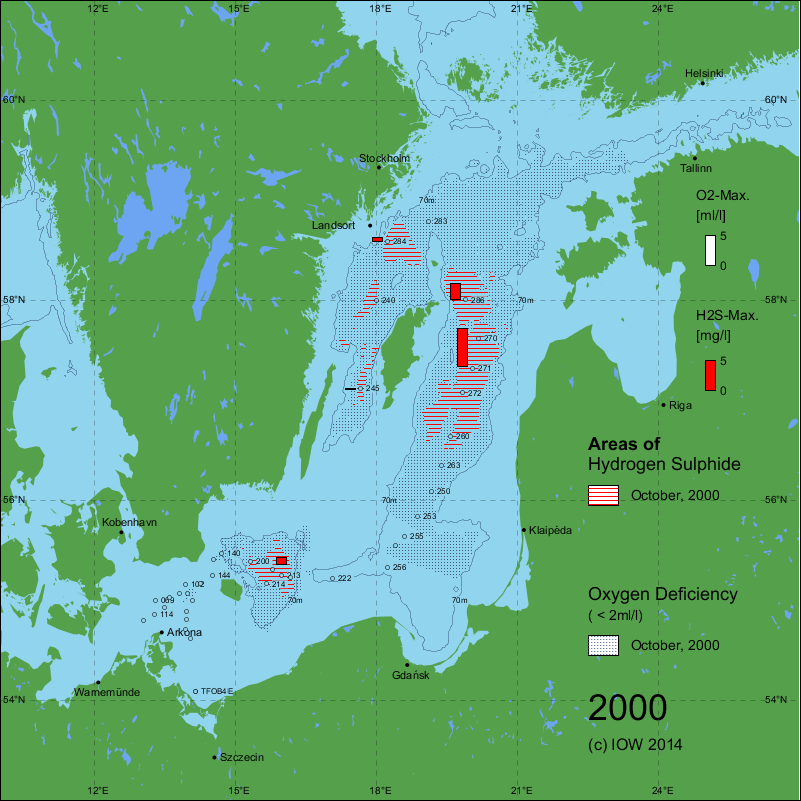
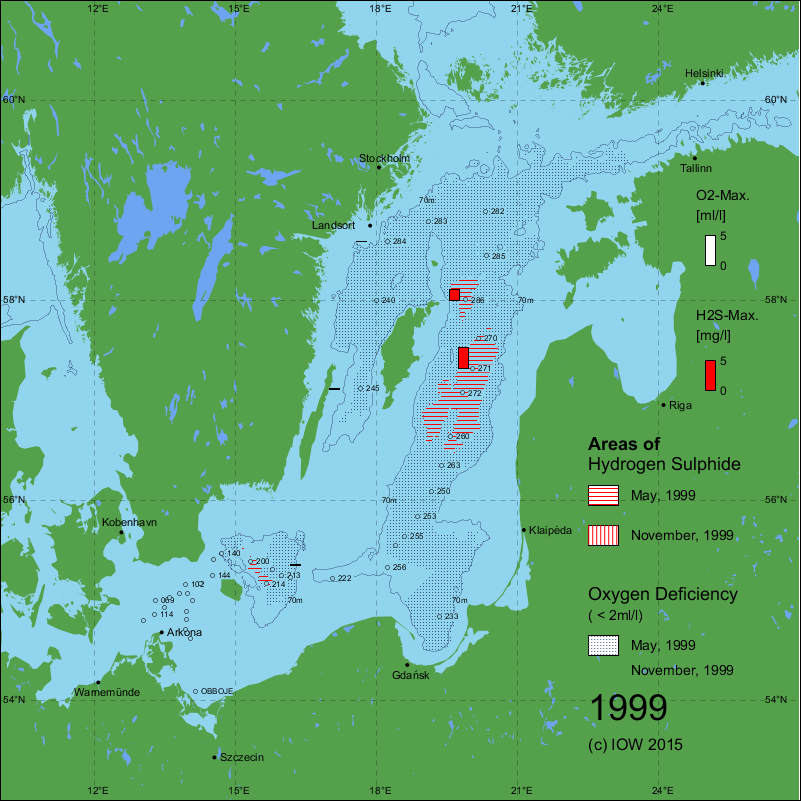
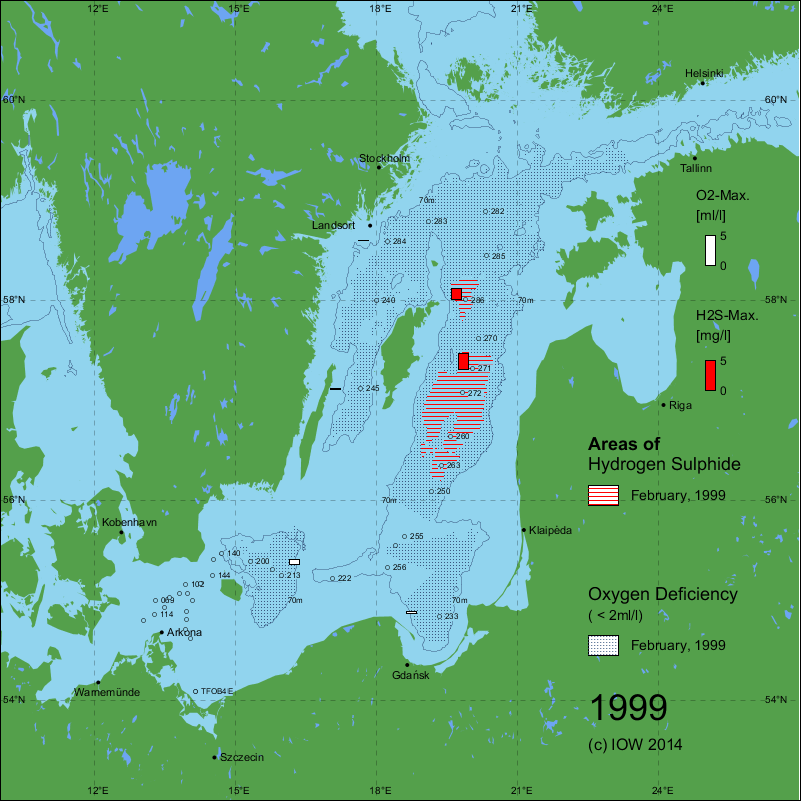
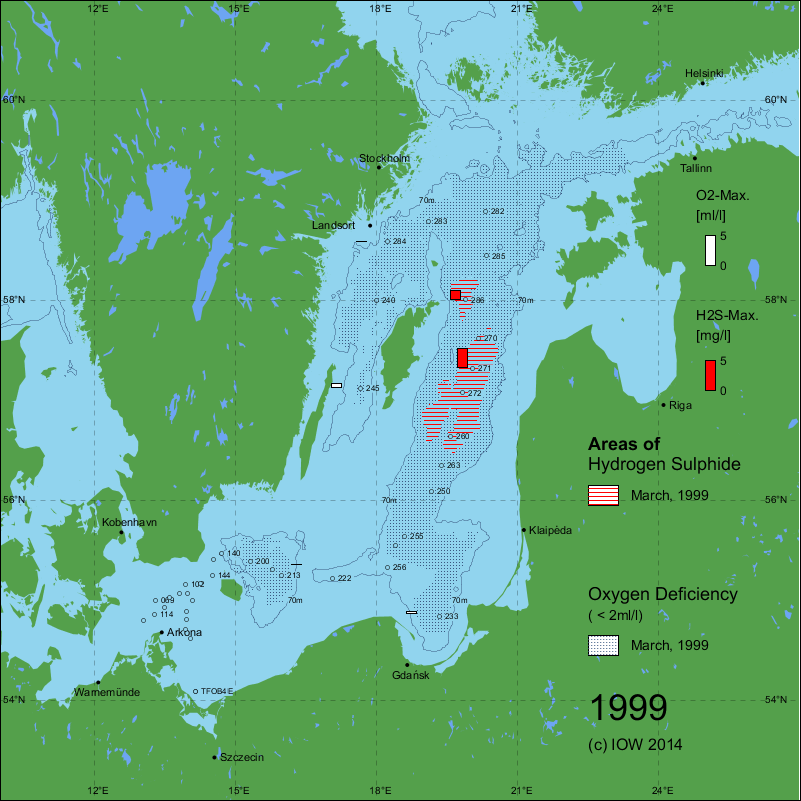
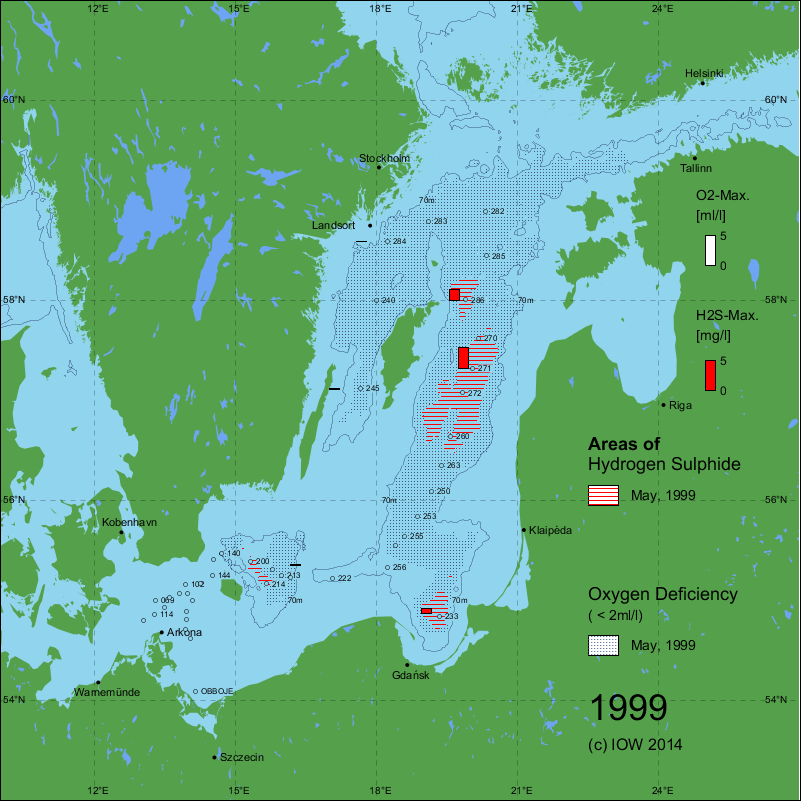
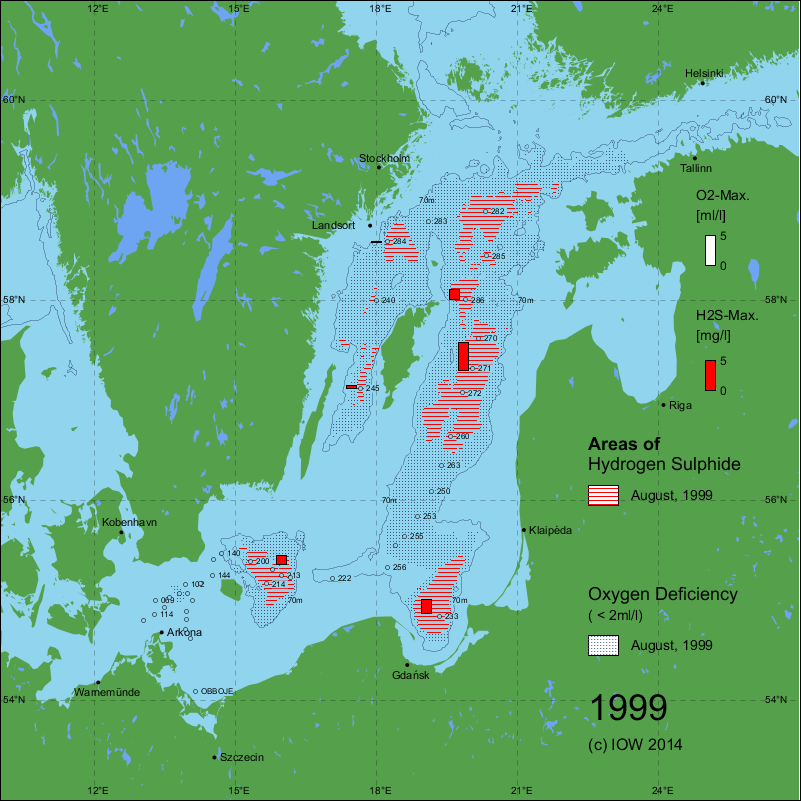
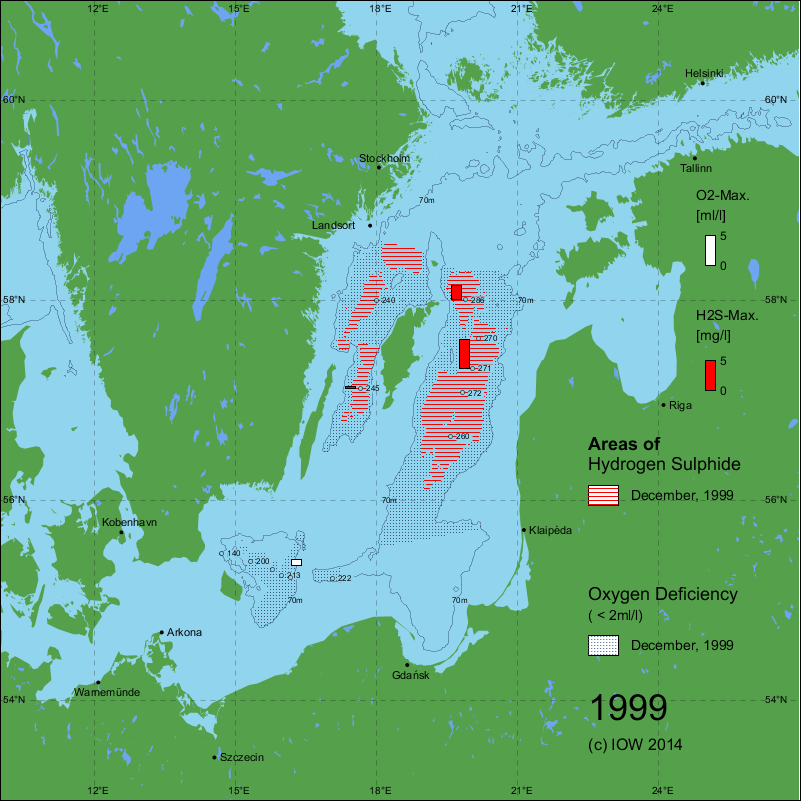
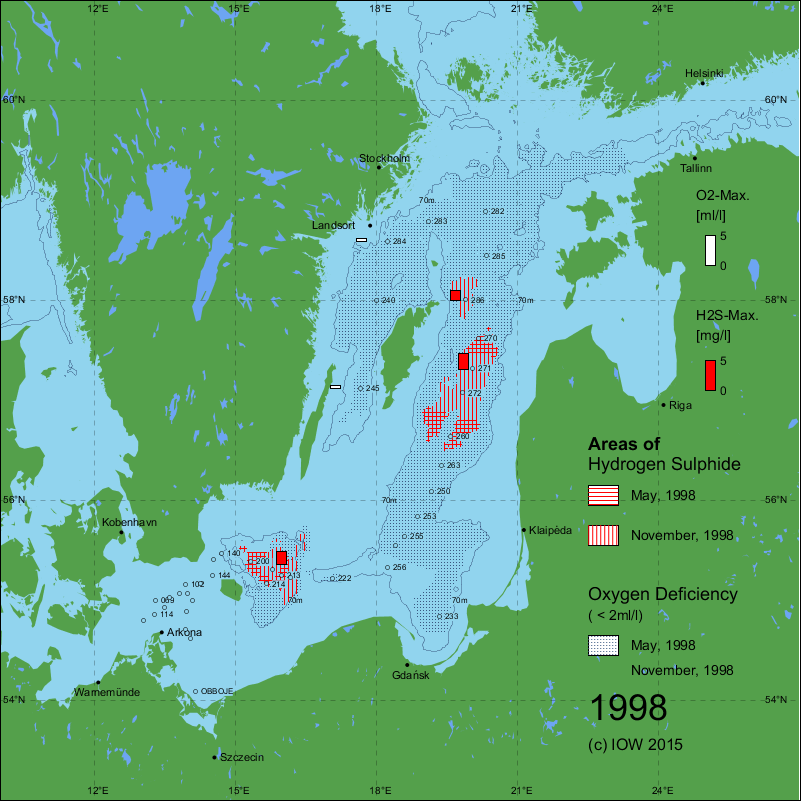
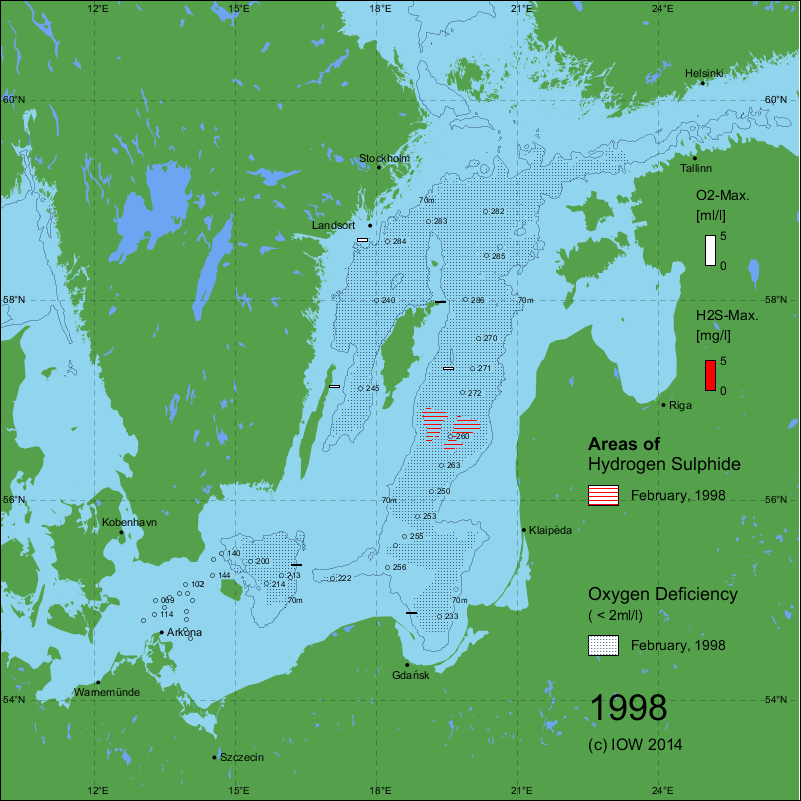
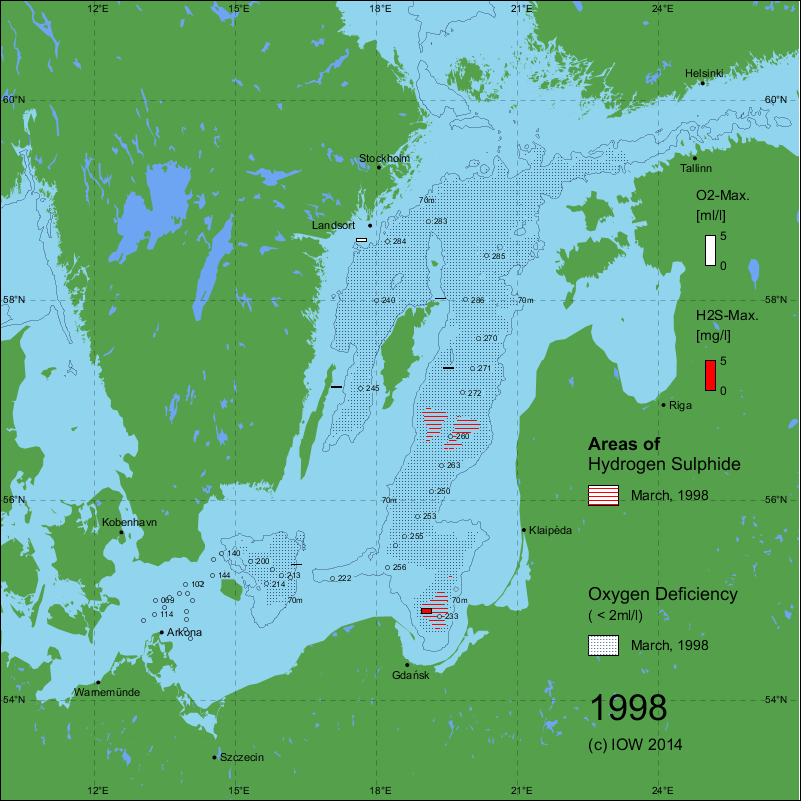
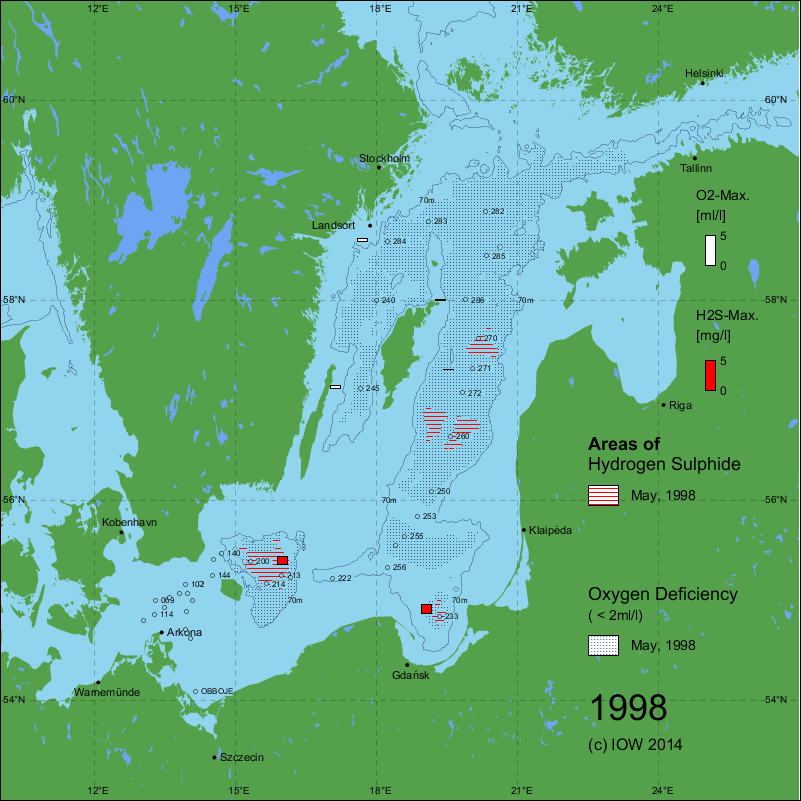
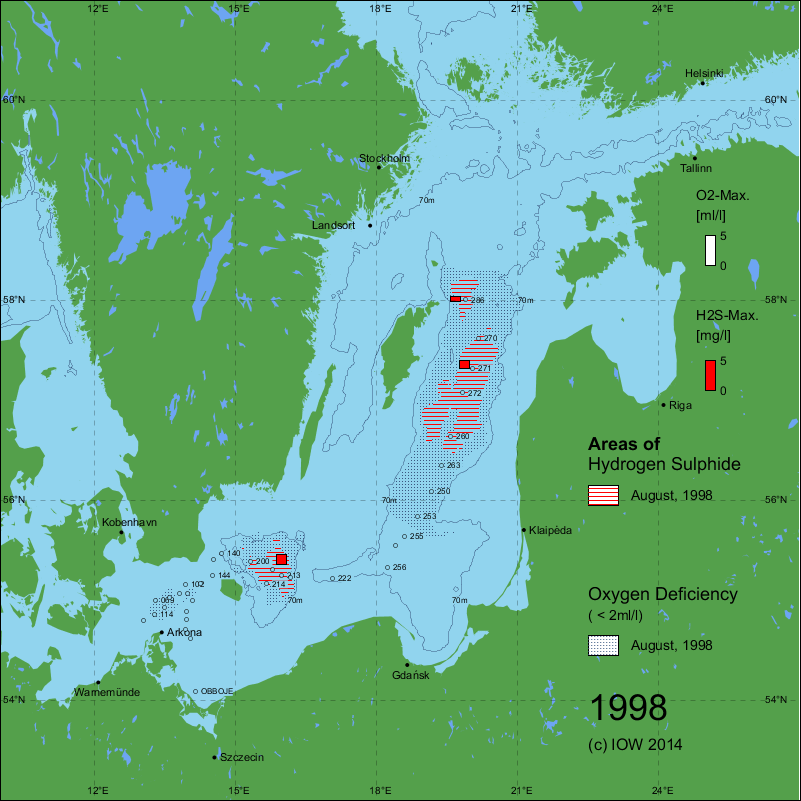
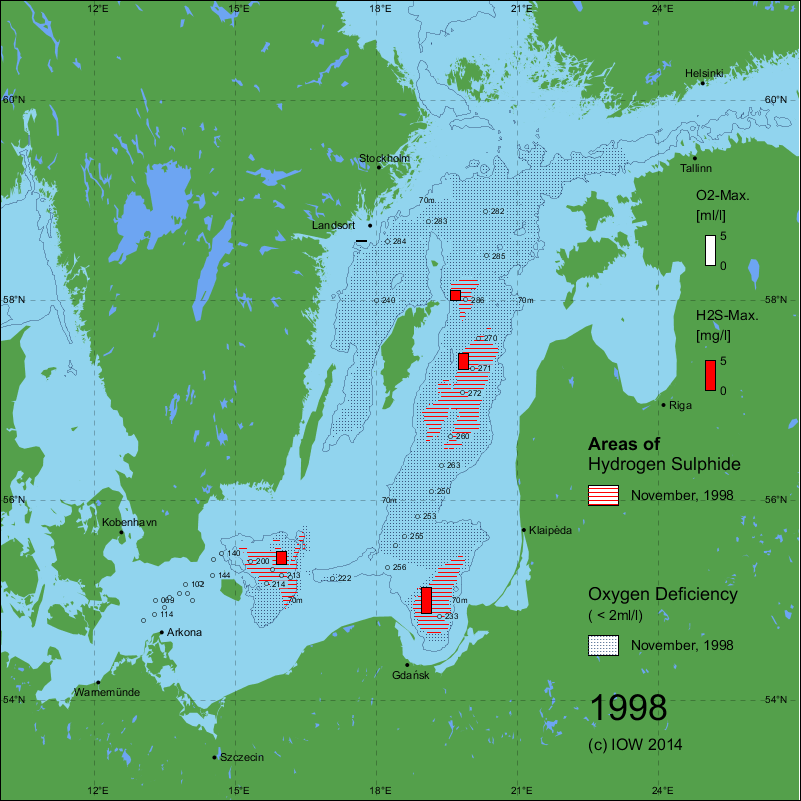
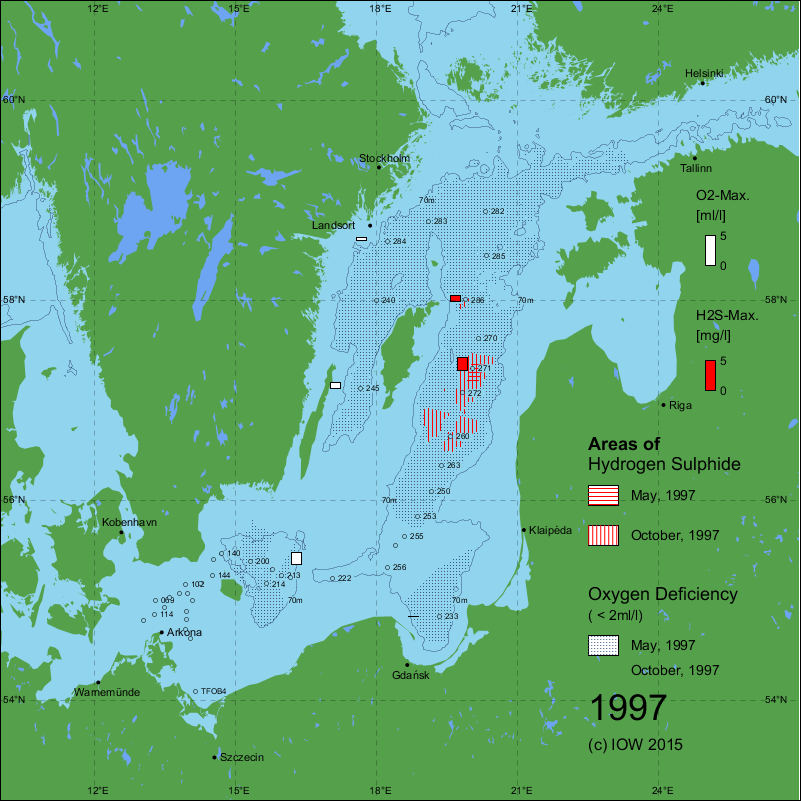
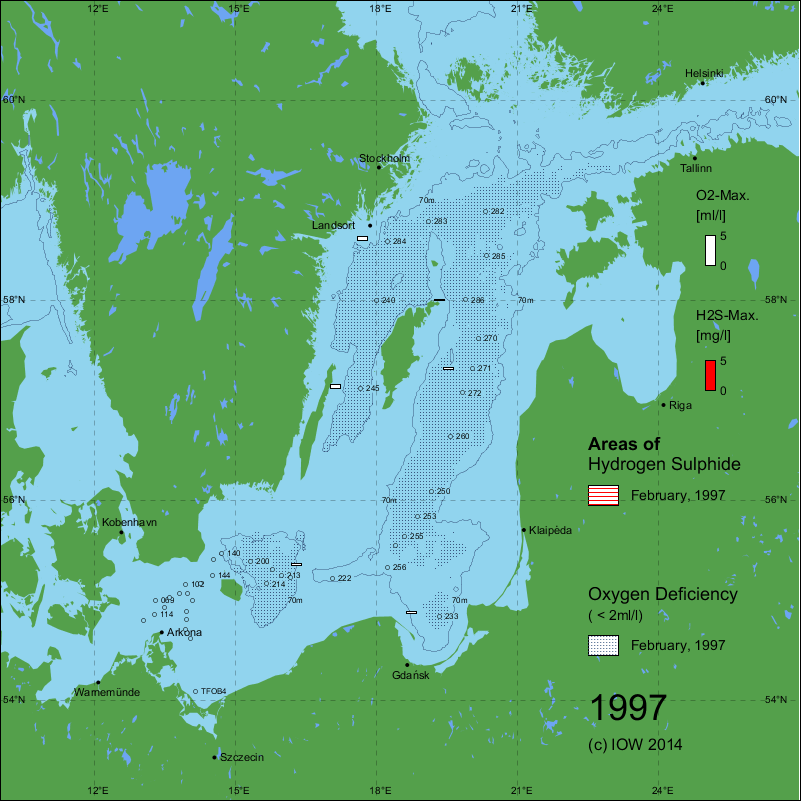
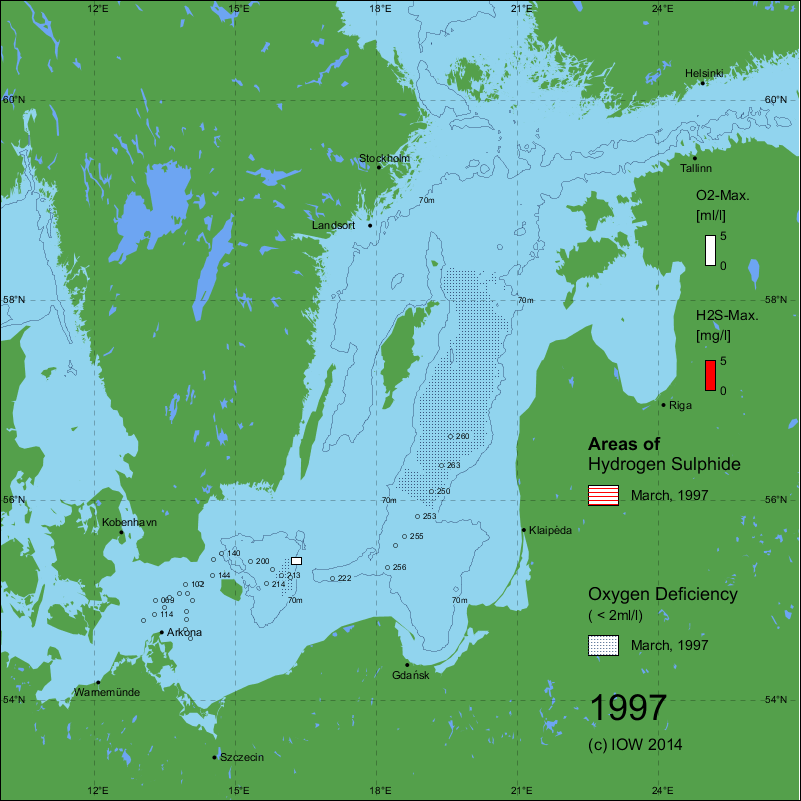
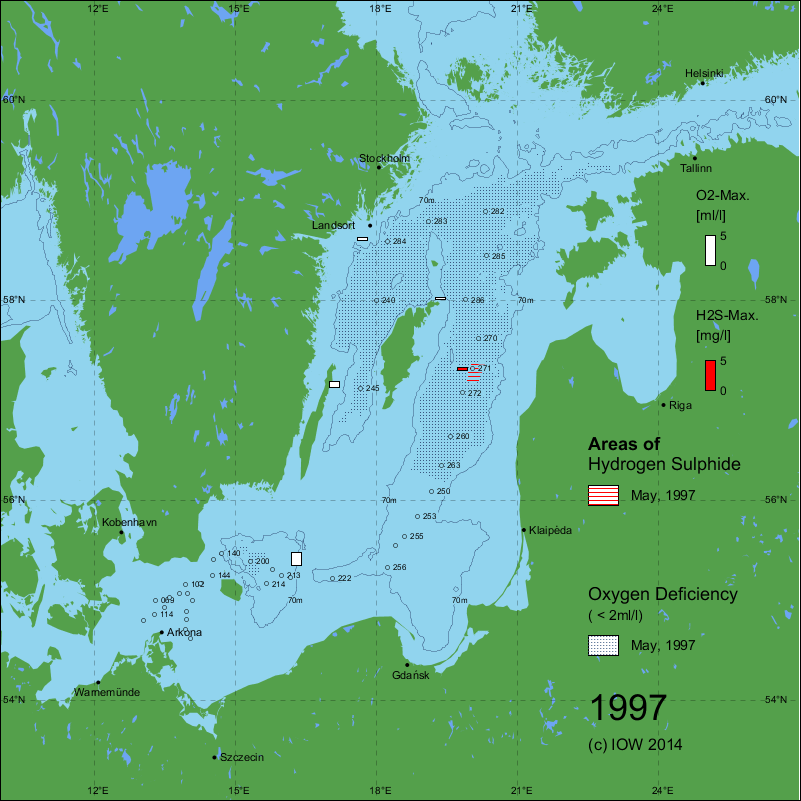
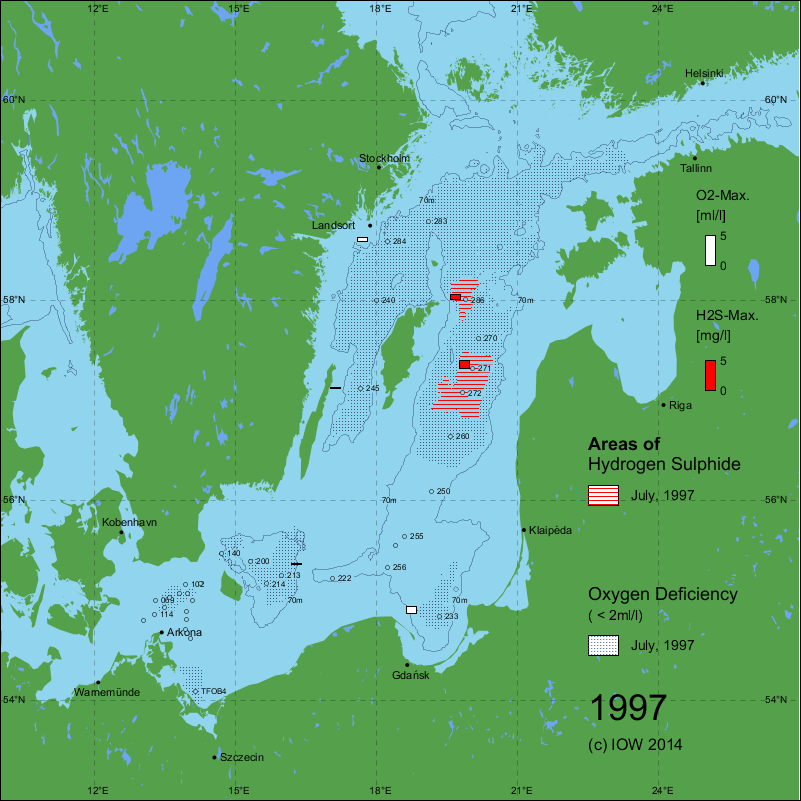
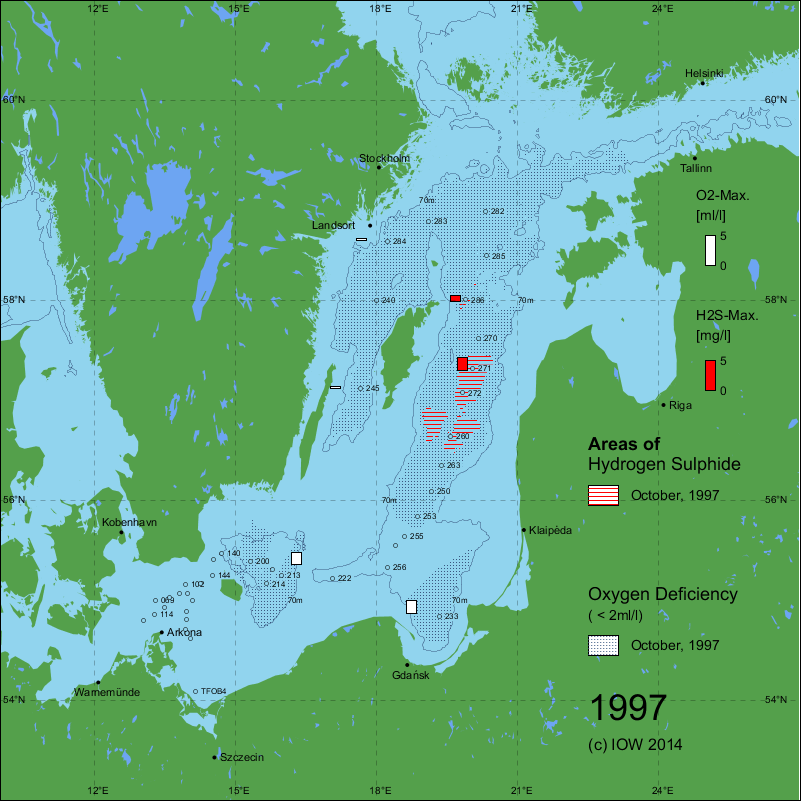
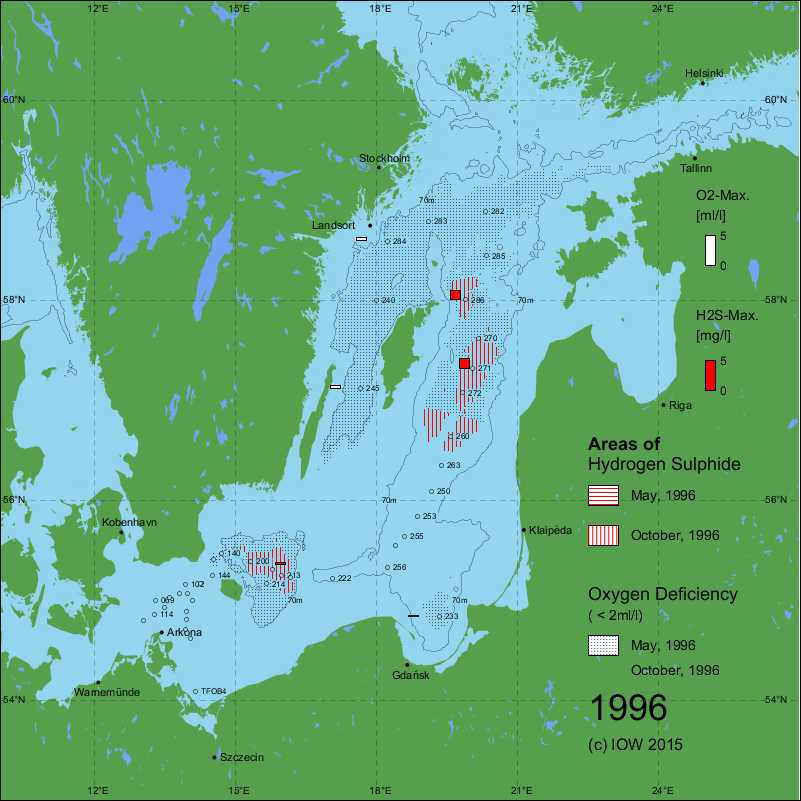
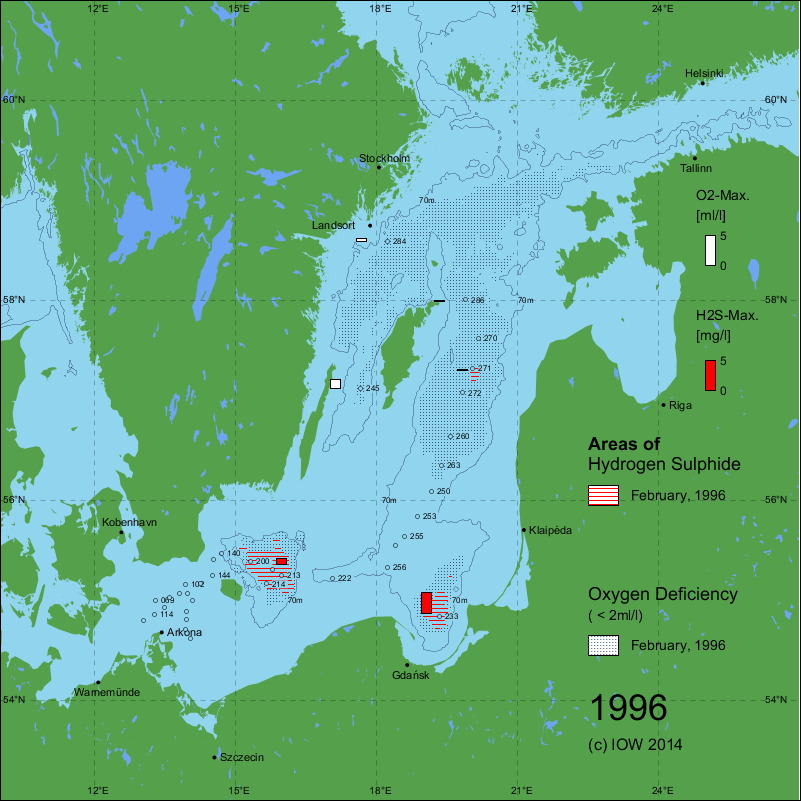
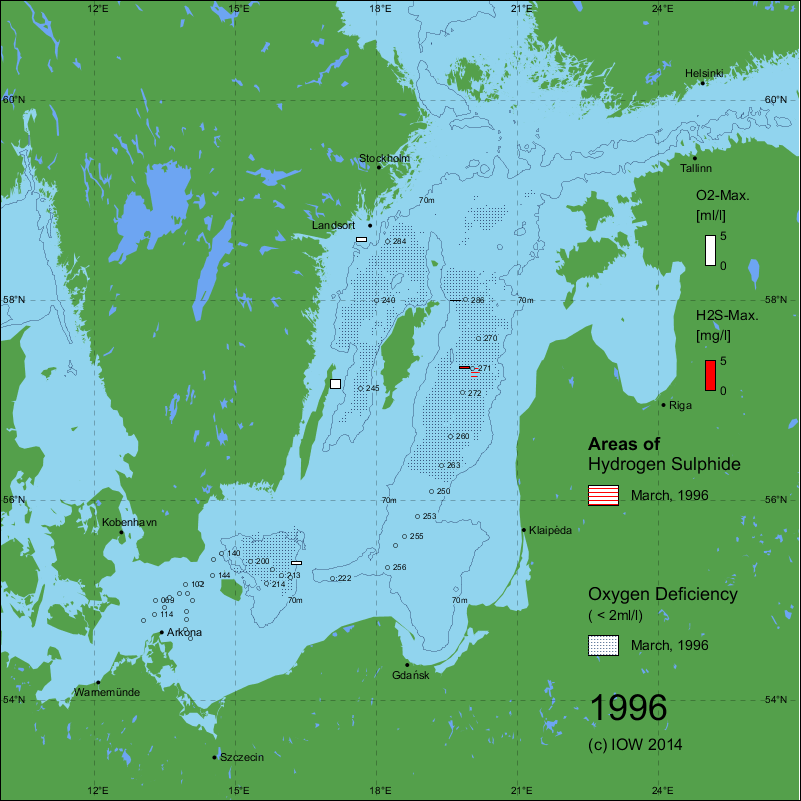
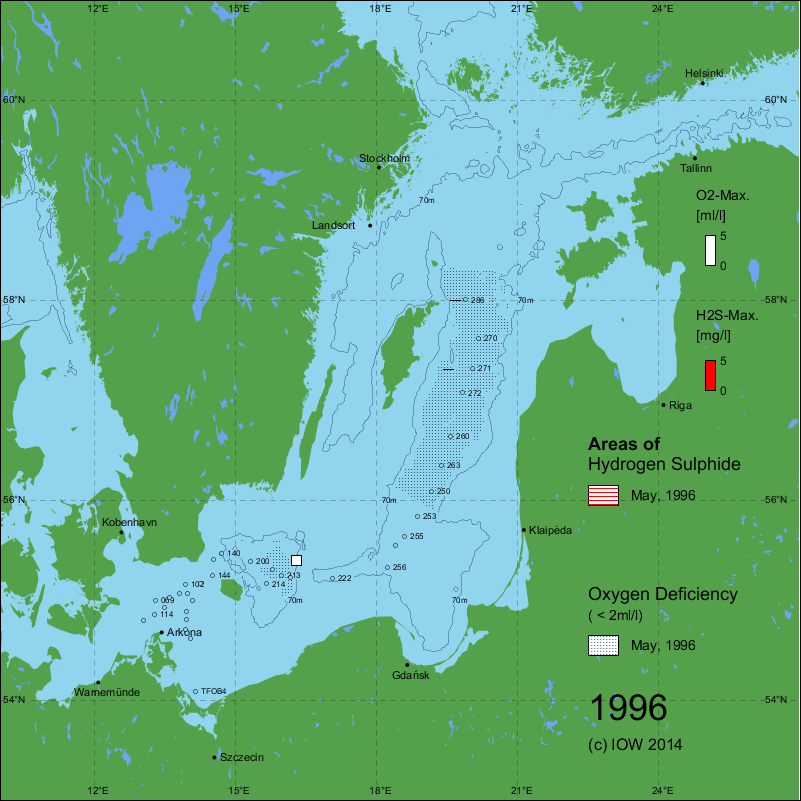
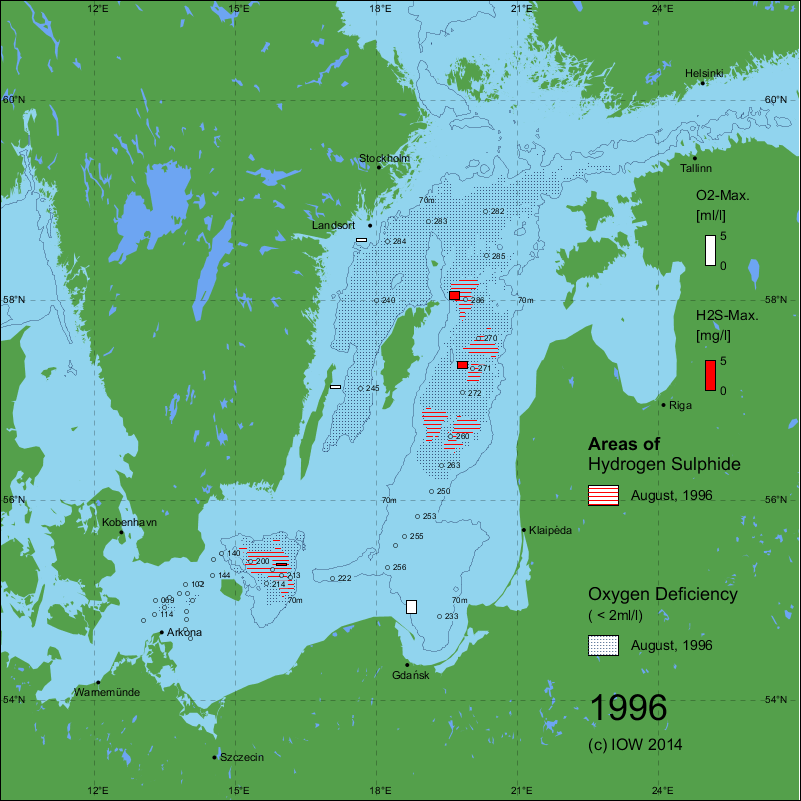
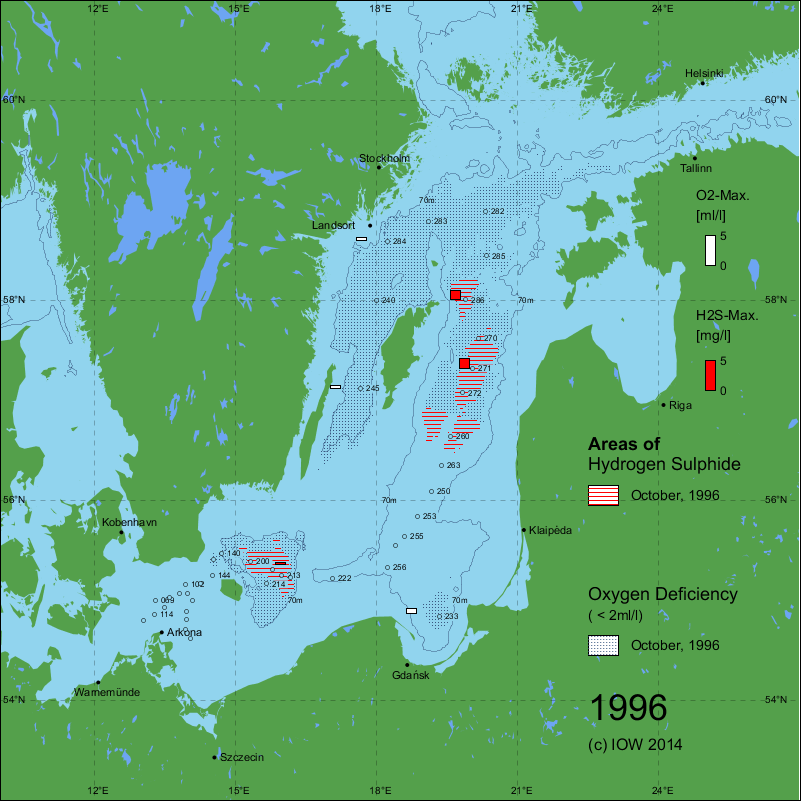
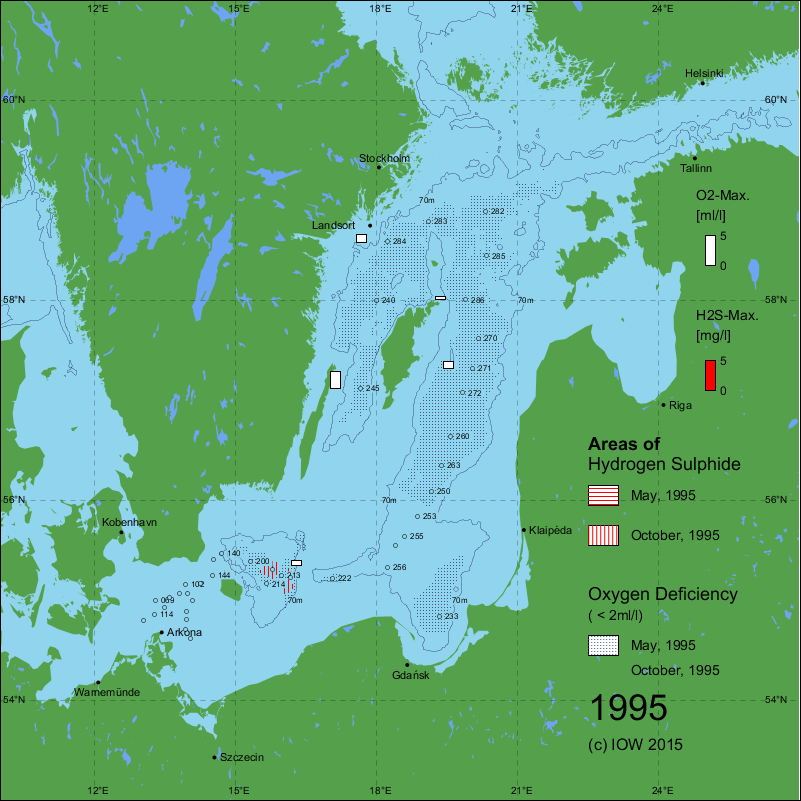
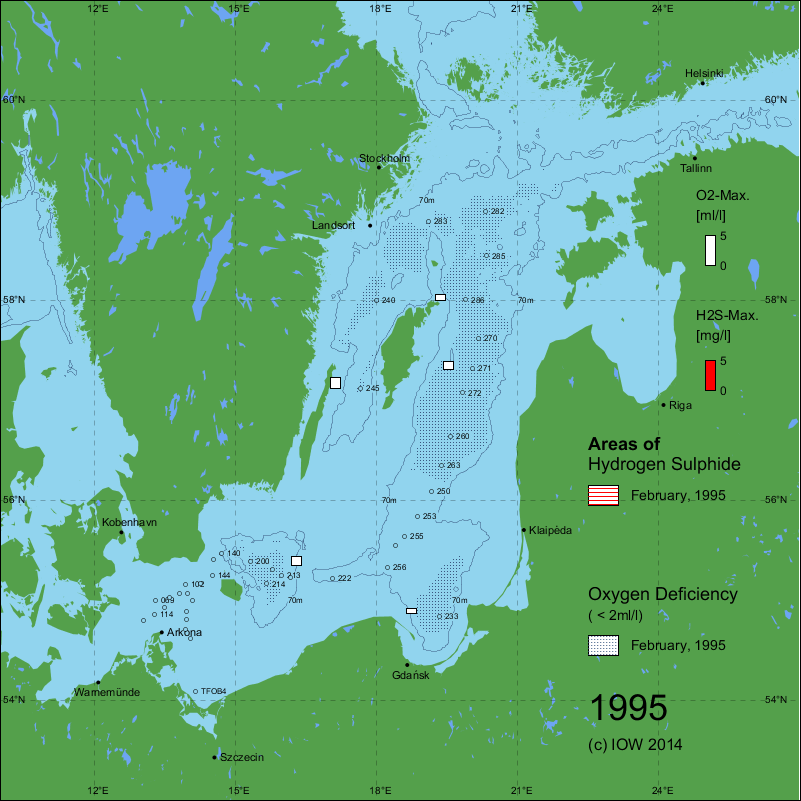
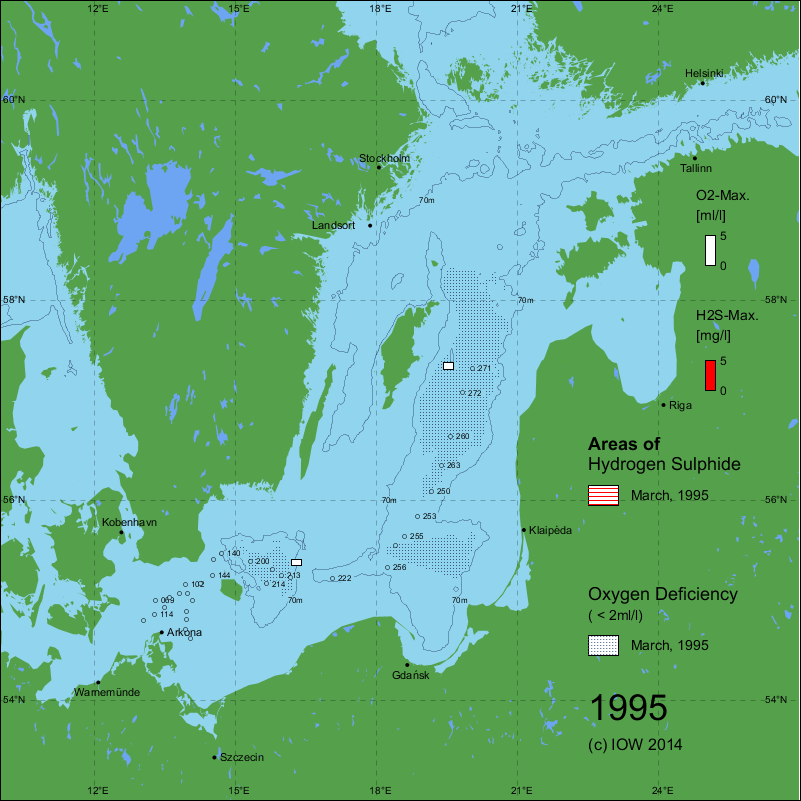
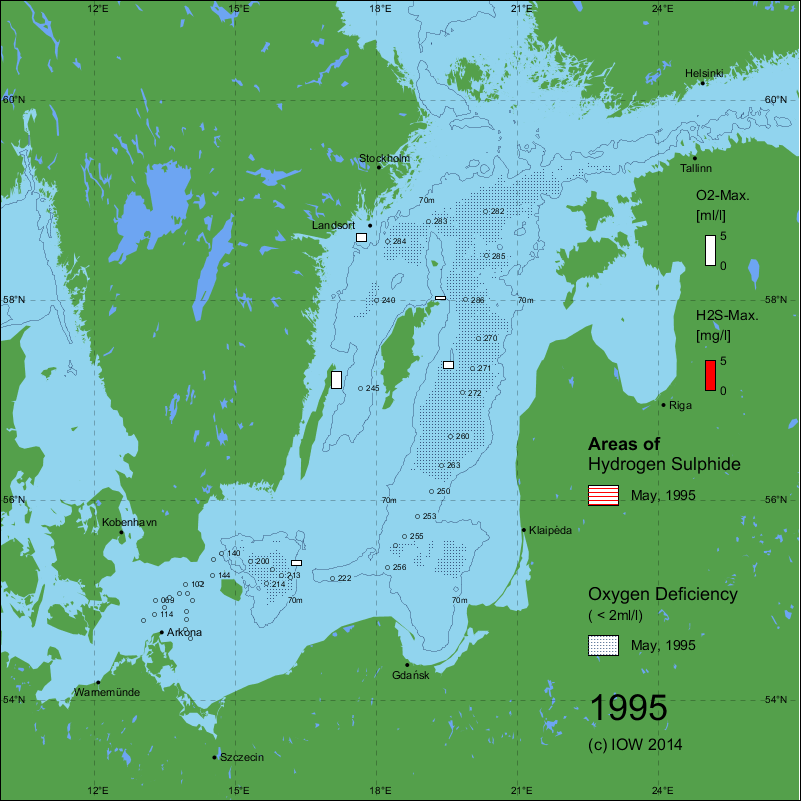
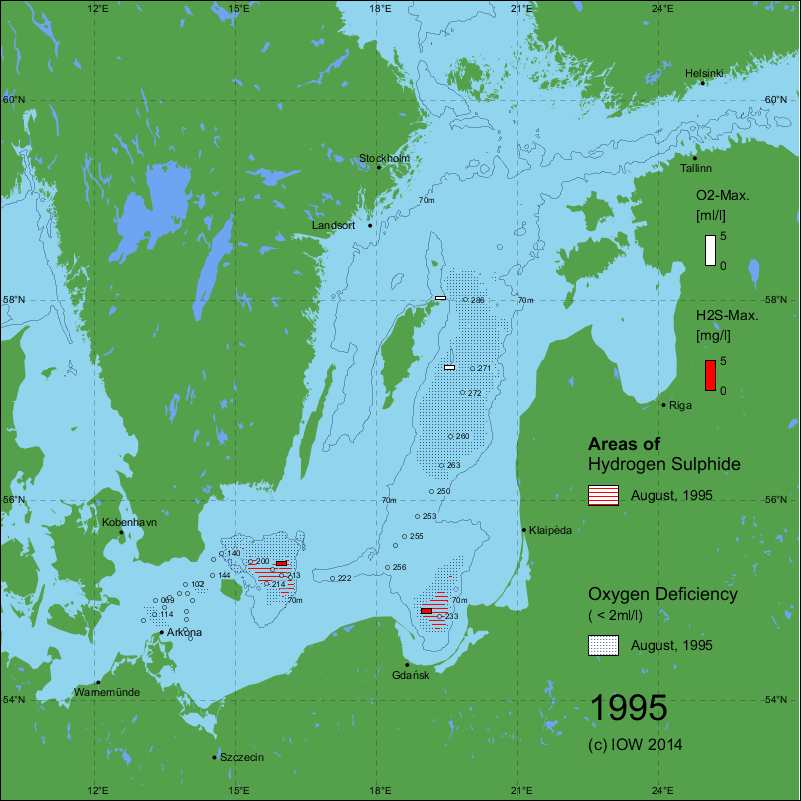
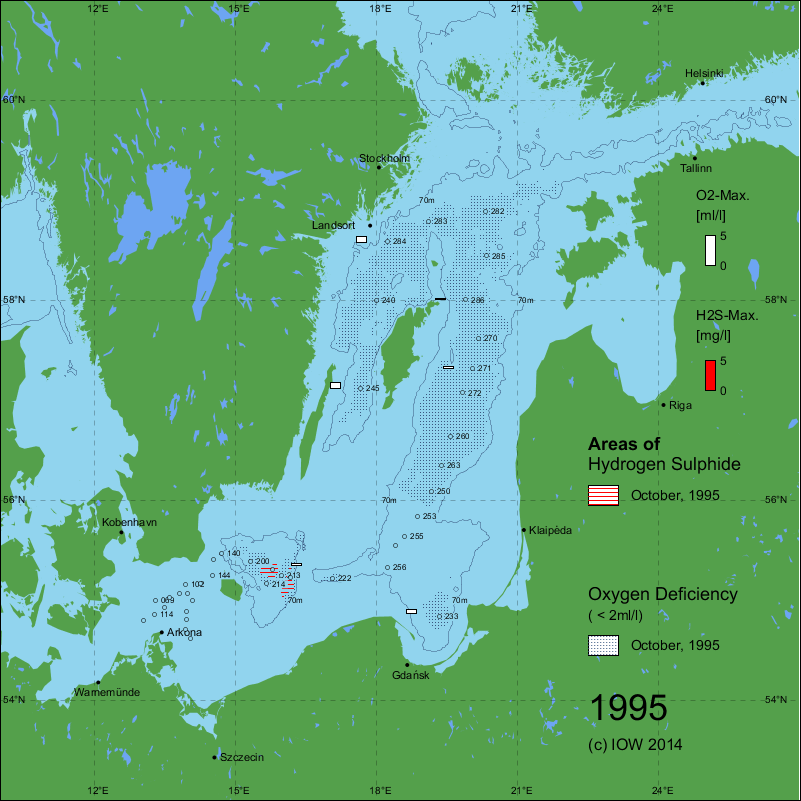
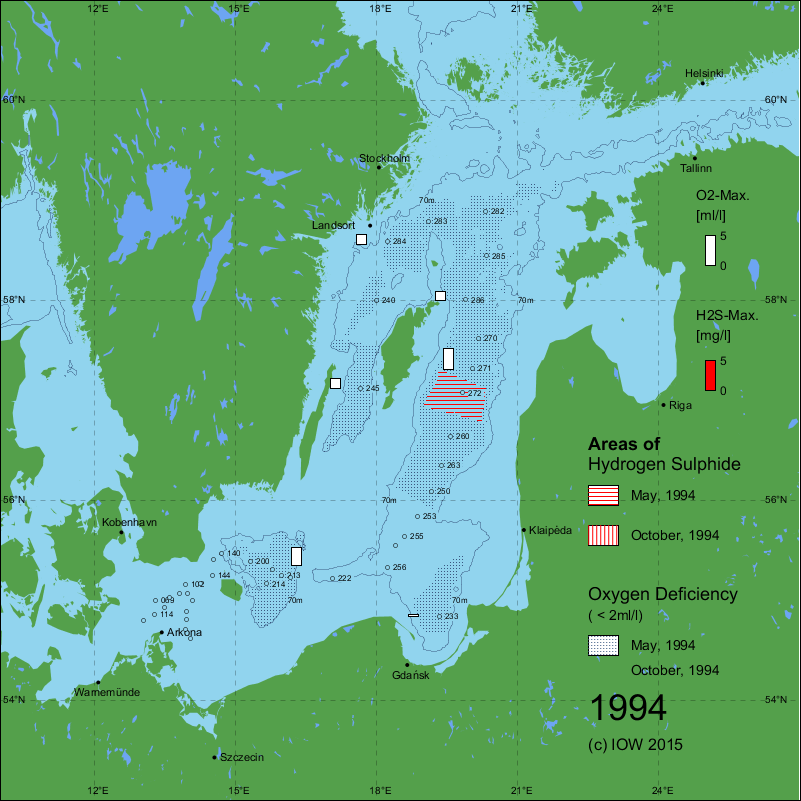
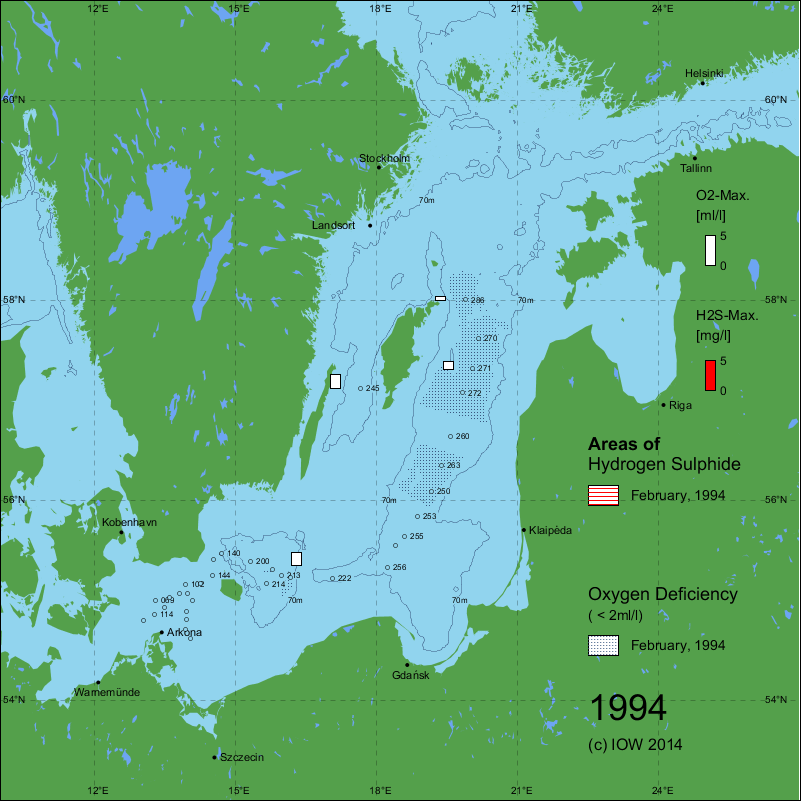
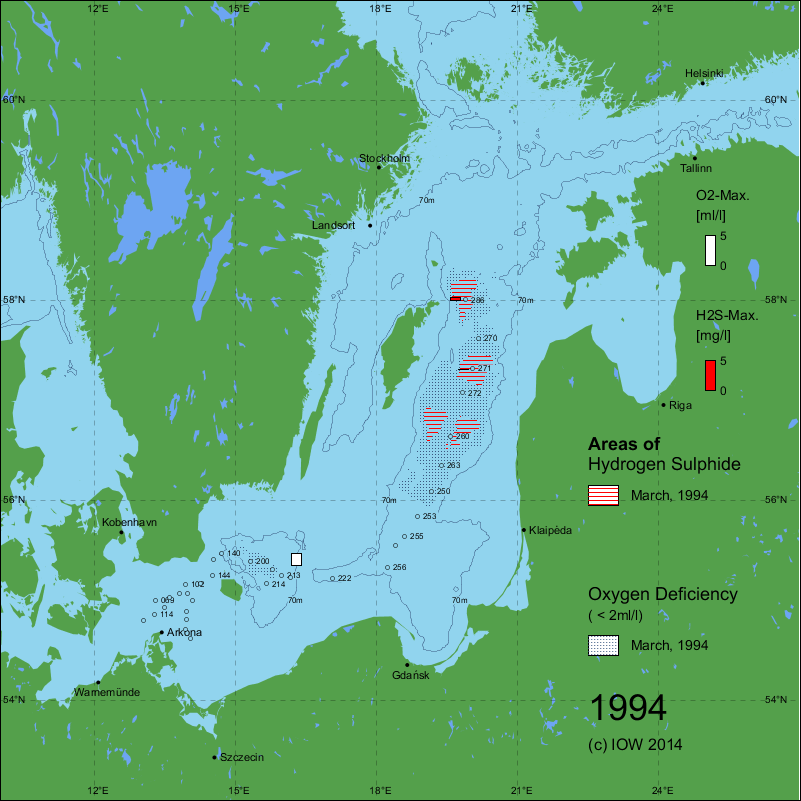
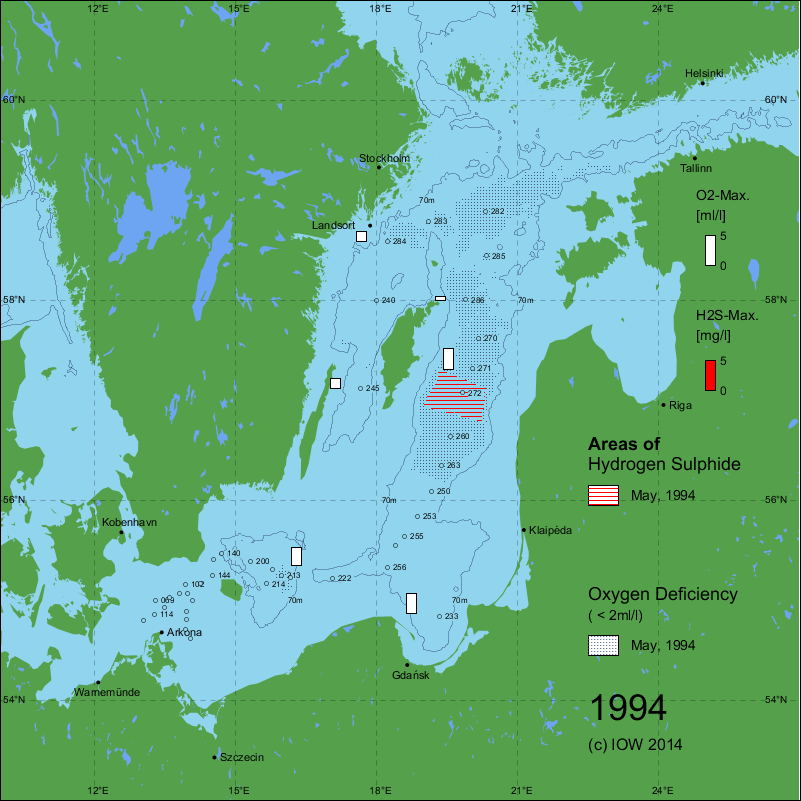
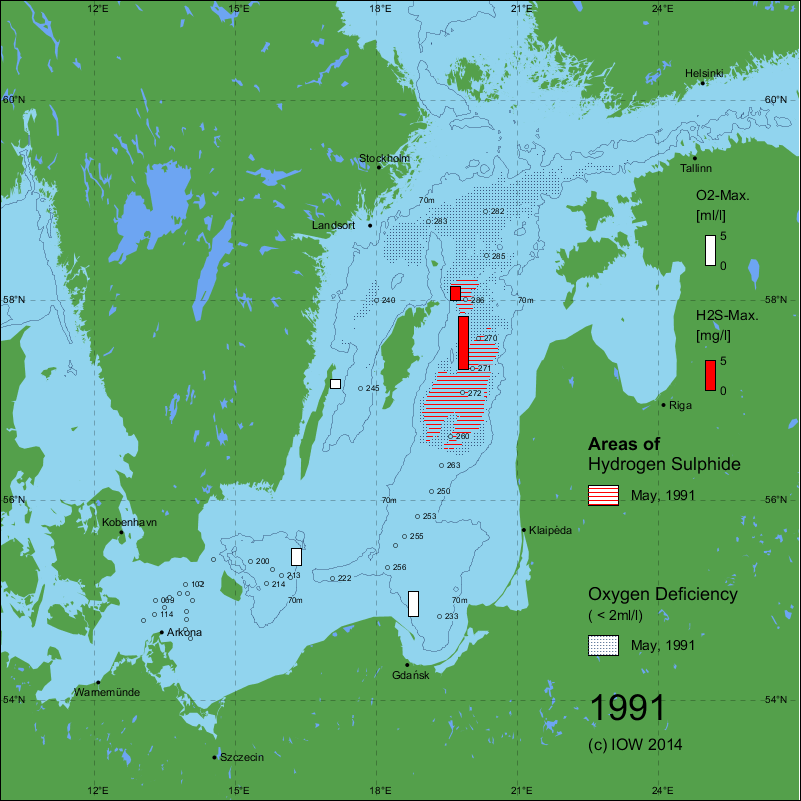
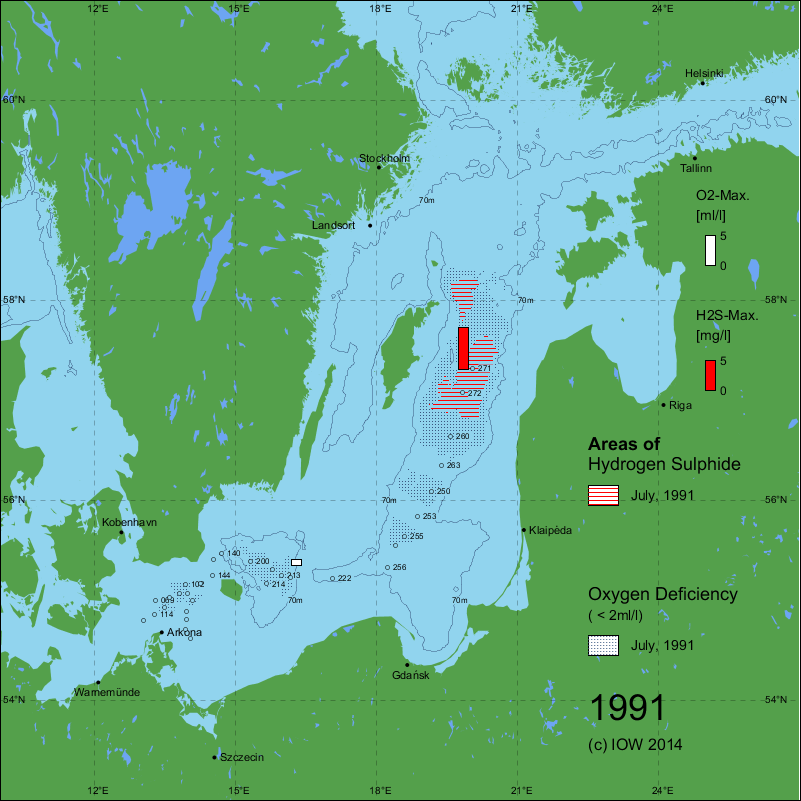
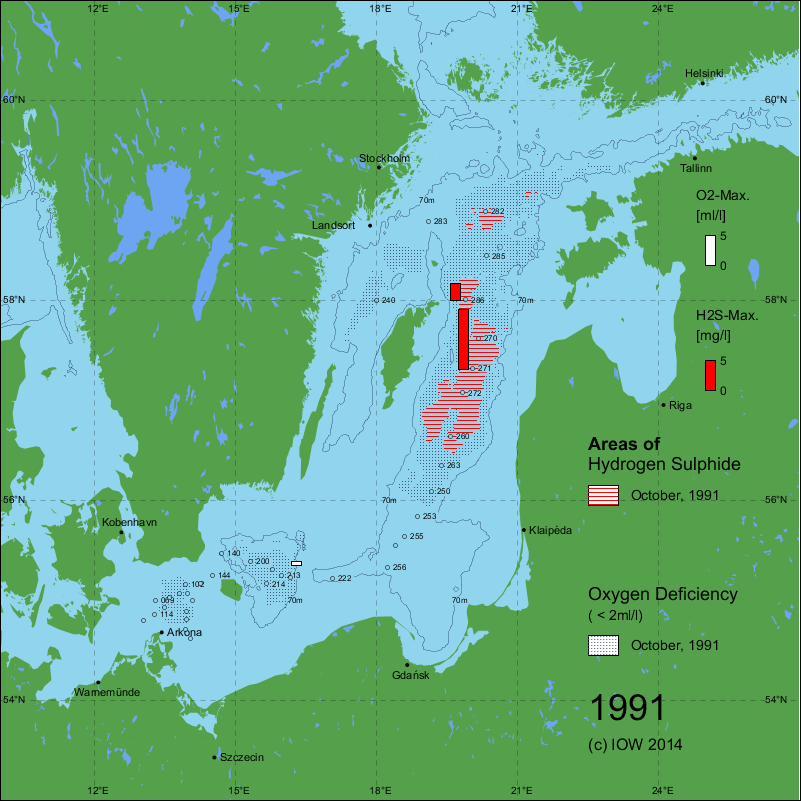
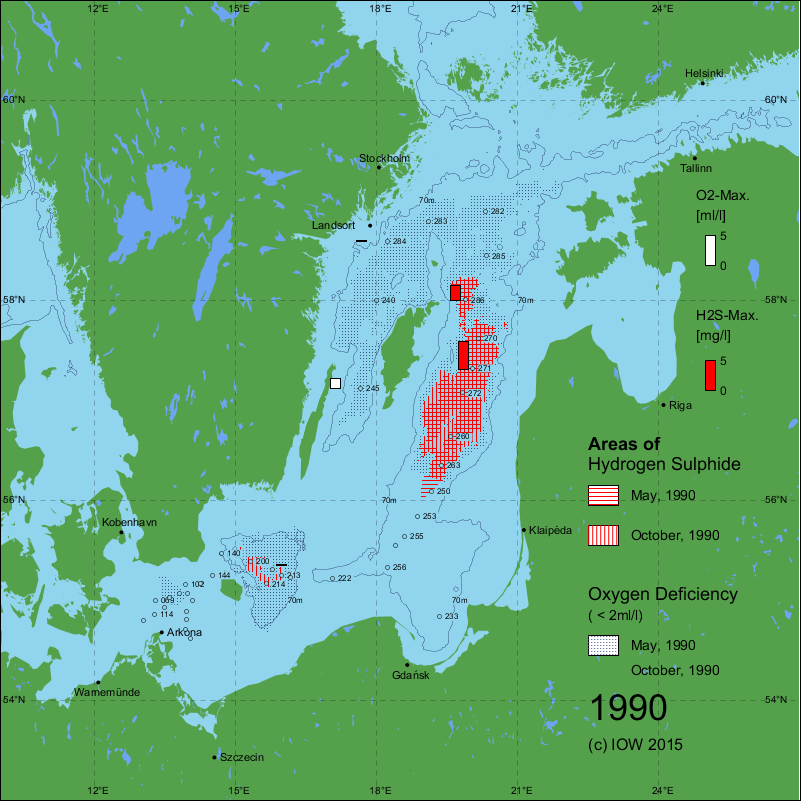
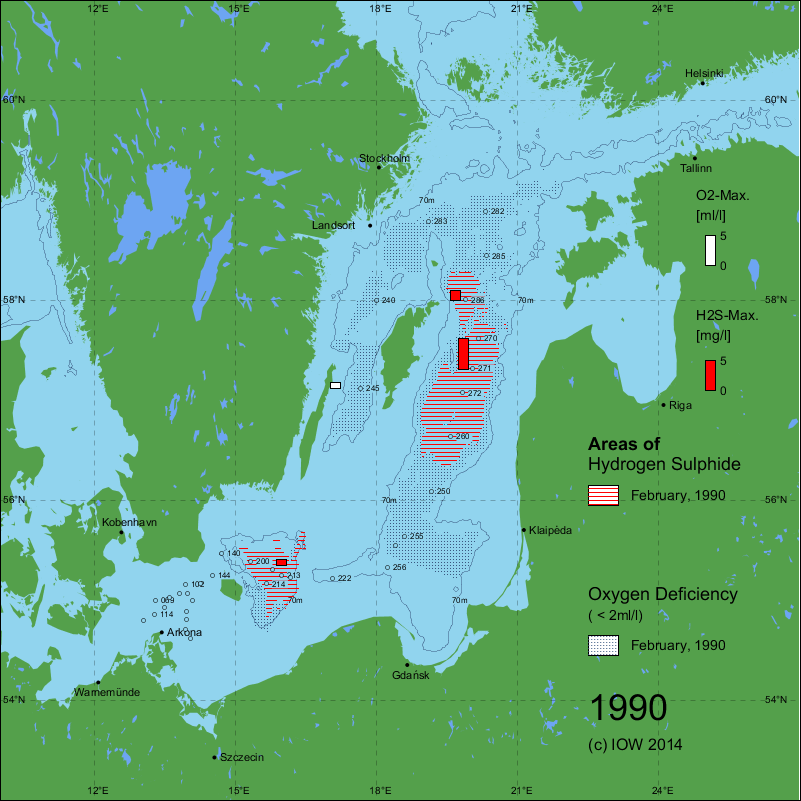
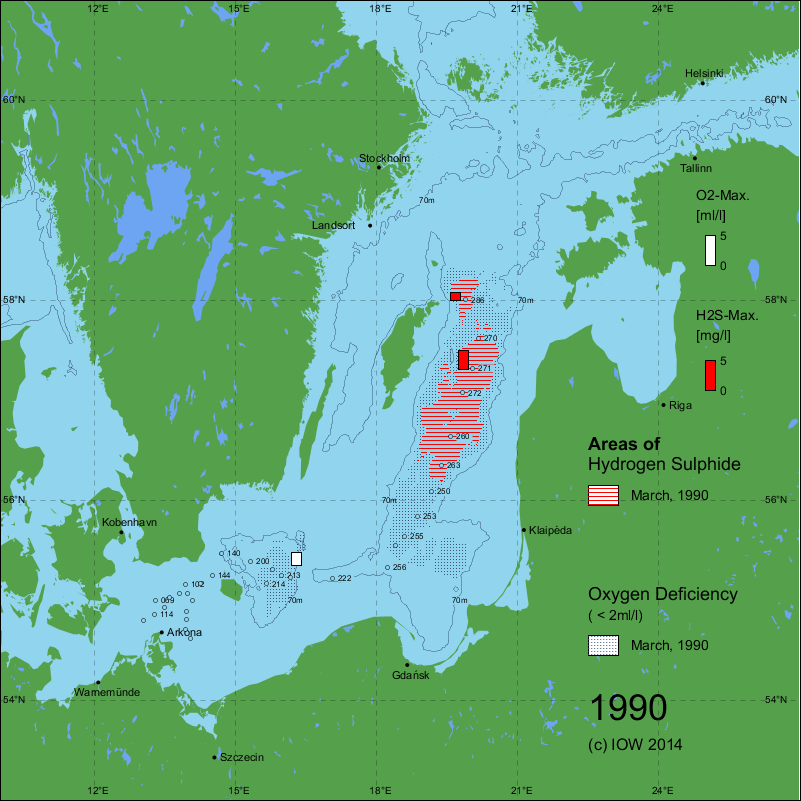
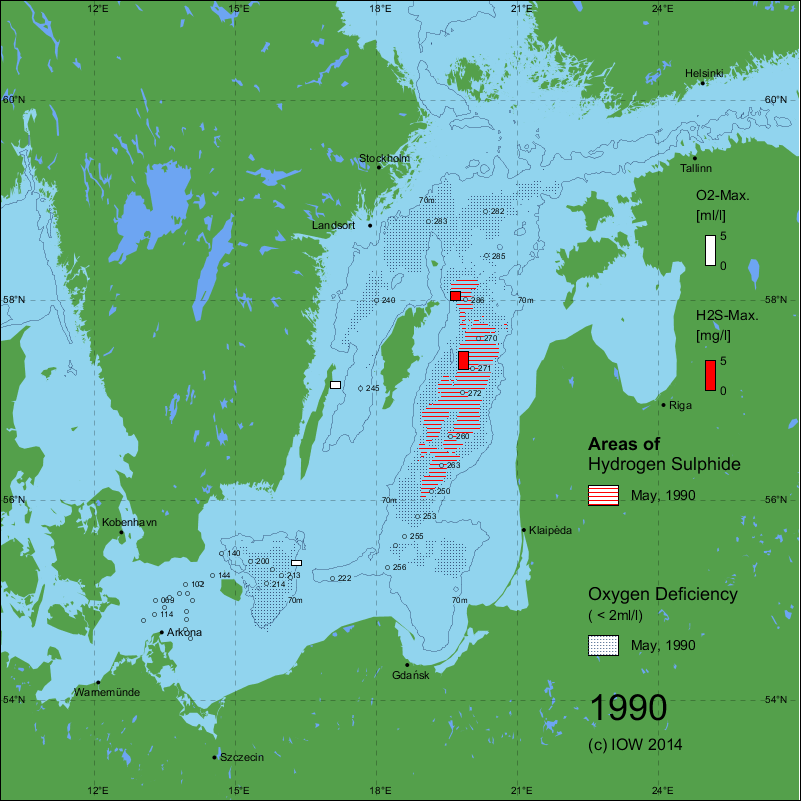
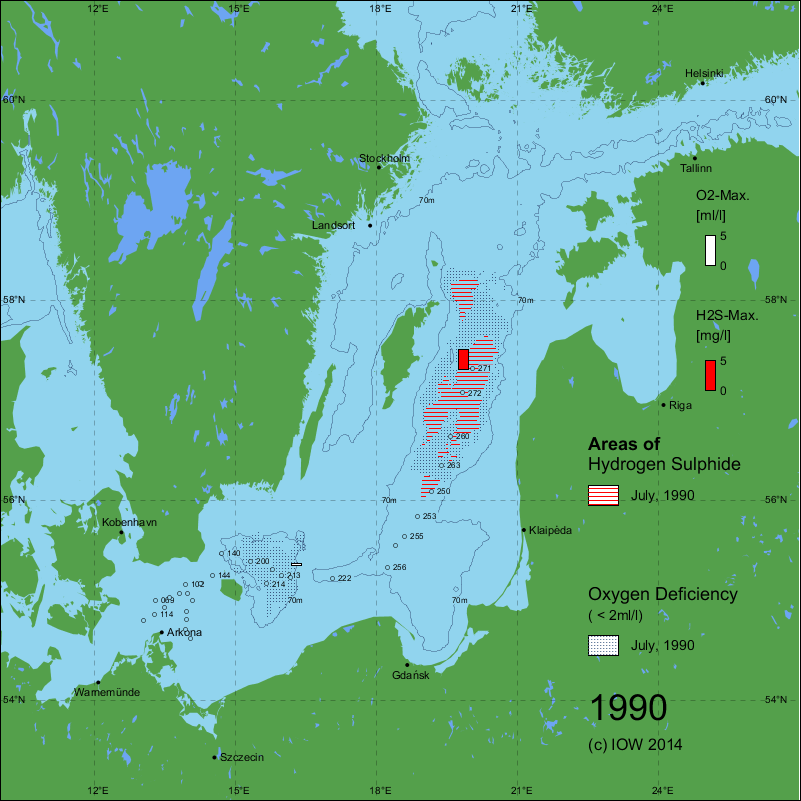
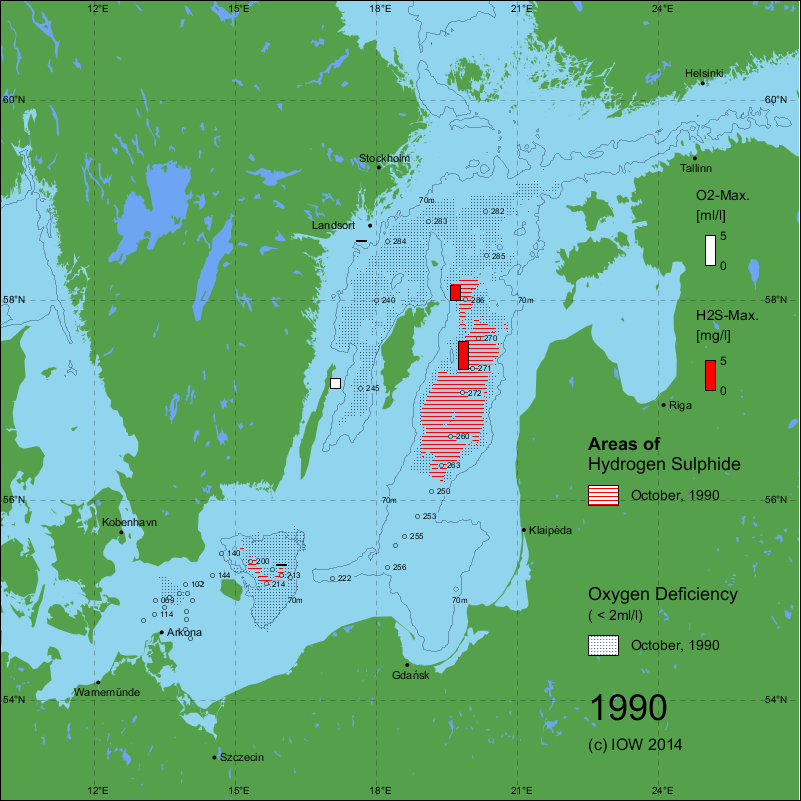
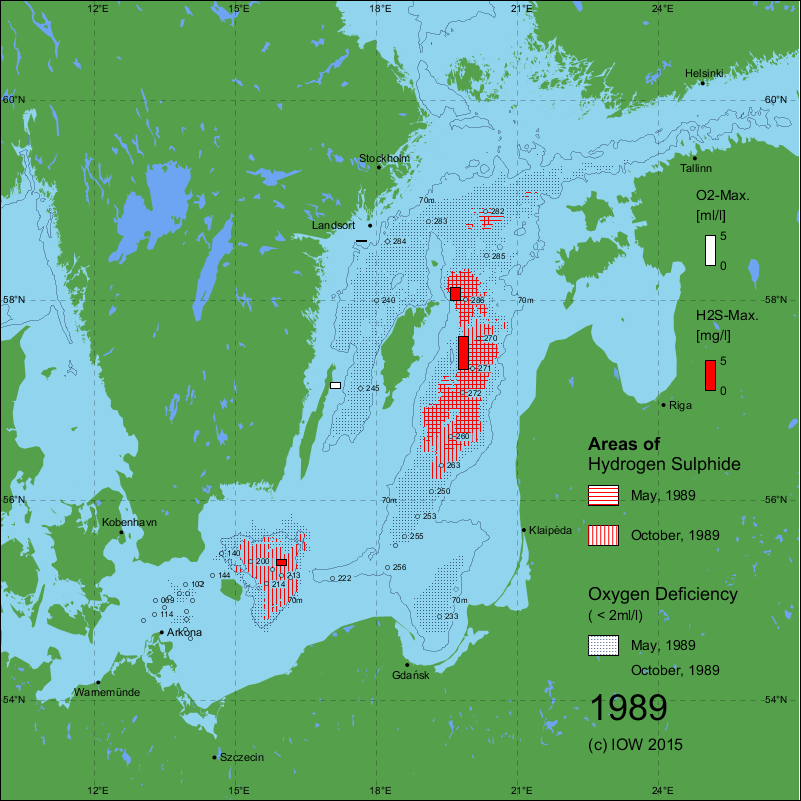
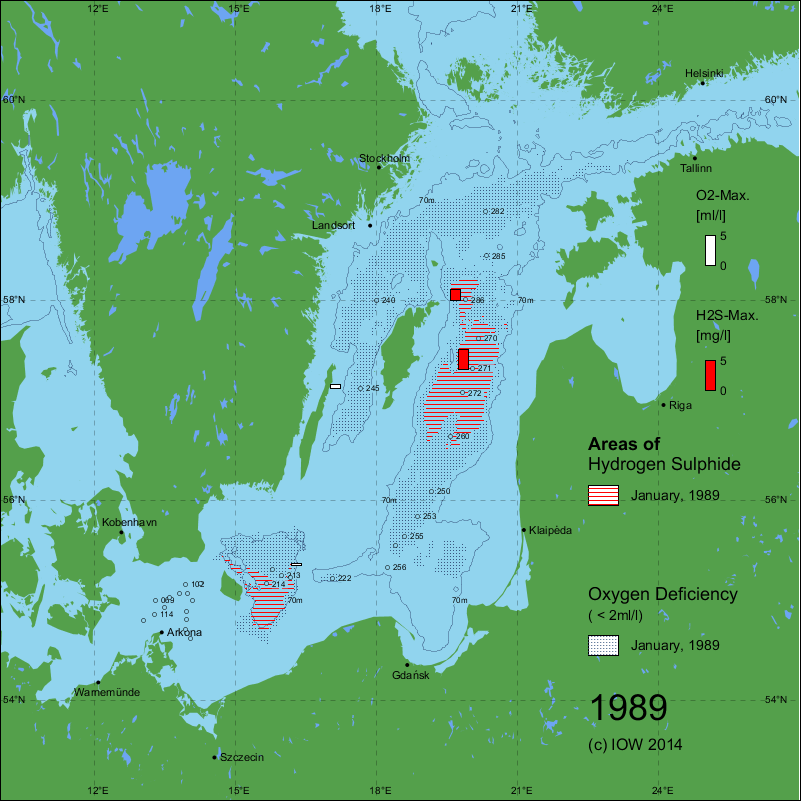
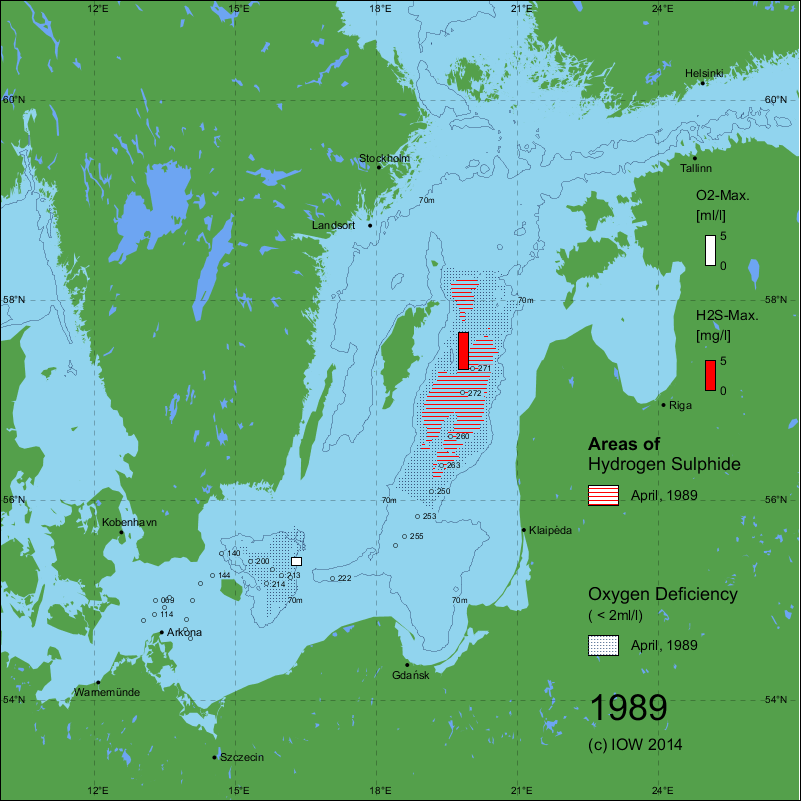
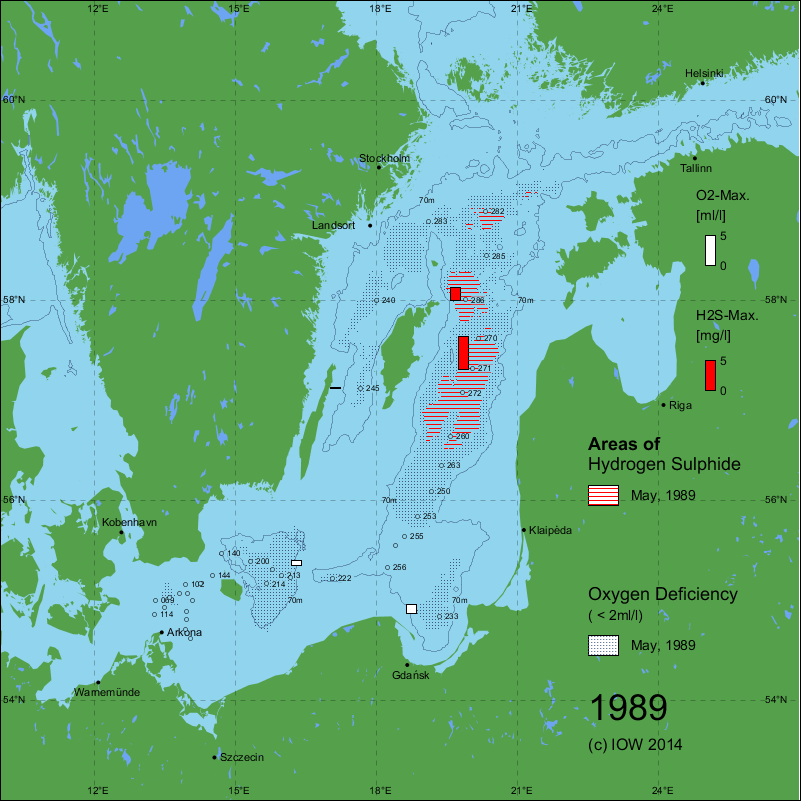
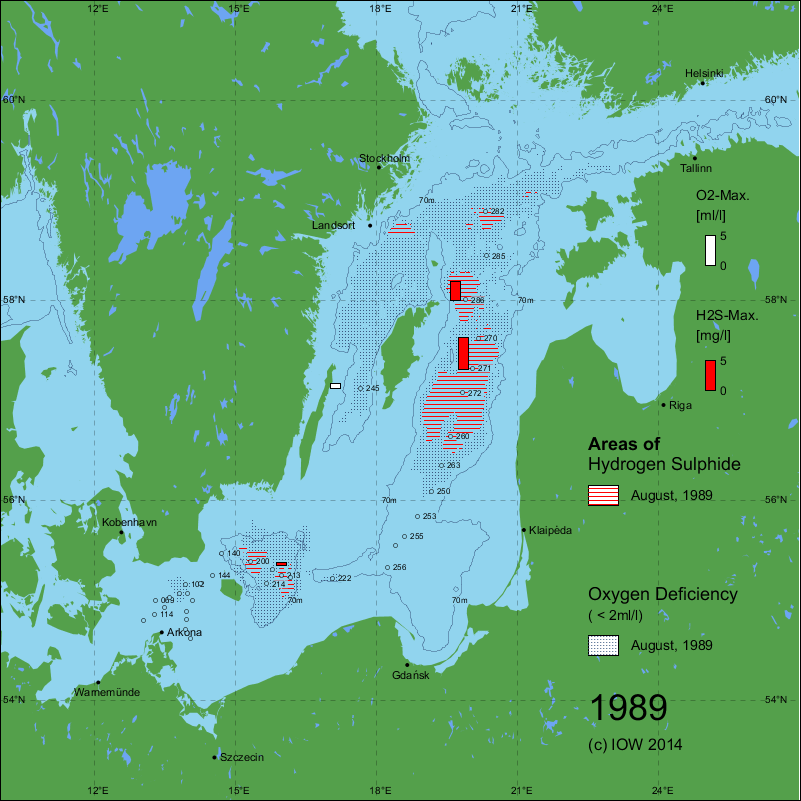
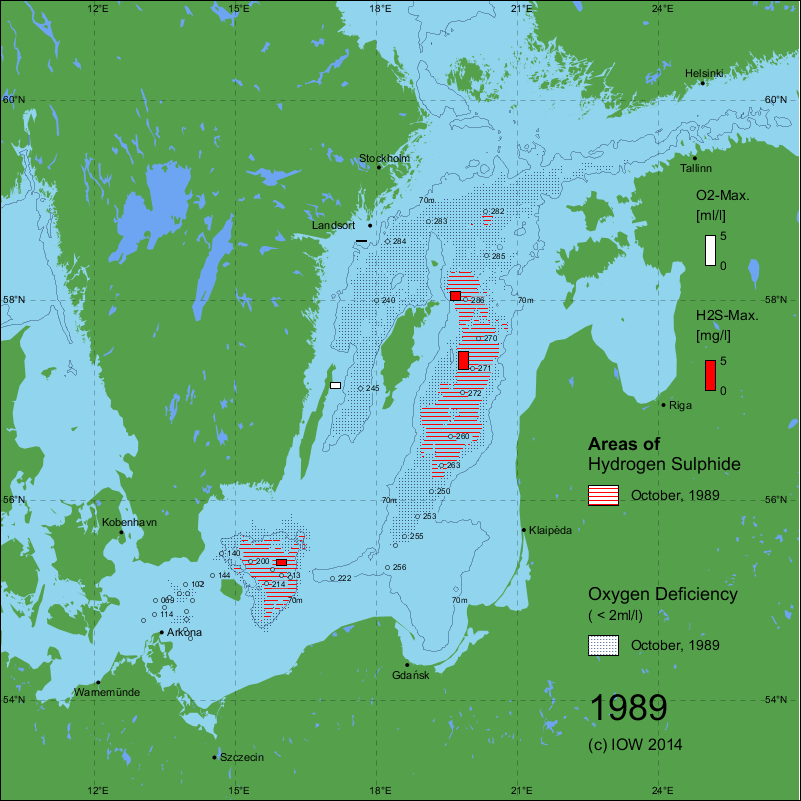
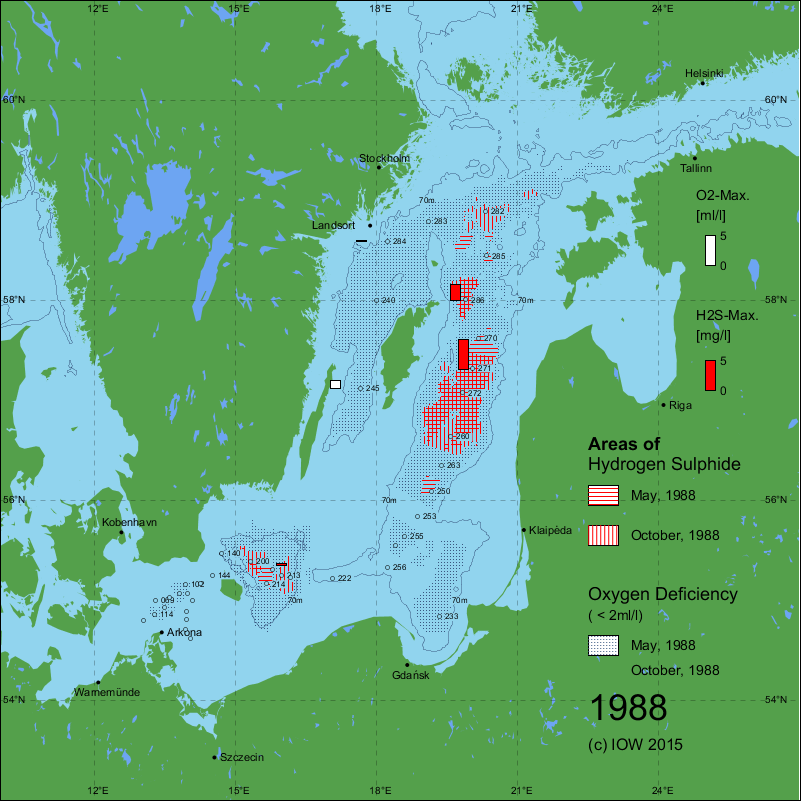
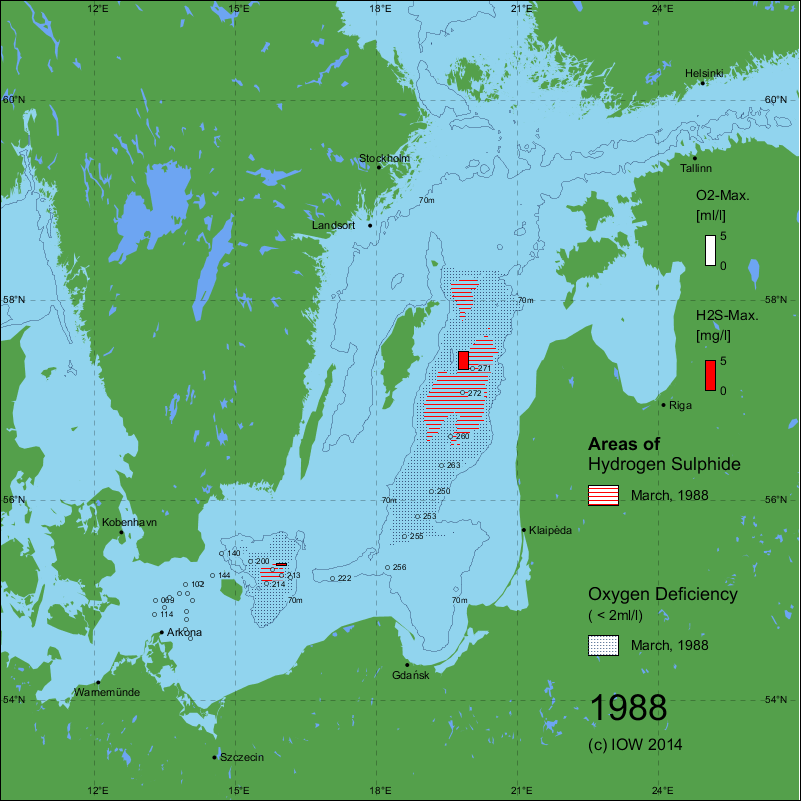
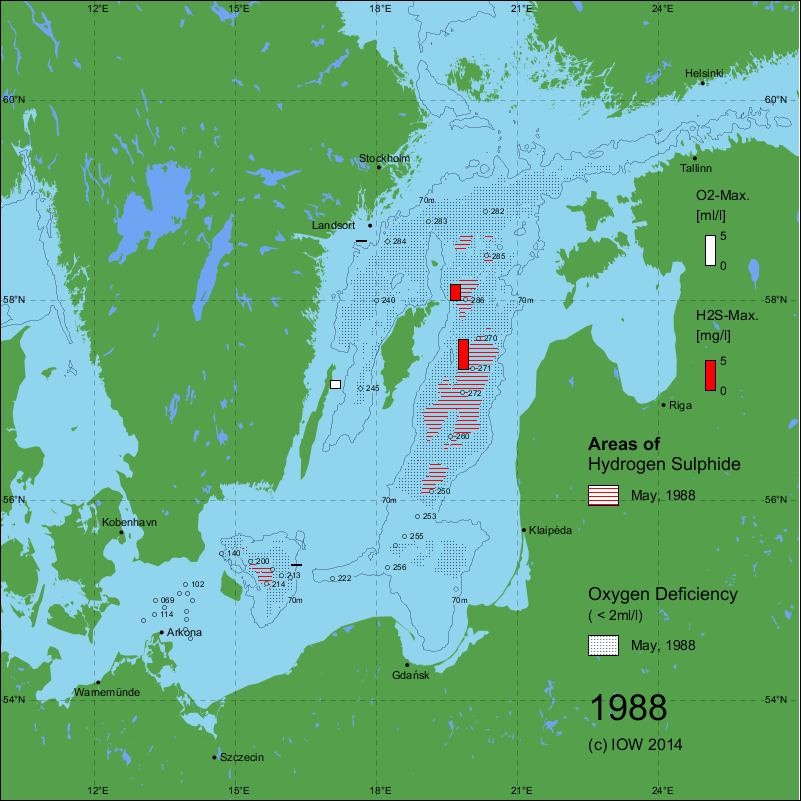
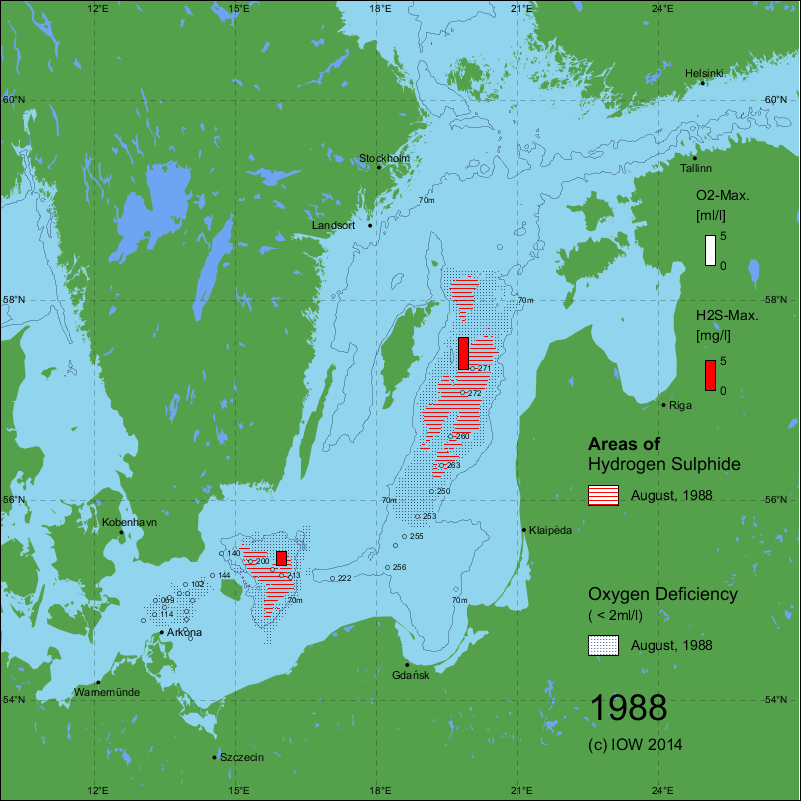
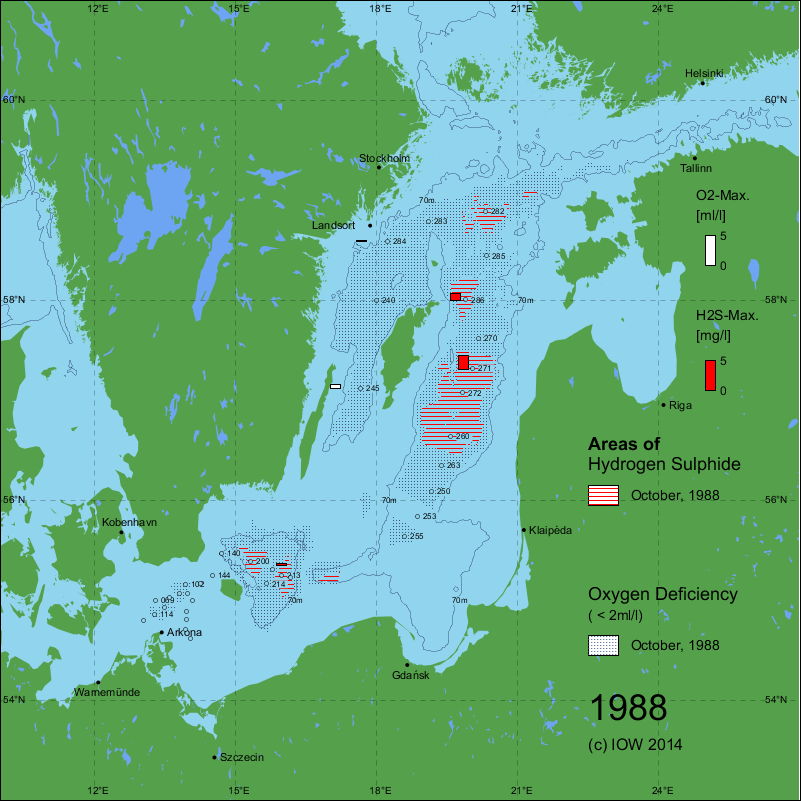
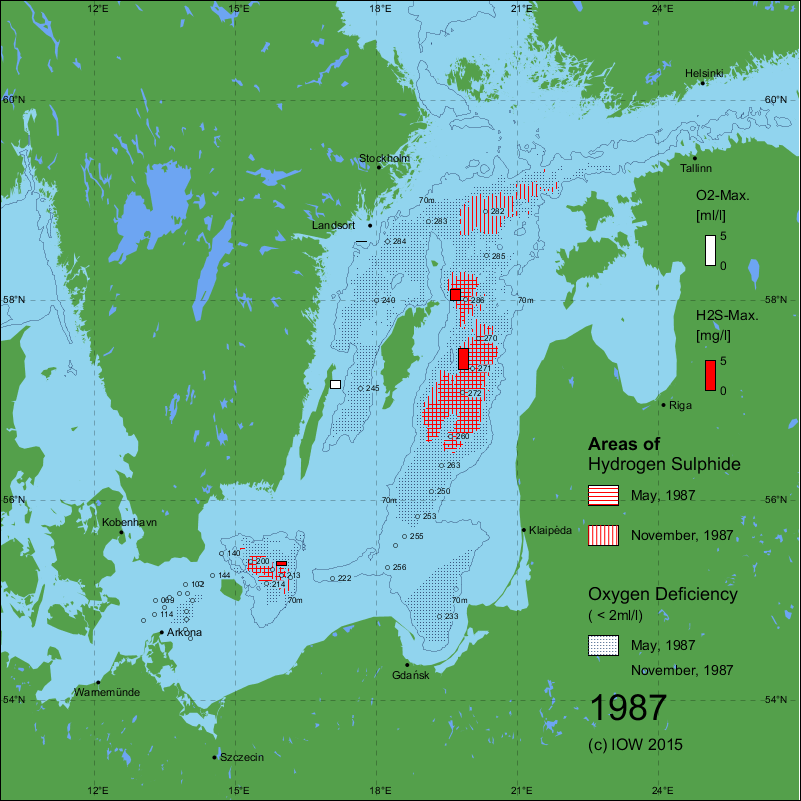
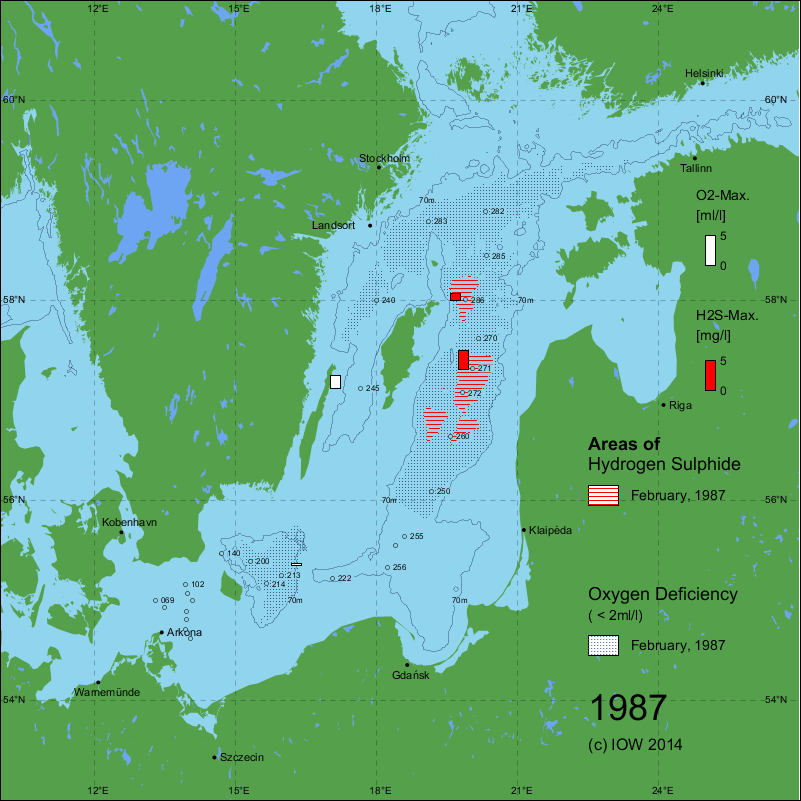
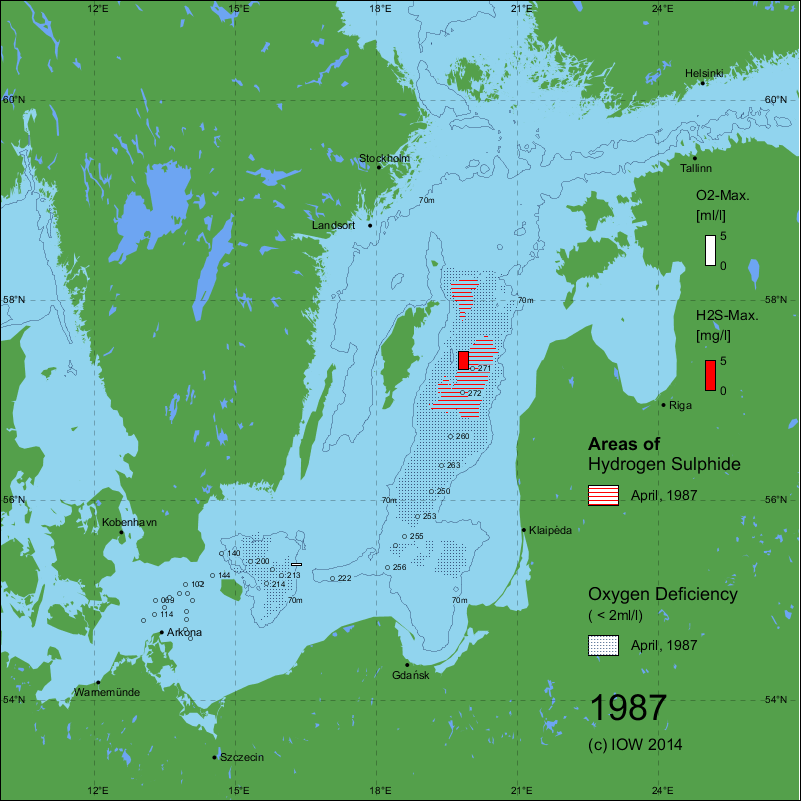
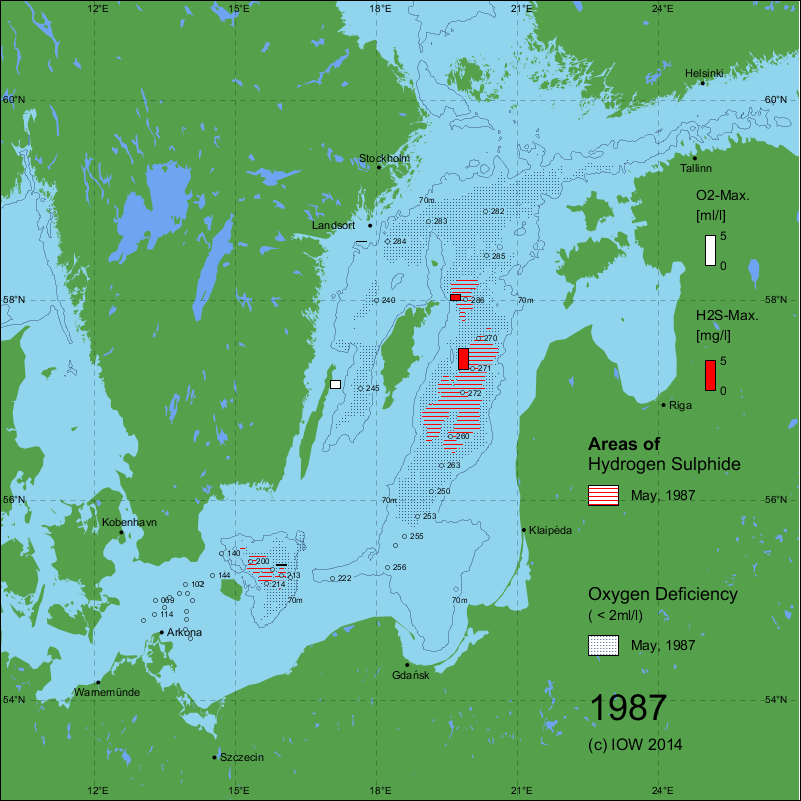
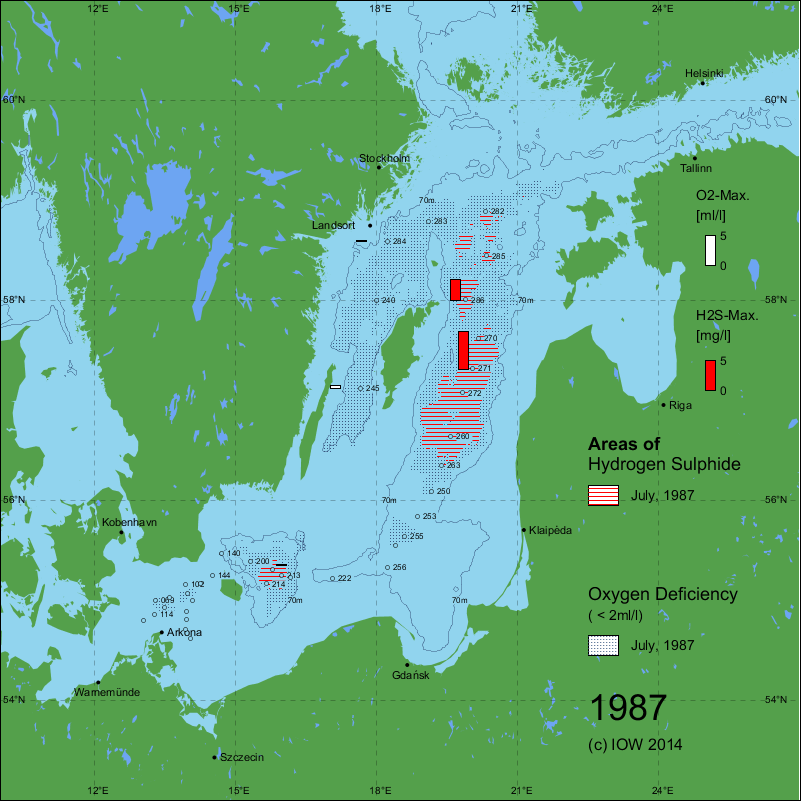
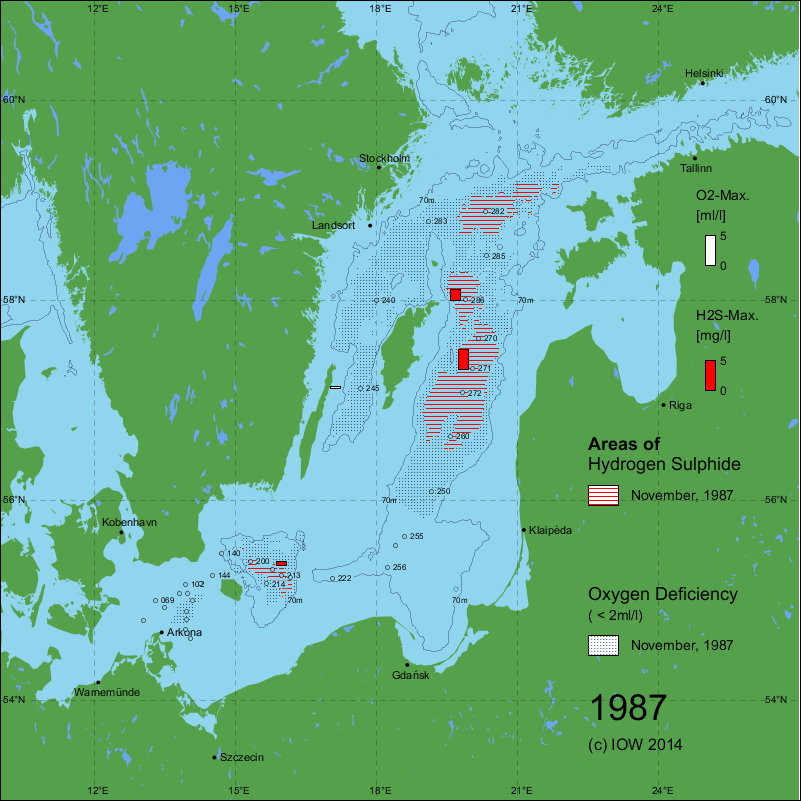
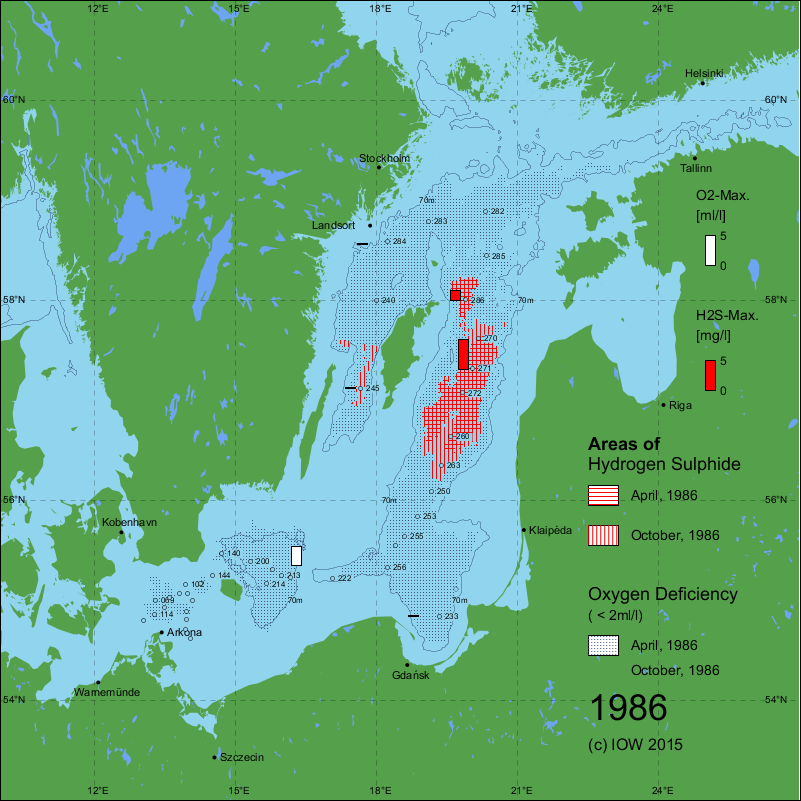
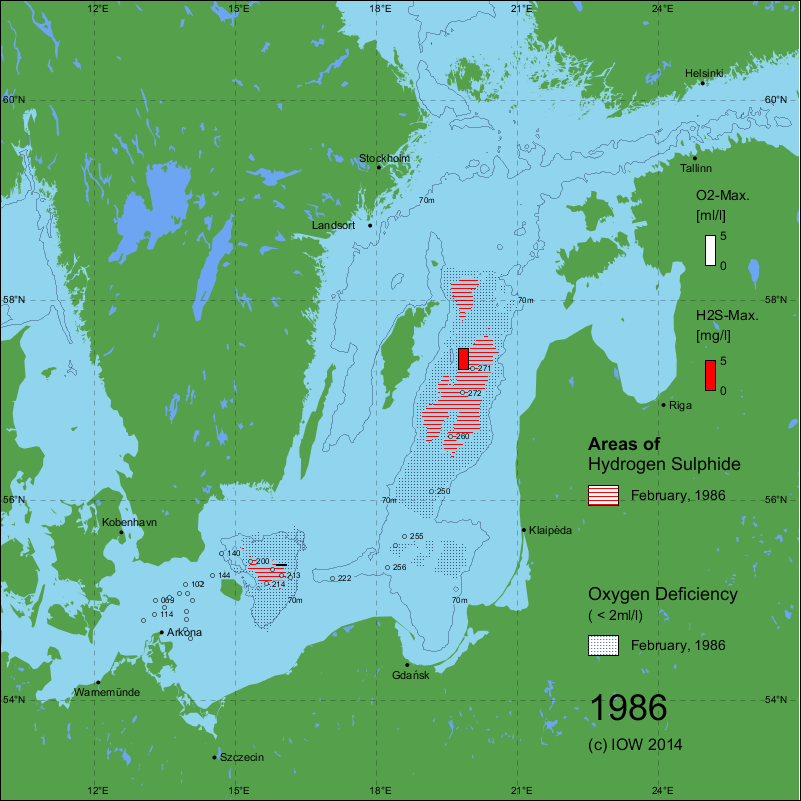
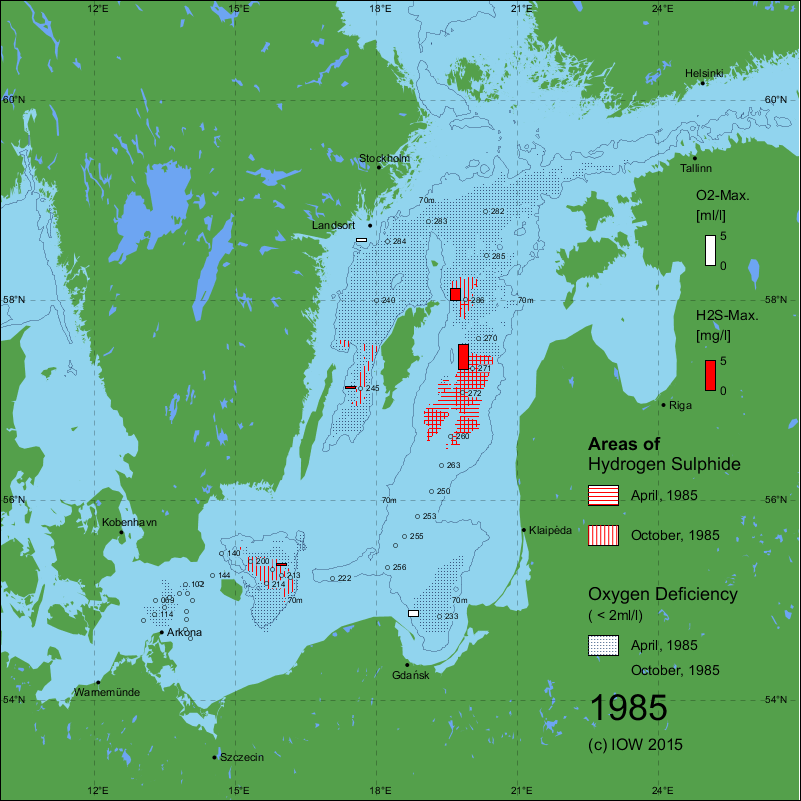
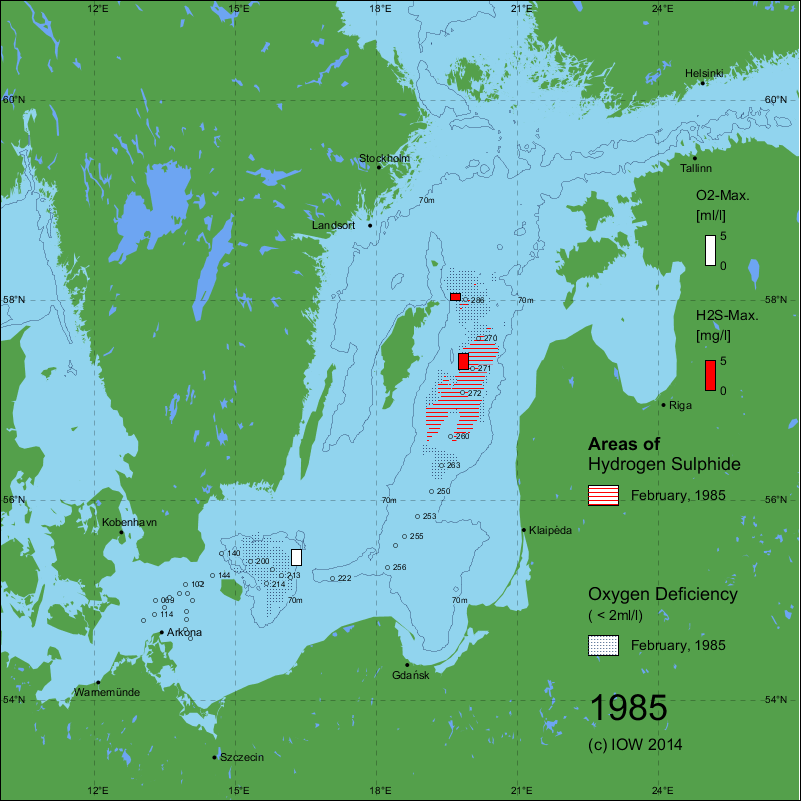
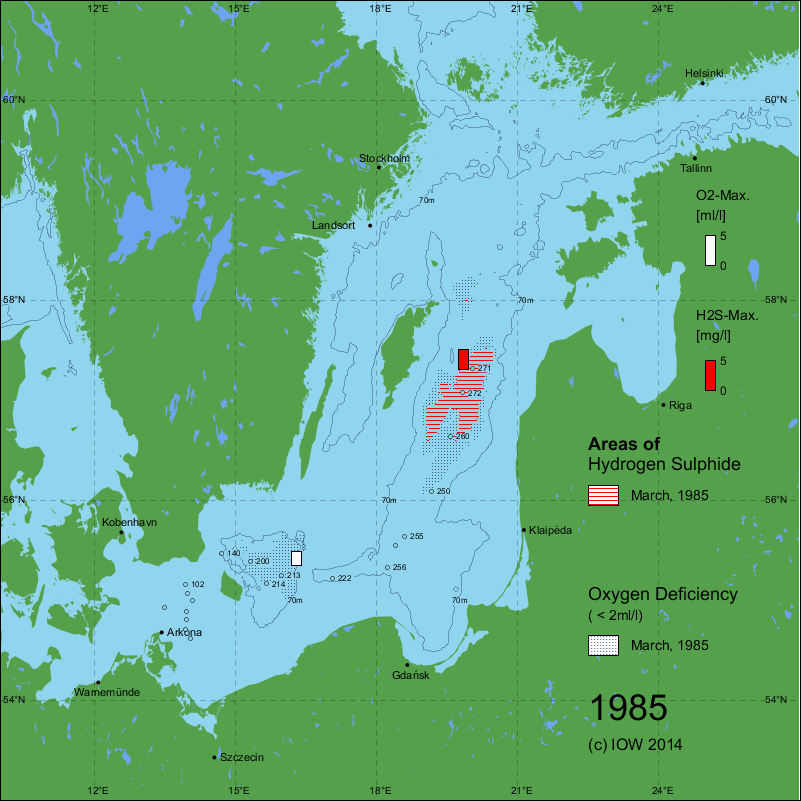
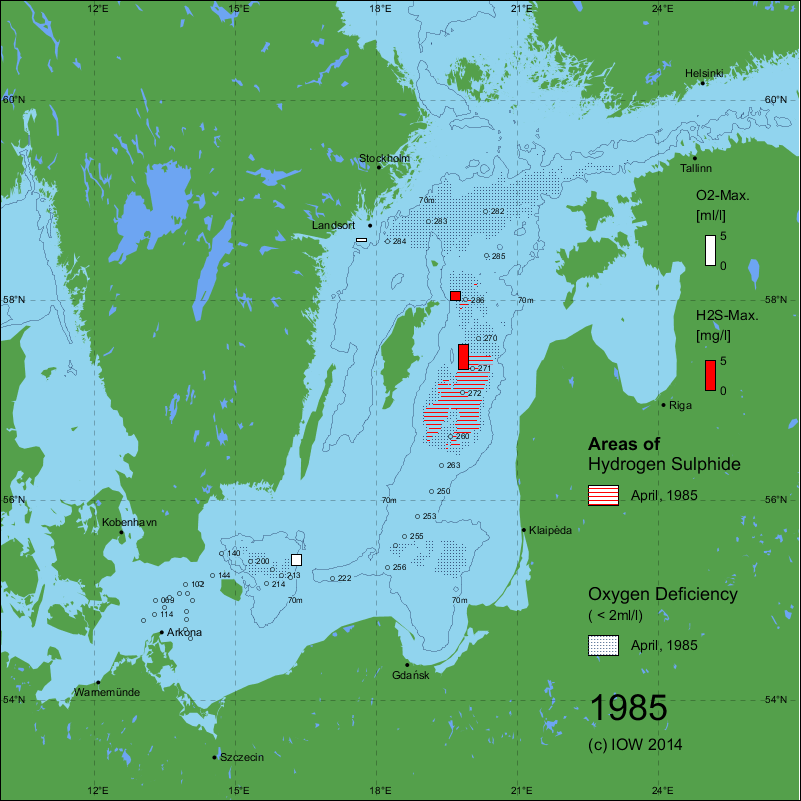
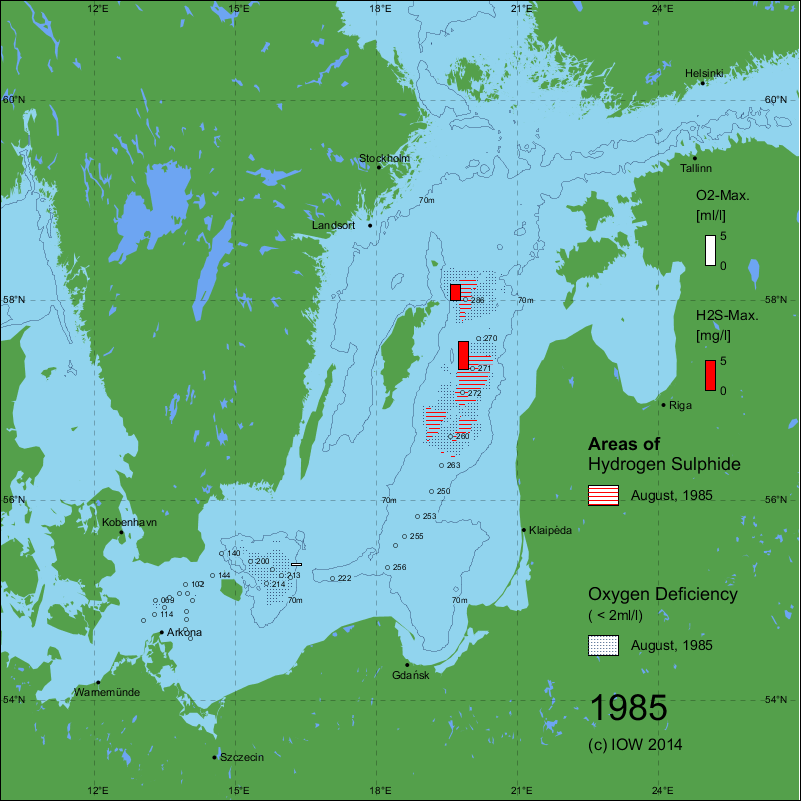
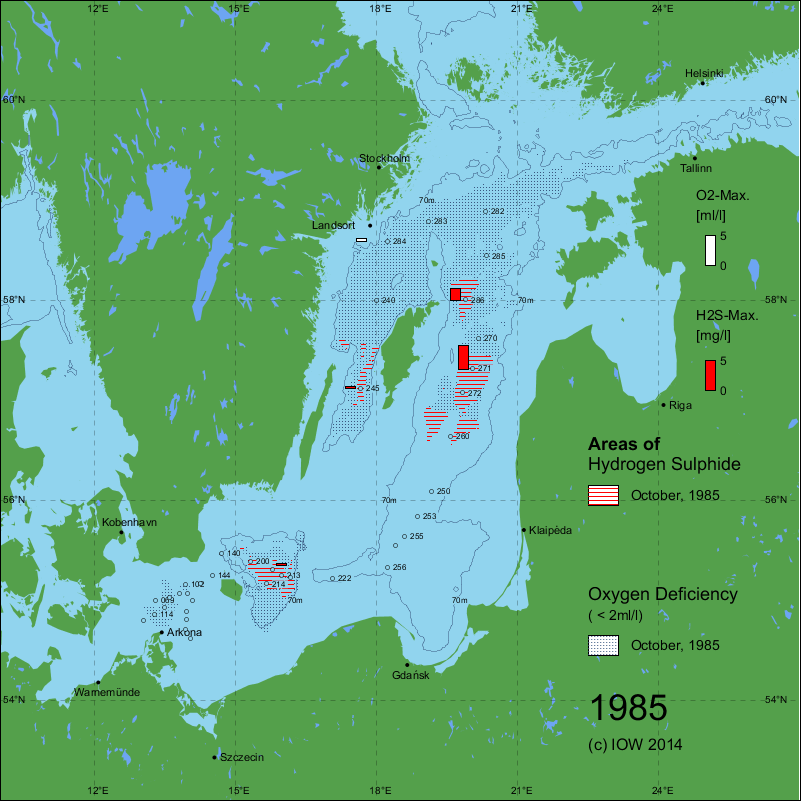
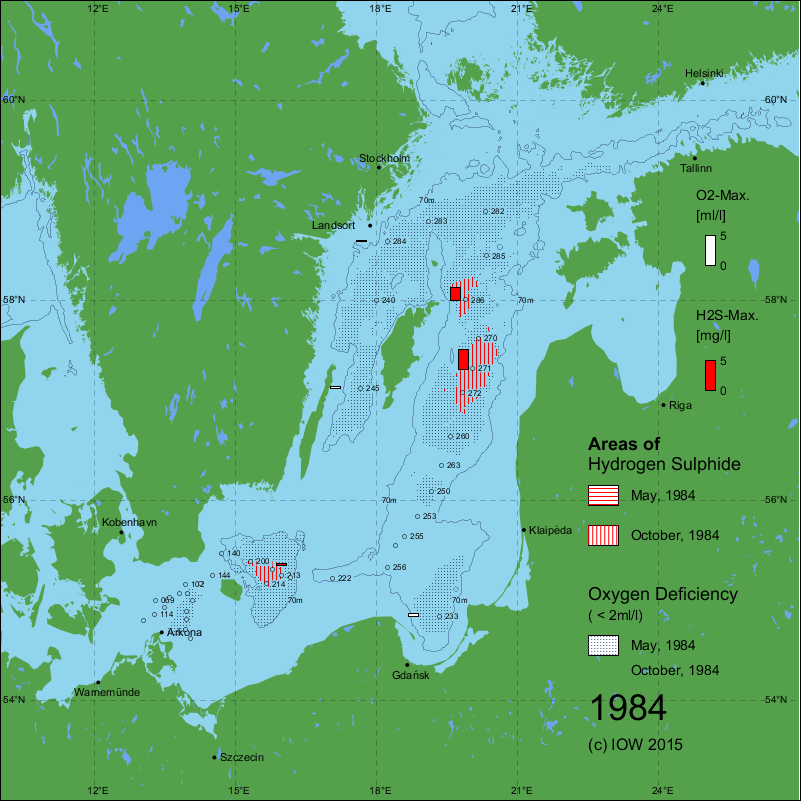
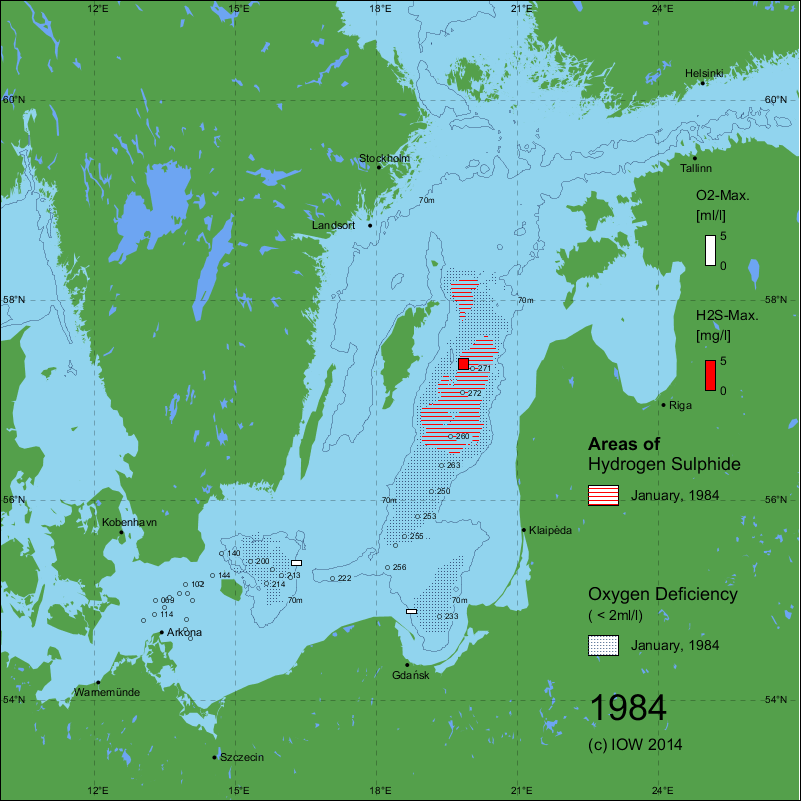
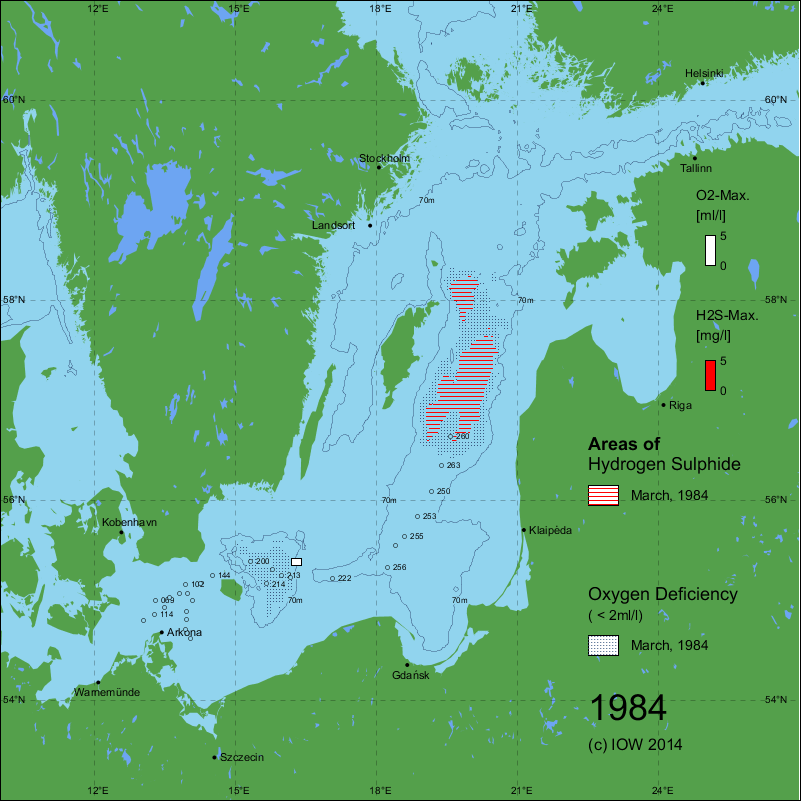
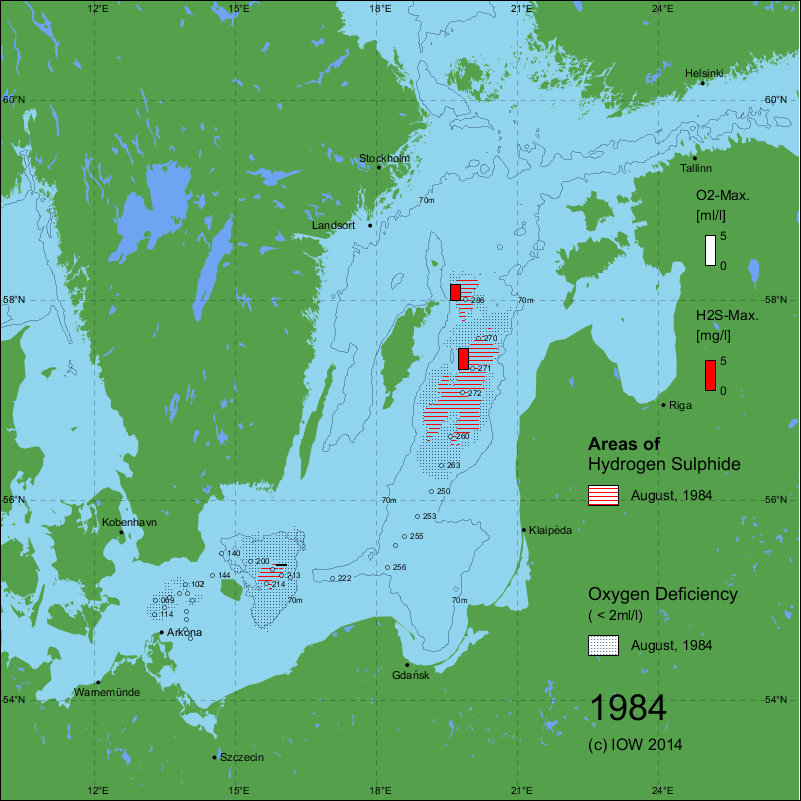
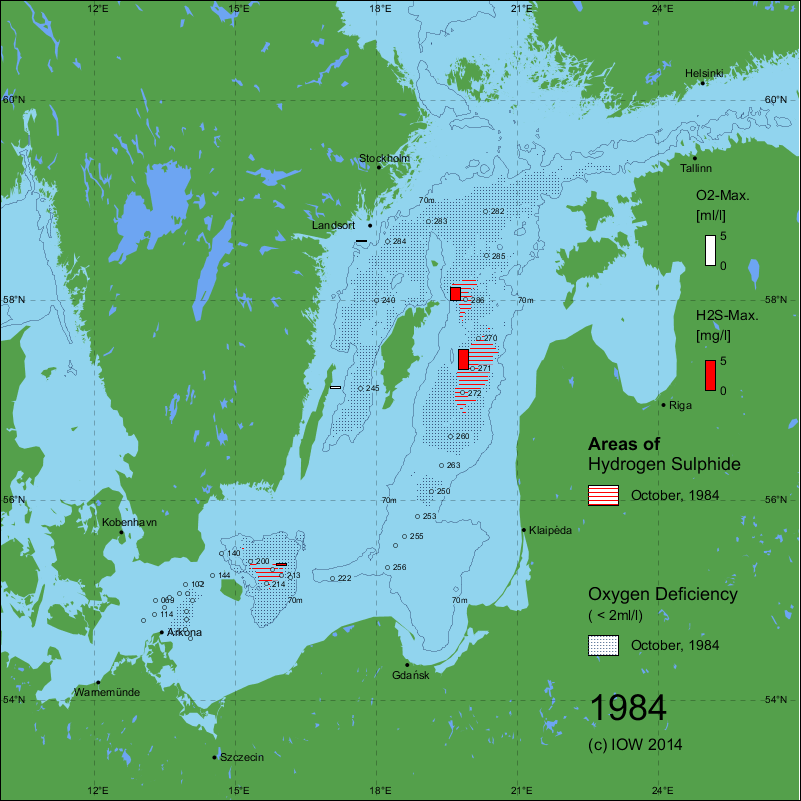
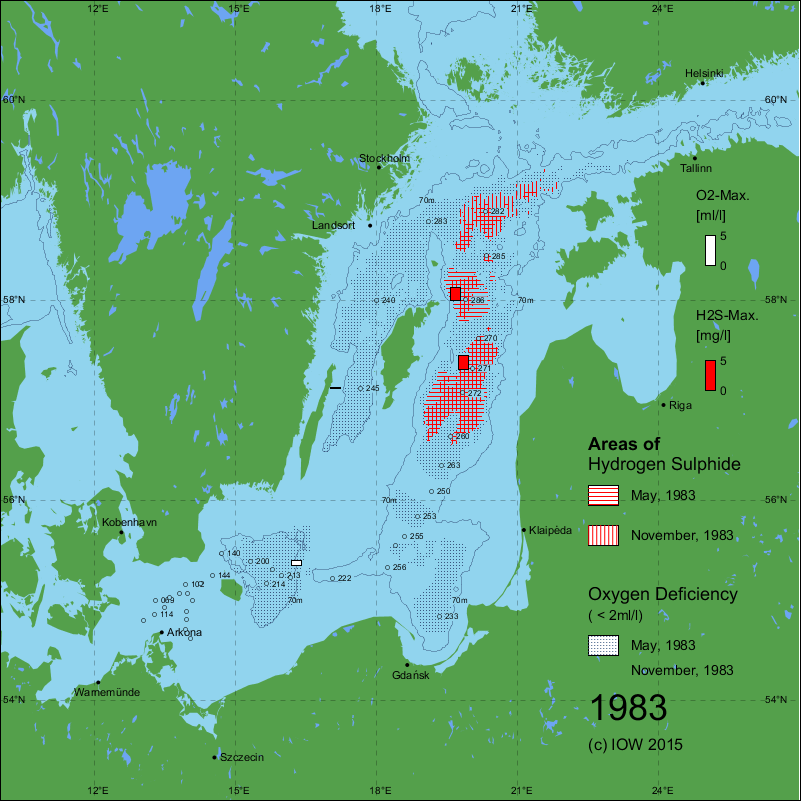
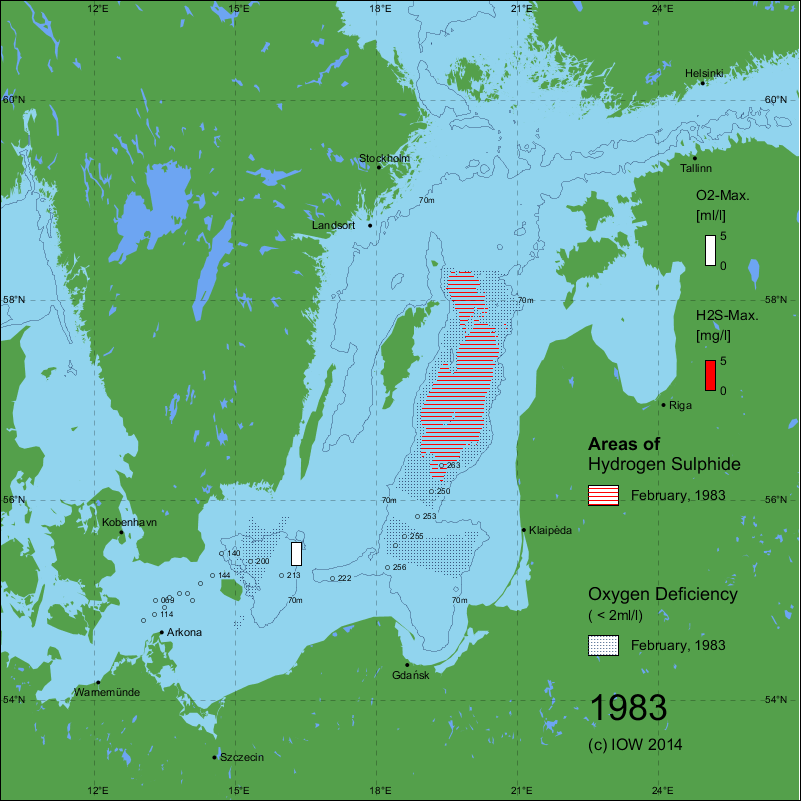
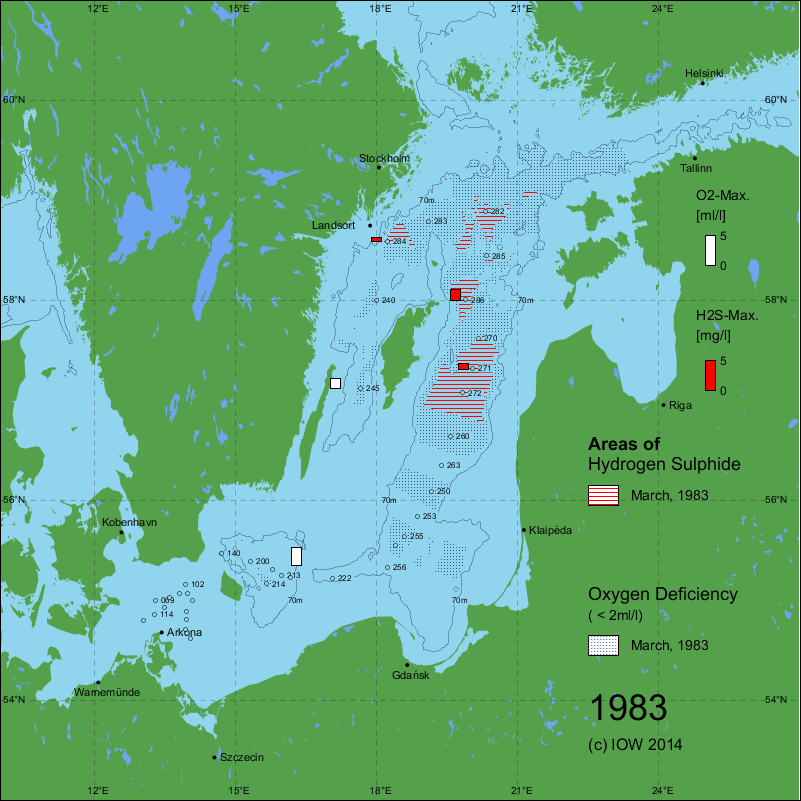
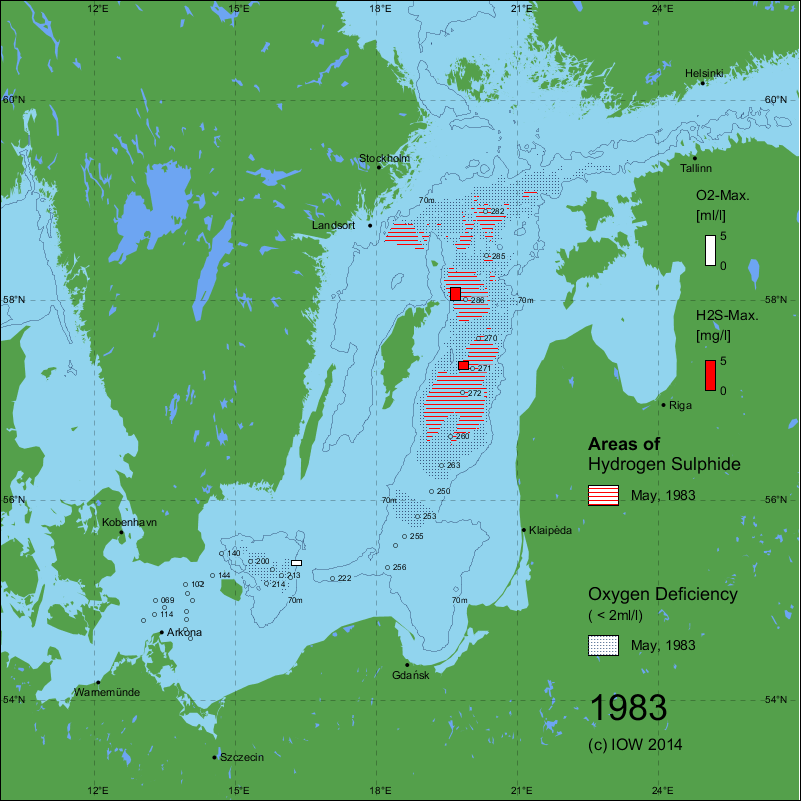
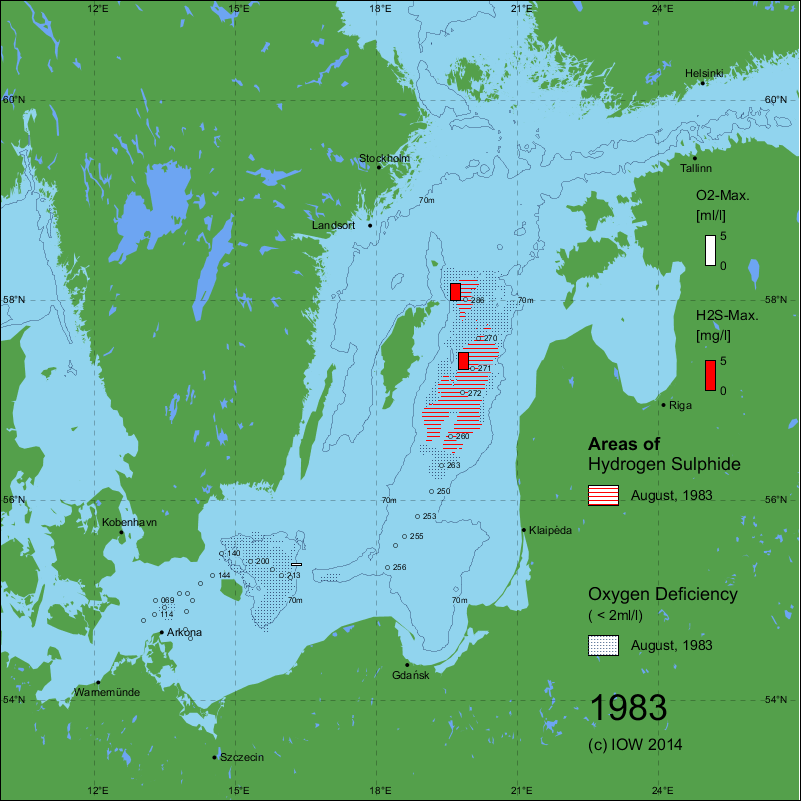
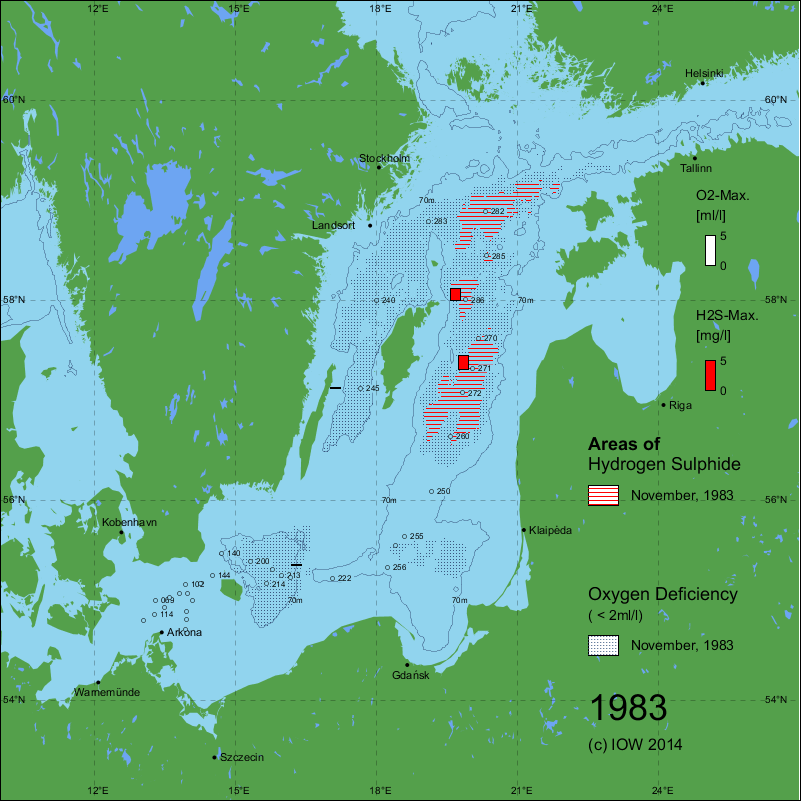
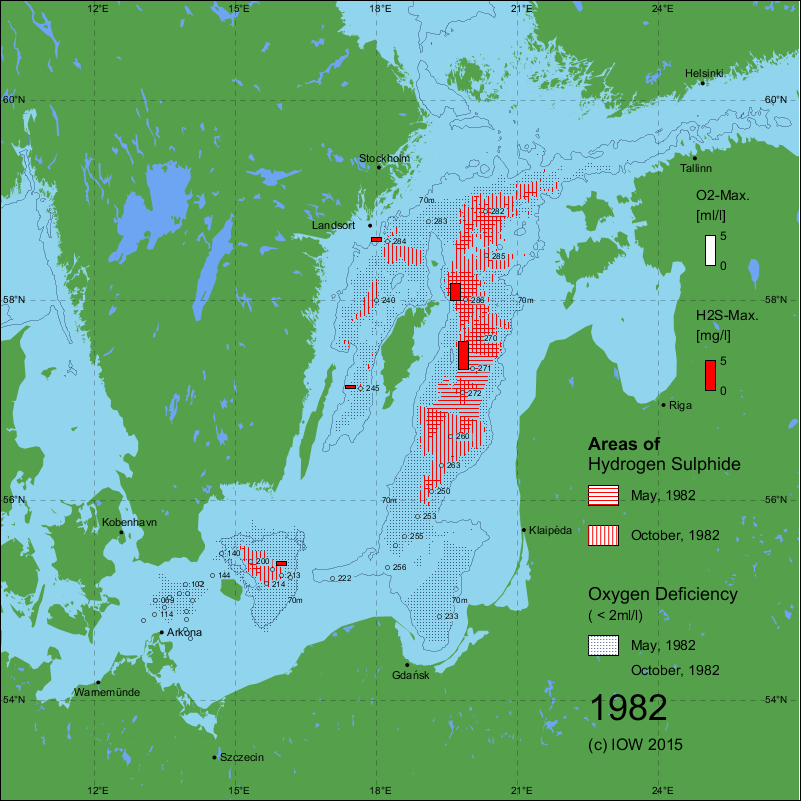
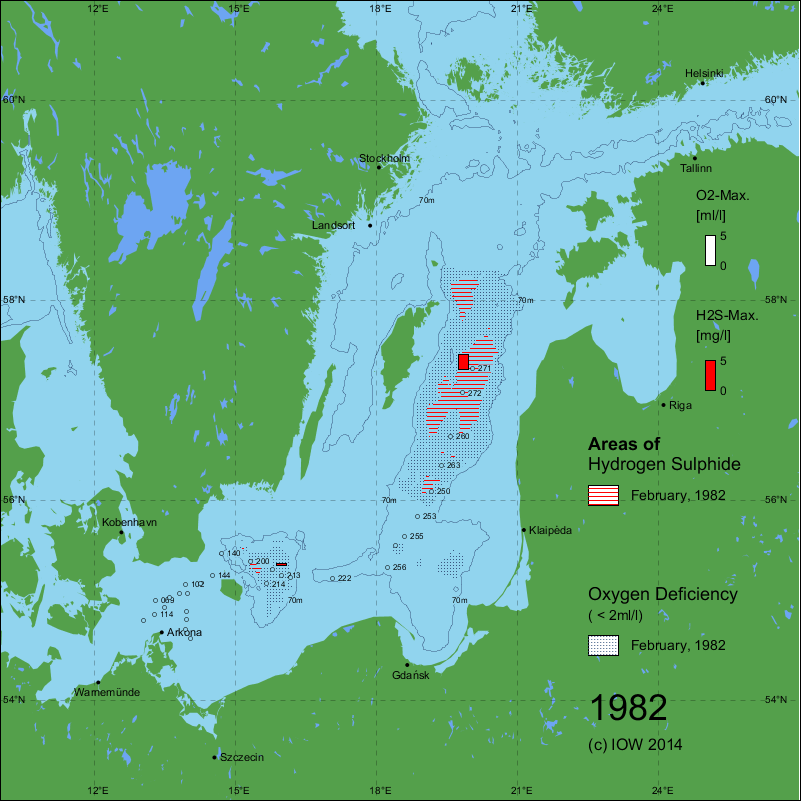
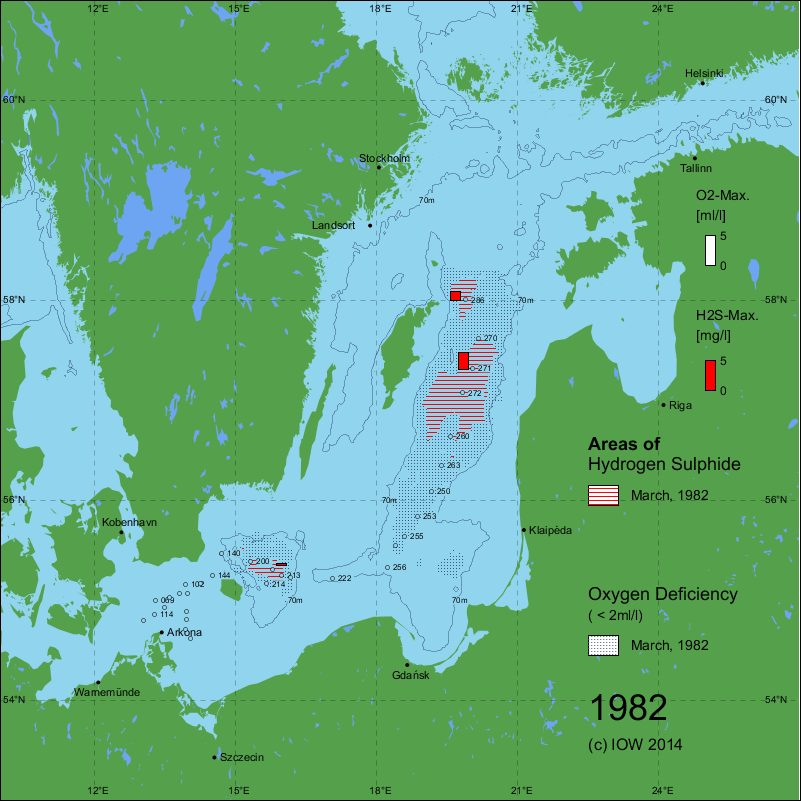
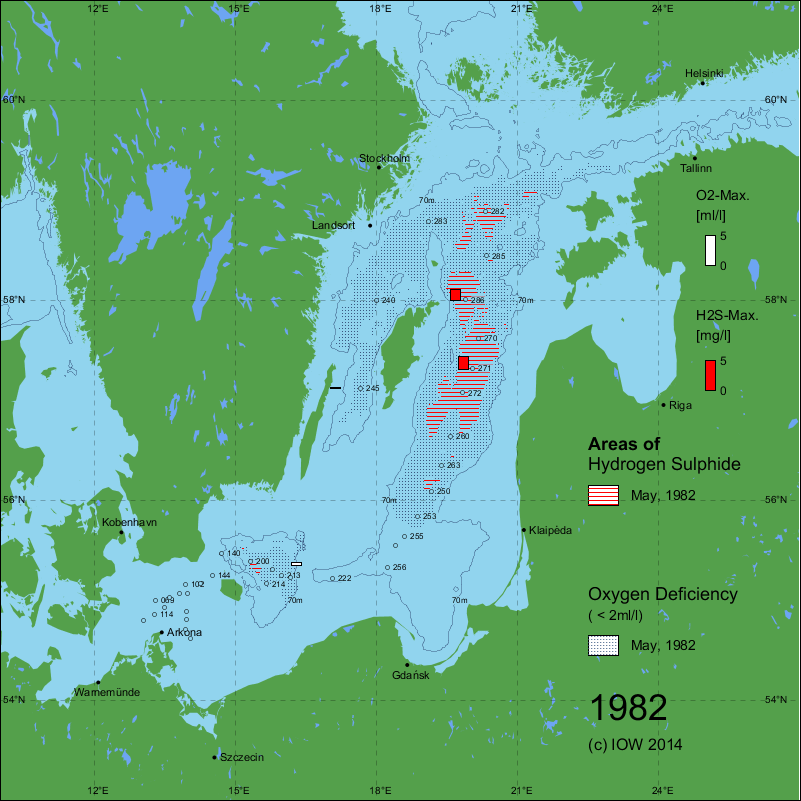
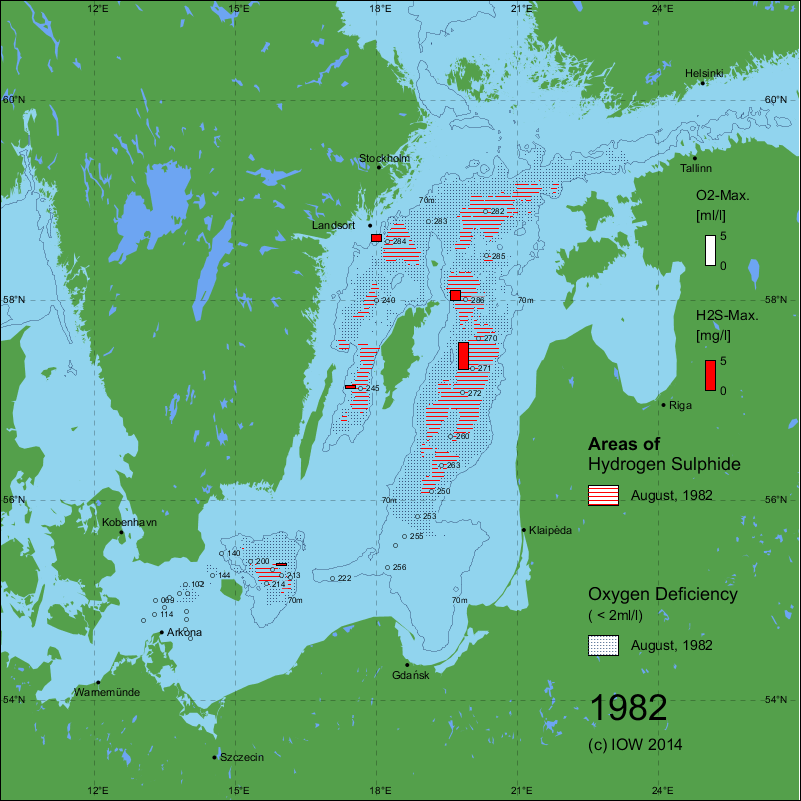
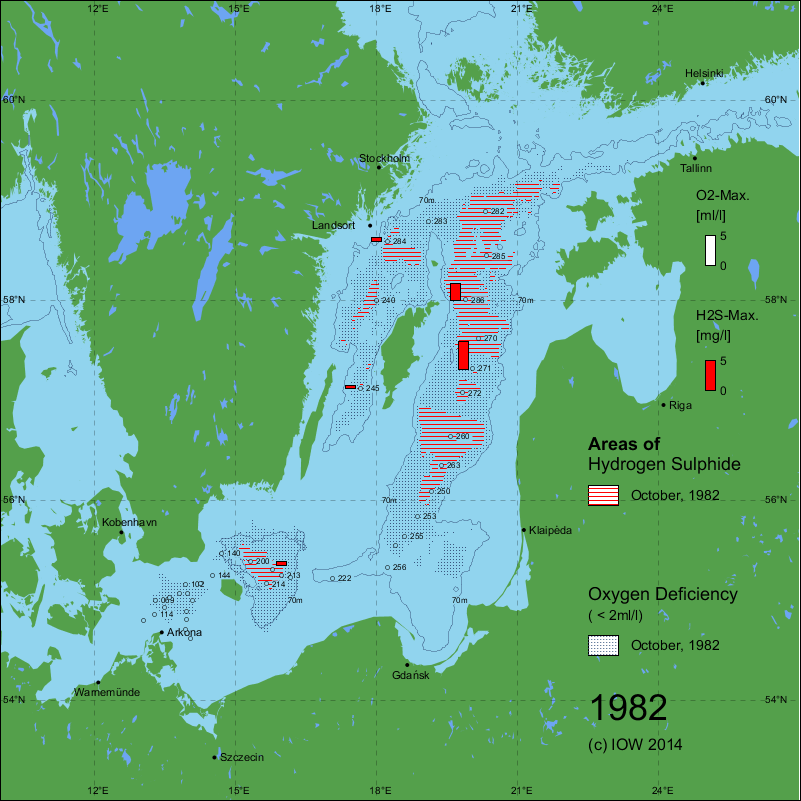
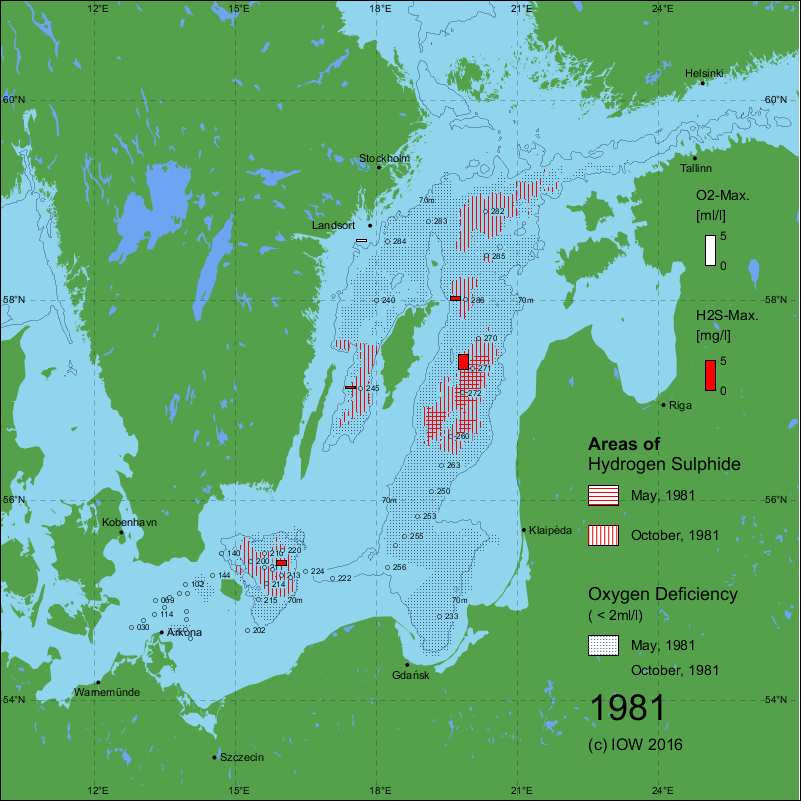
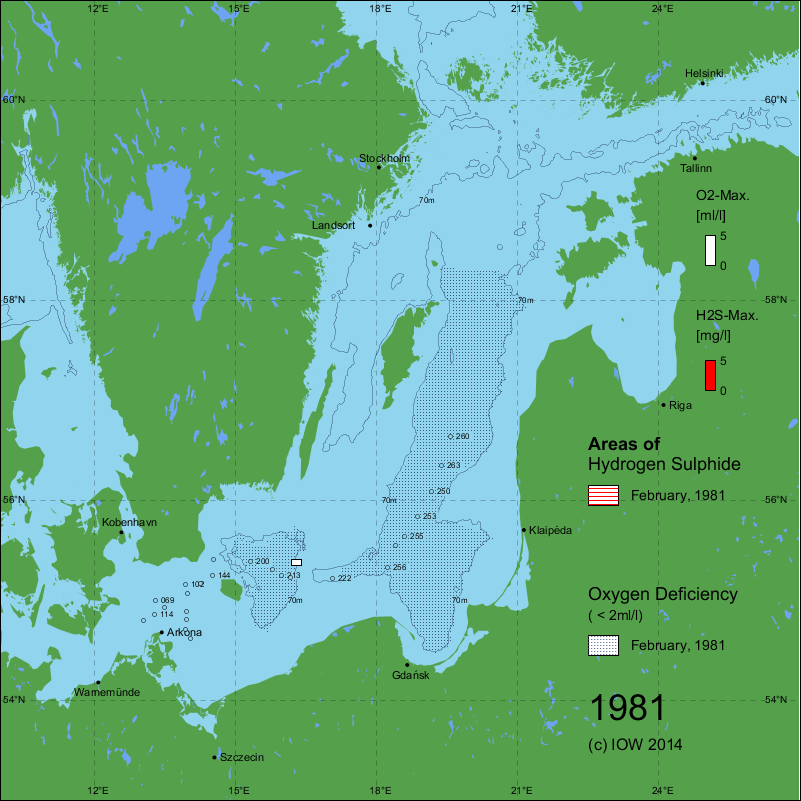
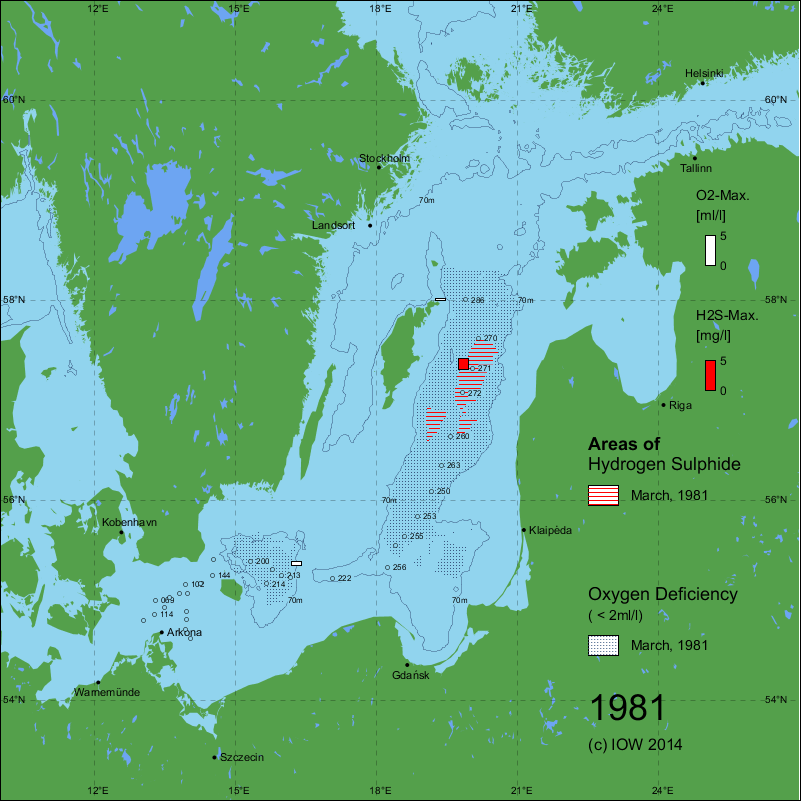
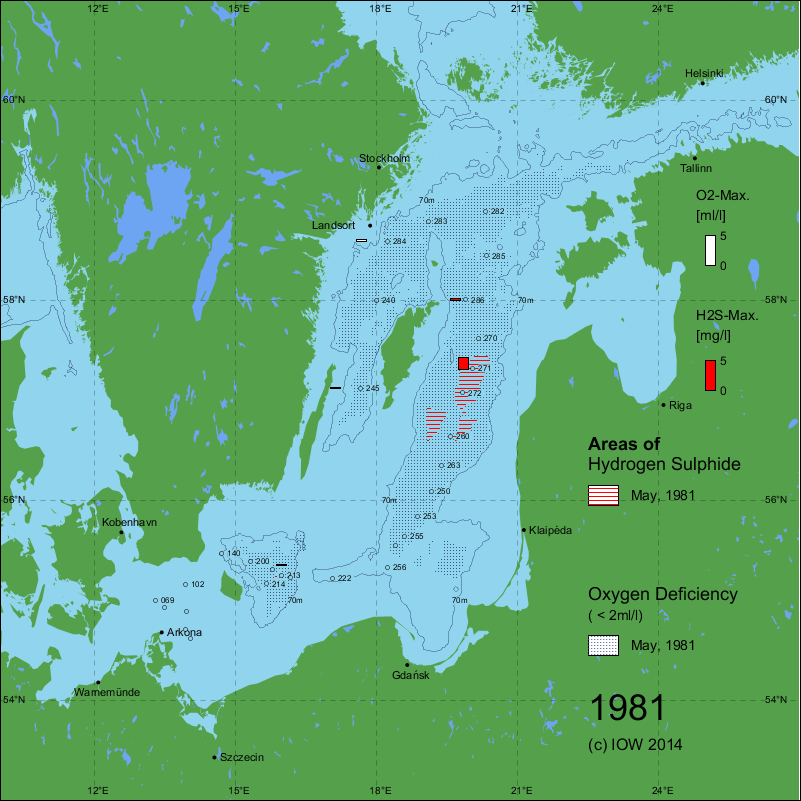
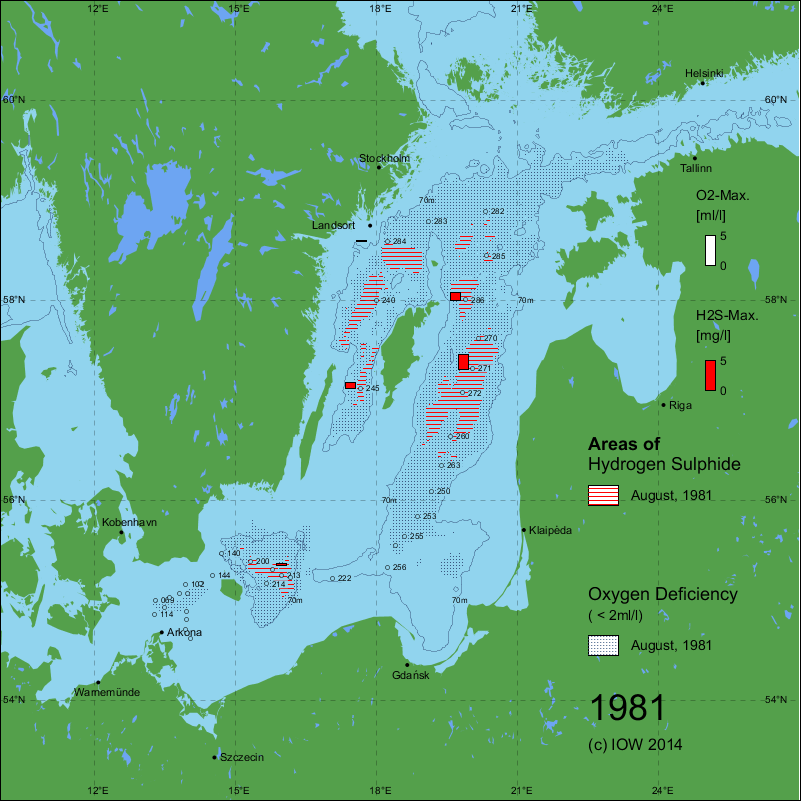
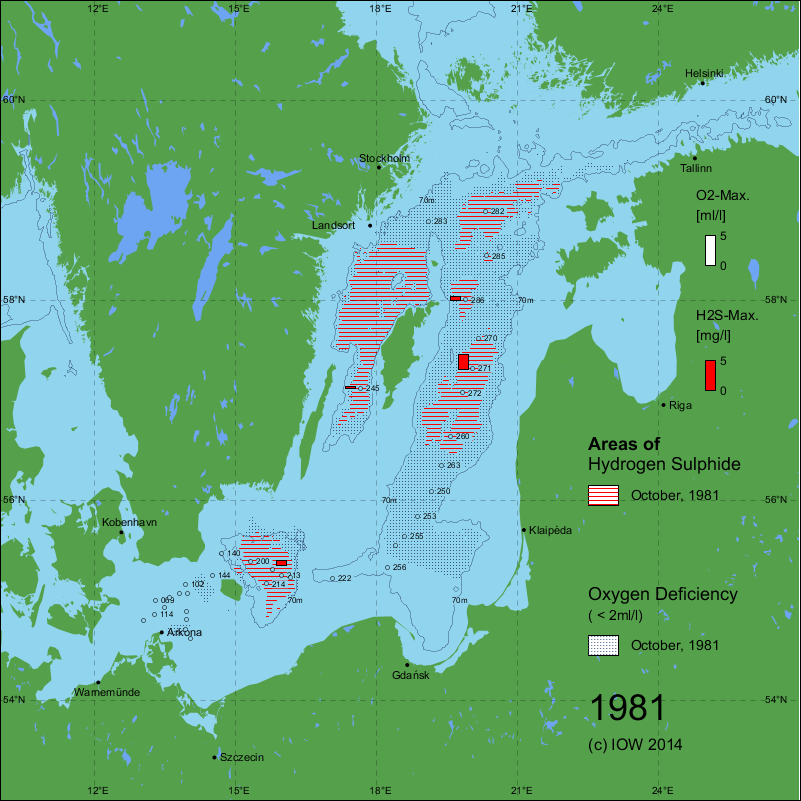
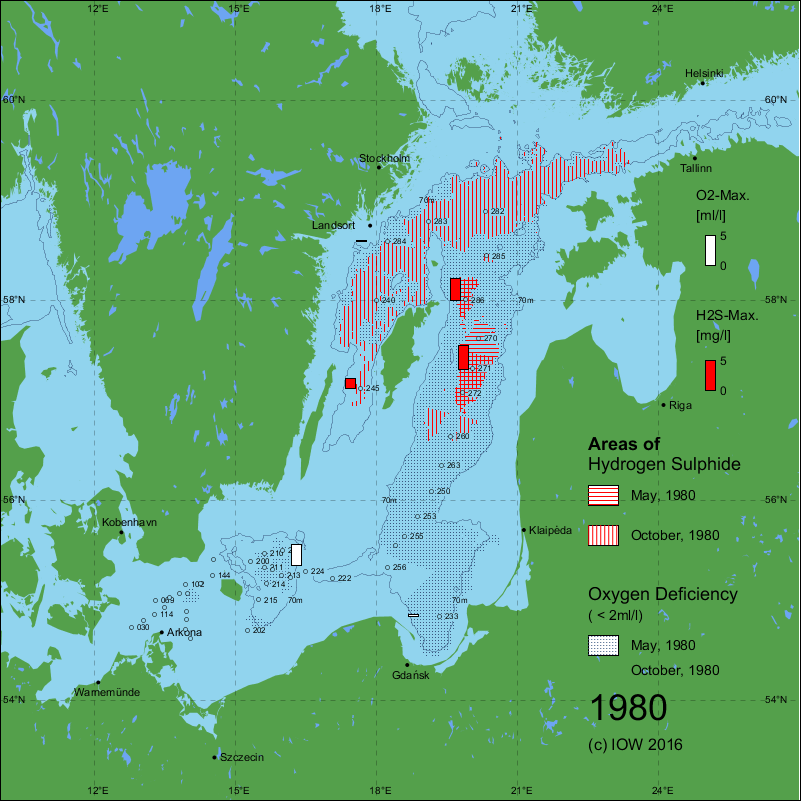
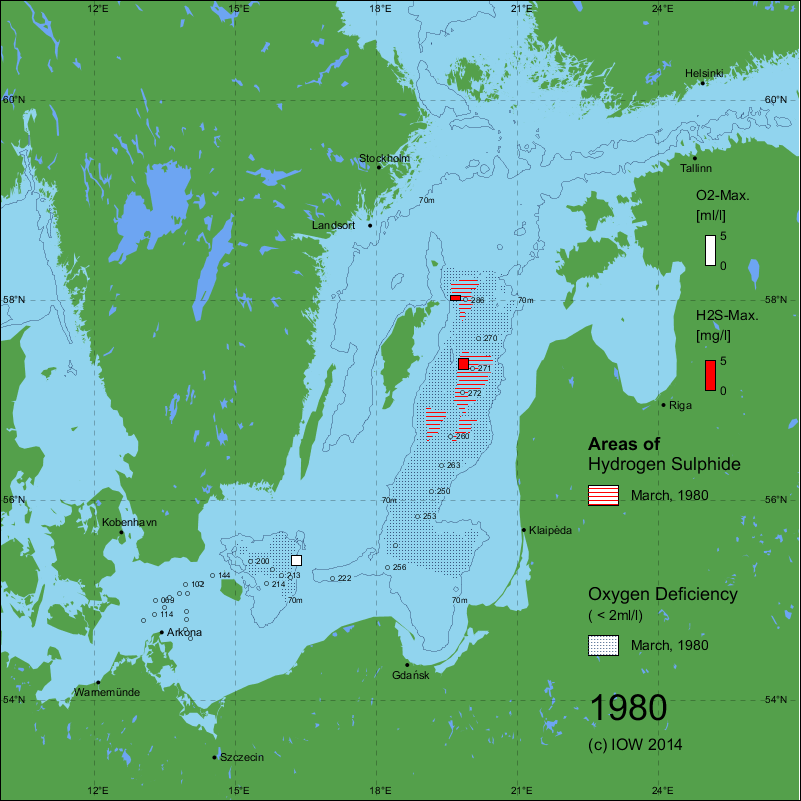
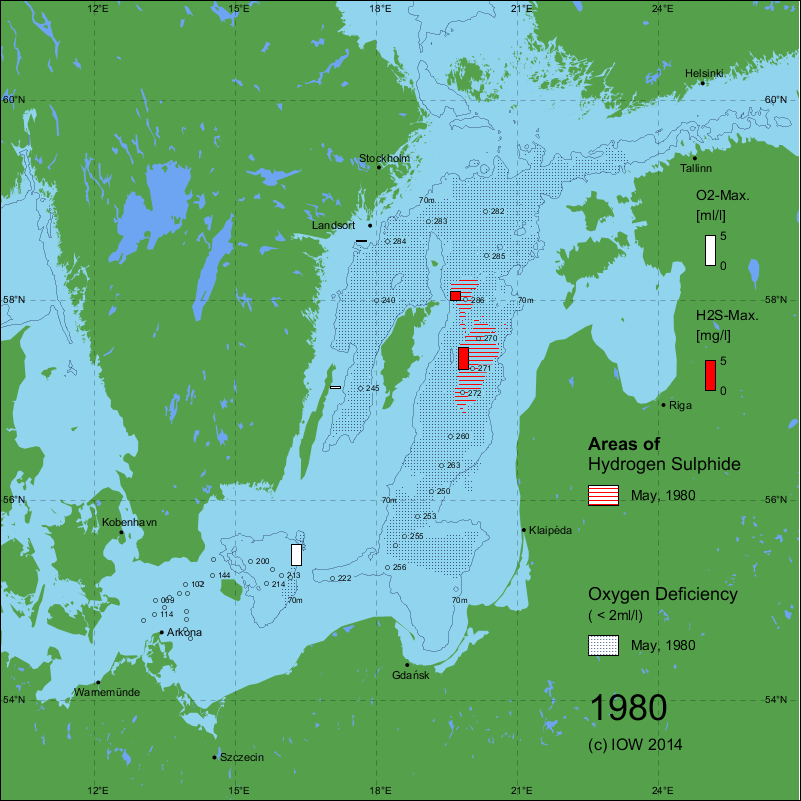
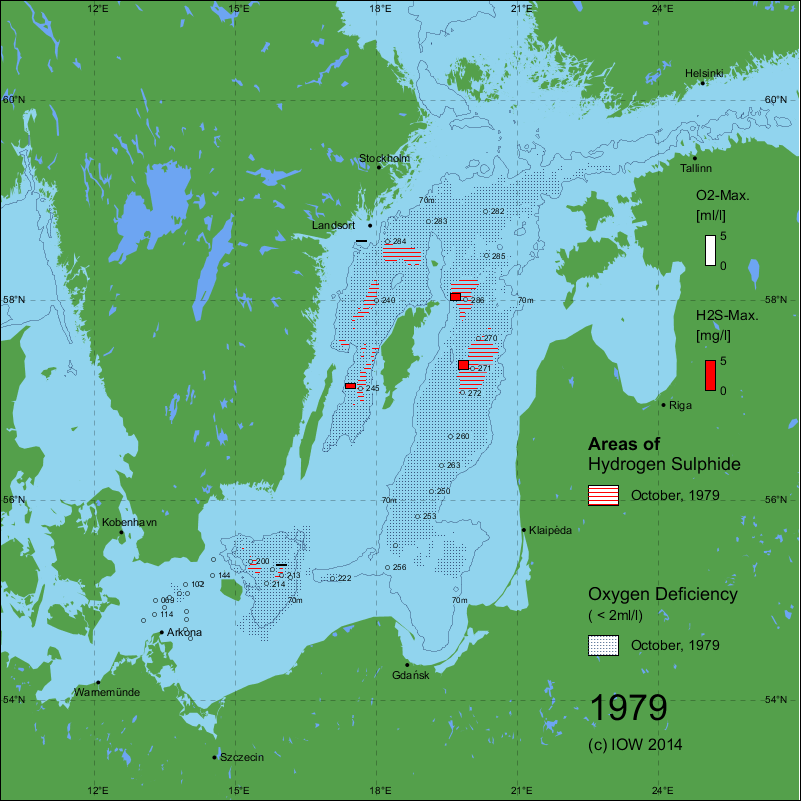
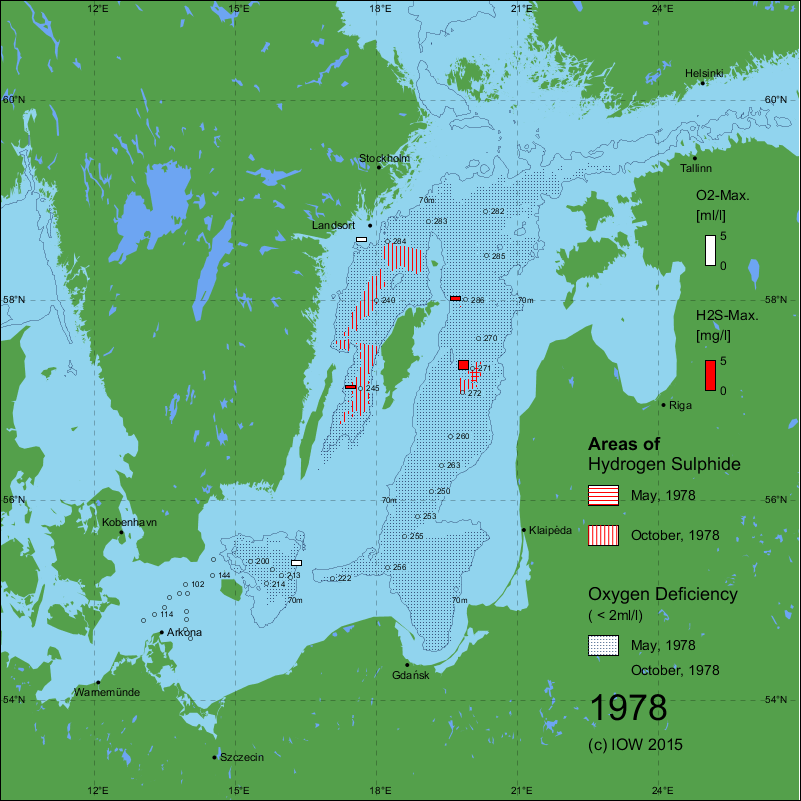
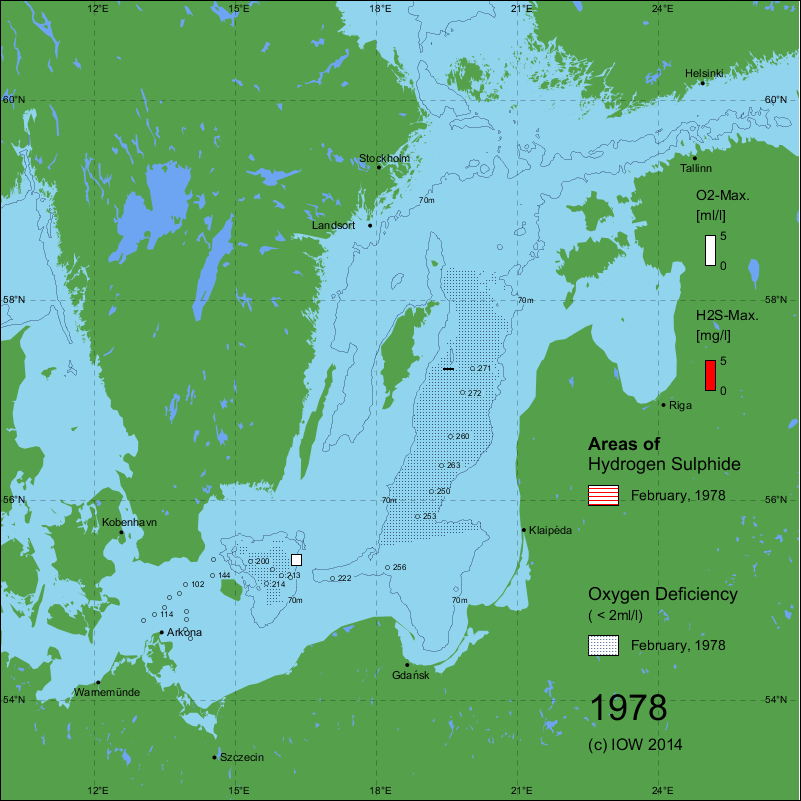
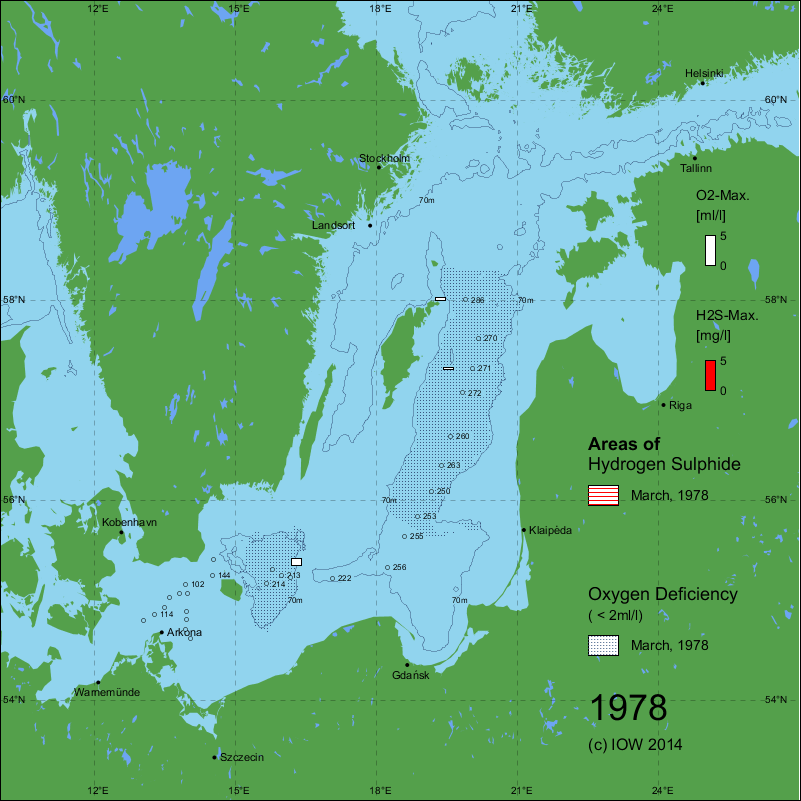
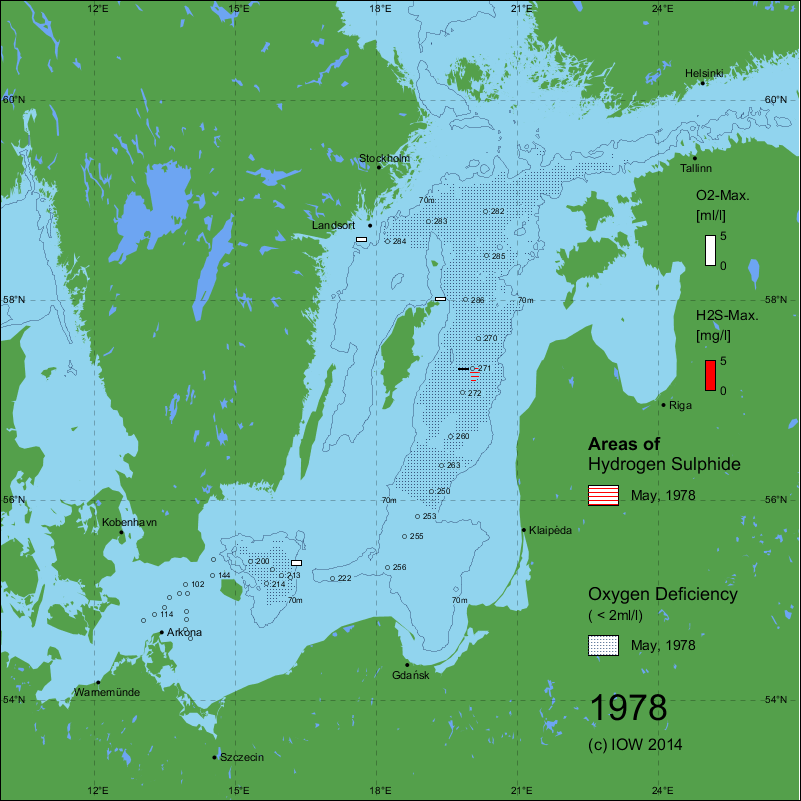
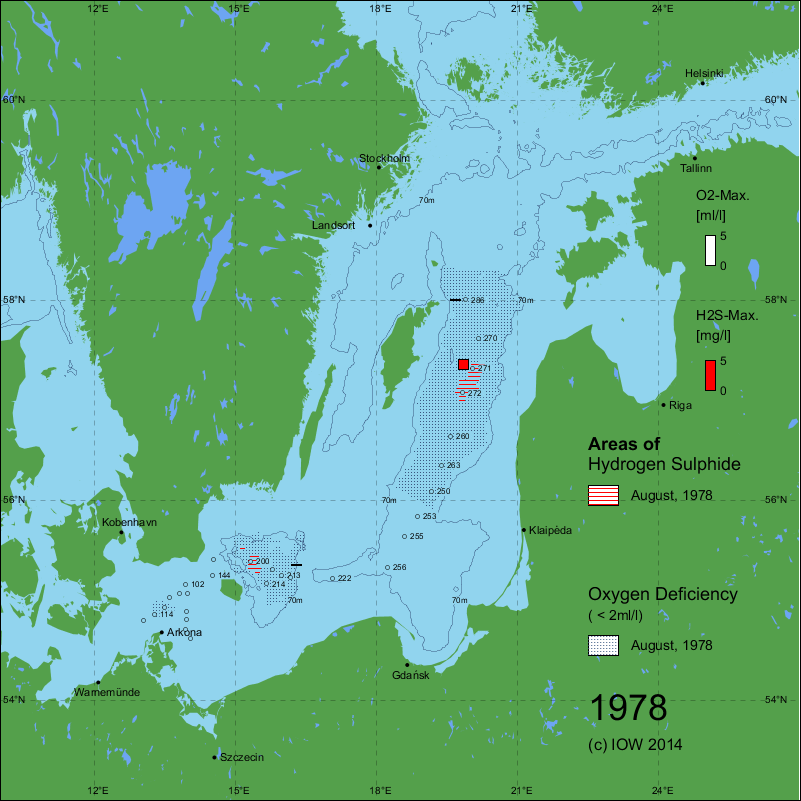
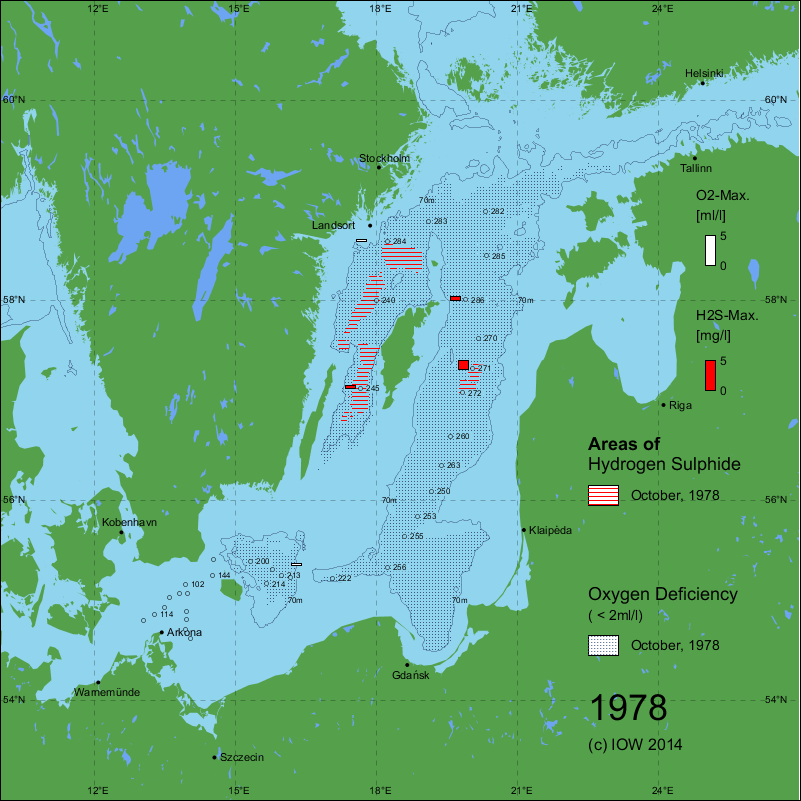
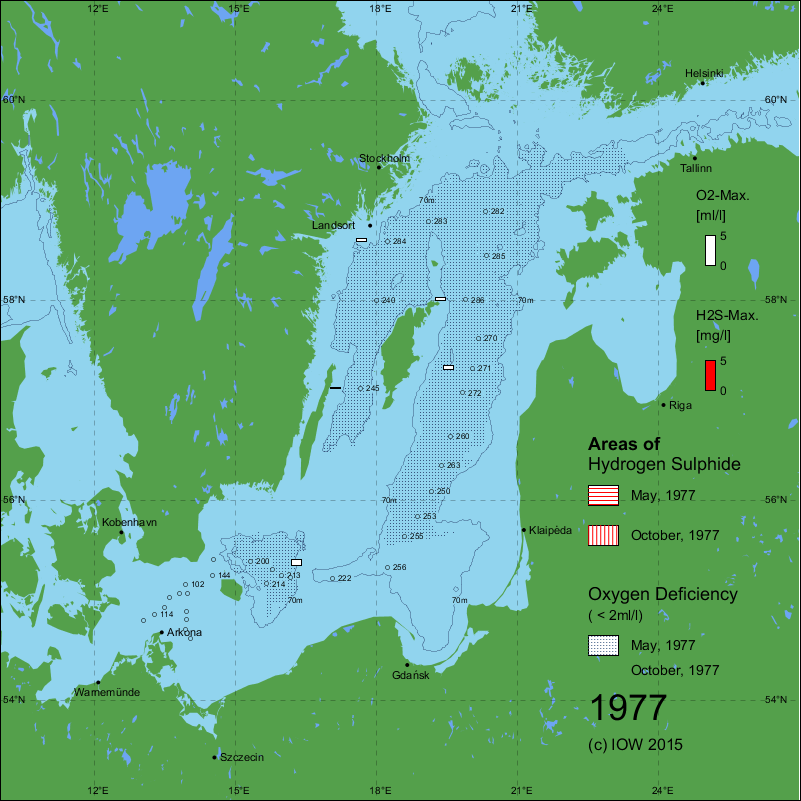
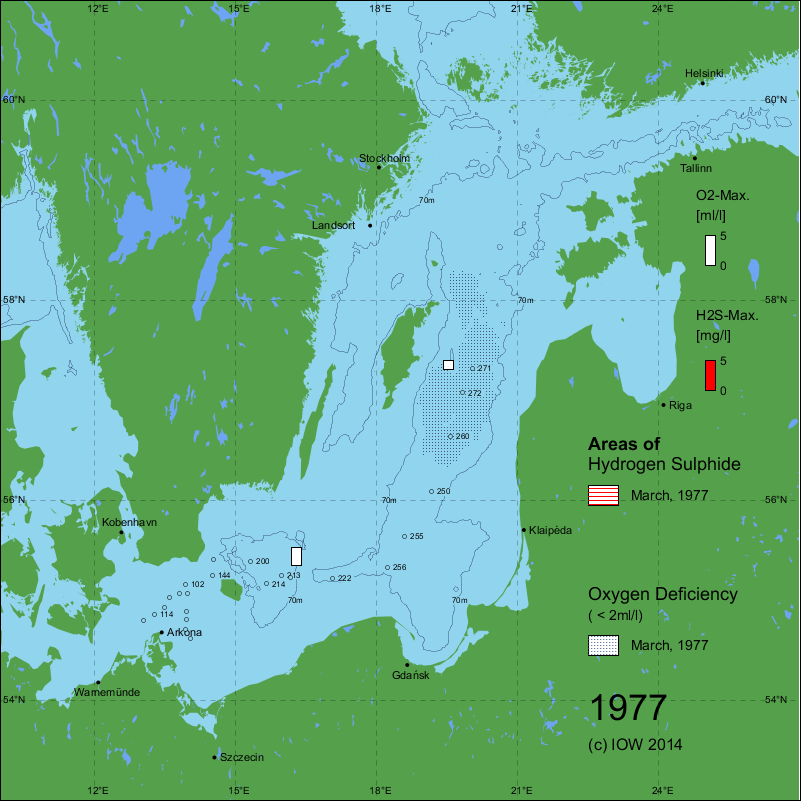
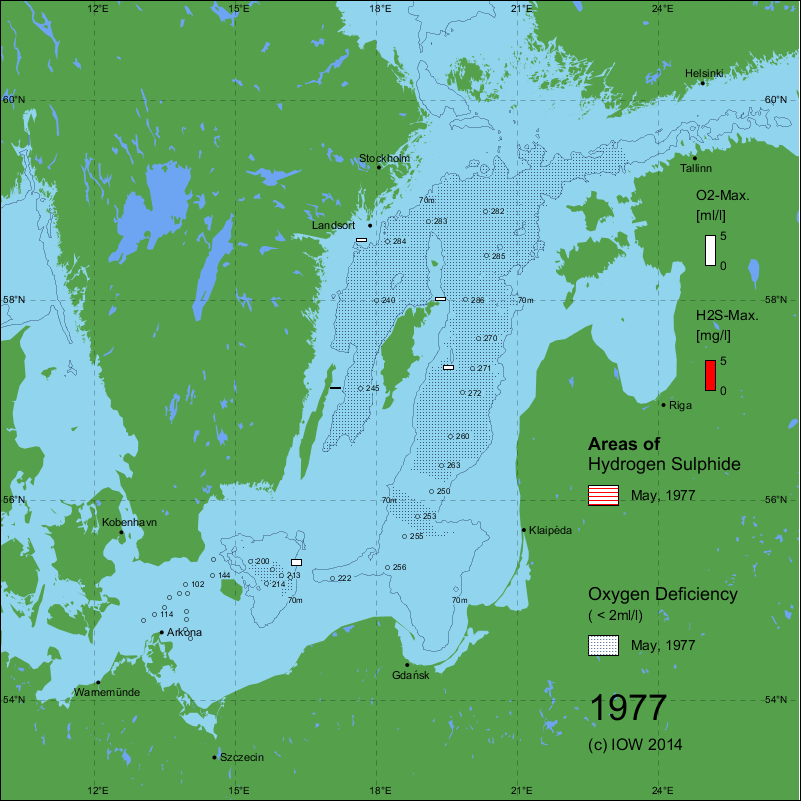
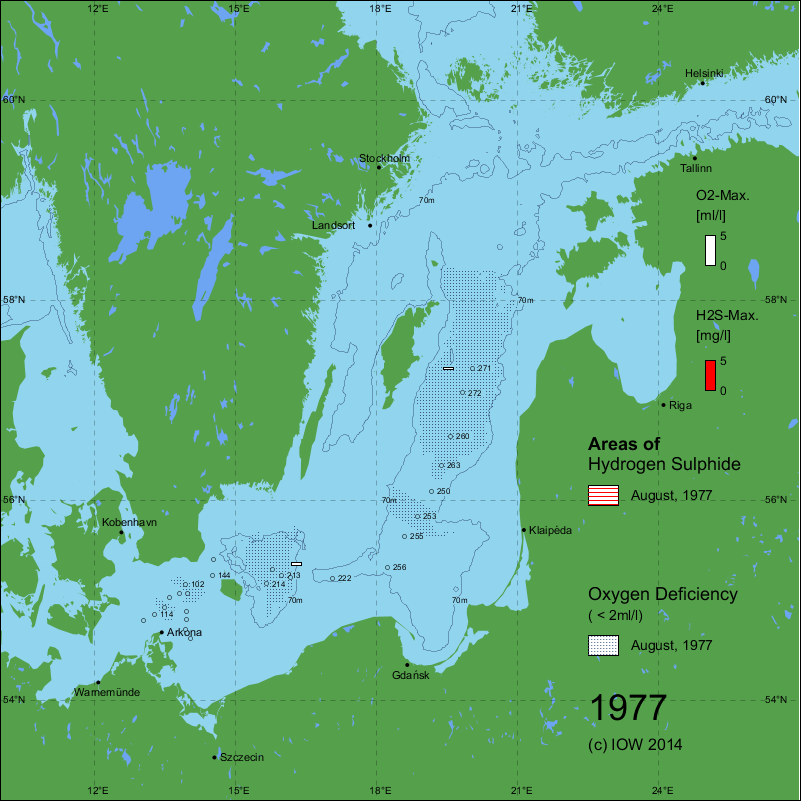
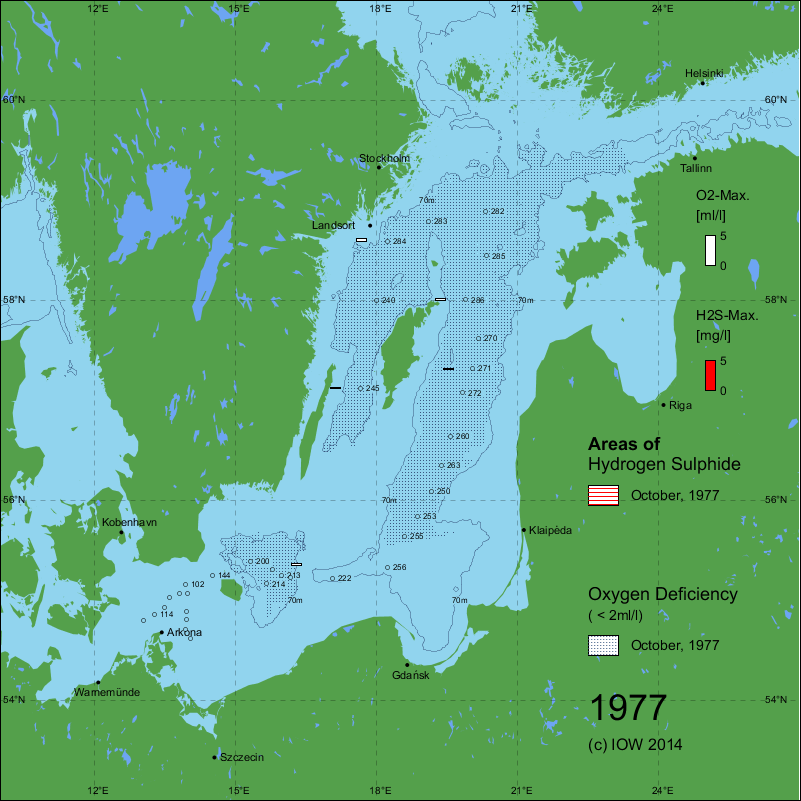
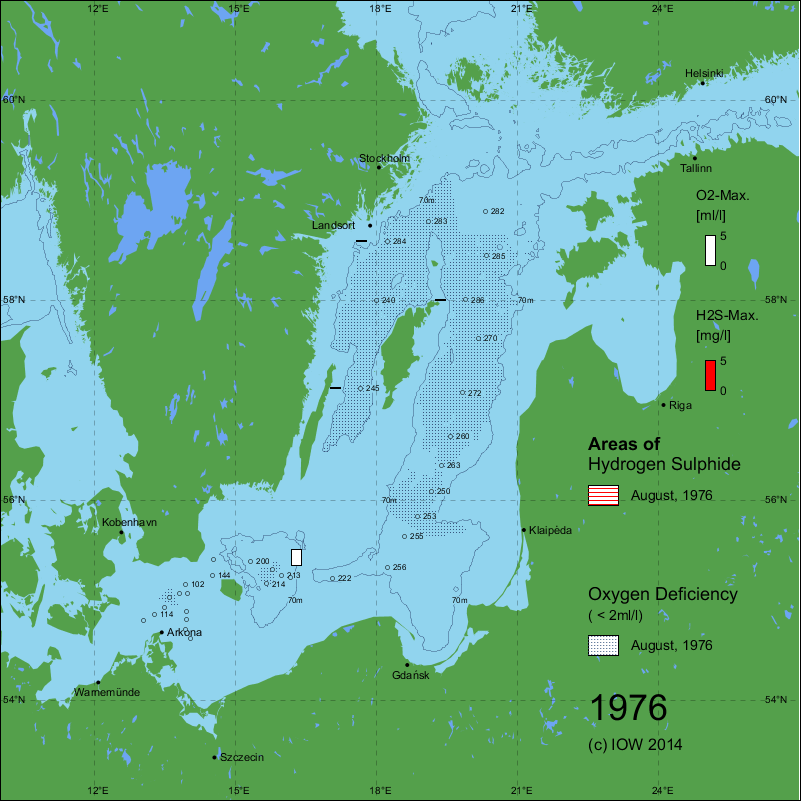
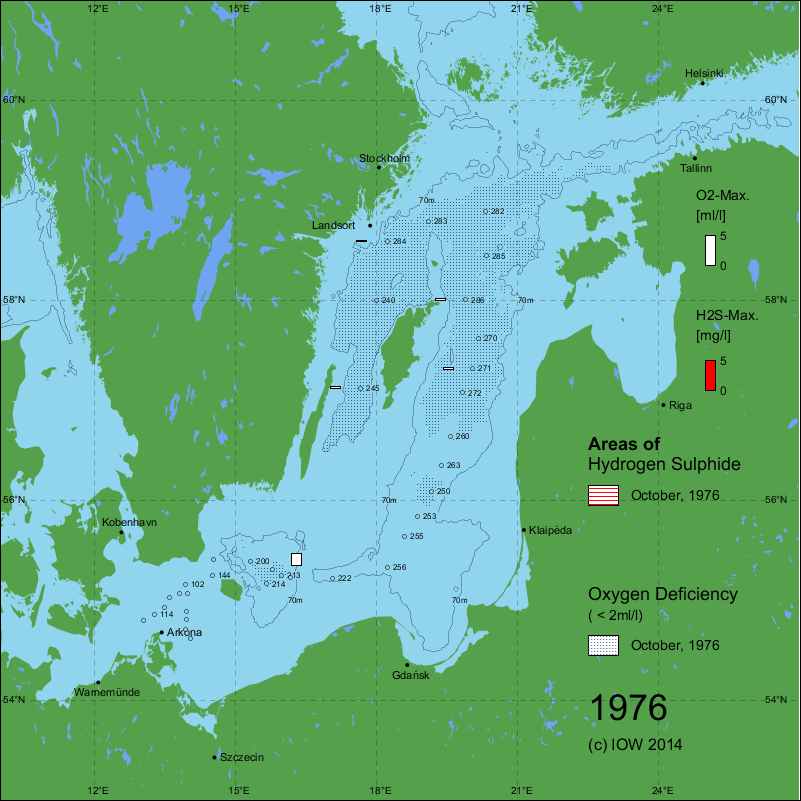
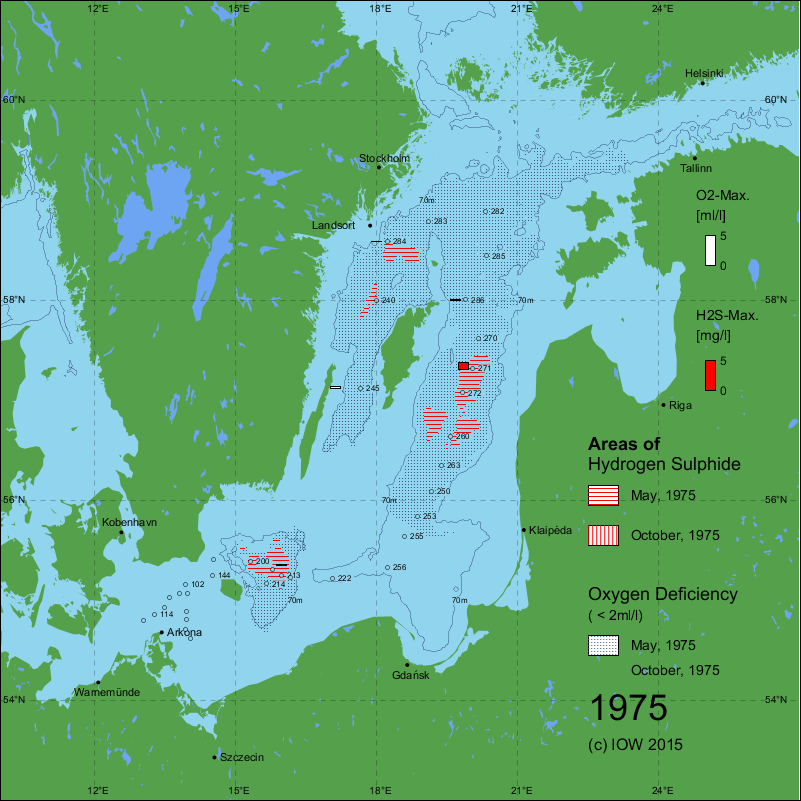
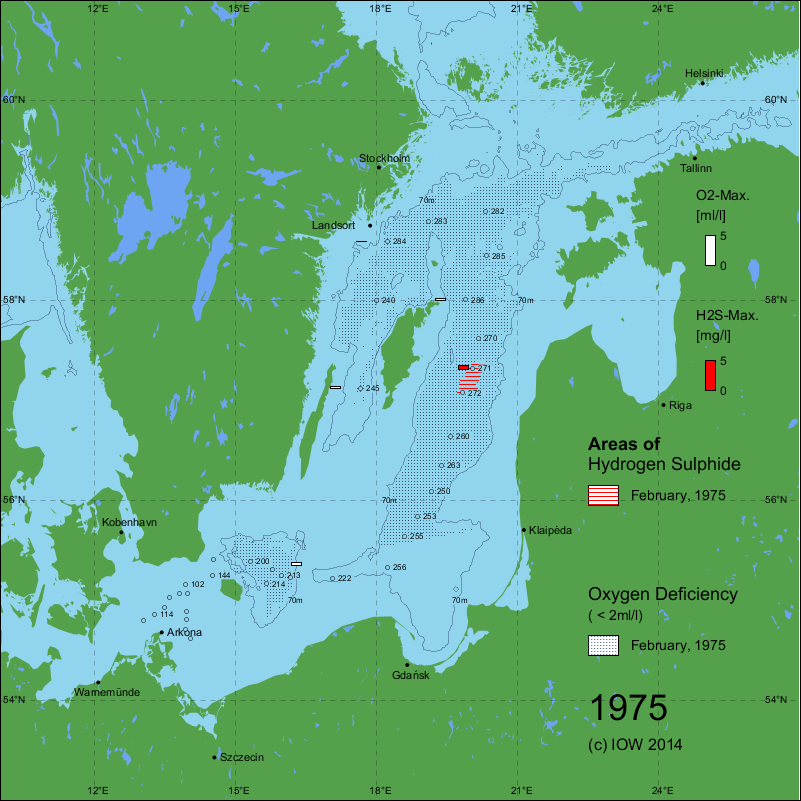
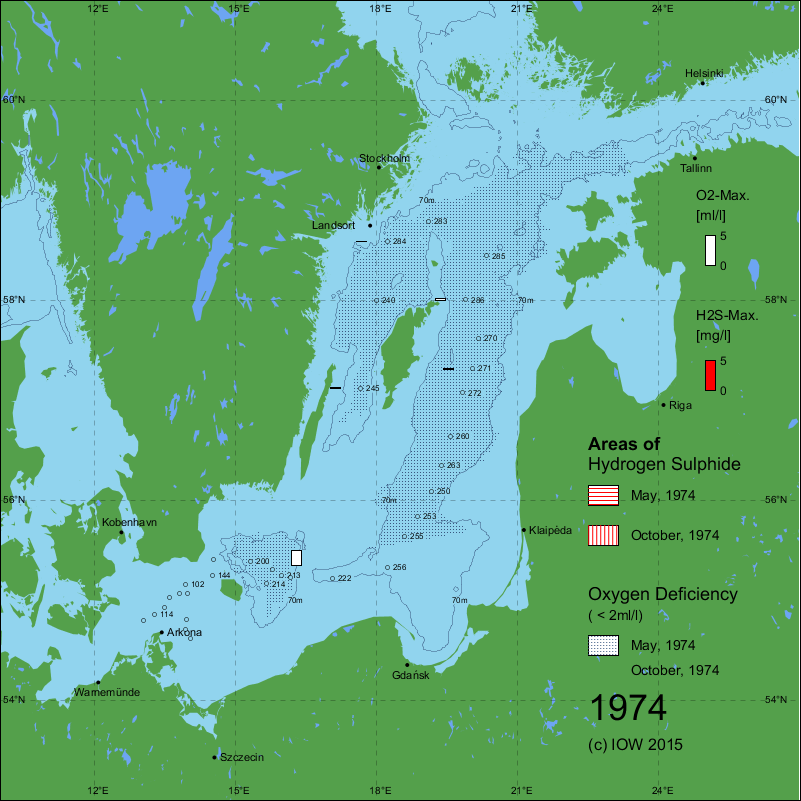
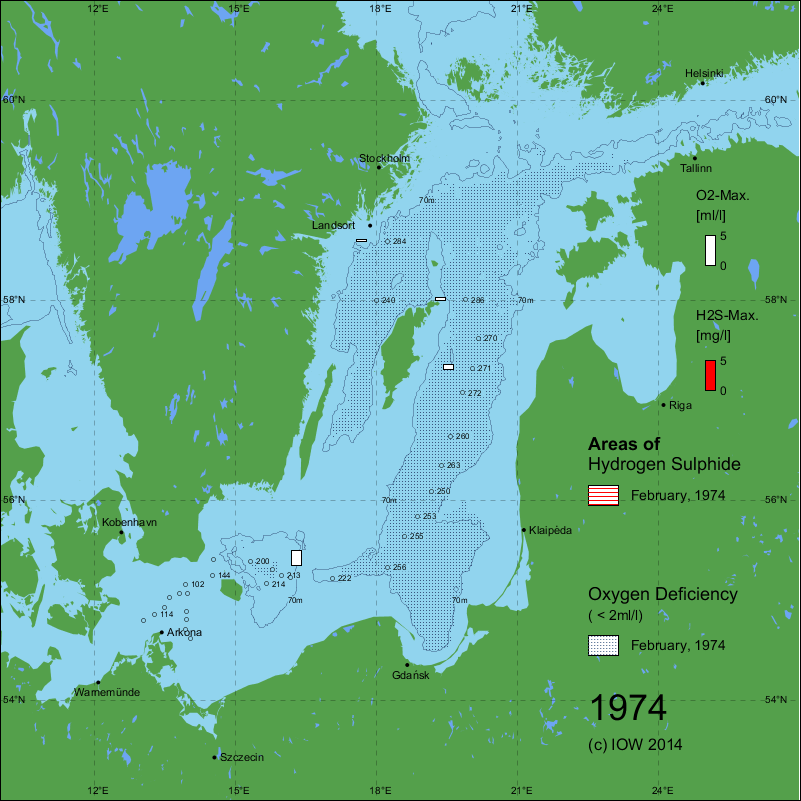
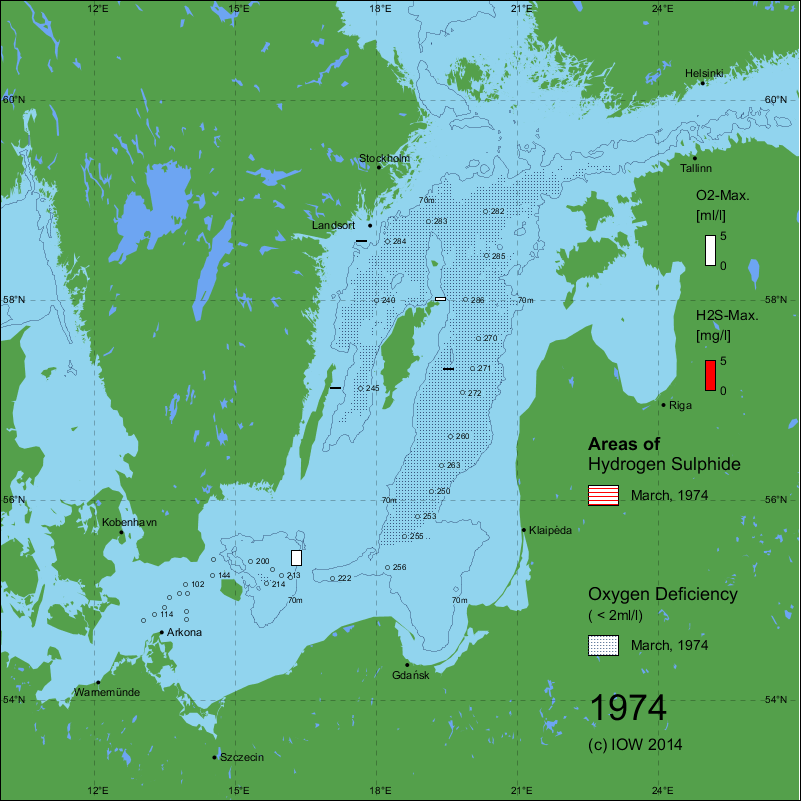
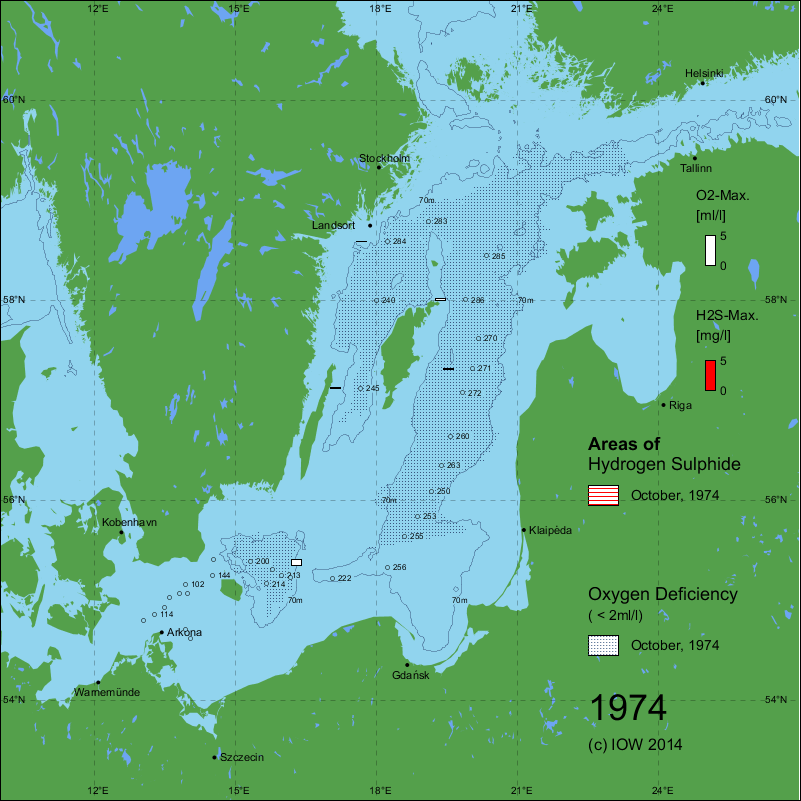
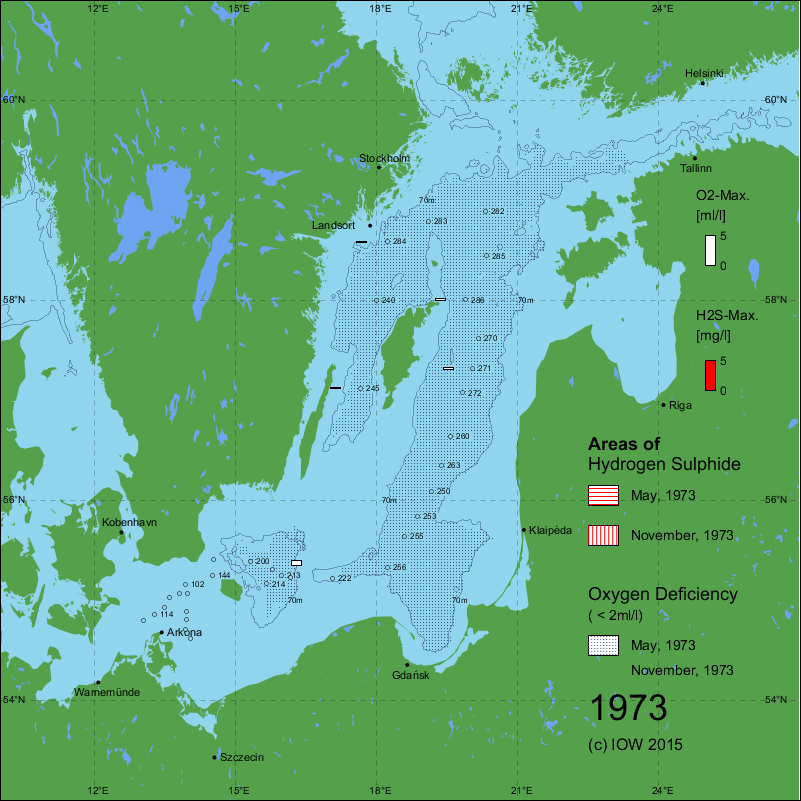
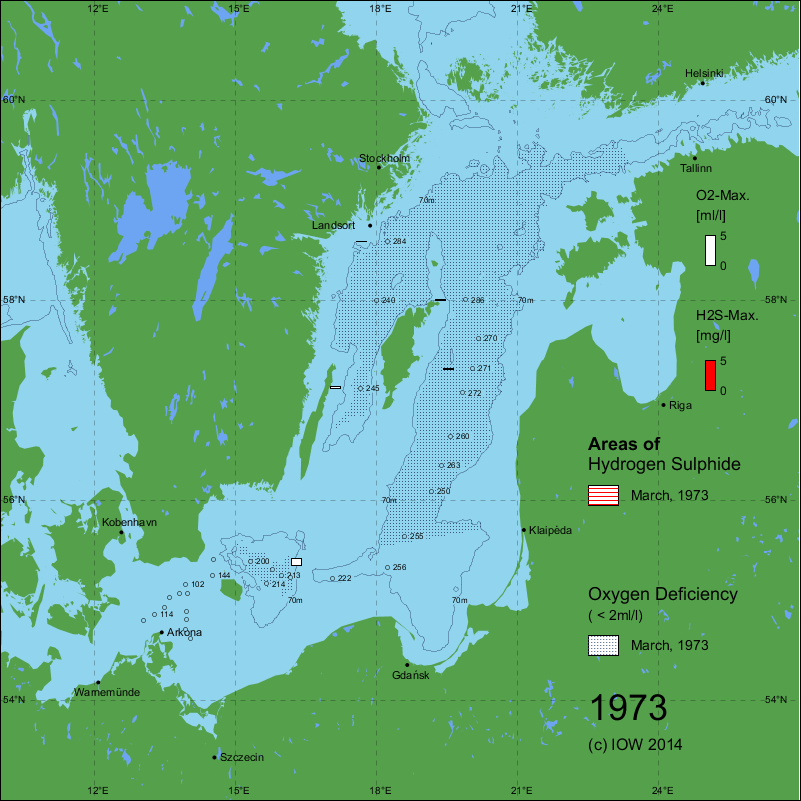
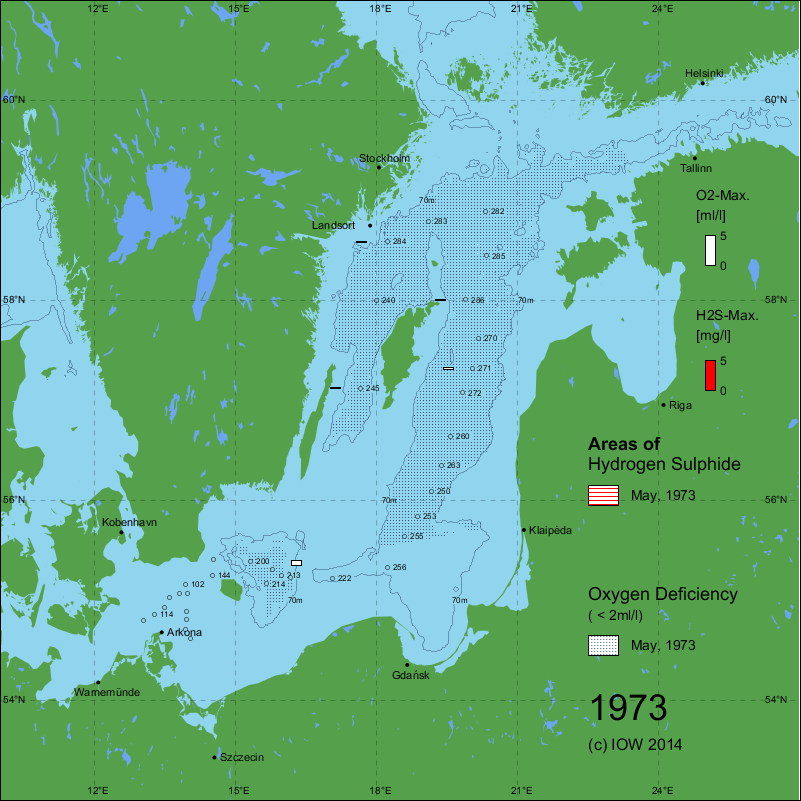
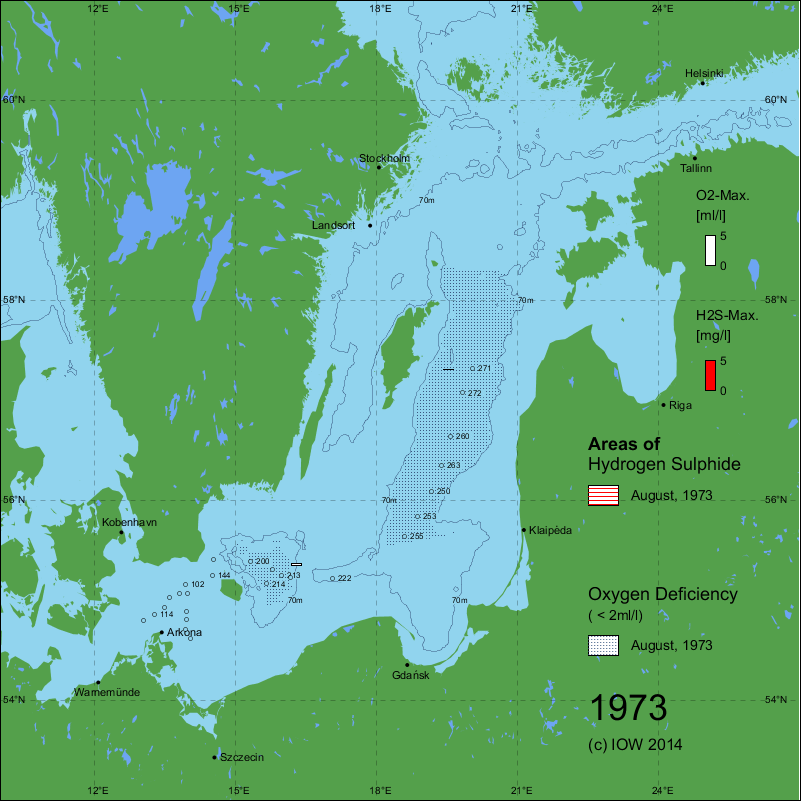
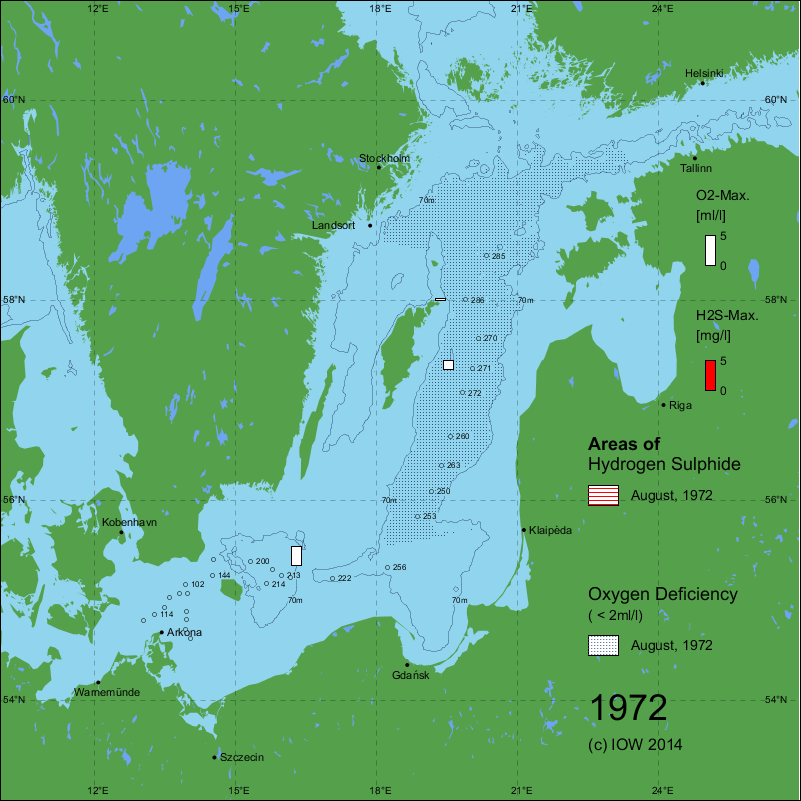
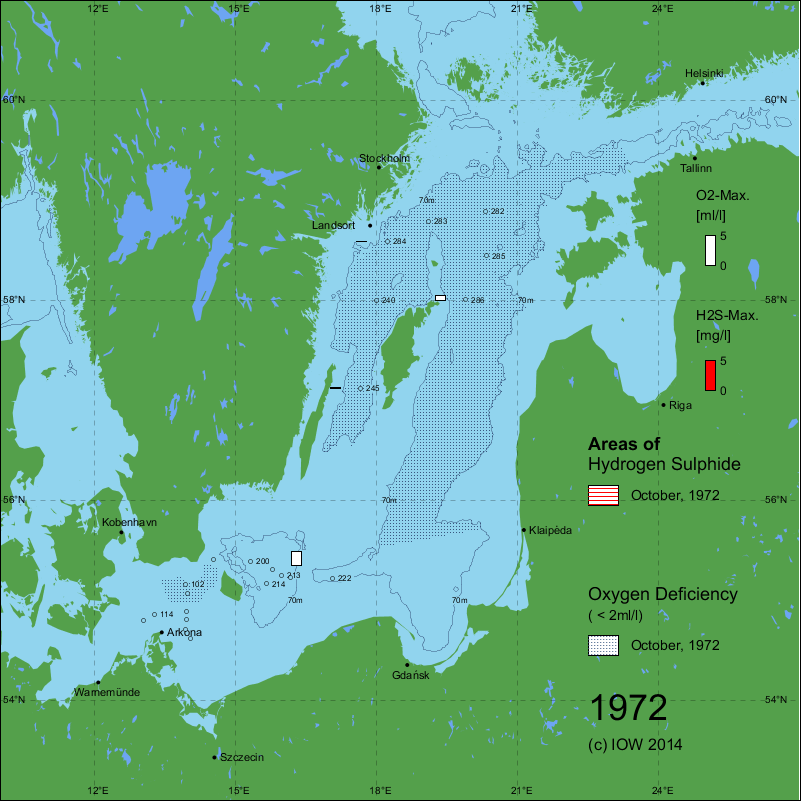
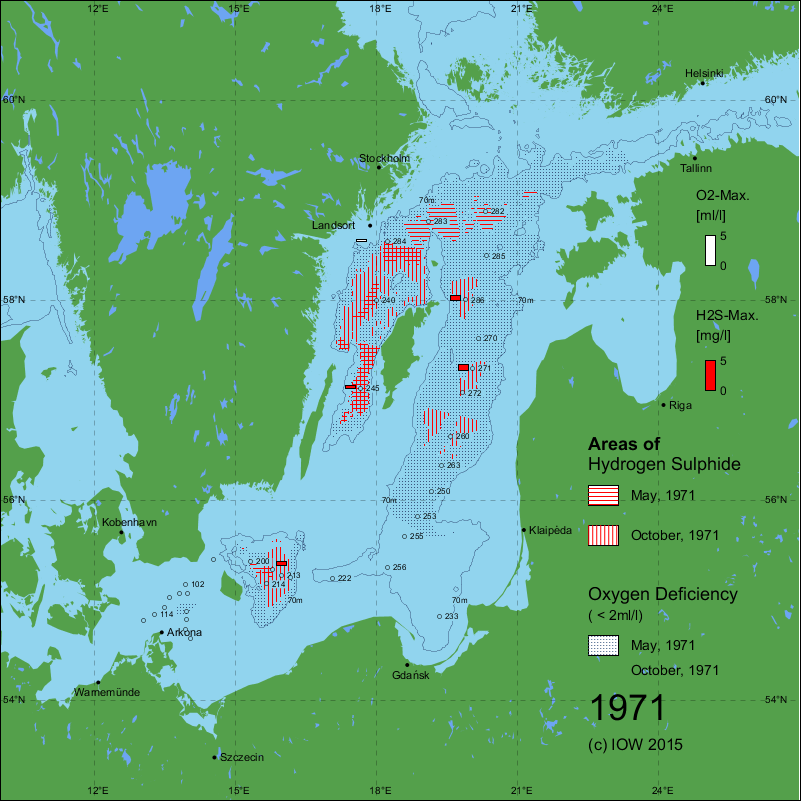
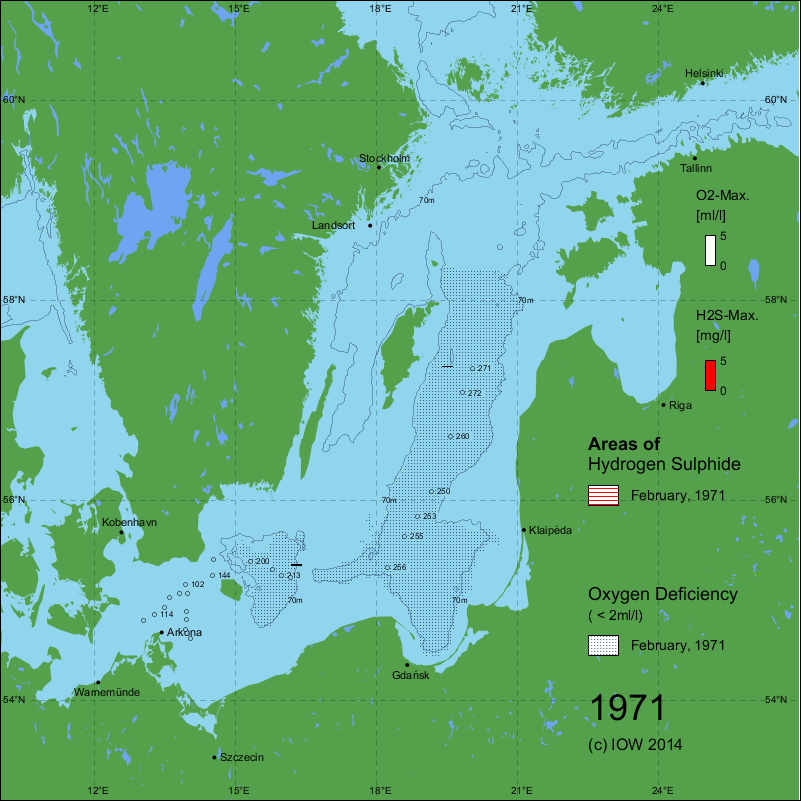
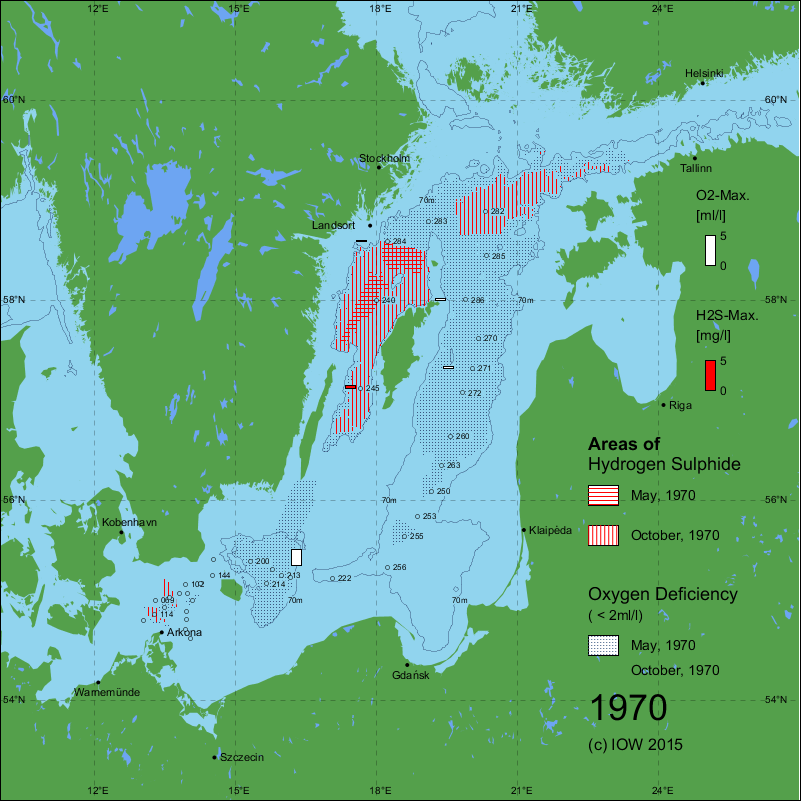
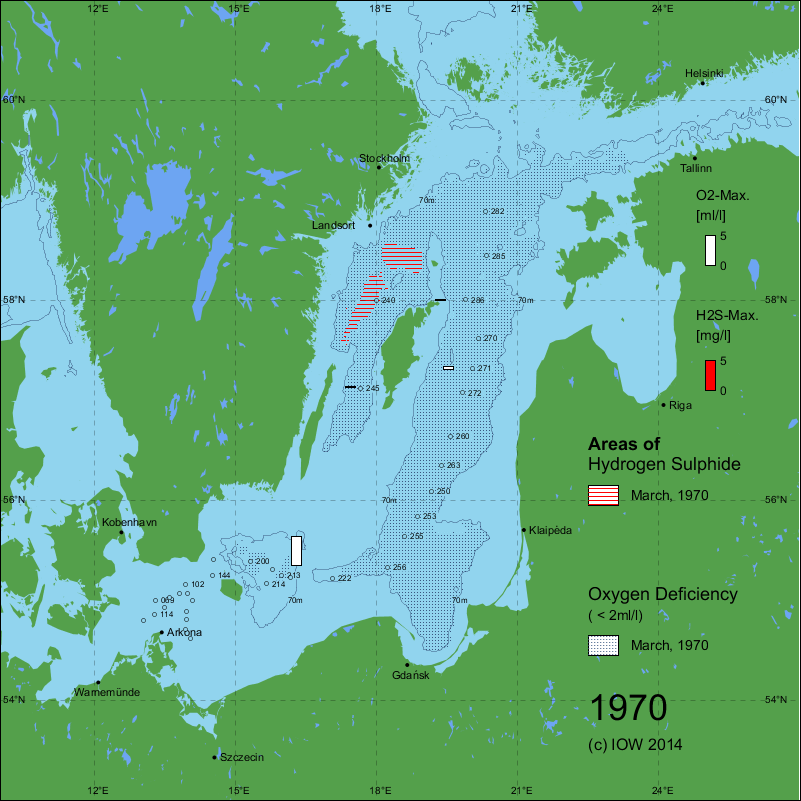
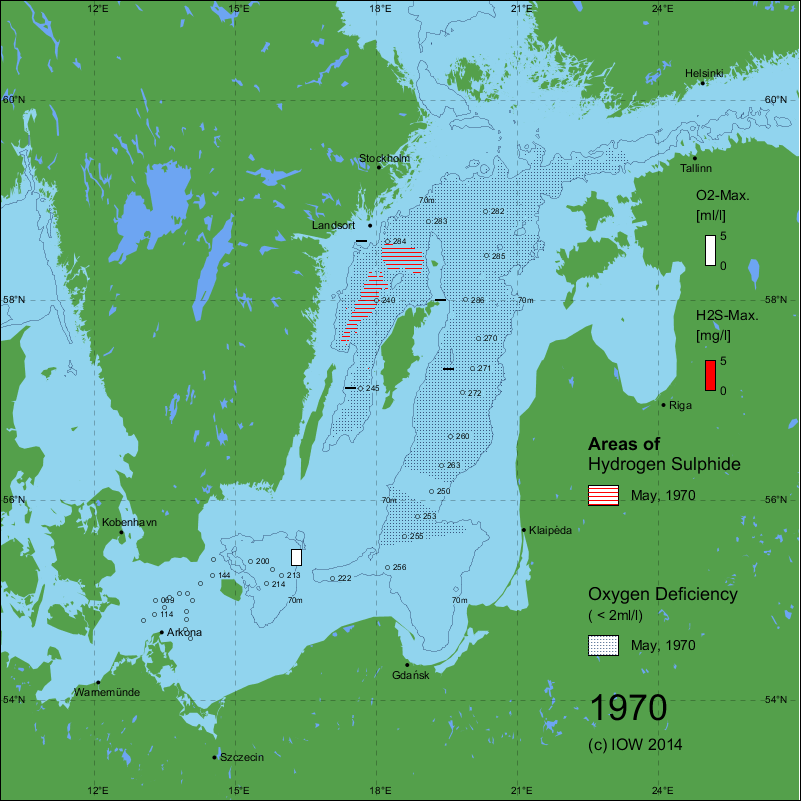
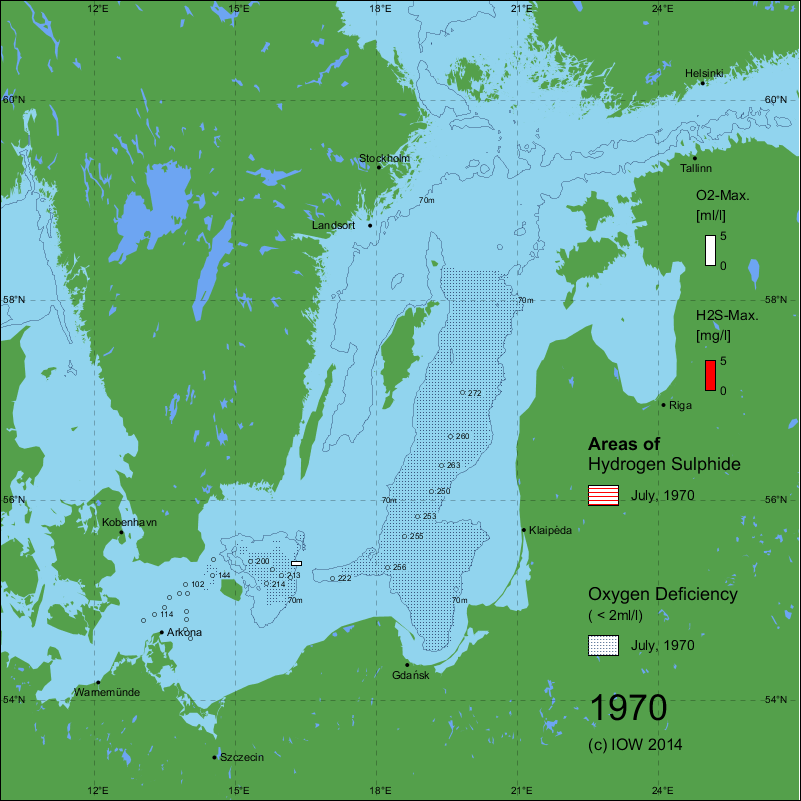
The distribution maps of suboxic and anoxic zones, determined during data collection on monitoring cruises (February, March/April, May, July/August, October/November), have been presented since 1969.
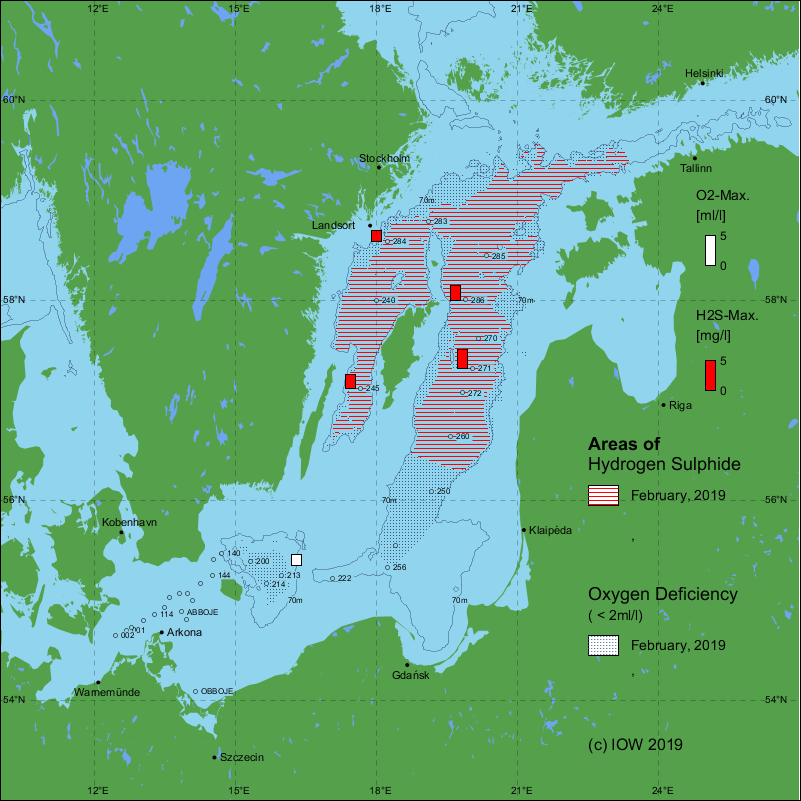
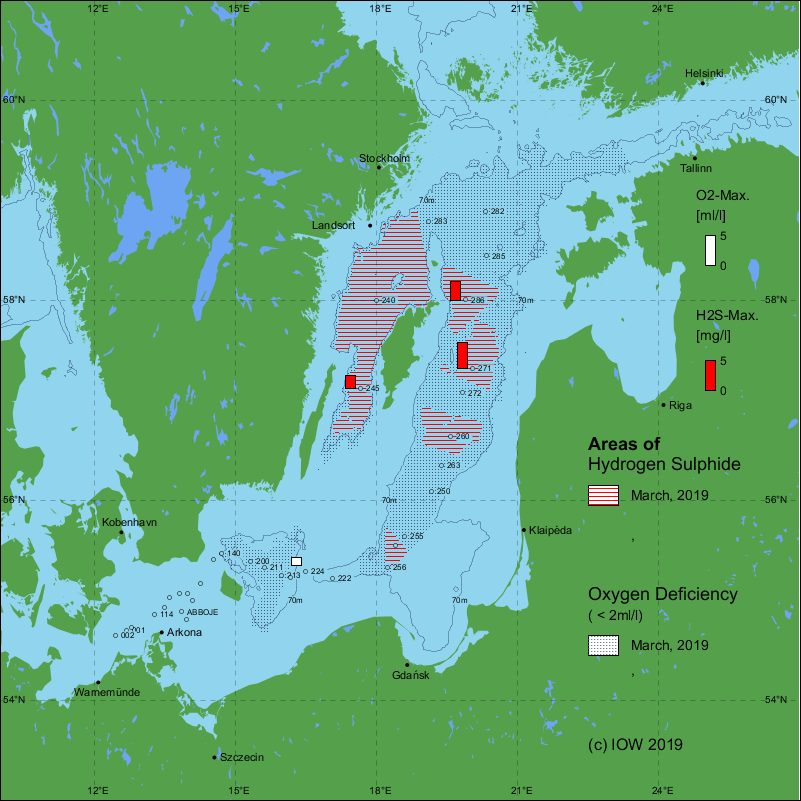
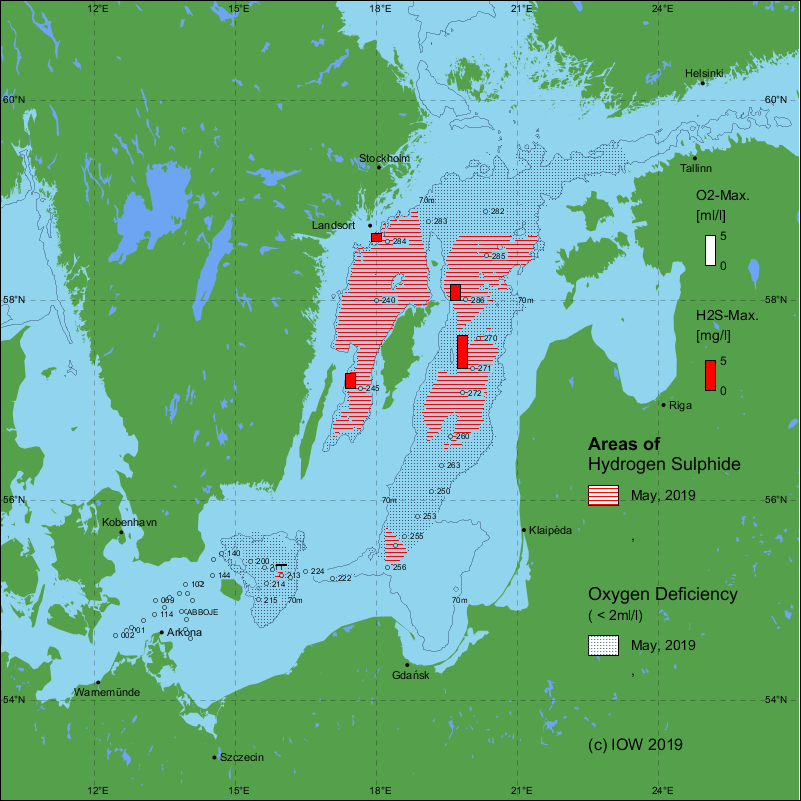
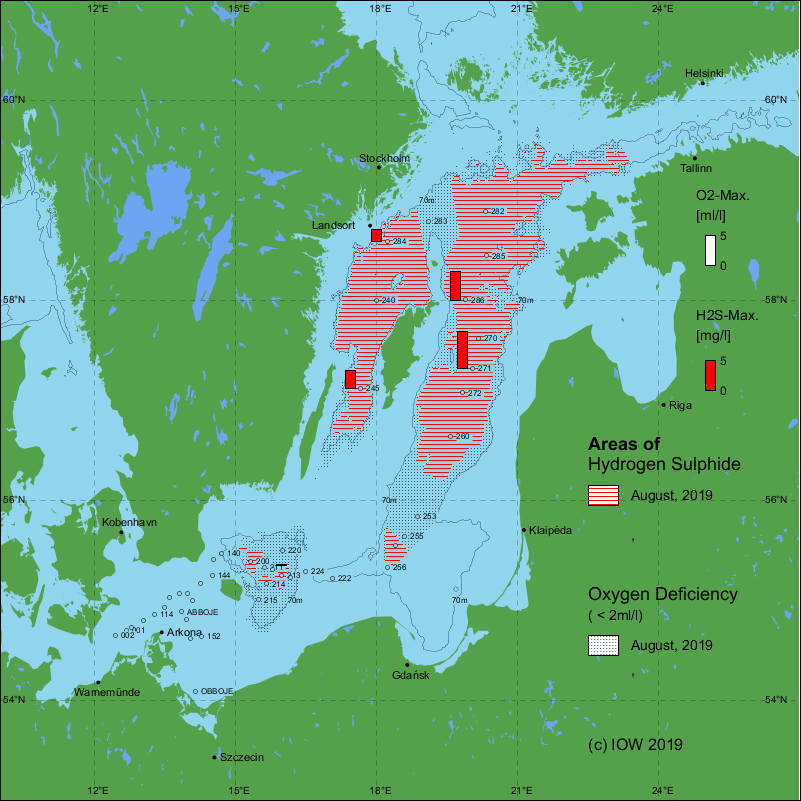
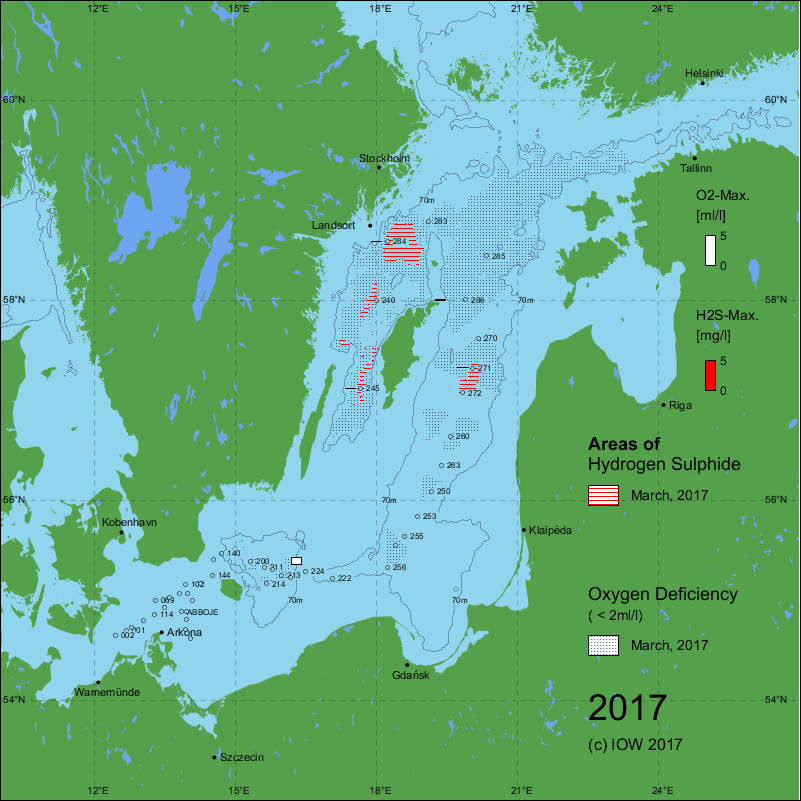
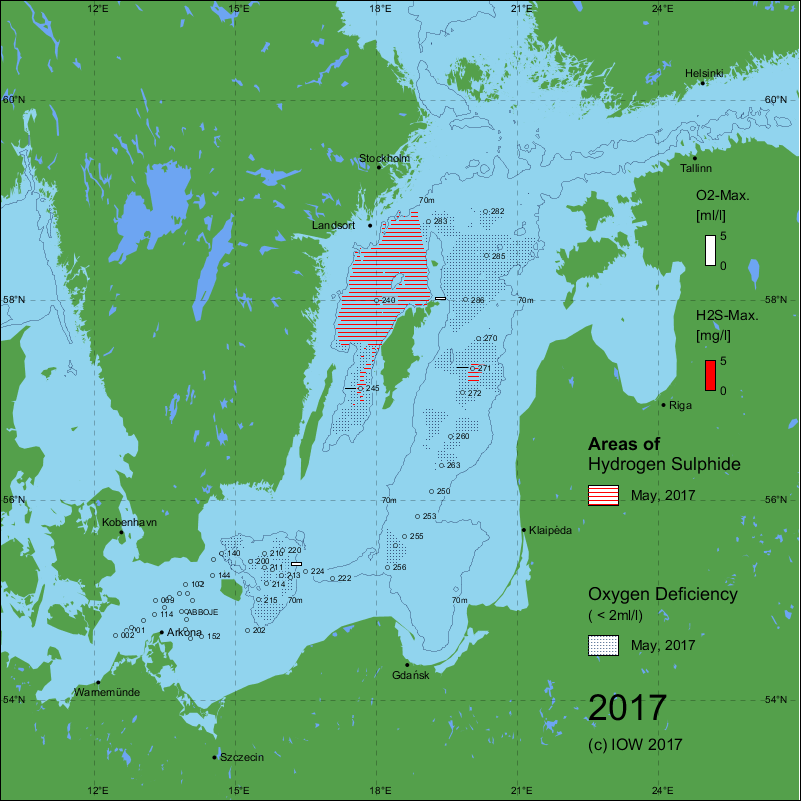
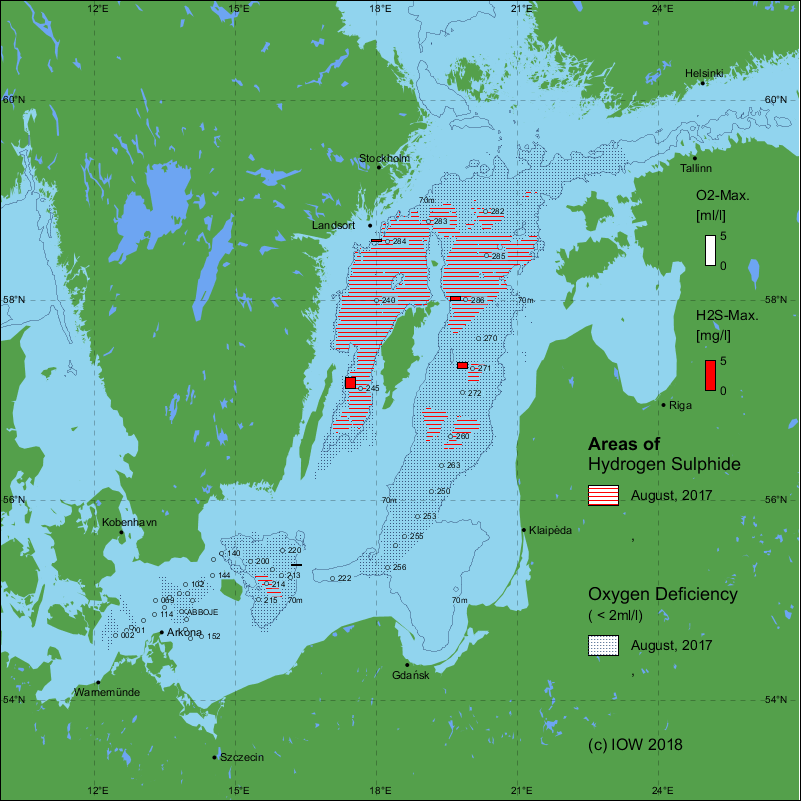
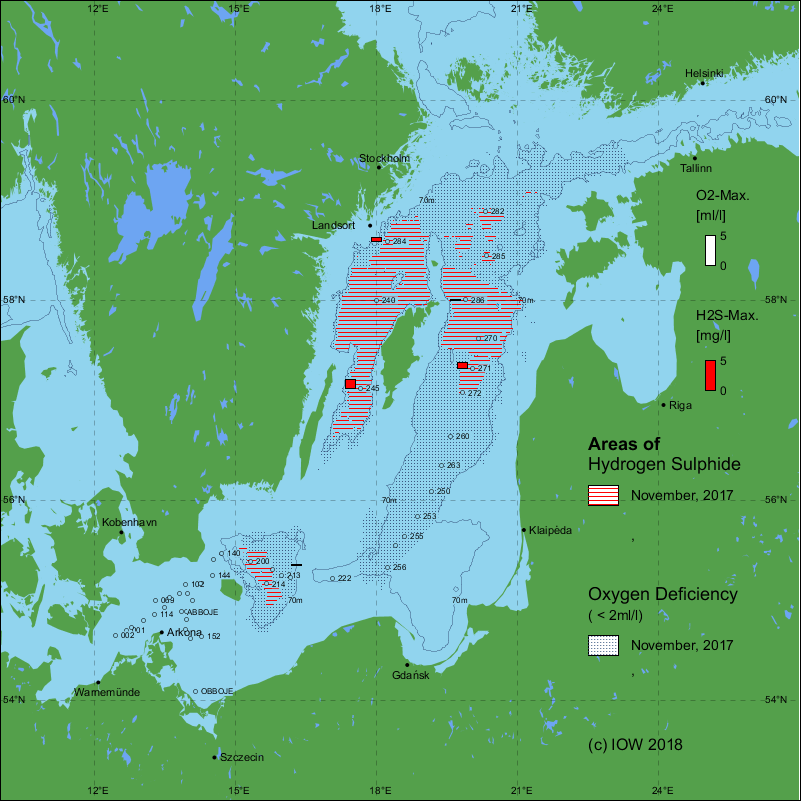
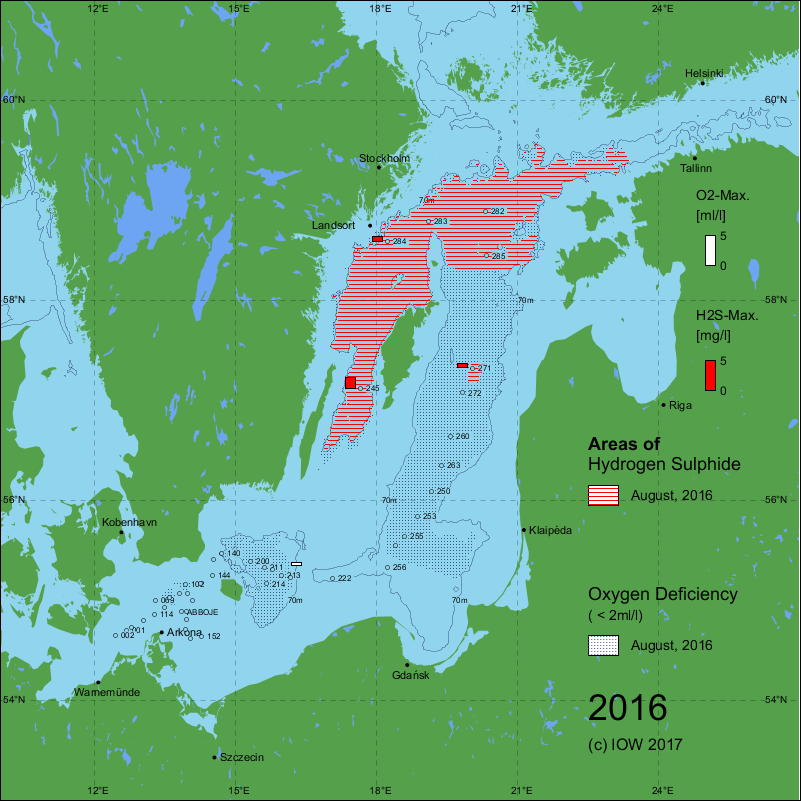
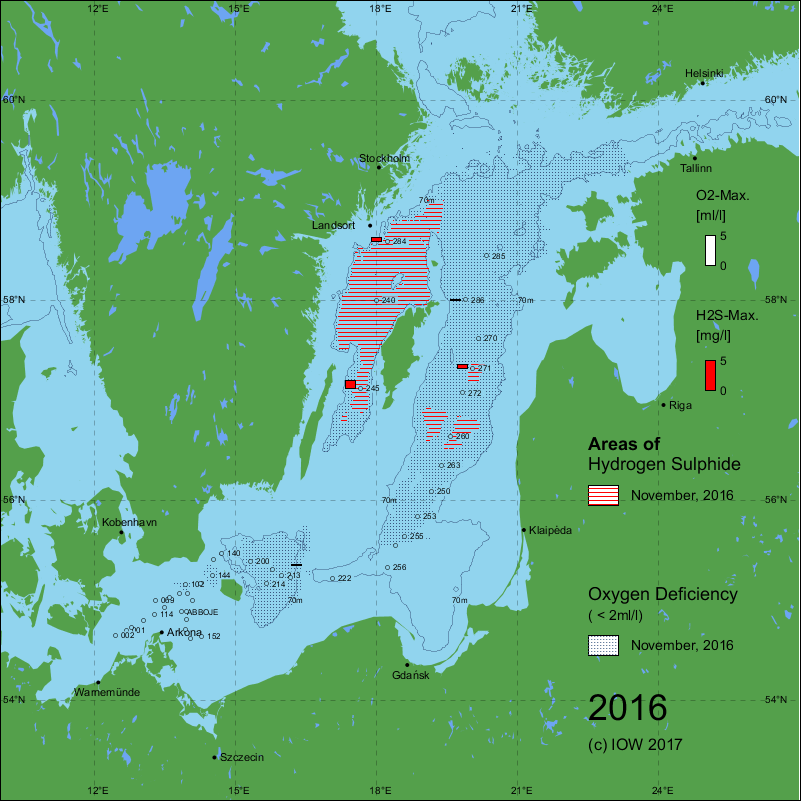
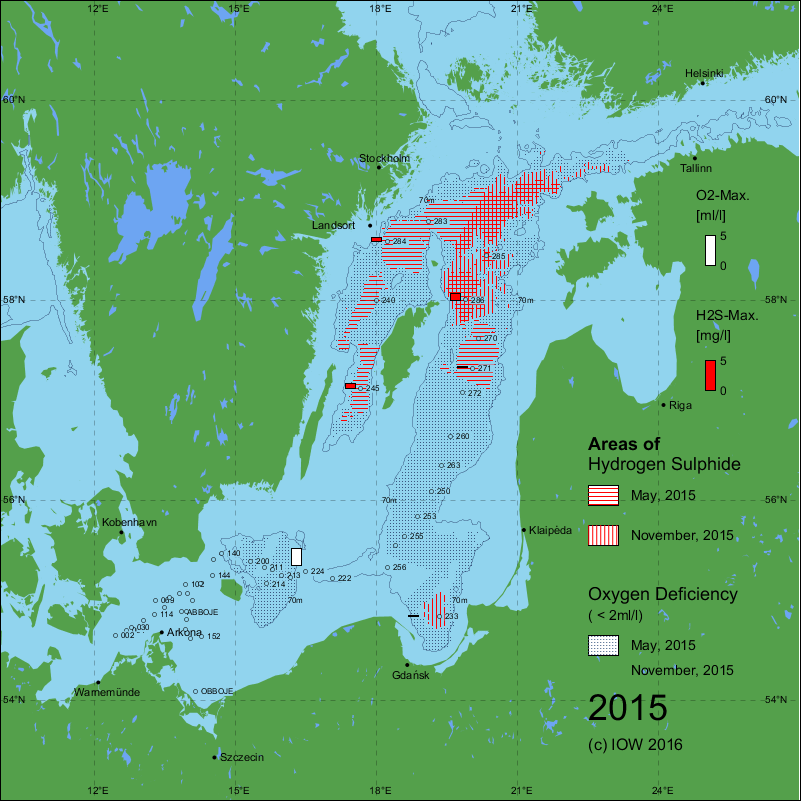
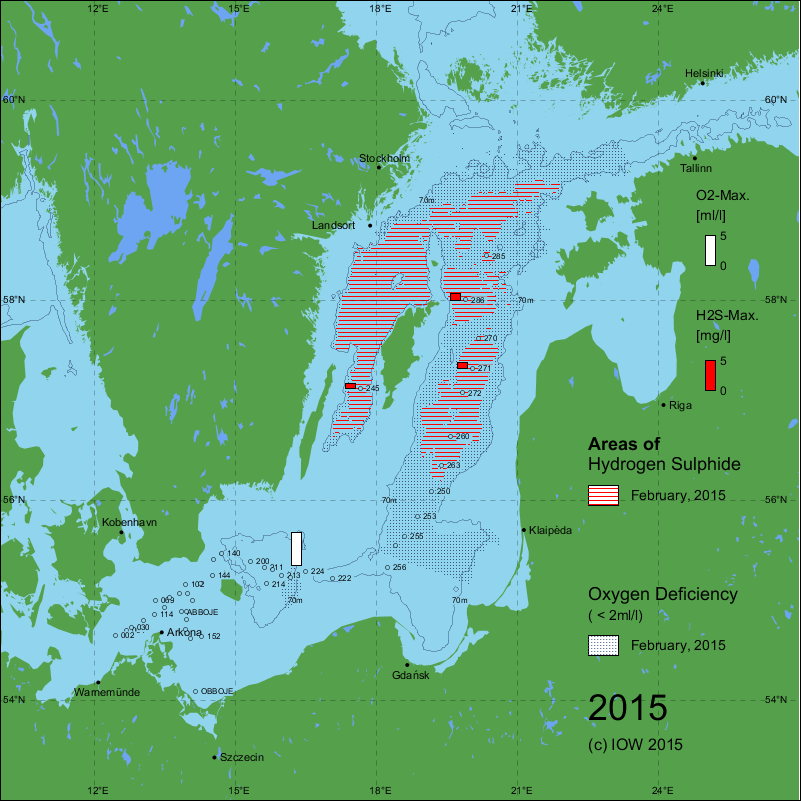
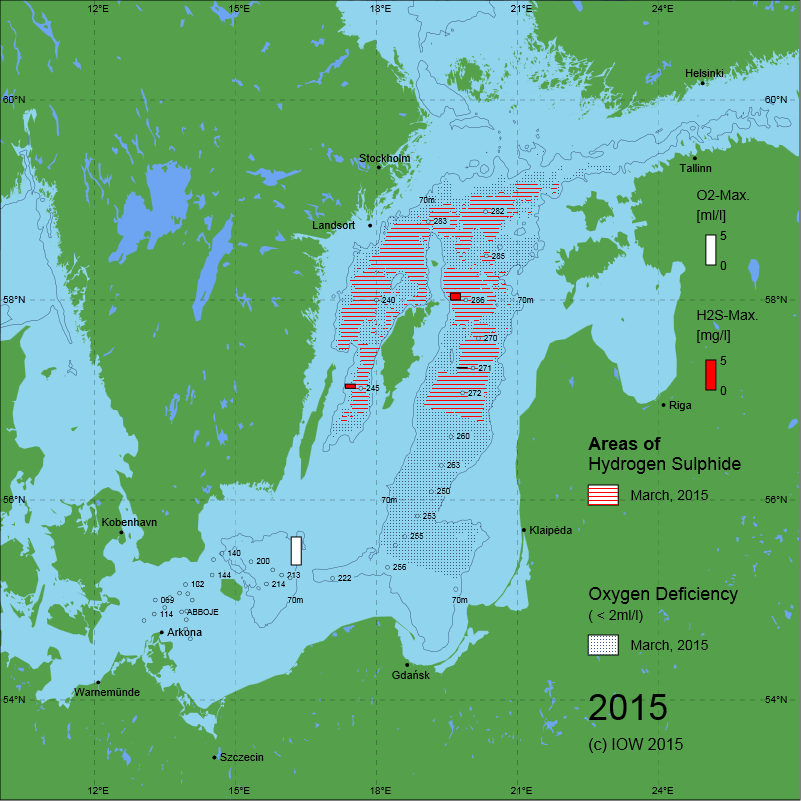
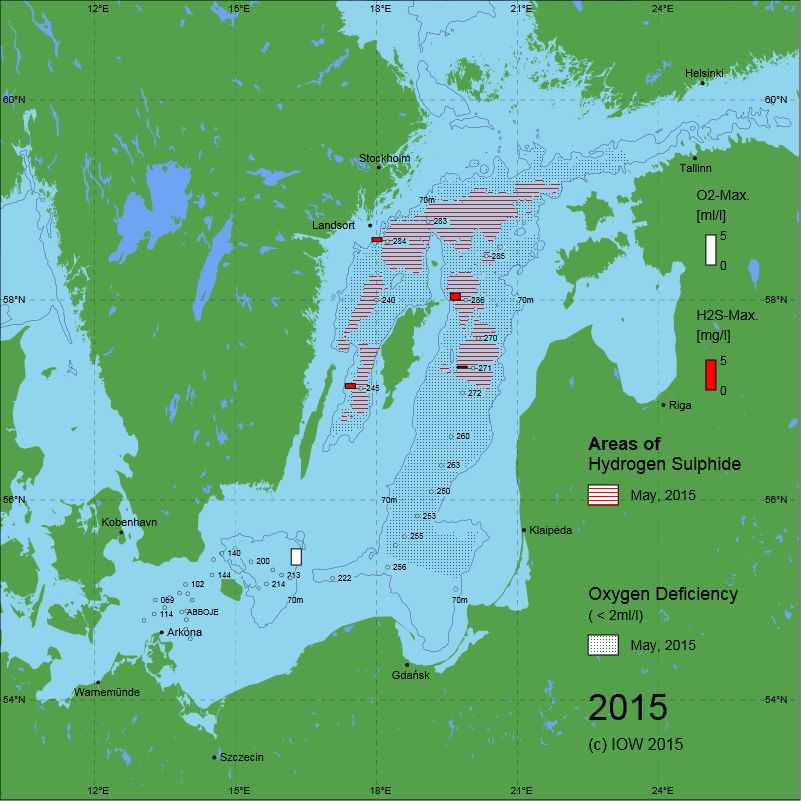
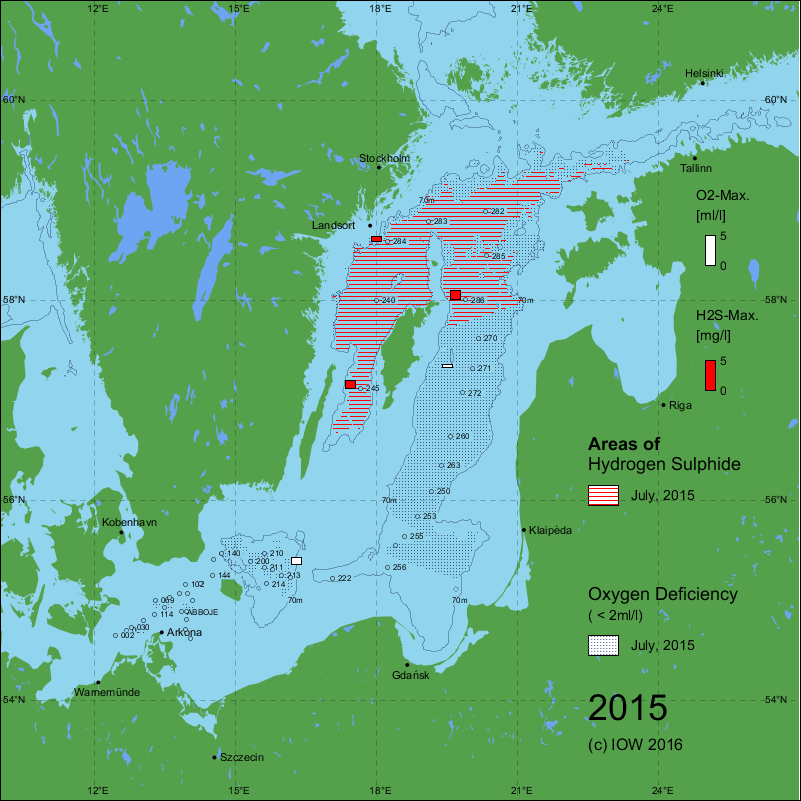
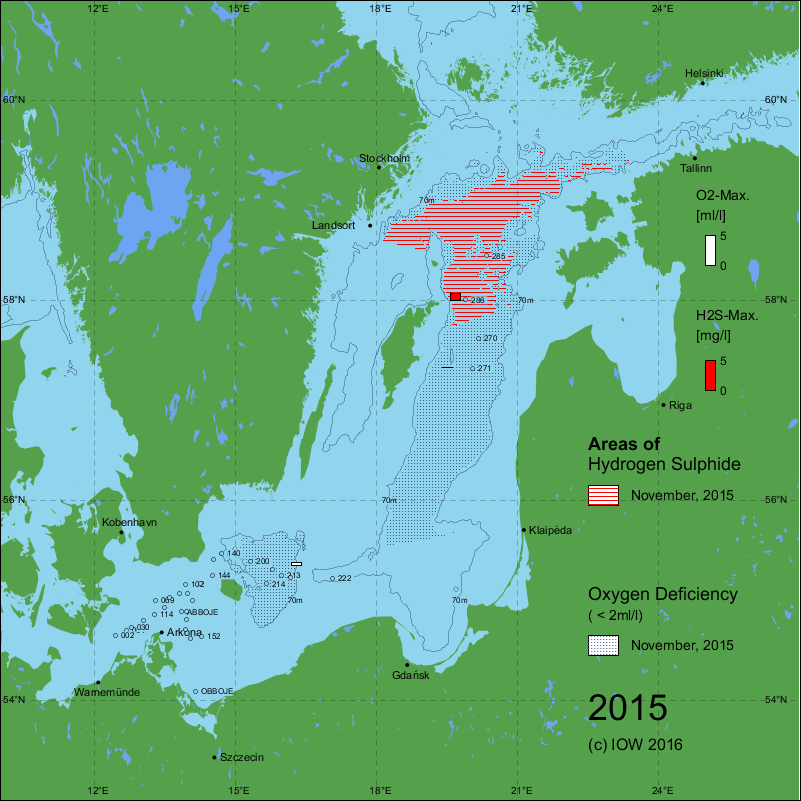
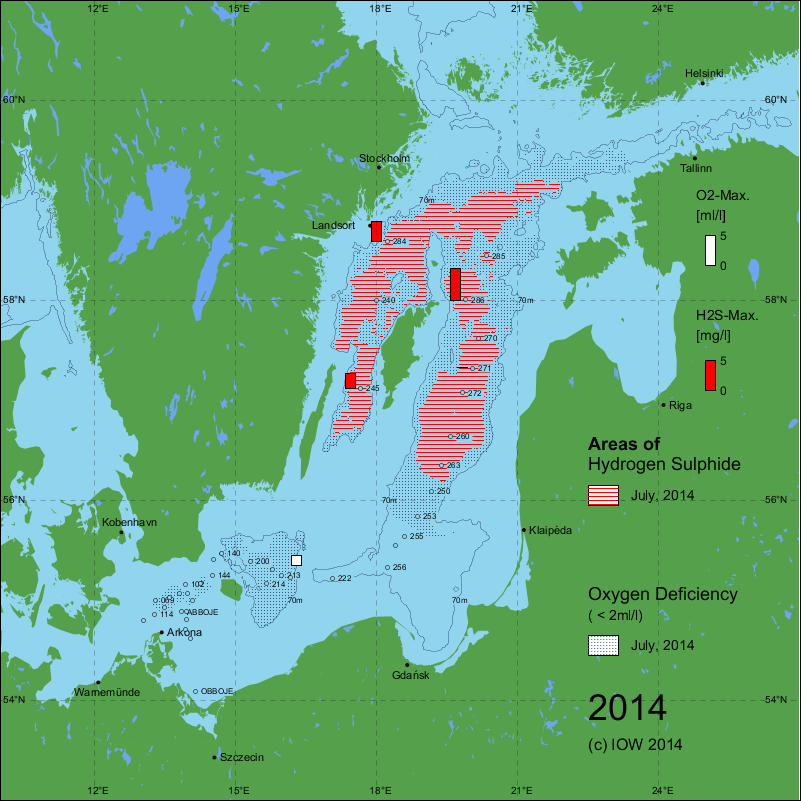
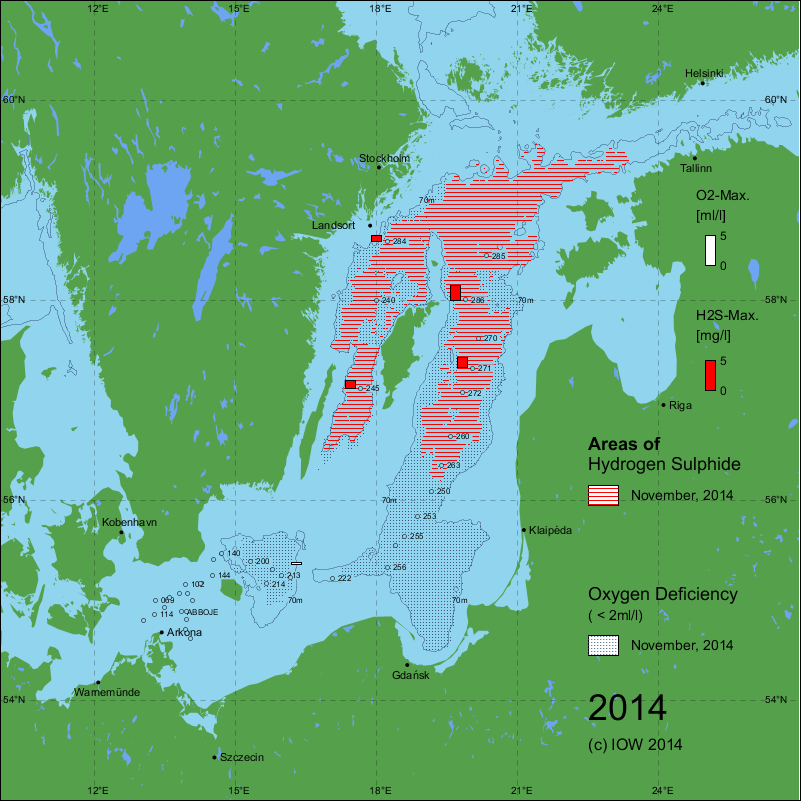
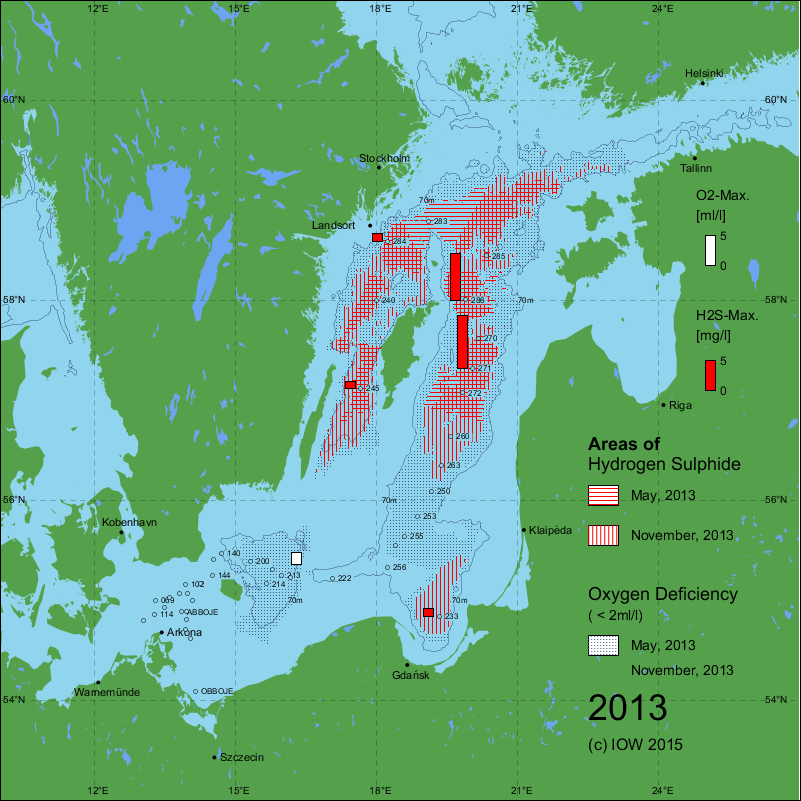
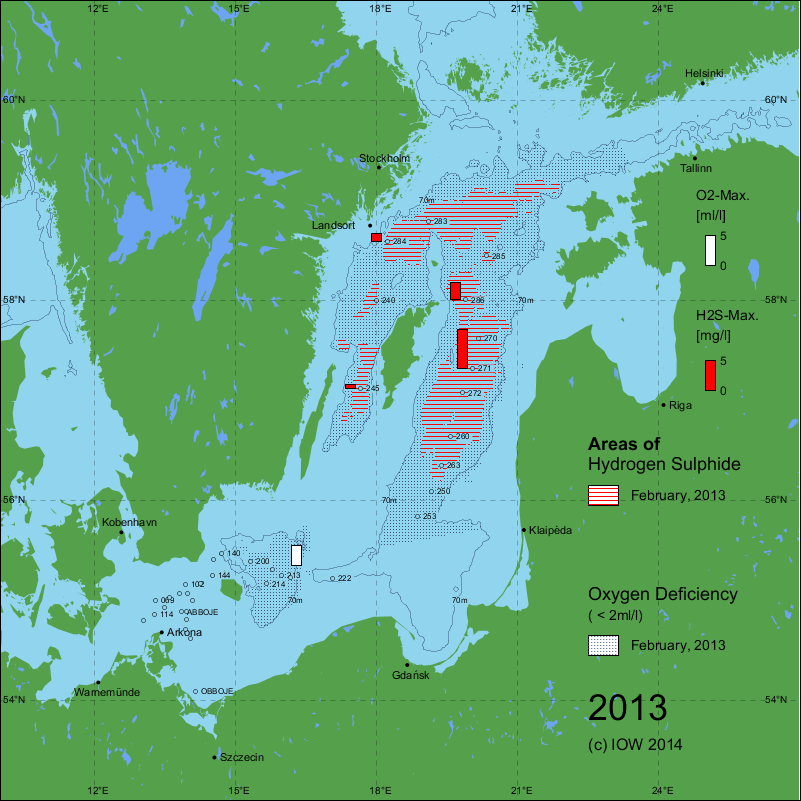
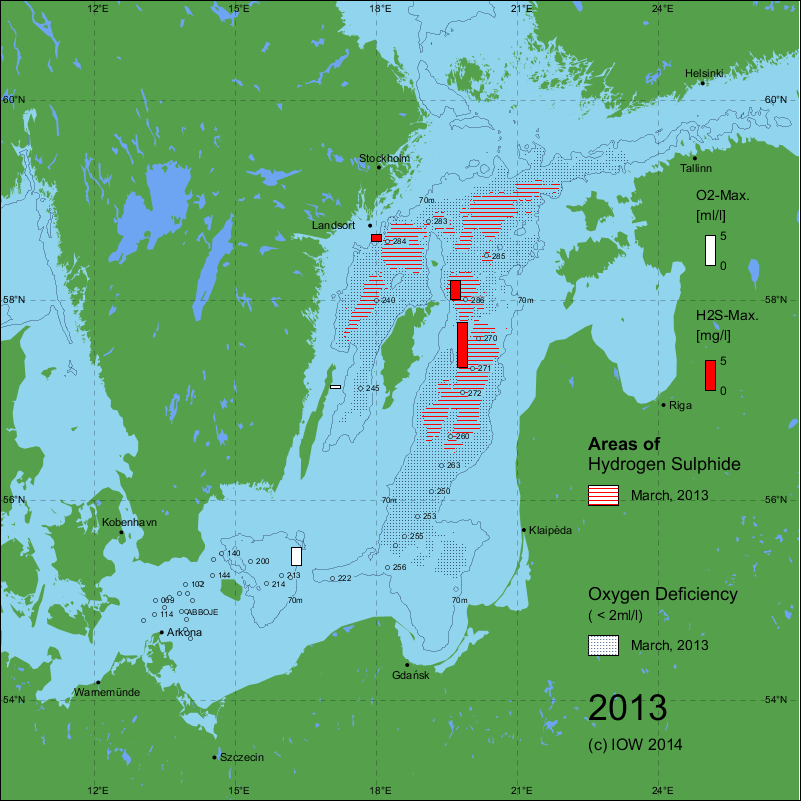
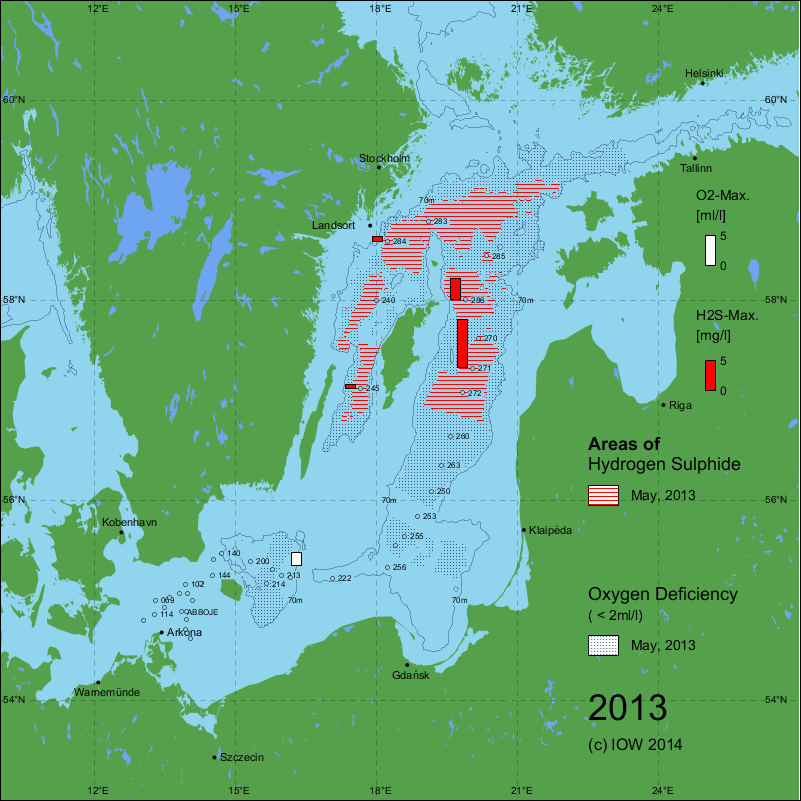
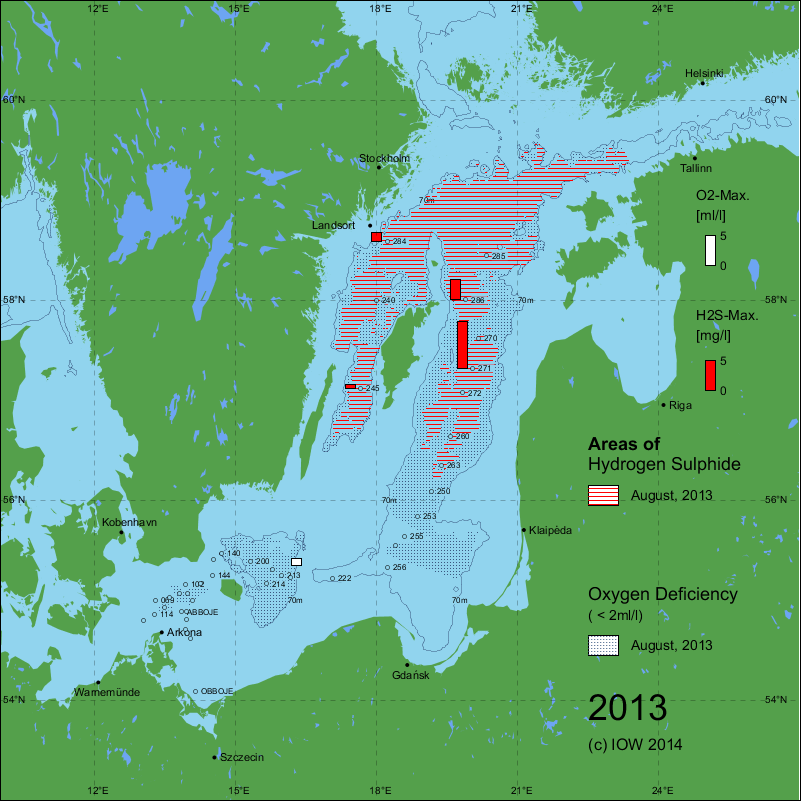
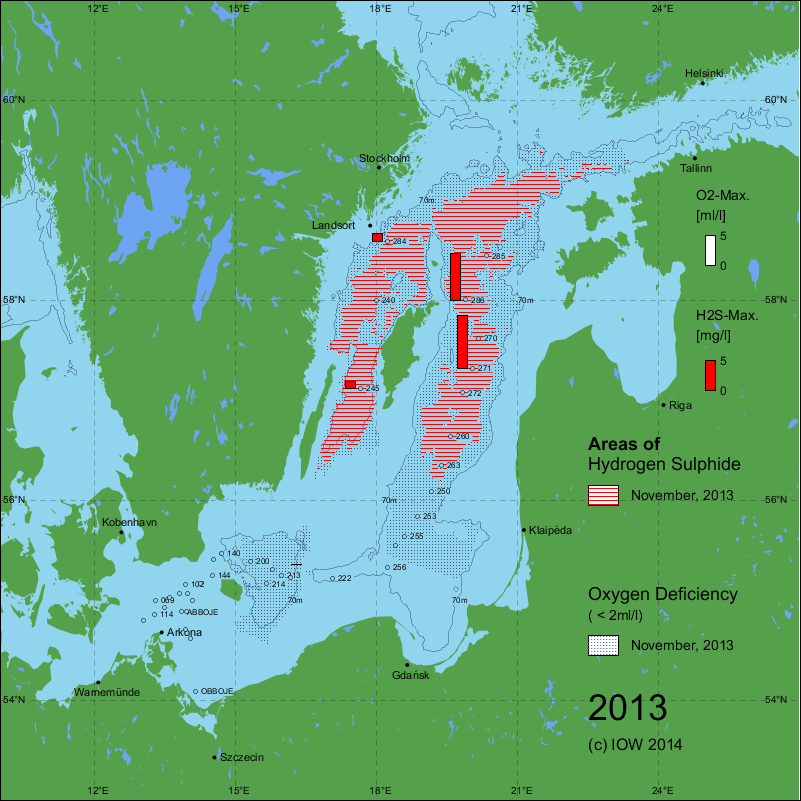
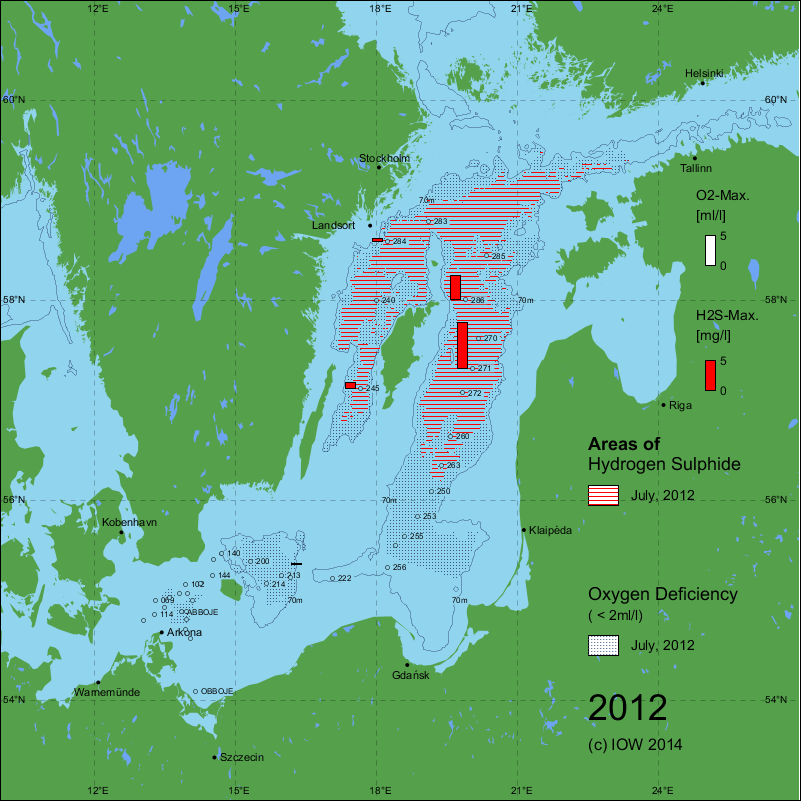
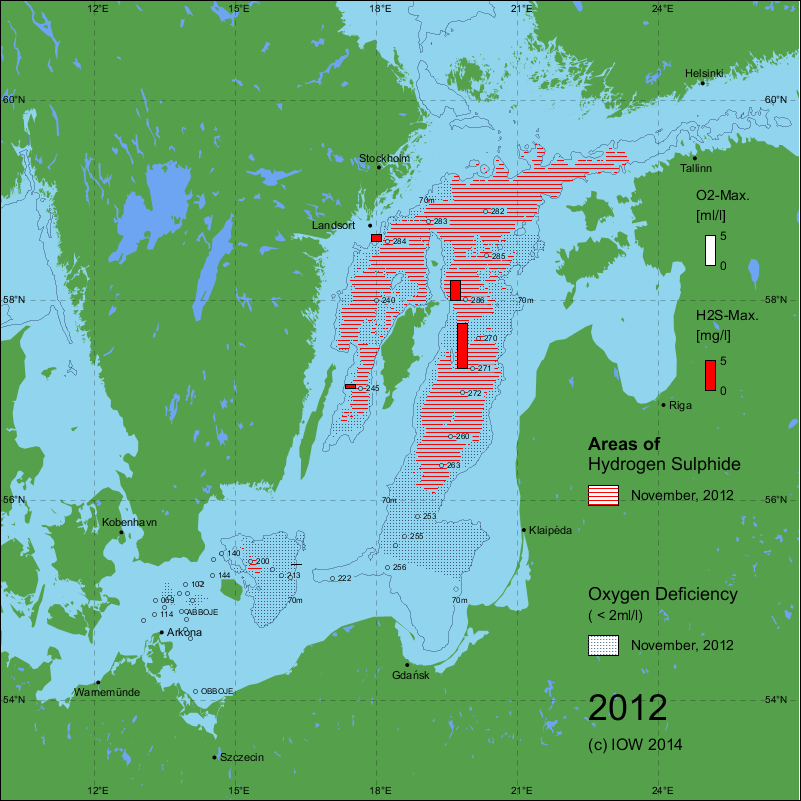
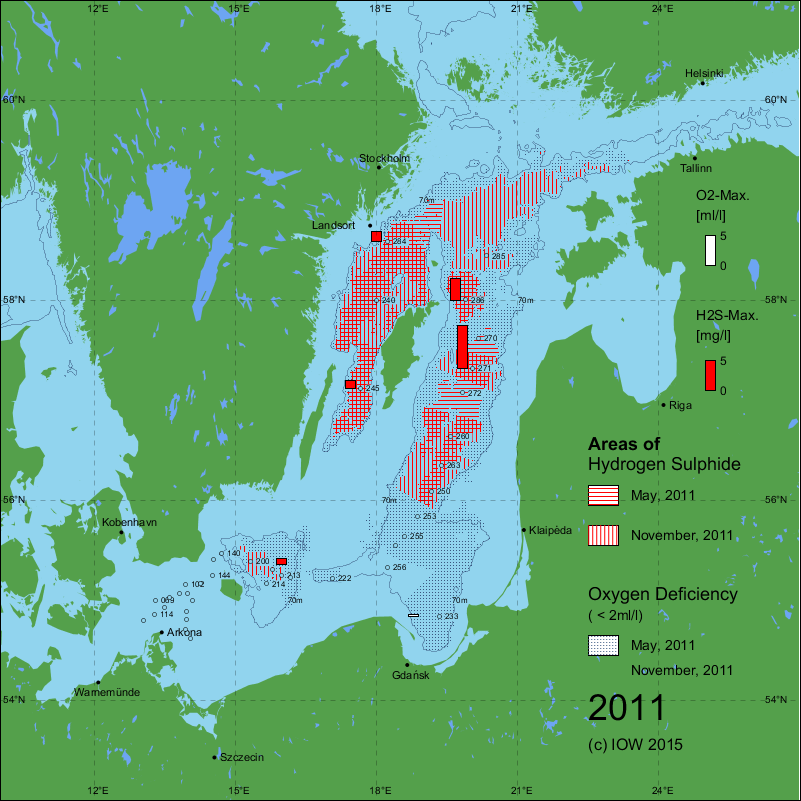
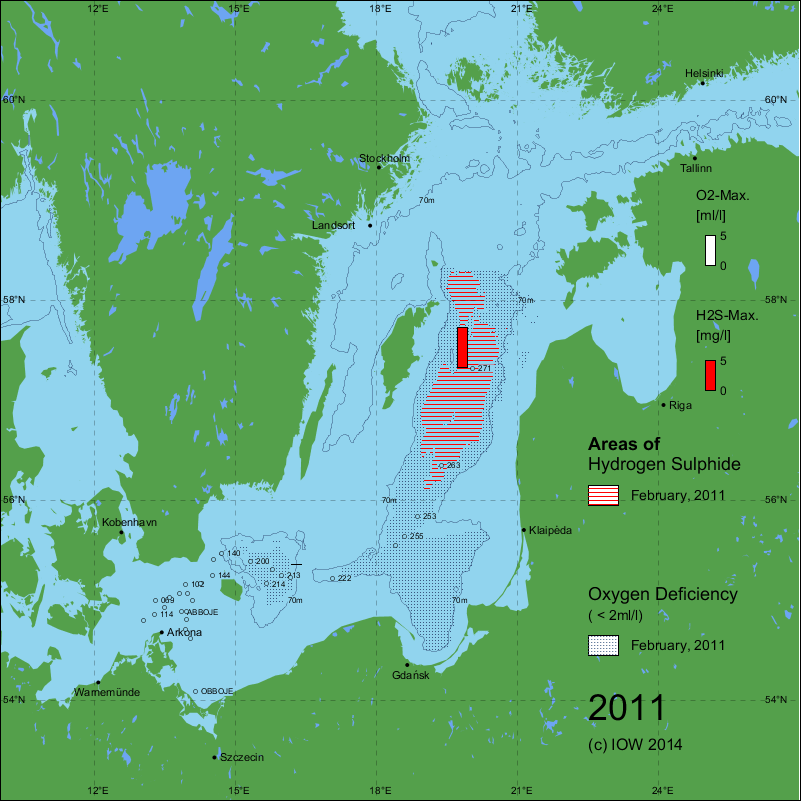
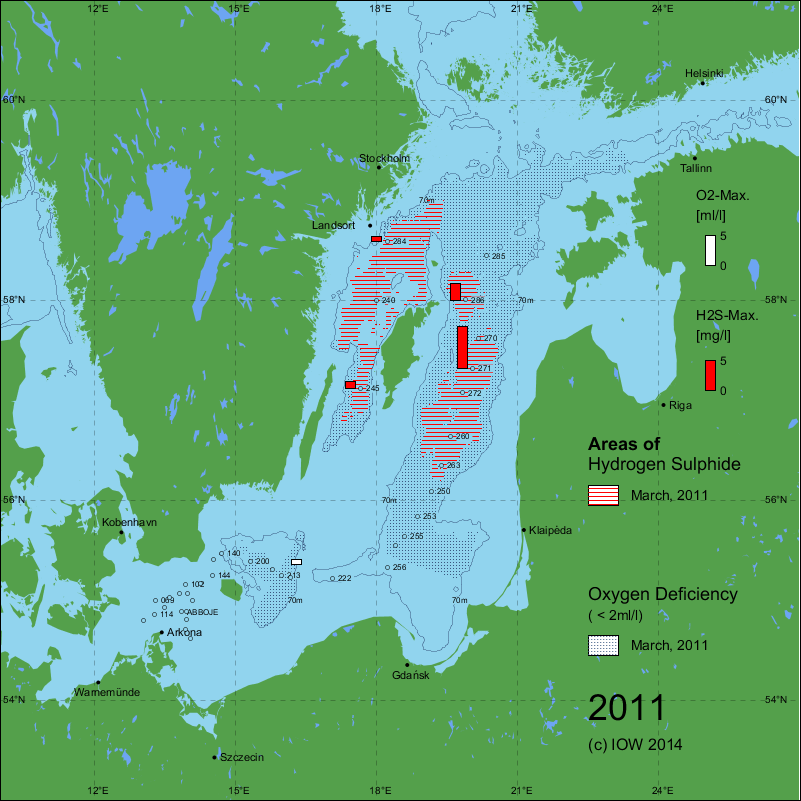
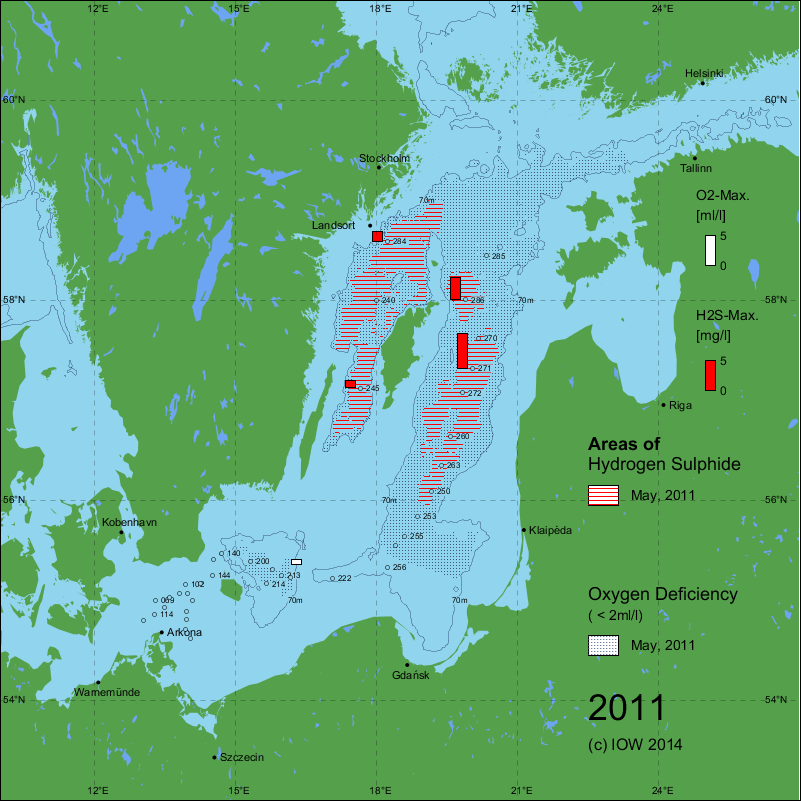
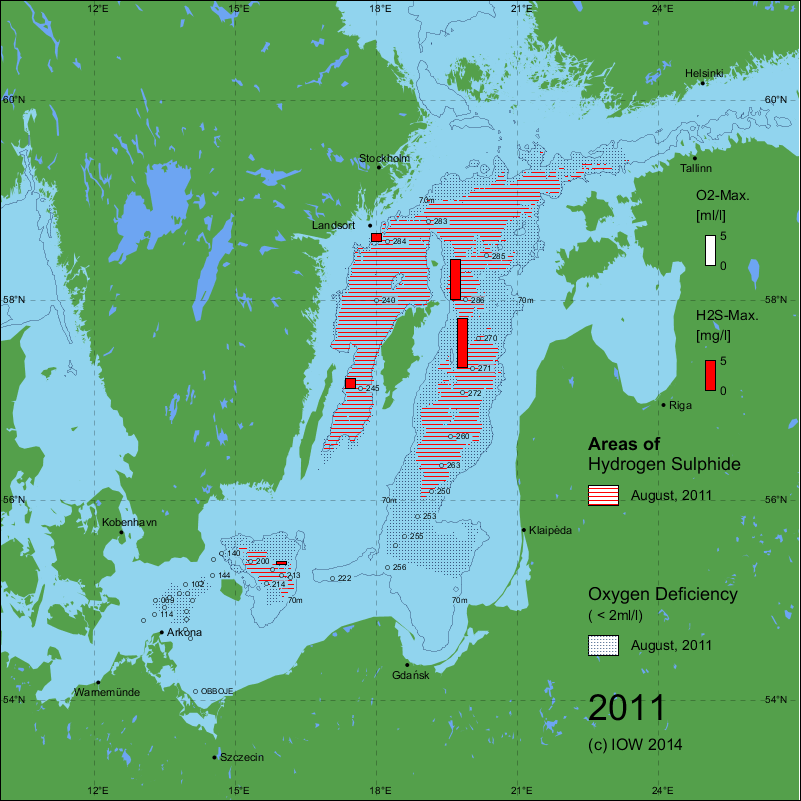
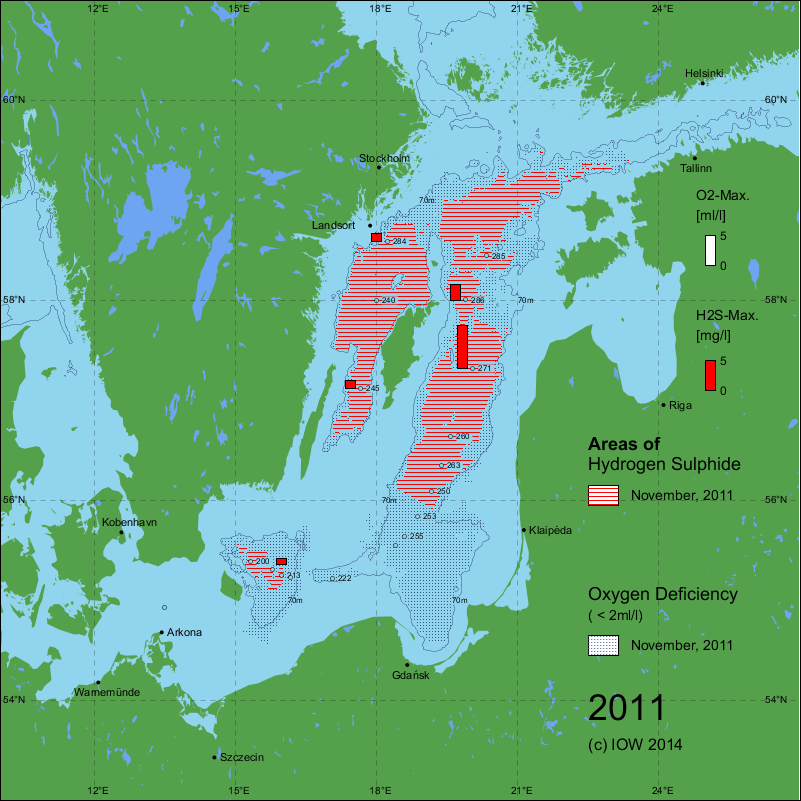
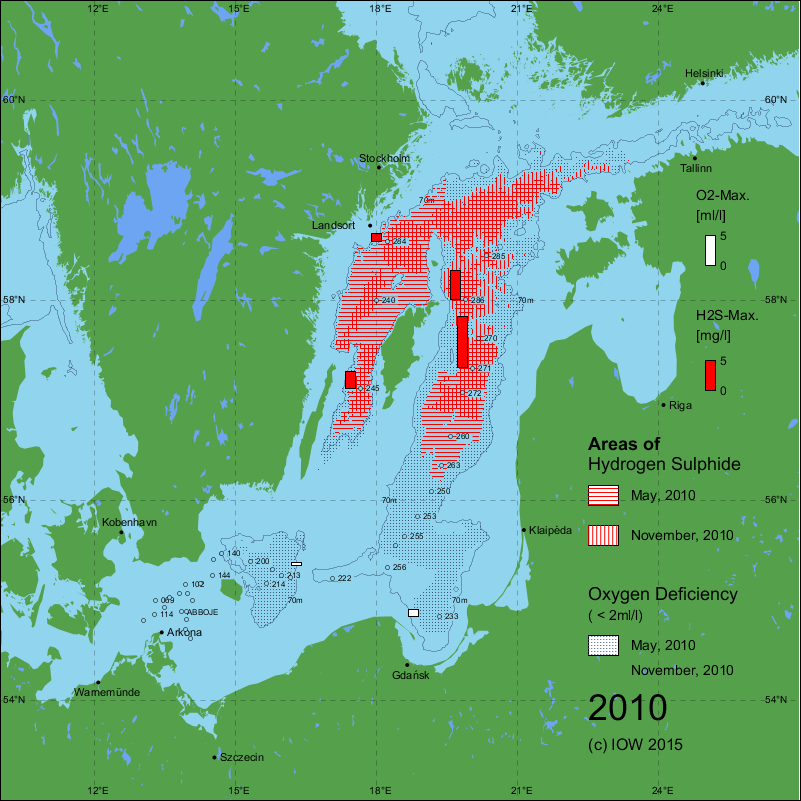
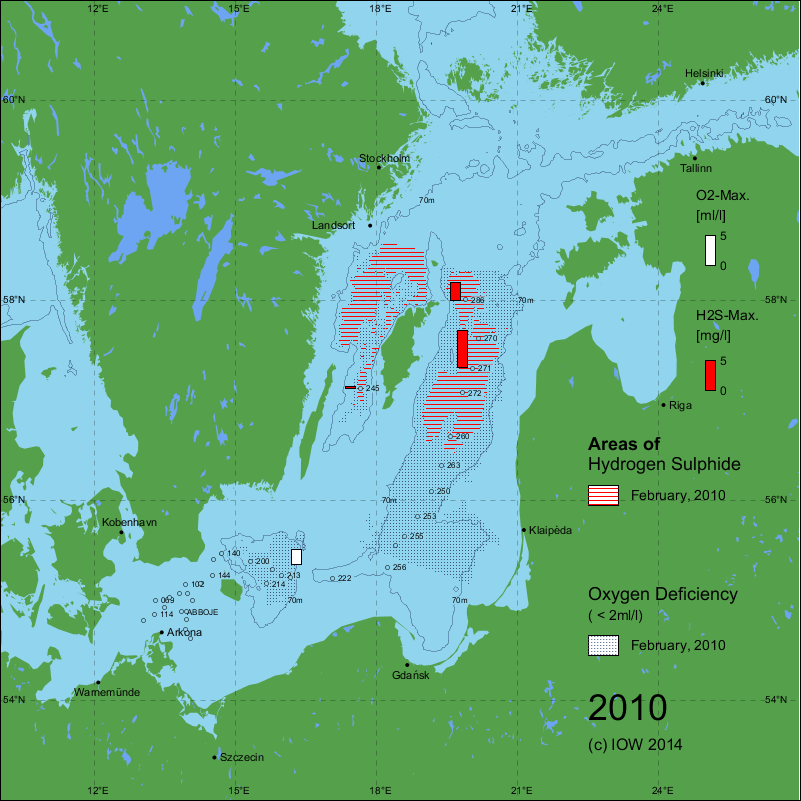
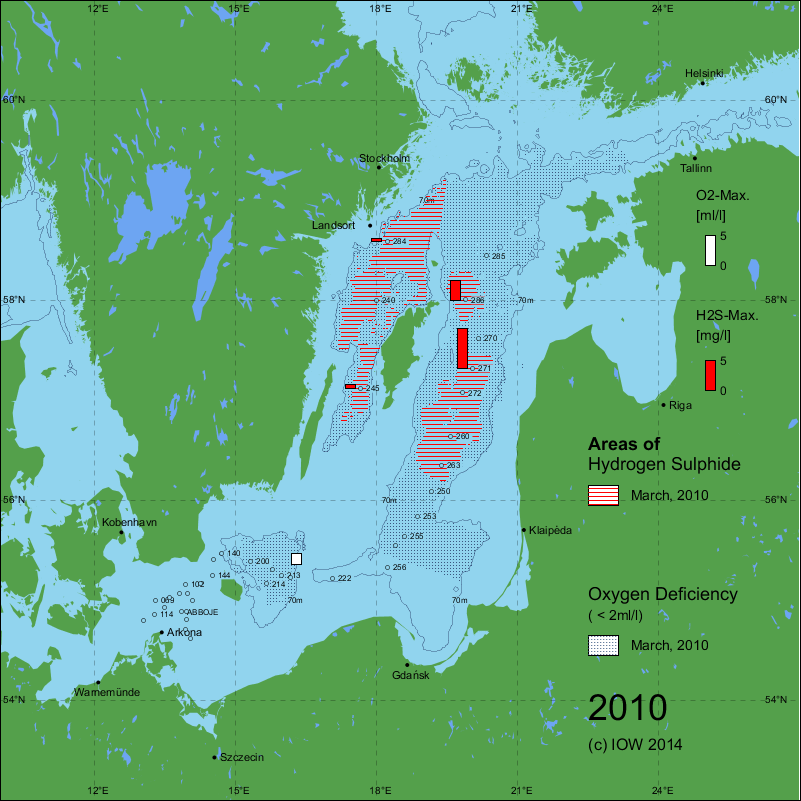
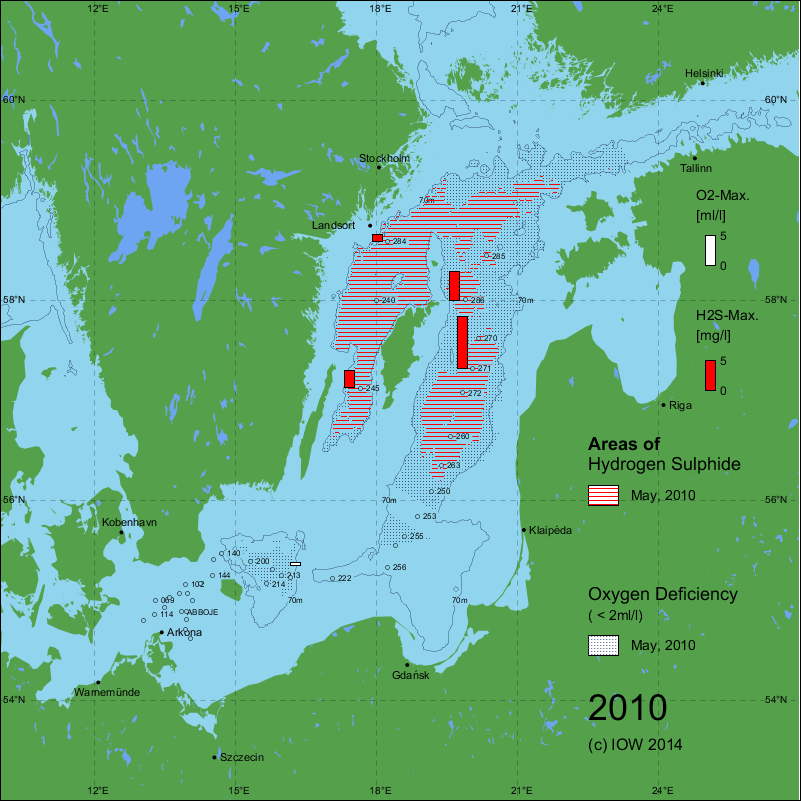
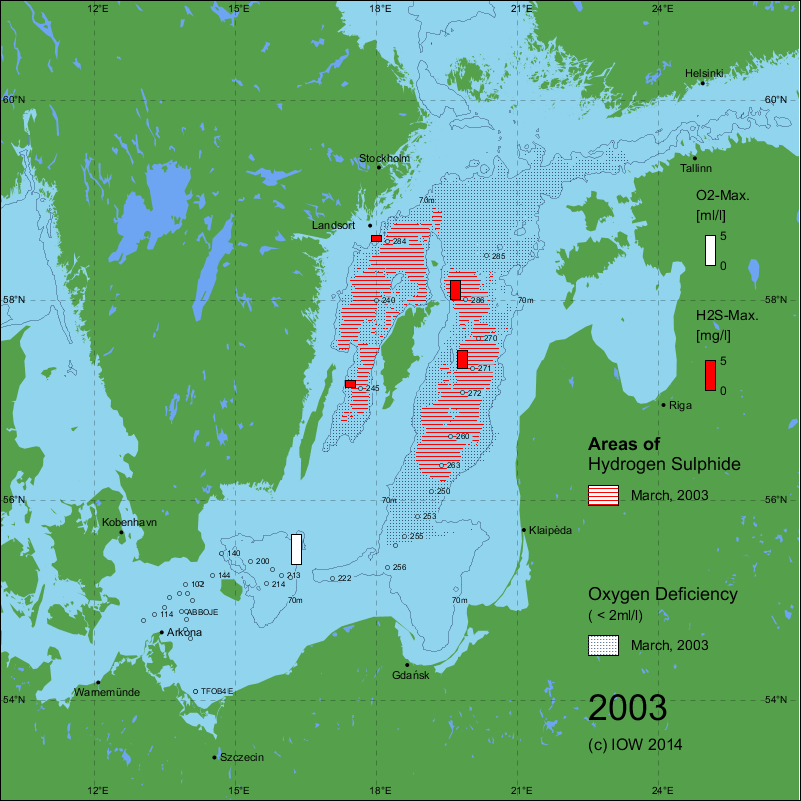
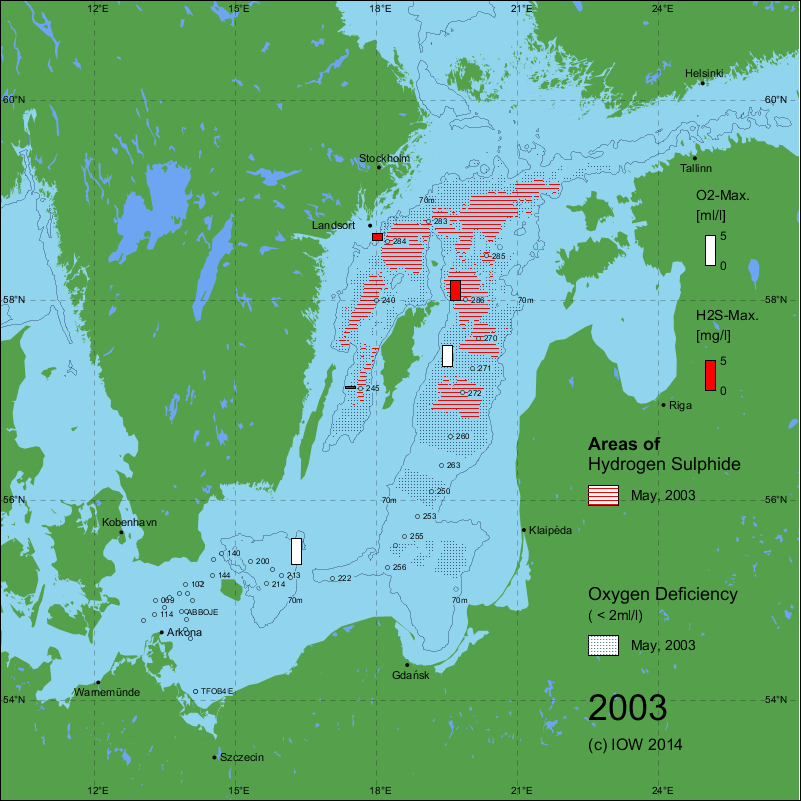
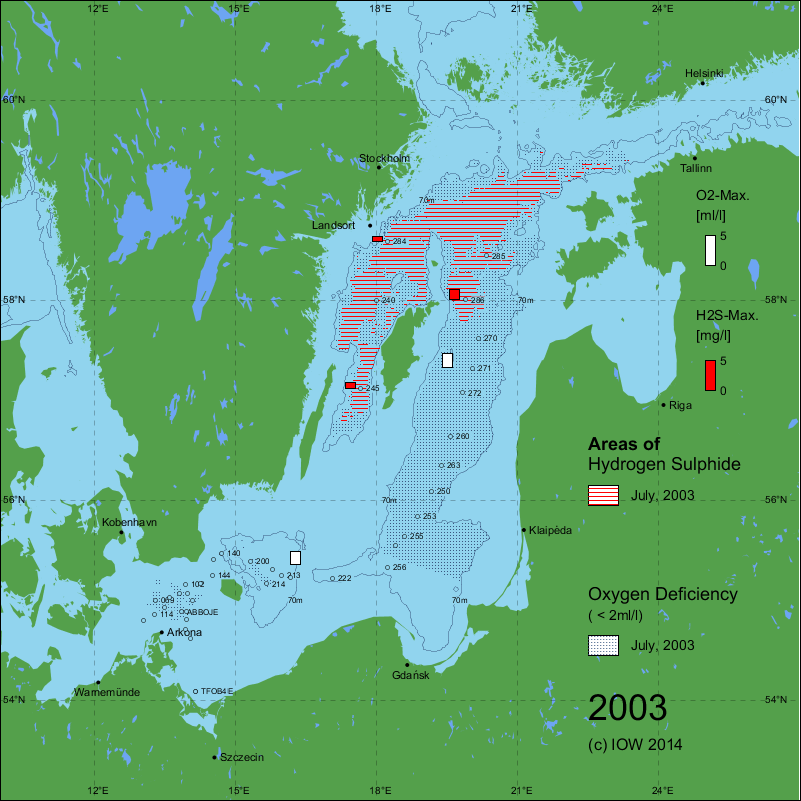
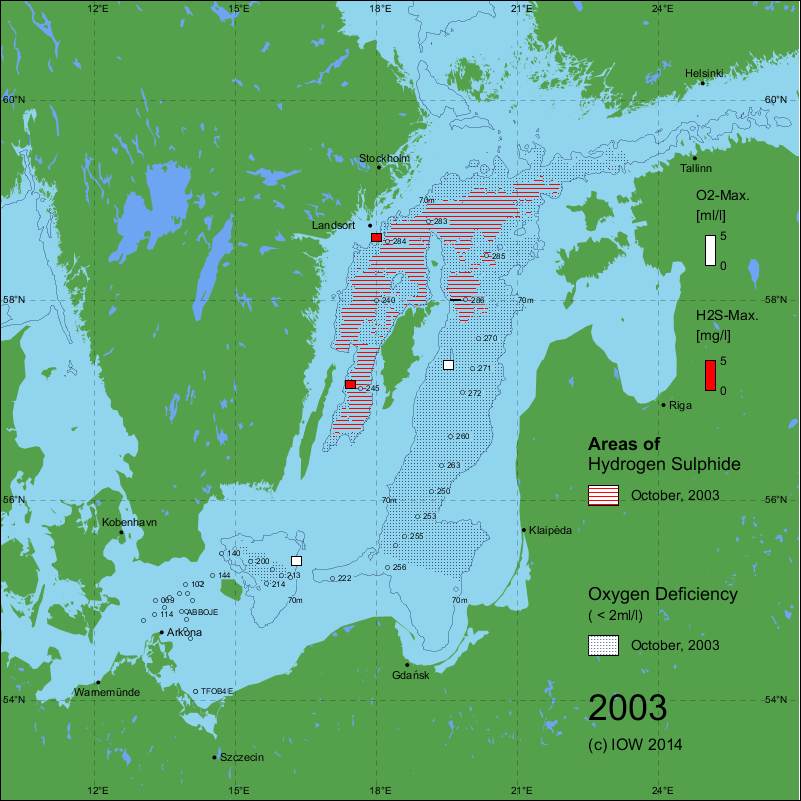
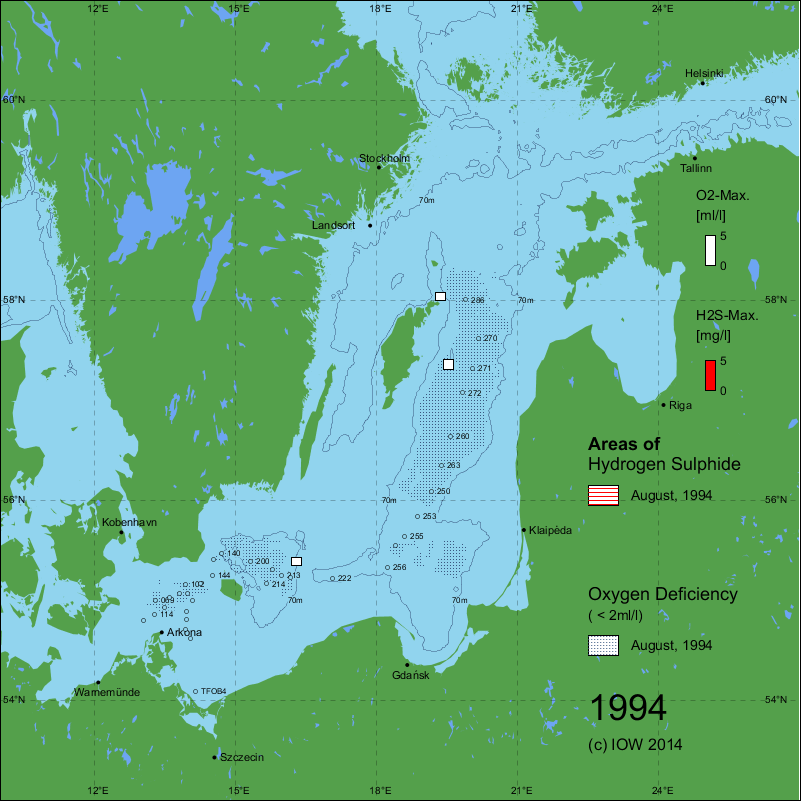
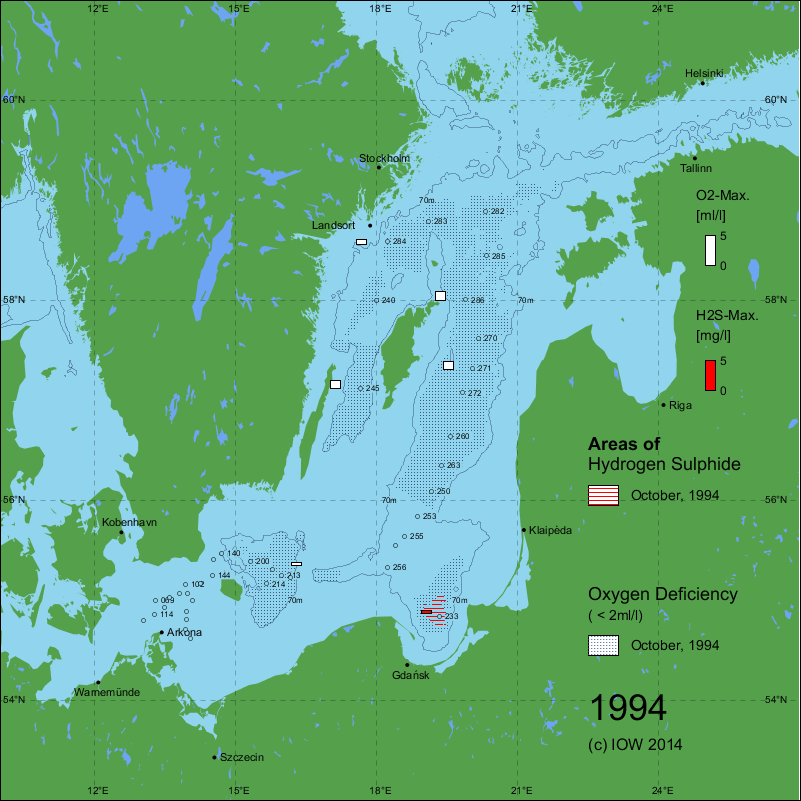
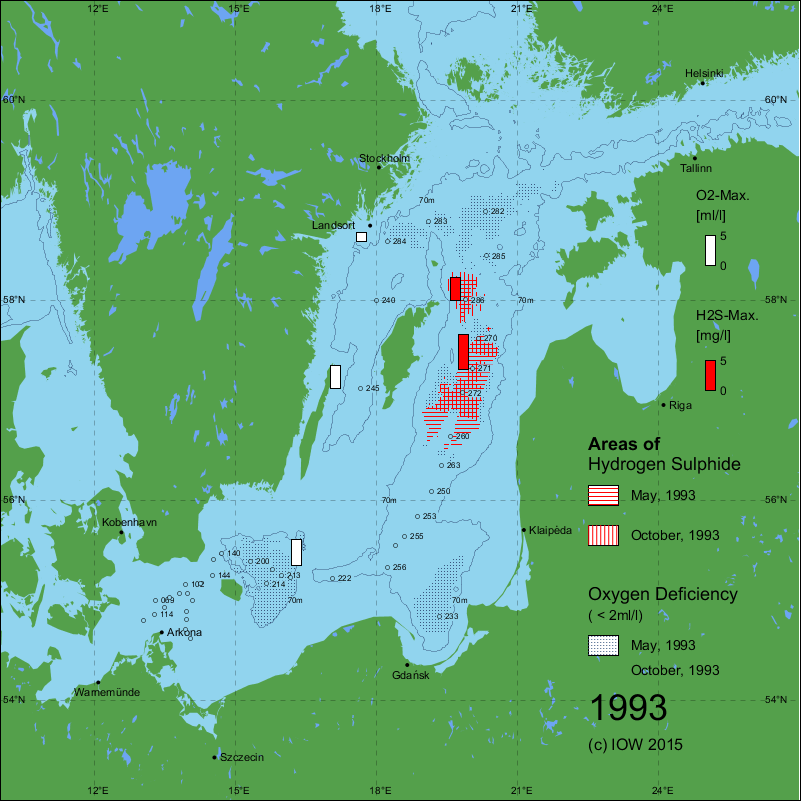
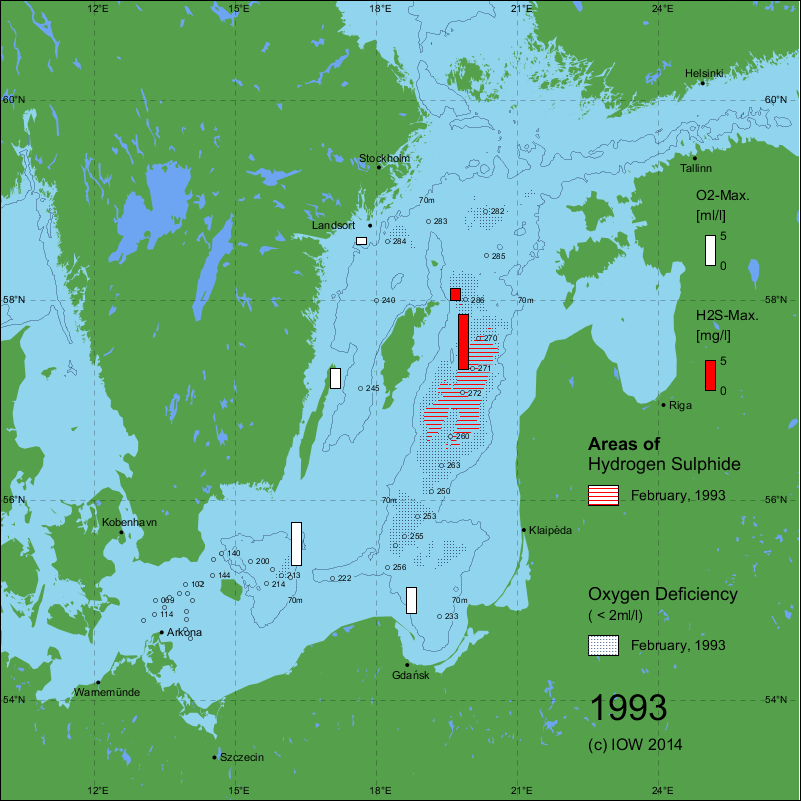
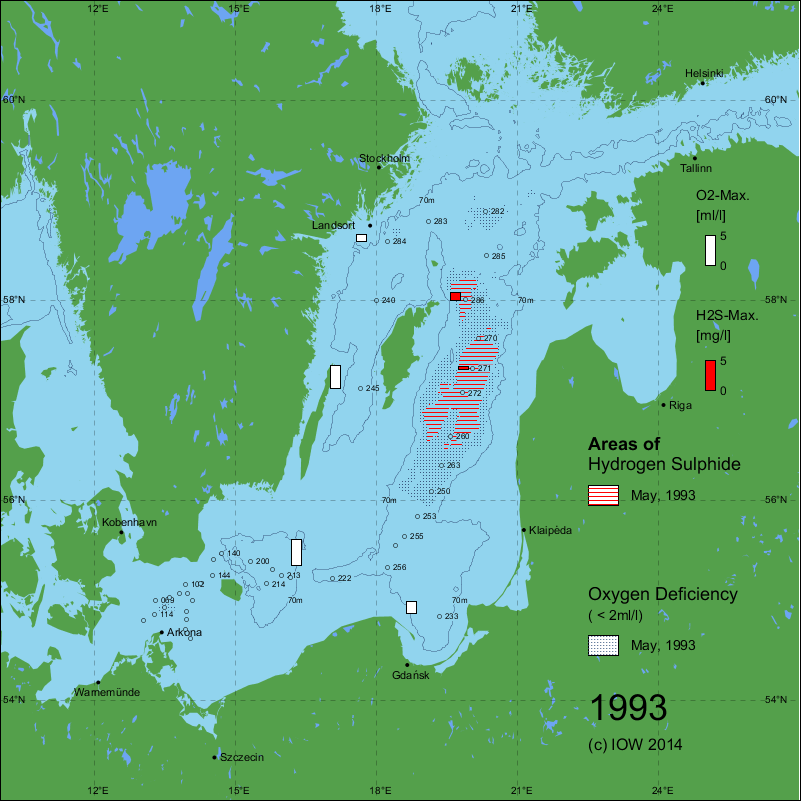
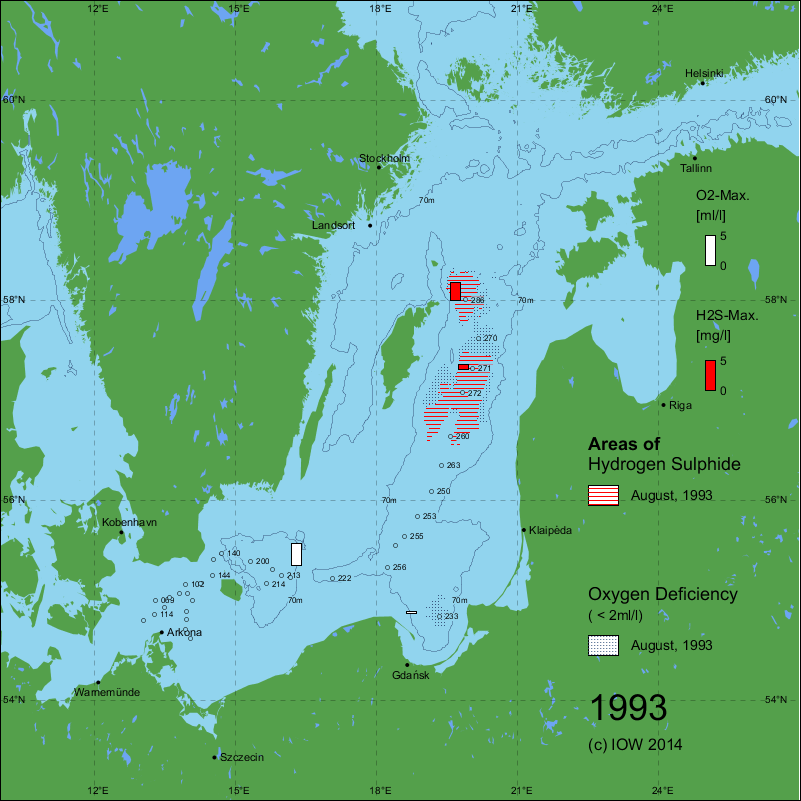
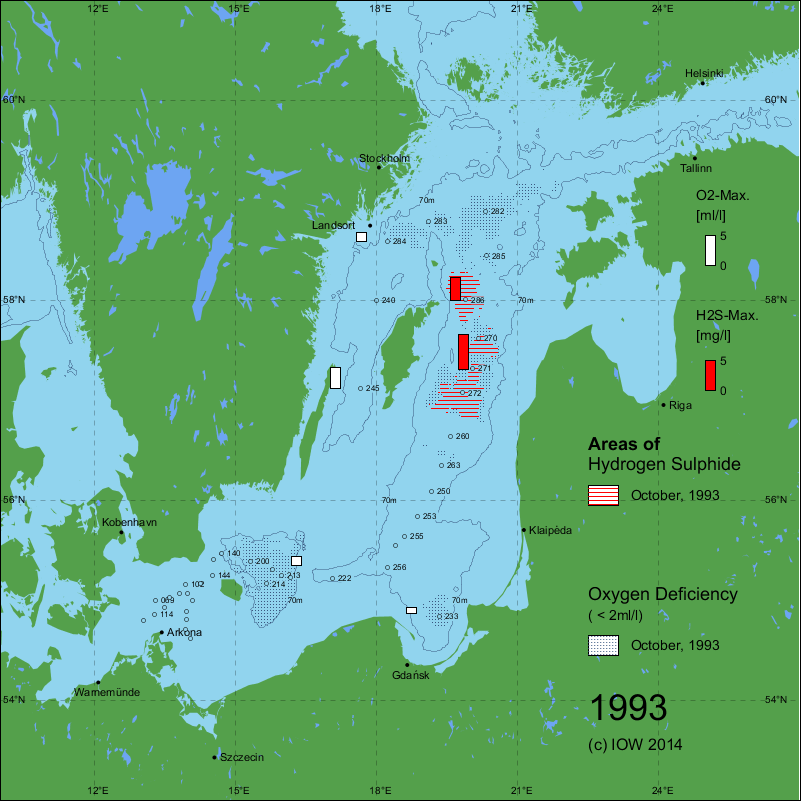
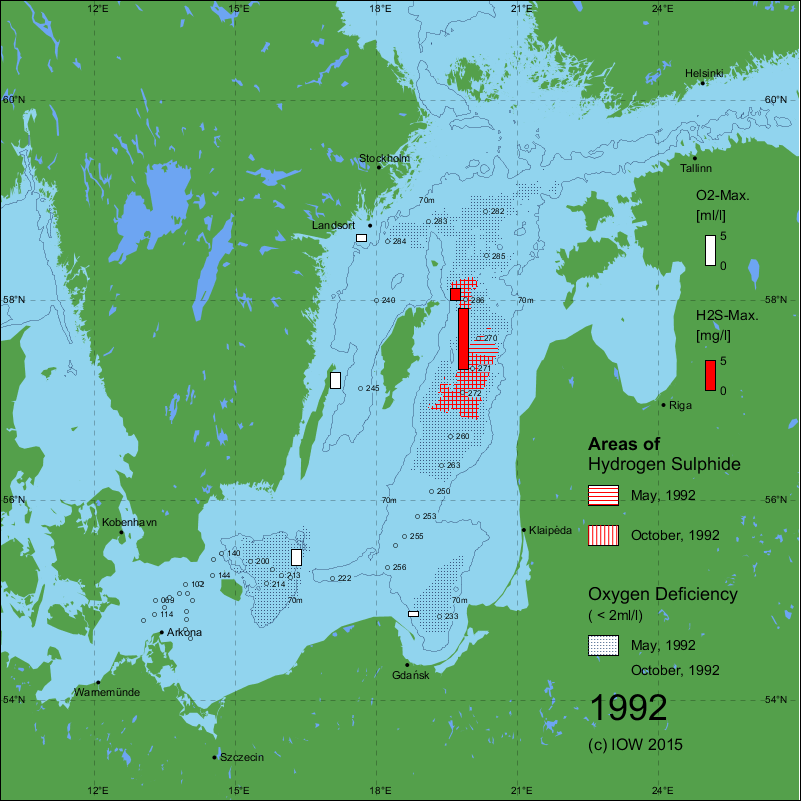
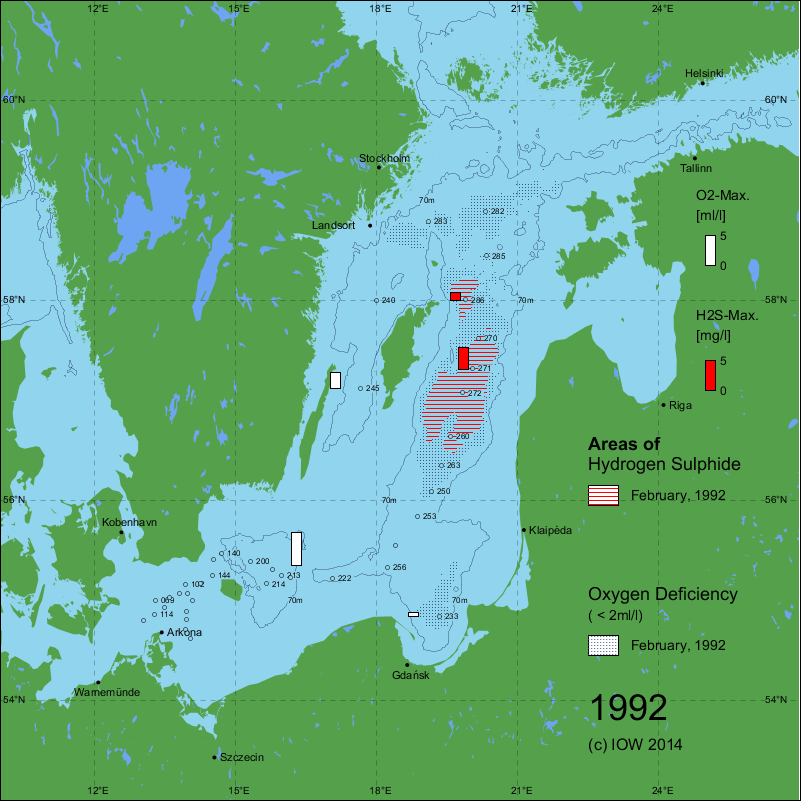
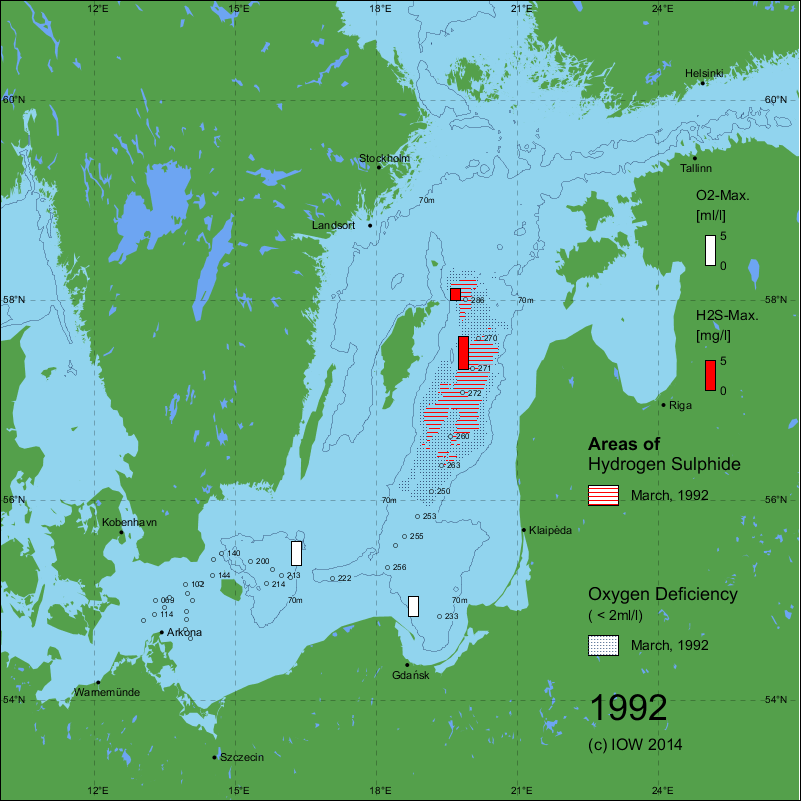
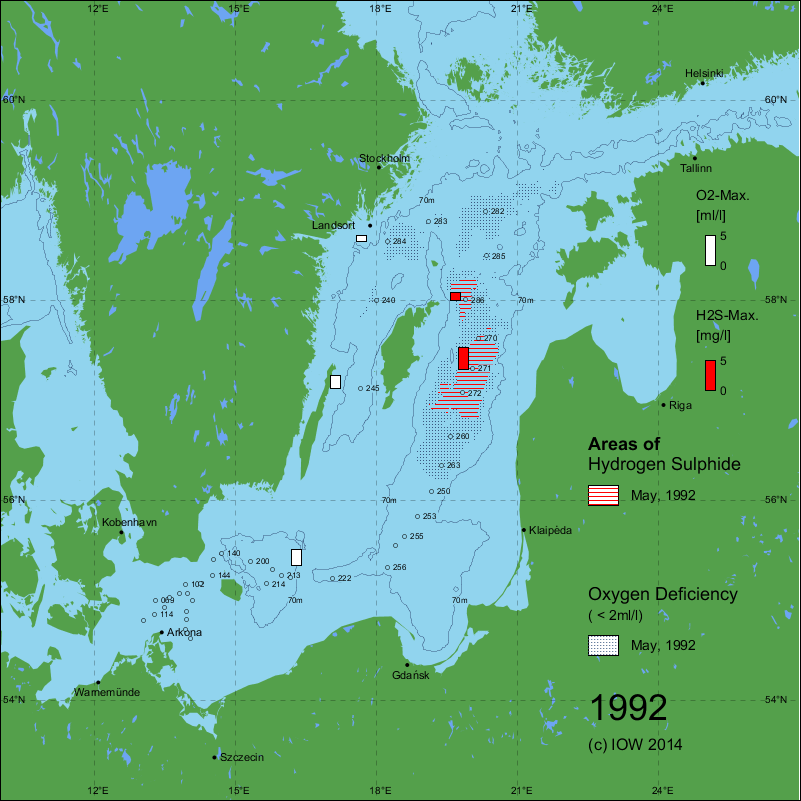
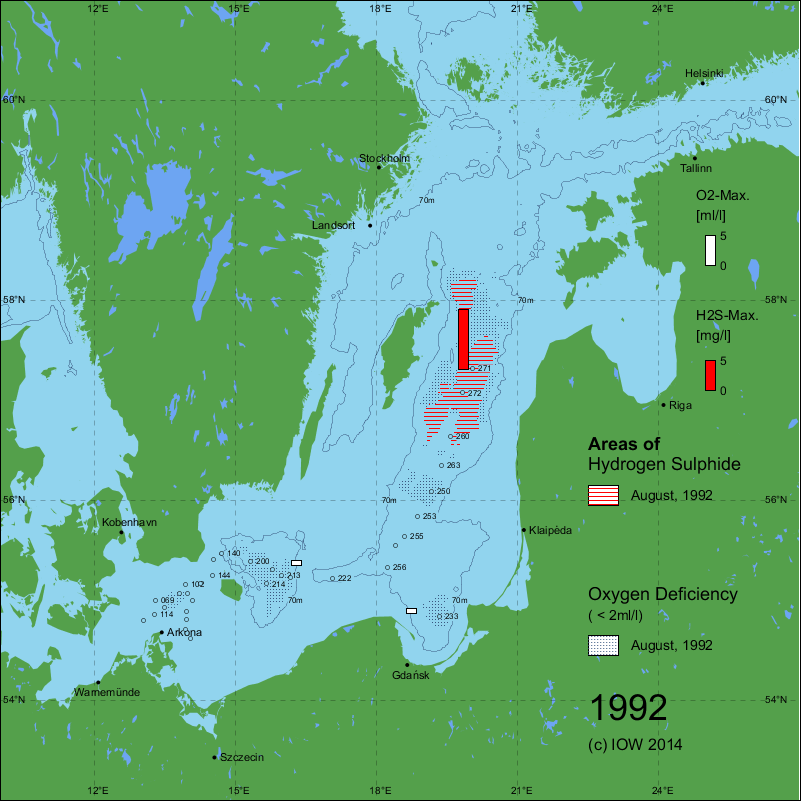
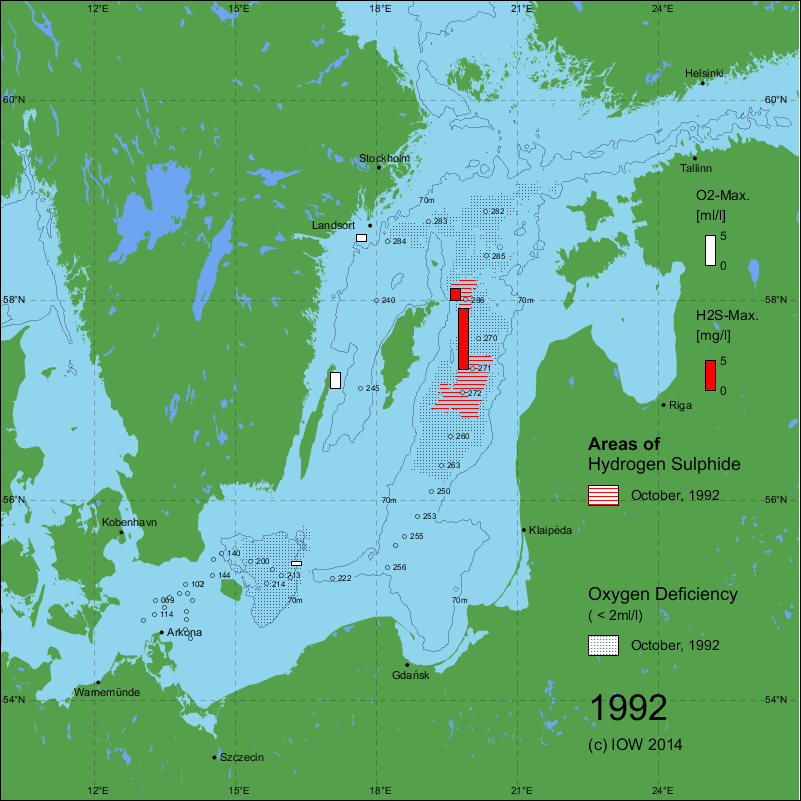
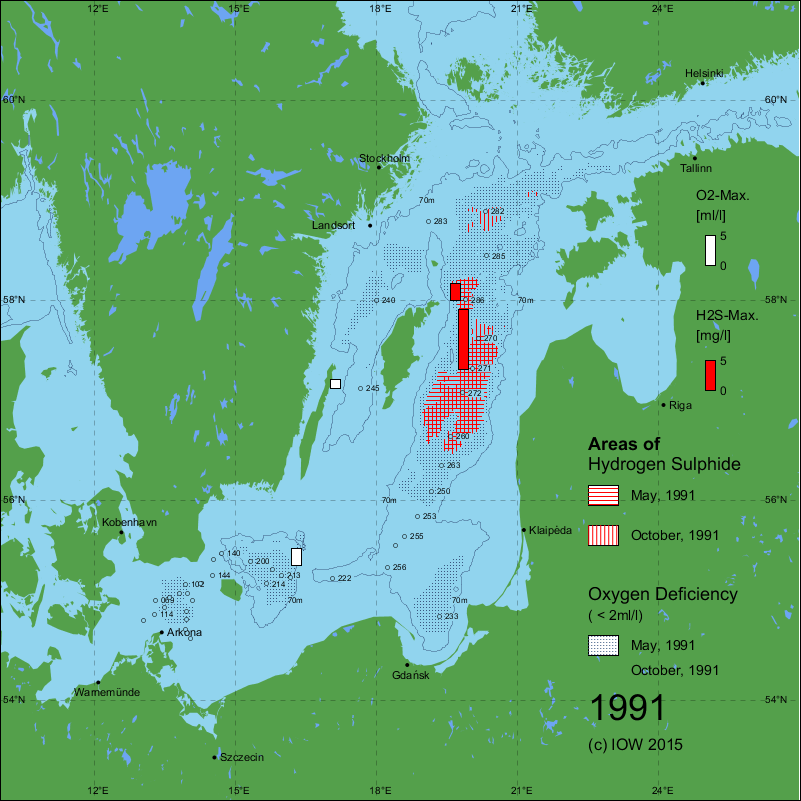
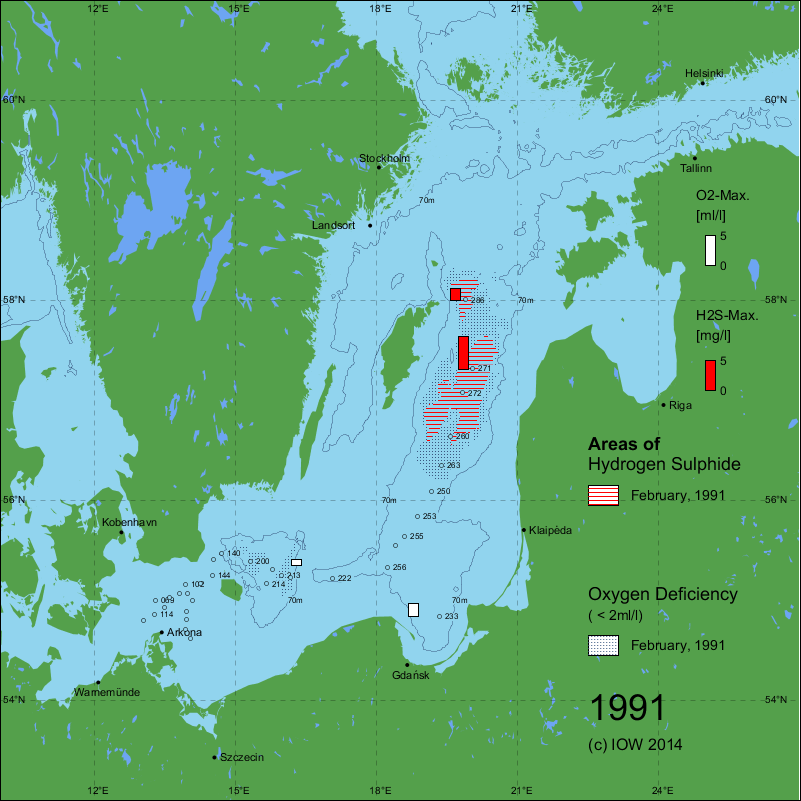
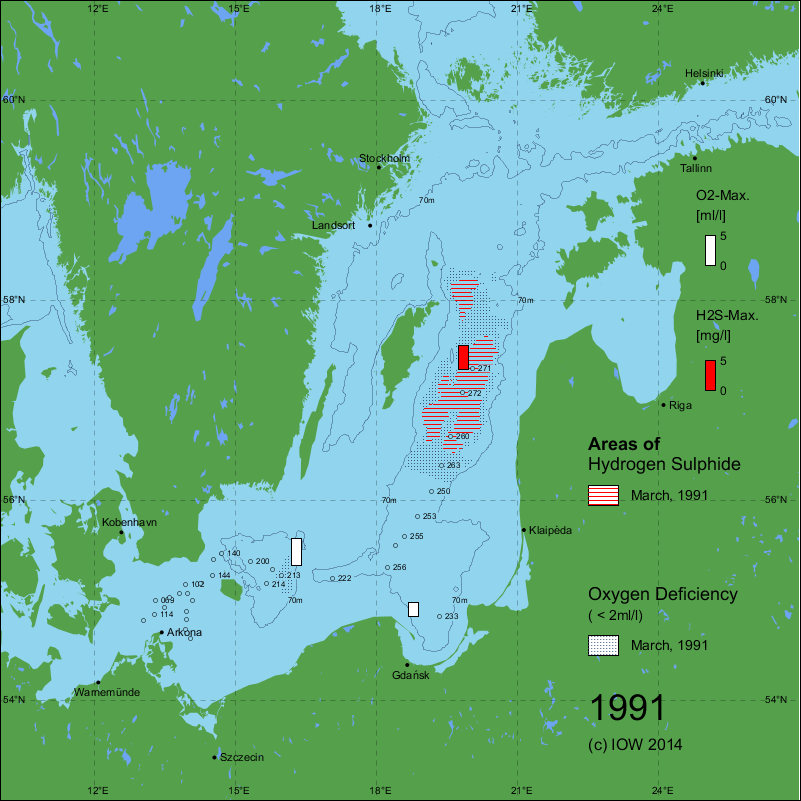
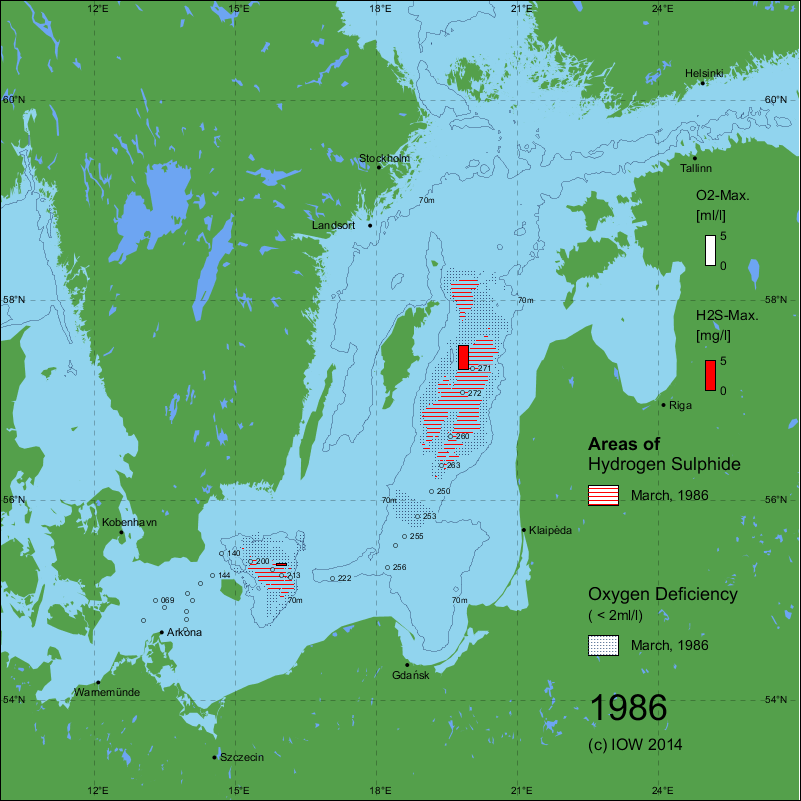
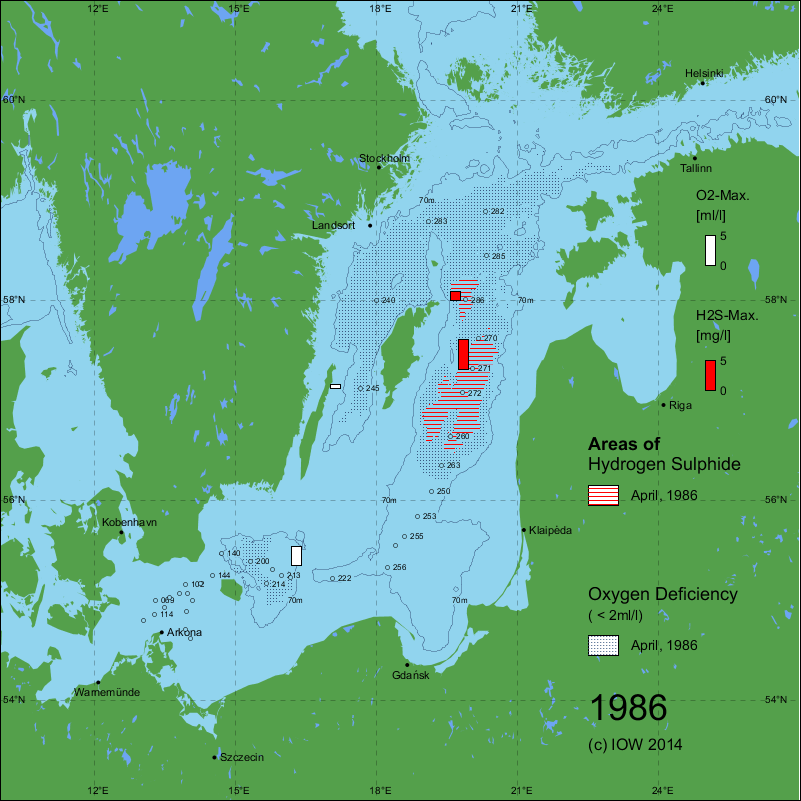
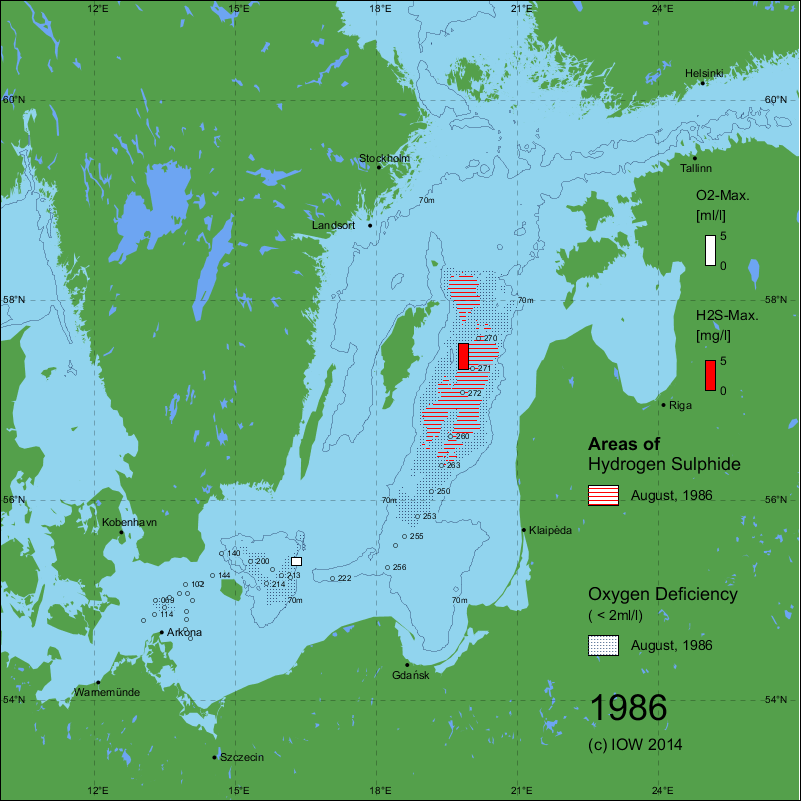
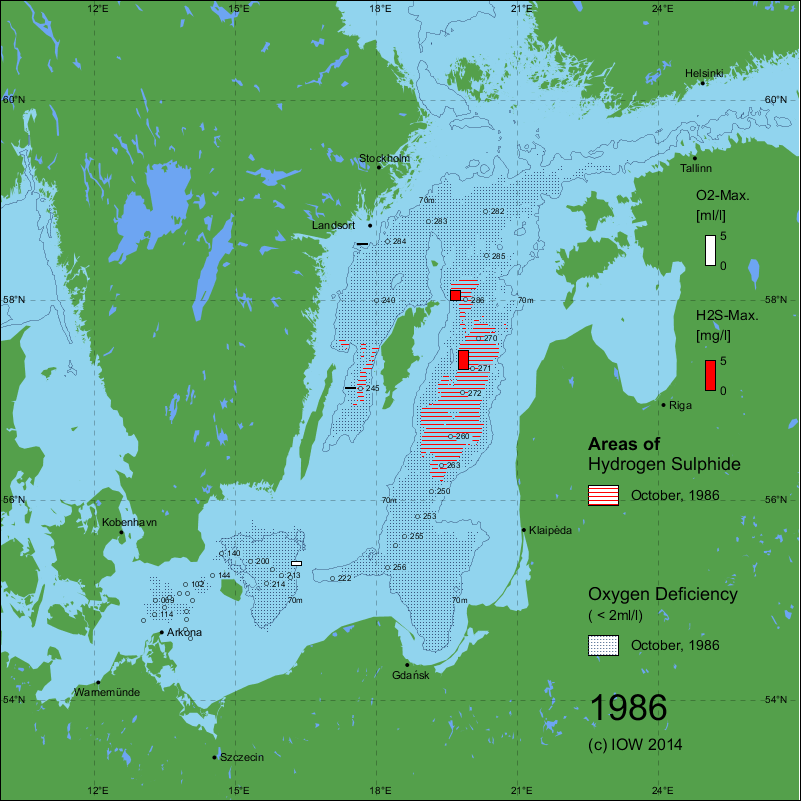
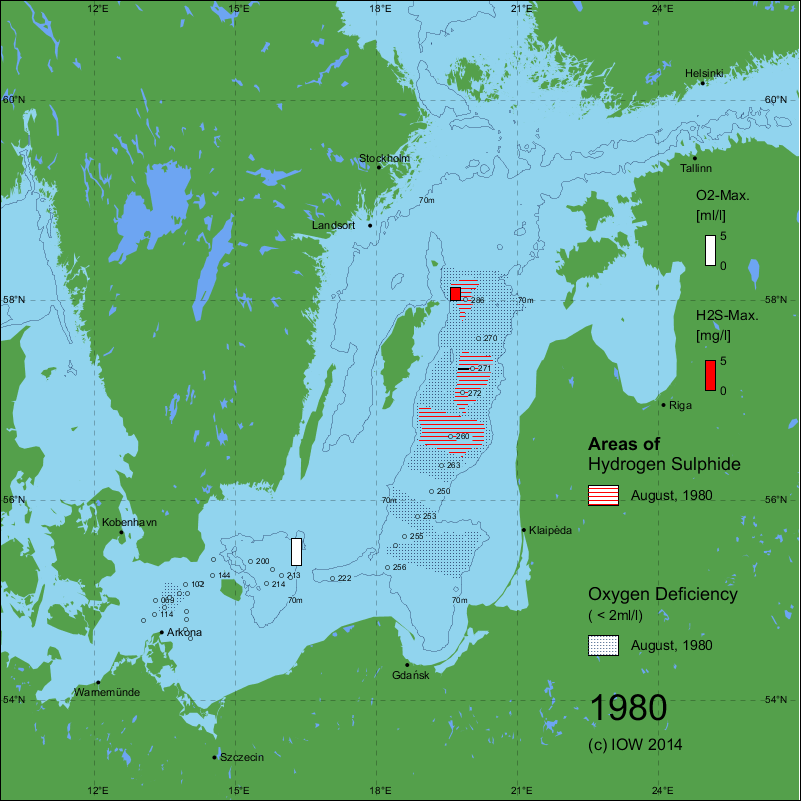
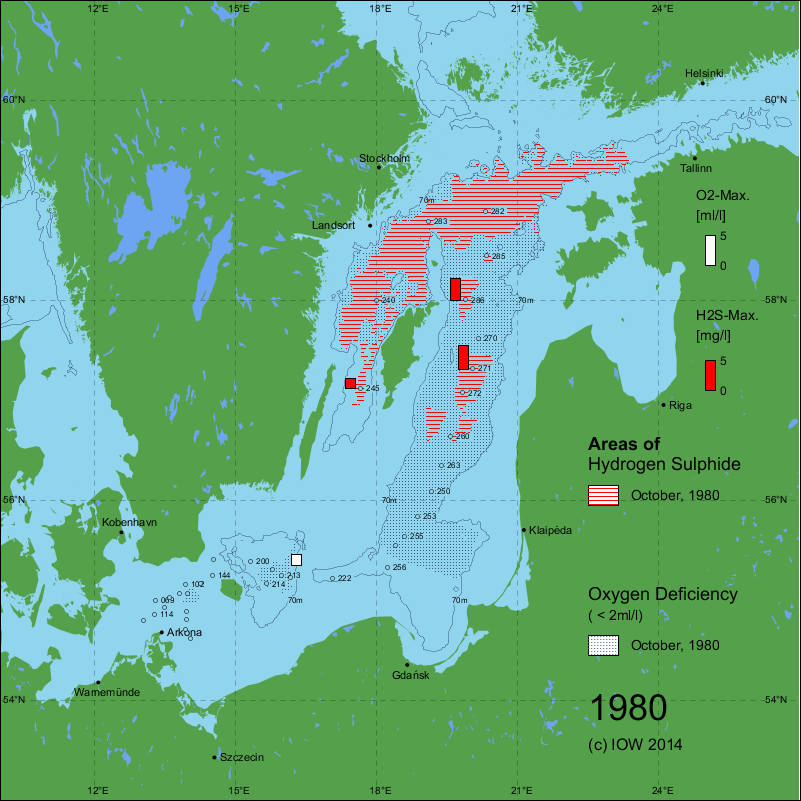
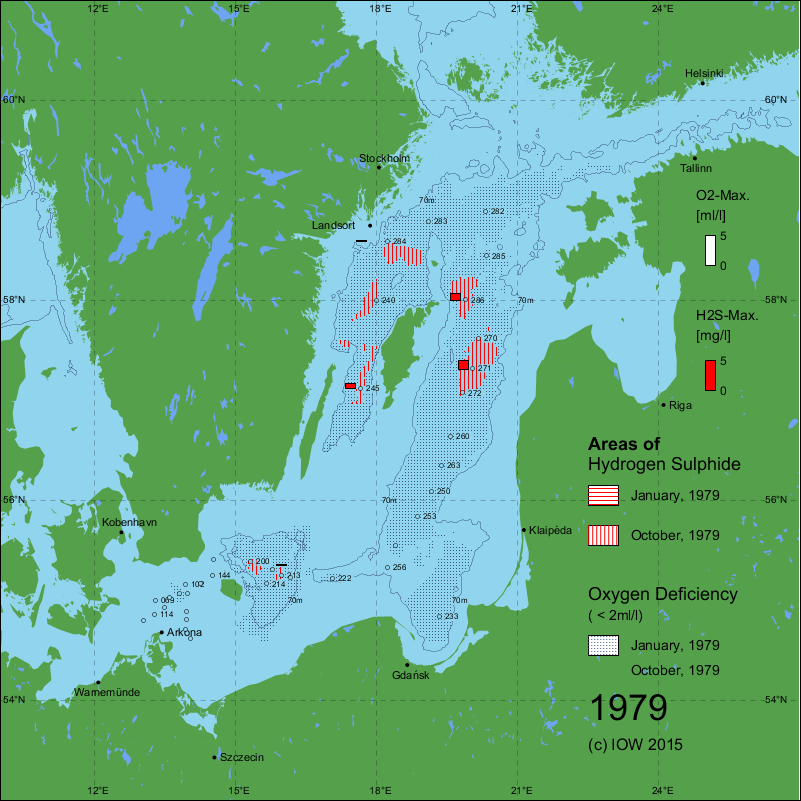
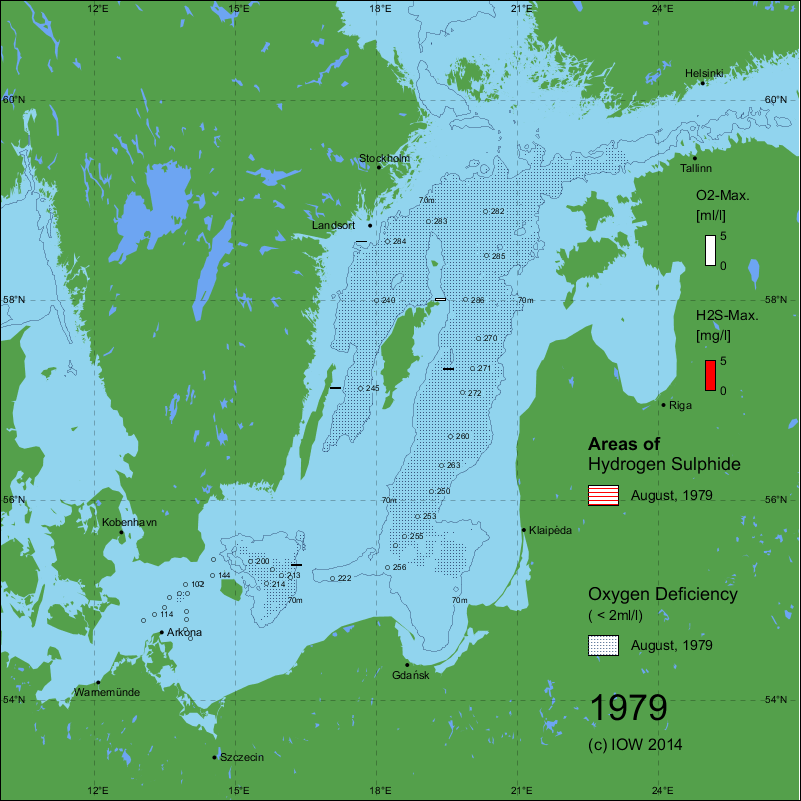
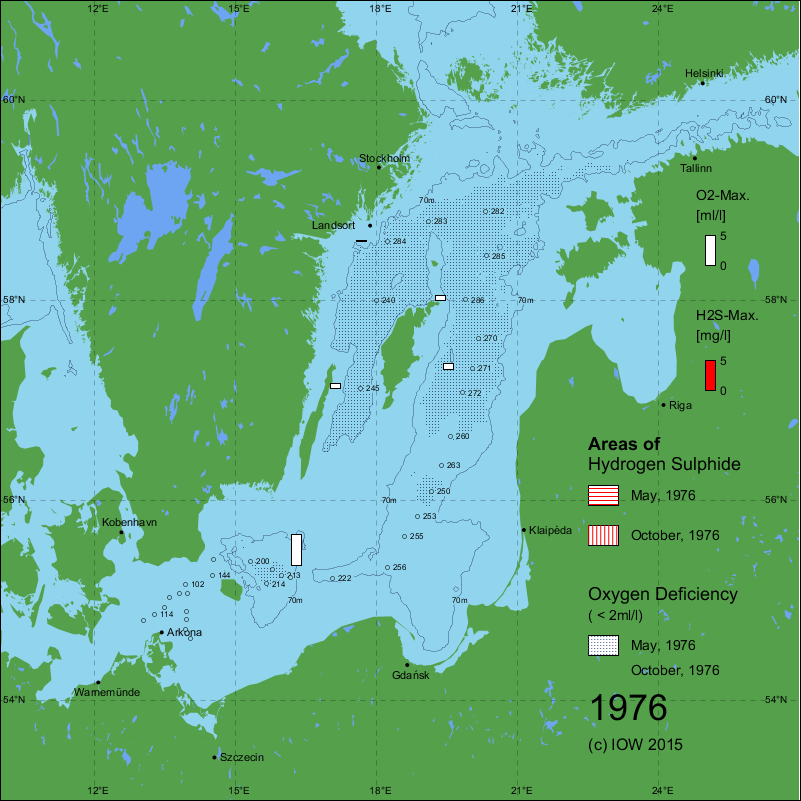
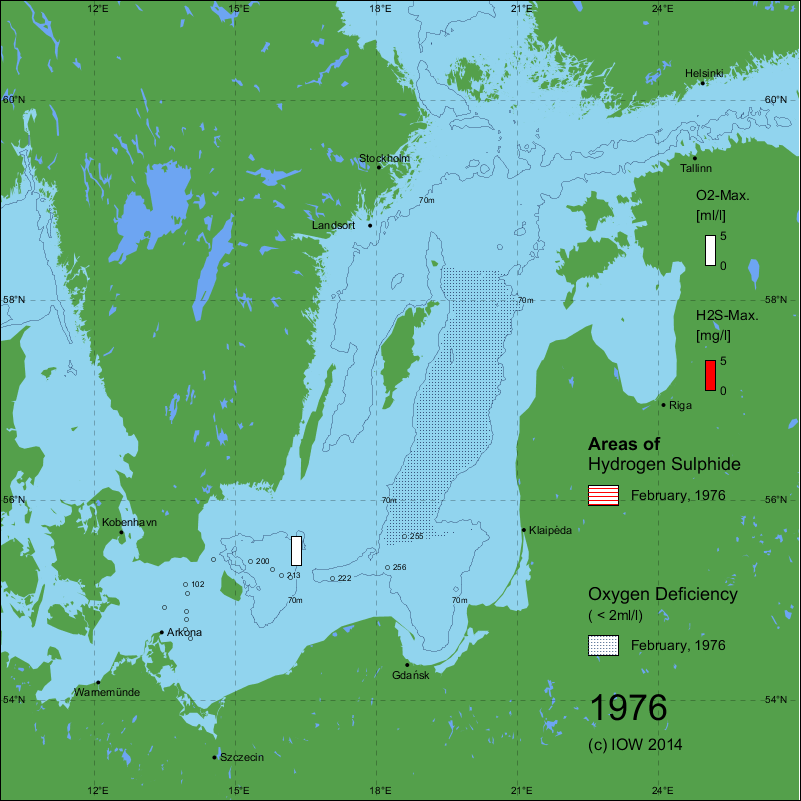
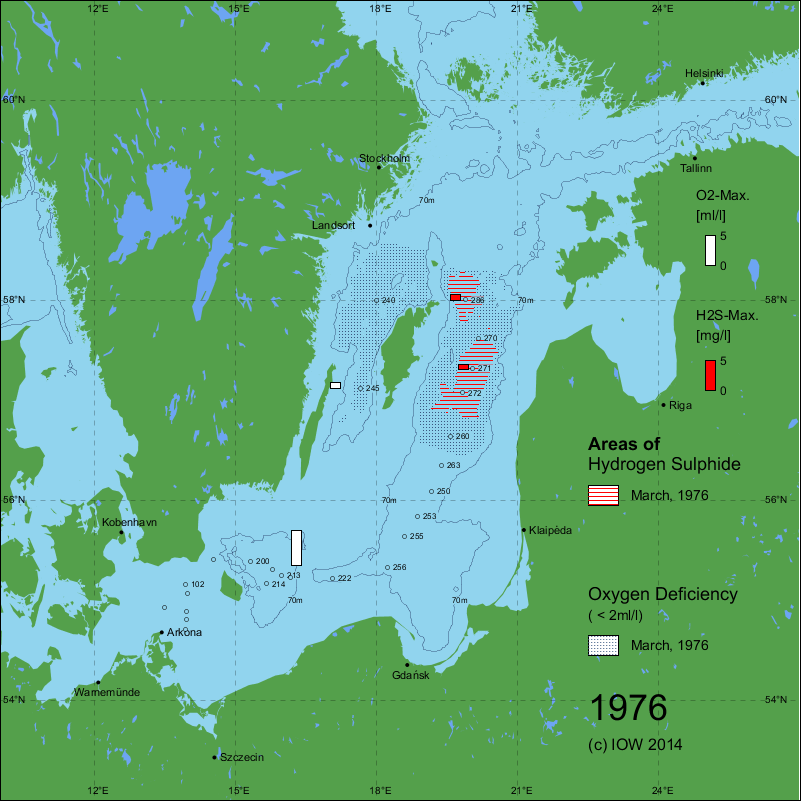
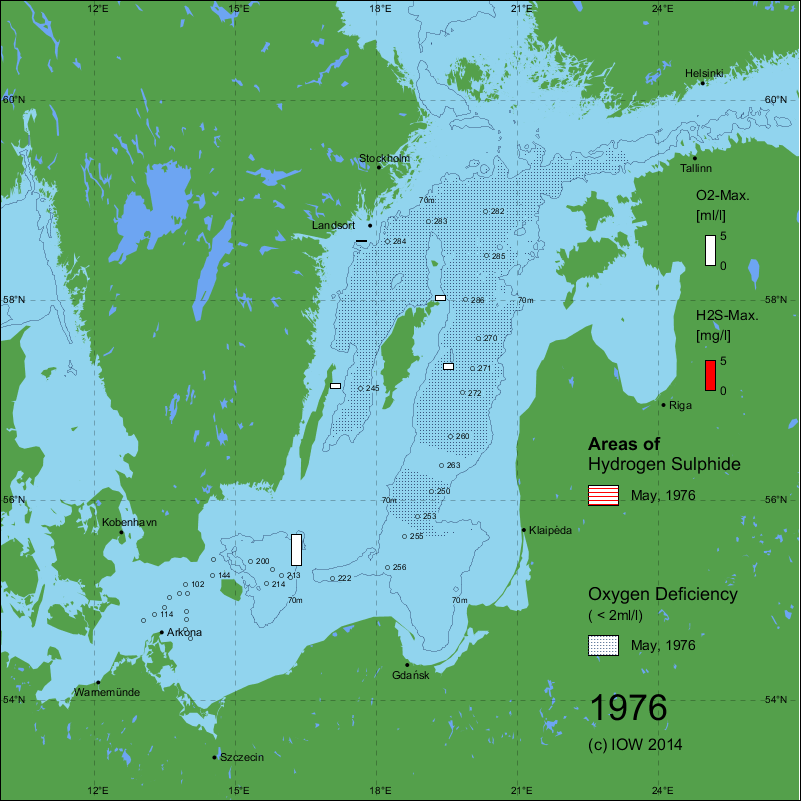
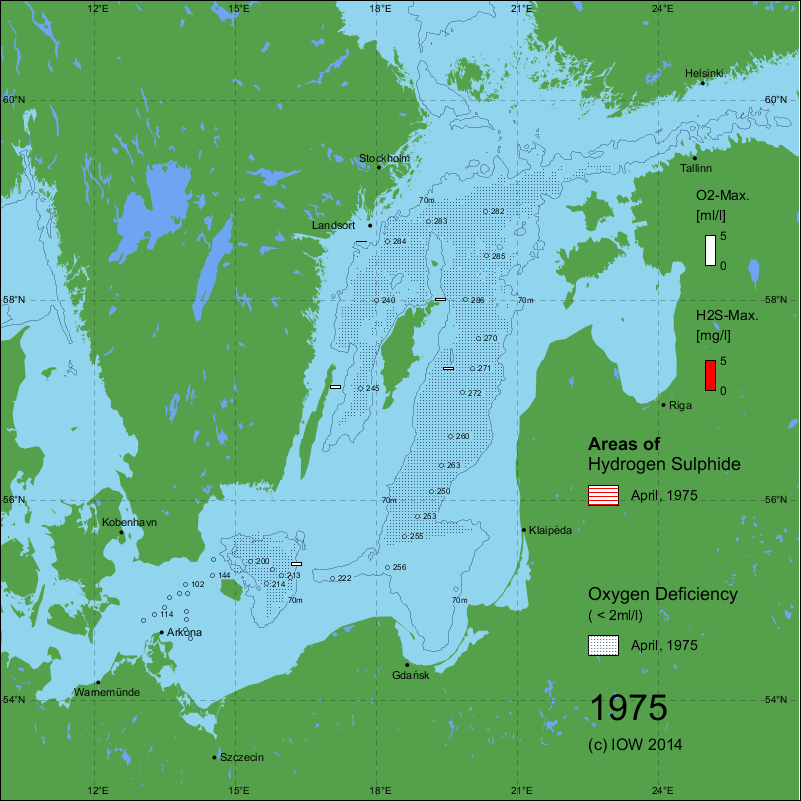
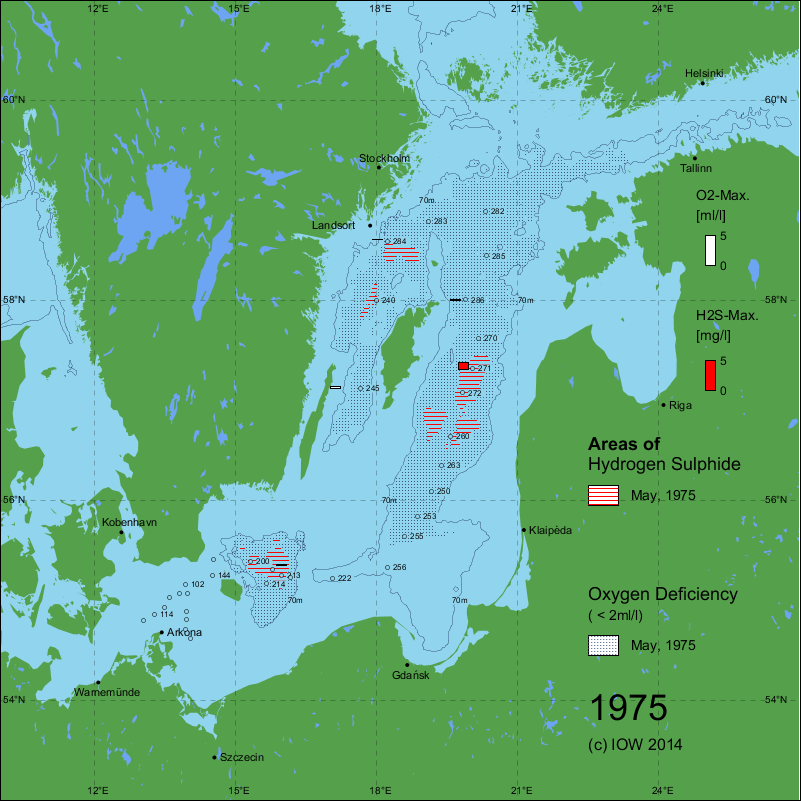
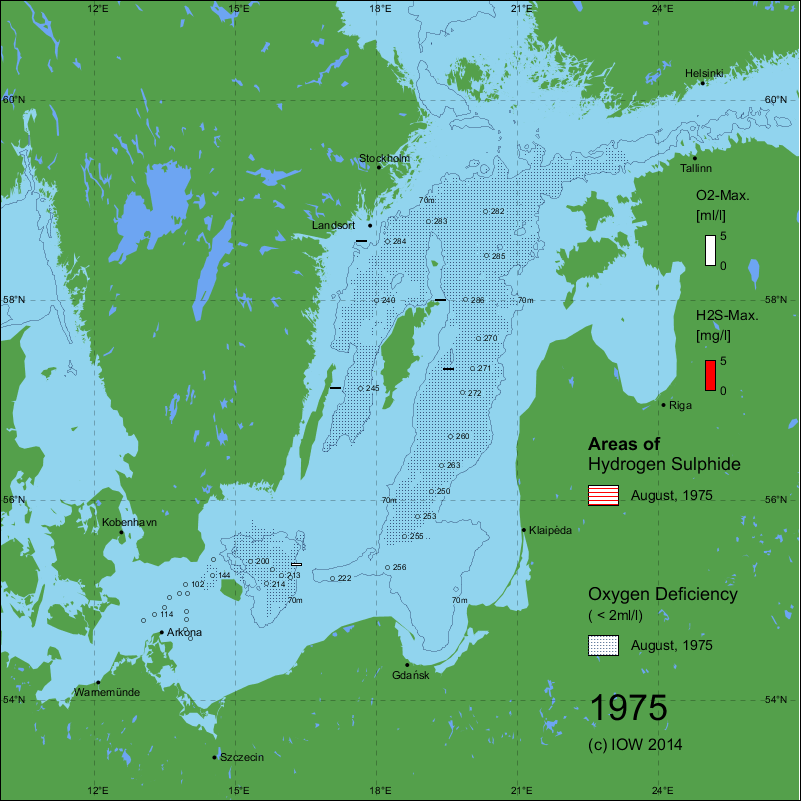
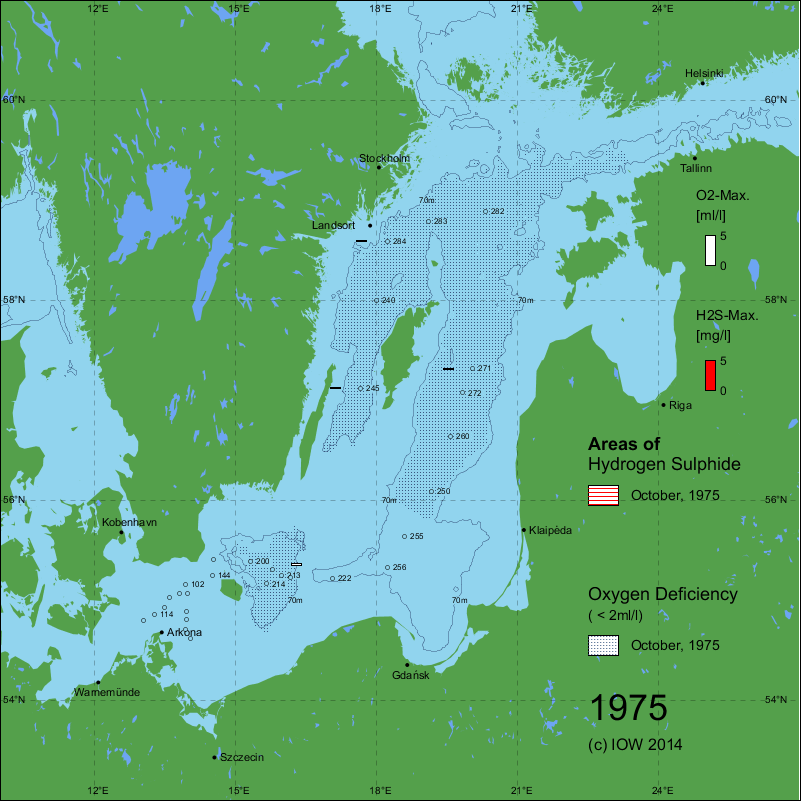
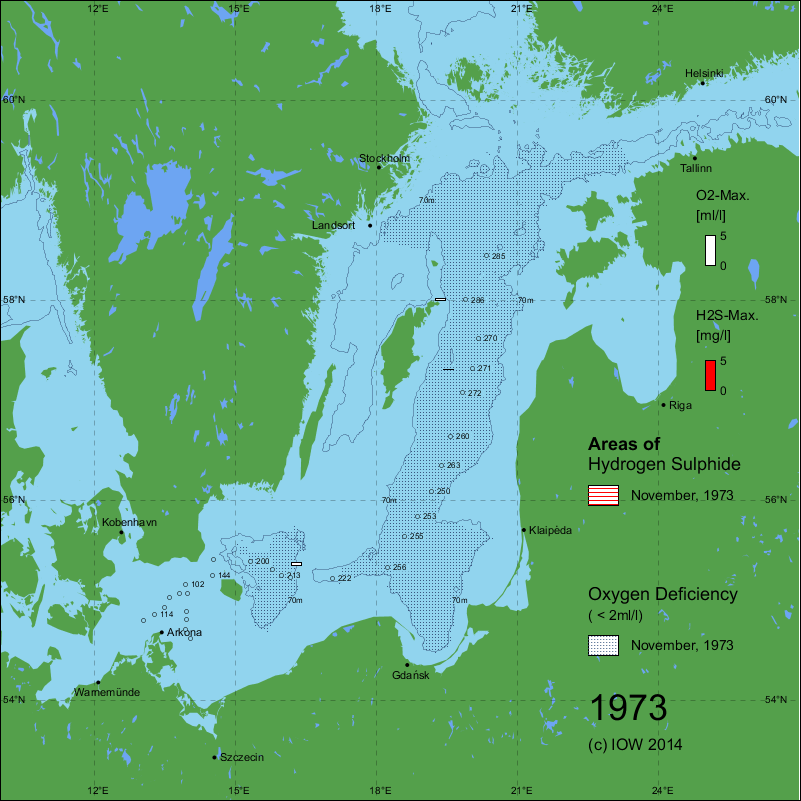
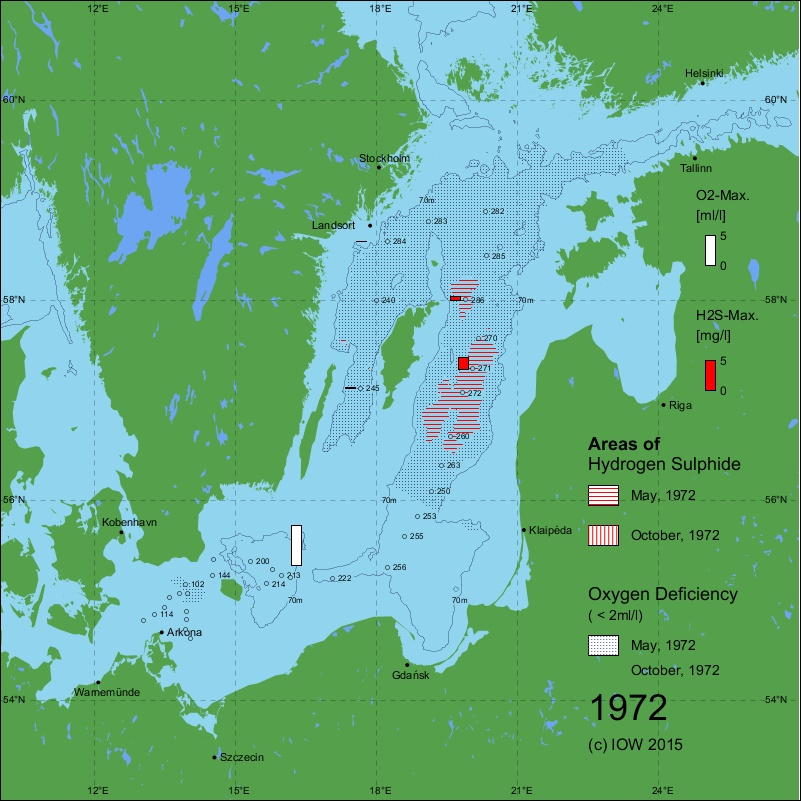
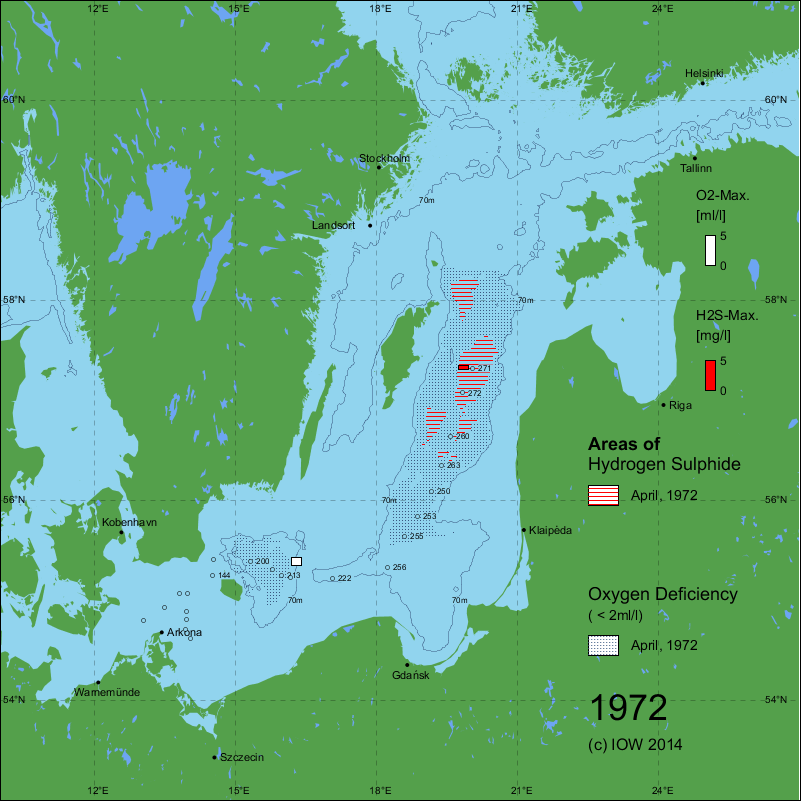
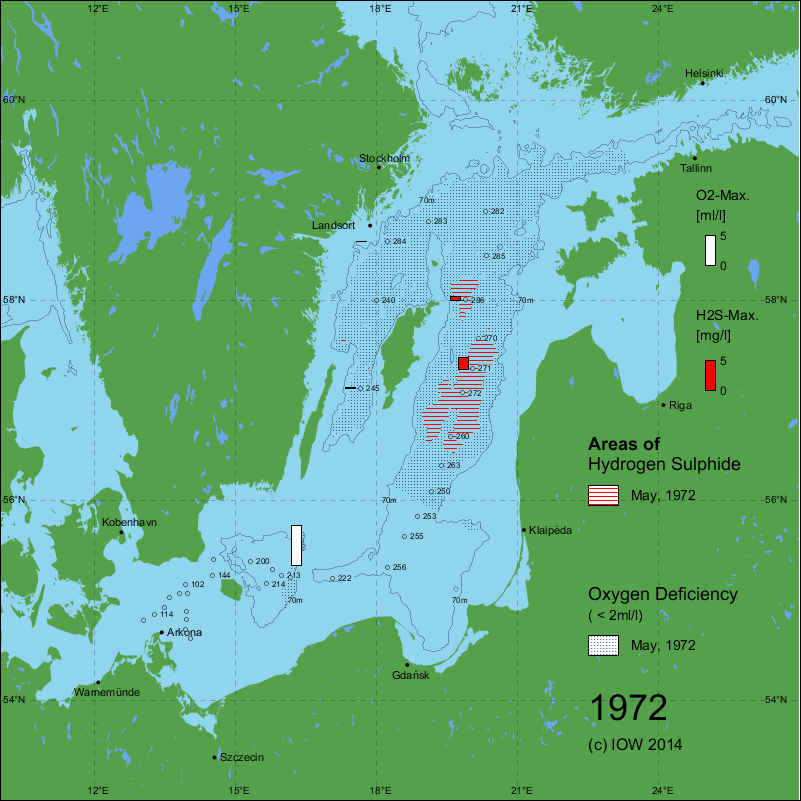
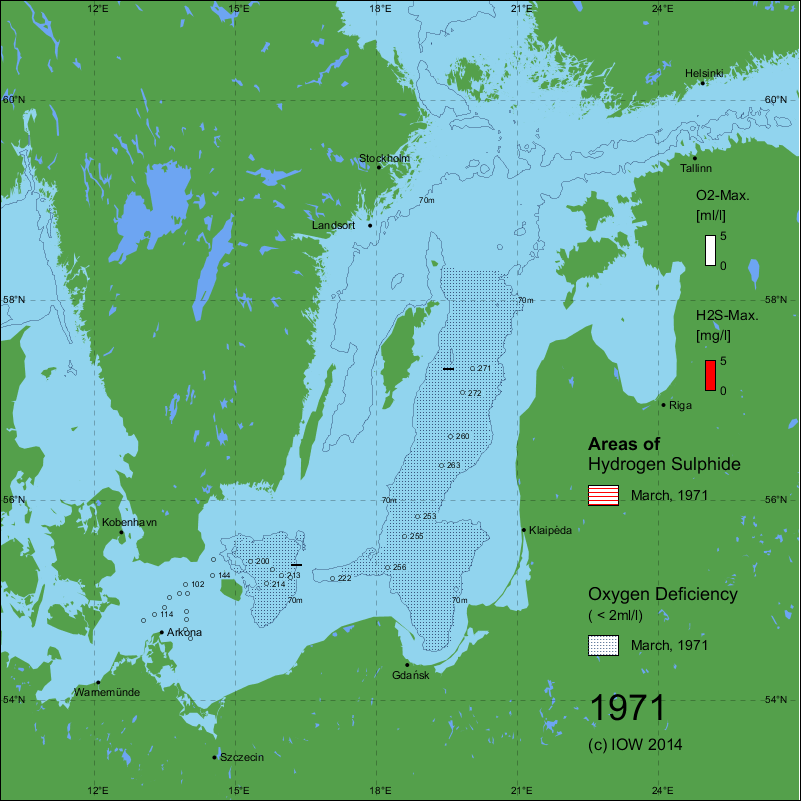
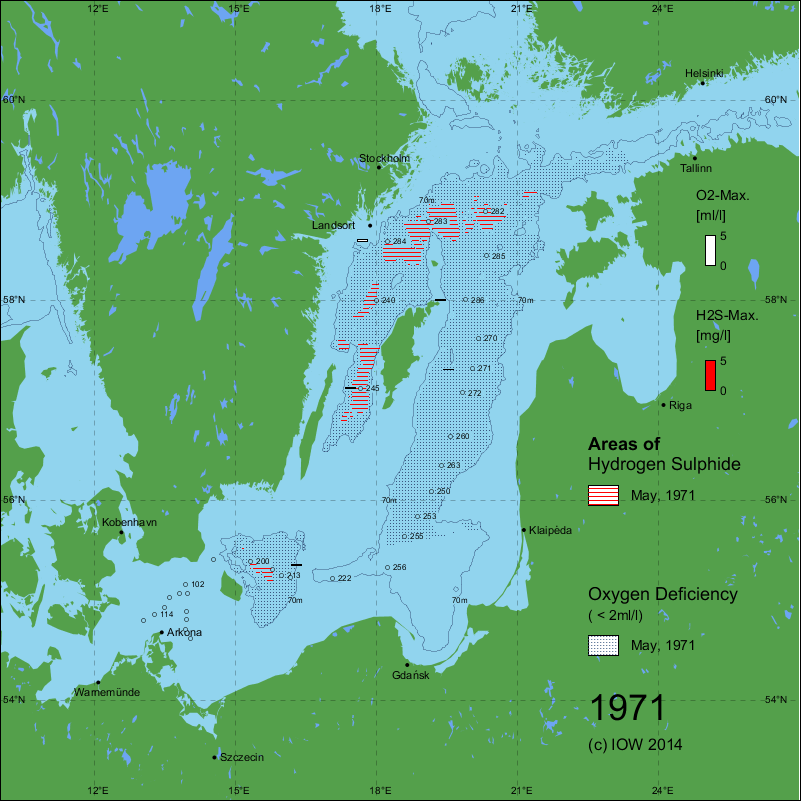
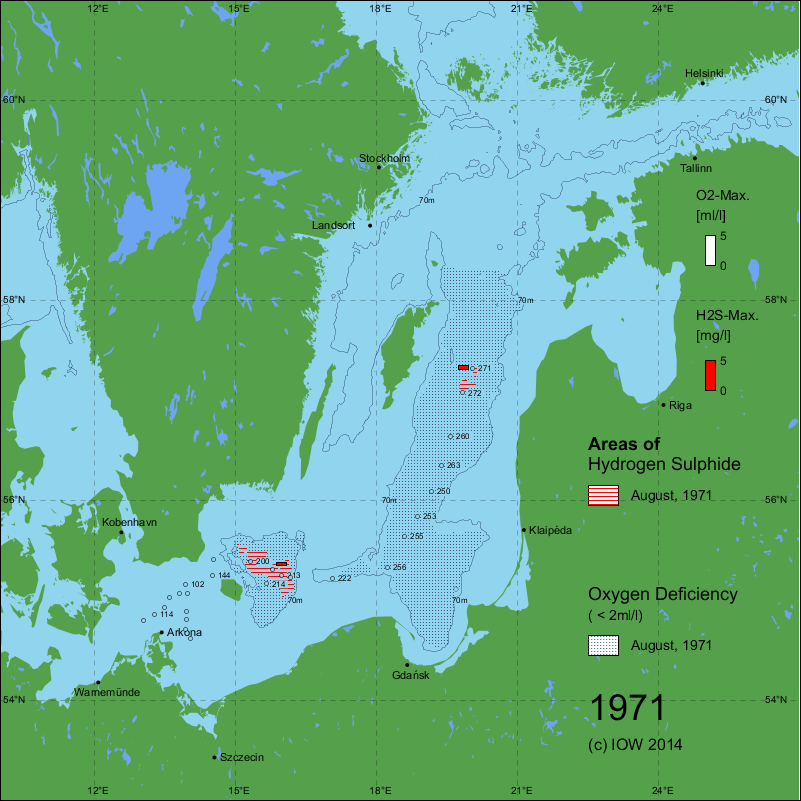
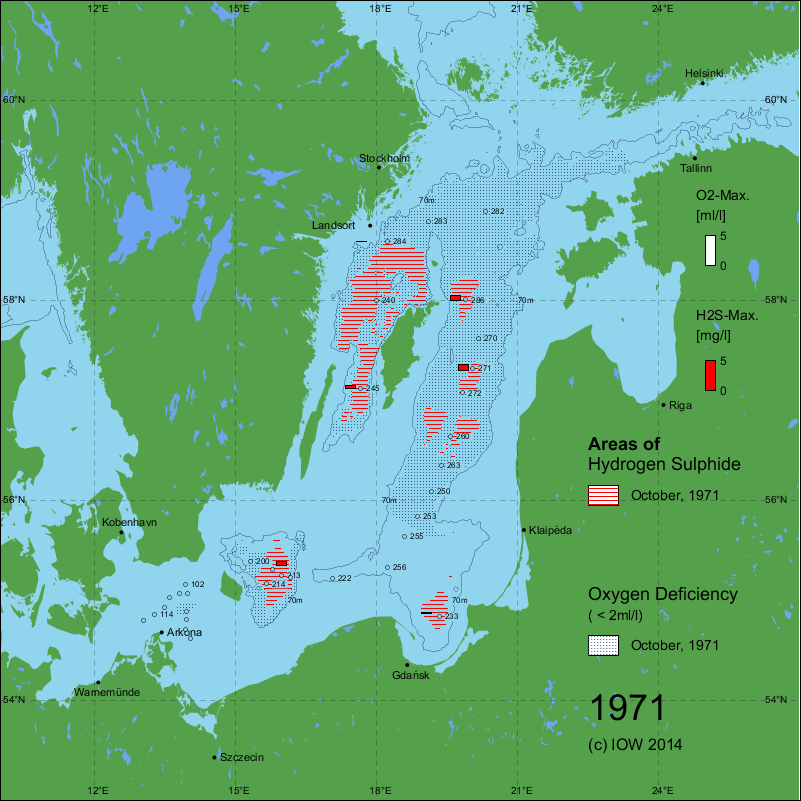
The graphs show the annual maximum extent of areas with oxygen deficiency (< 2 ml/l) and hydrogen sulfide in the near-bottom water layer of the Baltic Sea, as well as maximum oxygen and hydrogen sulfide concentrations (histograms) at selected stations in recent years.
2020 - 2029
| Jan/Feb | Mar/Apr | Apr/May | Jul/Aug | Oct/Nov | |
|---|---|---|---|---|---|
| 2026 | EMB387 | EMB392 | EMB394 | EMB400 | EMB405 |
| 2025 | EMB359 | EMB | EMB365 | EMB372 | EMB379 |
| 2024 | EMB356 | EMB337 | EMB340 | EMB346 | EMB353 |
| 2023 | EMB311 | EMB314 | EMB317 | EMB323 | EMB328 |
| 2022 | EMB286 | EMB290 | EMB293 | EMB298 | EMB305 |
| 2021 | EMB256 | EMB261 | EMB264 | EMB271 | EMB280 |
| 2020 | EMB230 | EMB237 | EMB242 | EMB251 |





2010 - 2019
| Jan/Feb | Mar/Apr | Apr/May | Jul/Aug | Oct/Nov | |
|---|---|---|---|---|---|
| 2019 | EMB206 | EMB209 | EMB213 | EMB218 | EMB224 |
| 2018 | EMB175 | EMB179 | EMB182 | EMB190 | EMB199 |
| 2017 | EMB147 | EMB150 | EMB154 | EMB162 | EMB171 |
| 2016 | EMB120 | EMB124 | EMB128 | EMB135 | EMB143 |
| 2015 | EMB095 | EMB099 | EMB102 | M117 | EMB117 |
| 2014 | AL430 | AL433a | EMB069 | EMB078 | EMB089 |
| 2013 | AL407a | EMB040 | EMB045 | EMB053 | EMB060 |
| 2012 | 06AK1202 | 06EZ1203 | 06EZ1206 | 06EZ1213 | 06EZ1221 |
| 2011 | 06AK1101 | 06AK1102 | 06JX1101 | 06EZ1105 | 06EZ1112 |
| 2010 | 06HK1001 | 07PE1007 | 06HK1002 | 06AK1003 | 06HK1004 |

2000 - 2009
1990 - 1999
1980 - 1989

1970 - 1979
| Jan/Feb | Mar/Apr | Apr/May | Jul/Aug | Oct/Nov | |
|---|---|---|---|---|---|
| 1979 | * | * | * | 40/79/04 | 40/79/08 |
| 1978 | 40/78/01 | 40/78/02 | 40/78/03 | 40/78/05 | 40/78/08 |
| 1977 | * | 40/77/05 | 40/77/07 | 40/77/10 | 40/77/11 |
| 1976 | 40/76/03 | 40/76/05 | 40/76/07 | 40/76/08 | 40/76/11 |
| 1975 | 44/75/02 | 44/75/04 | 40/75/06 | 40/75/08 | 40/75/10 |
| 1974 | 44/74/02 | 44/74/04 | * | * | 40/74/10 |
| 1973 | * | 40/73/01 | 40/73/04 | 40/73/09 | 40/73/13 |
| 1972 | * | 40/72/03 | 40/72/05 | 40/72/09 | 40/73/13 |
| 1971 | 40/71/01 | 40/71/02 | 40/71/05 | 40/71/07 | 40/71/10 |
| 1970 | * | 40/70/02 | 40/70/04 | 40/70/05 | 40/70/07 |
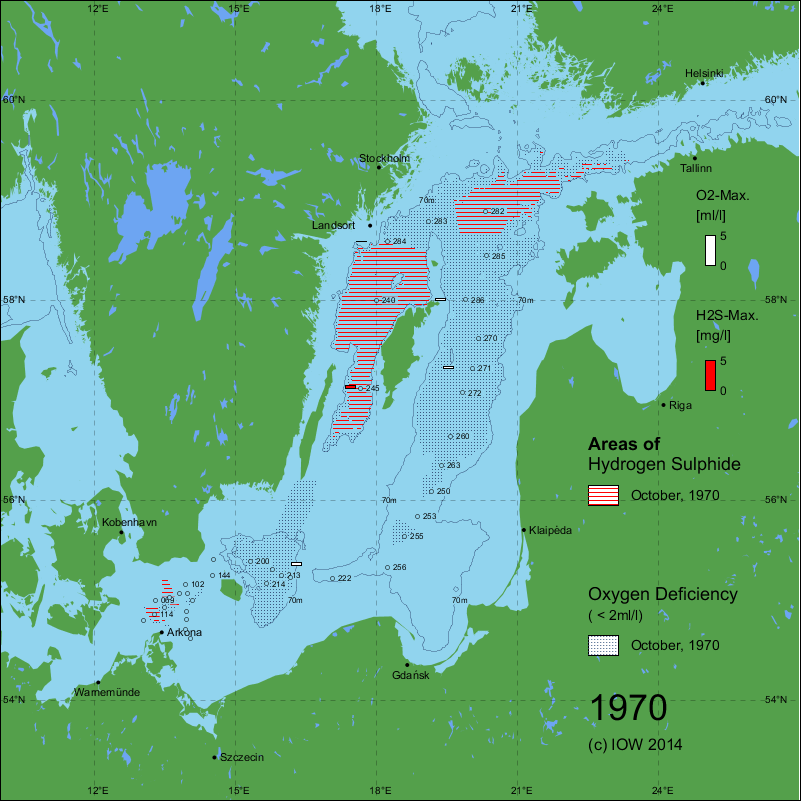
1969
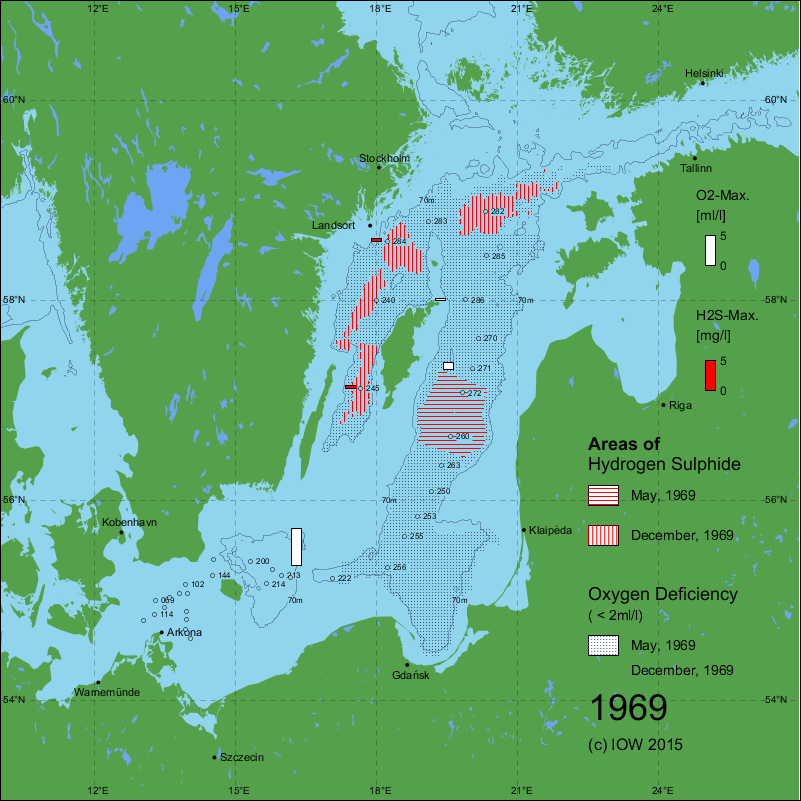
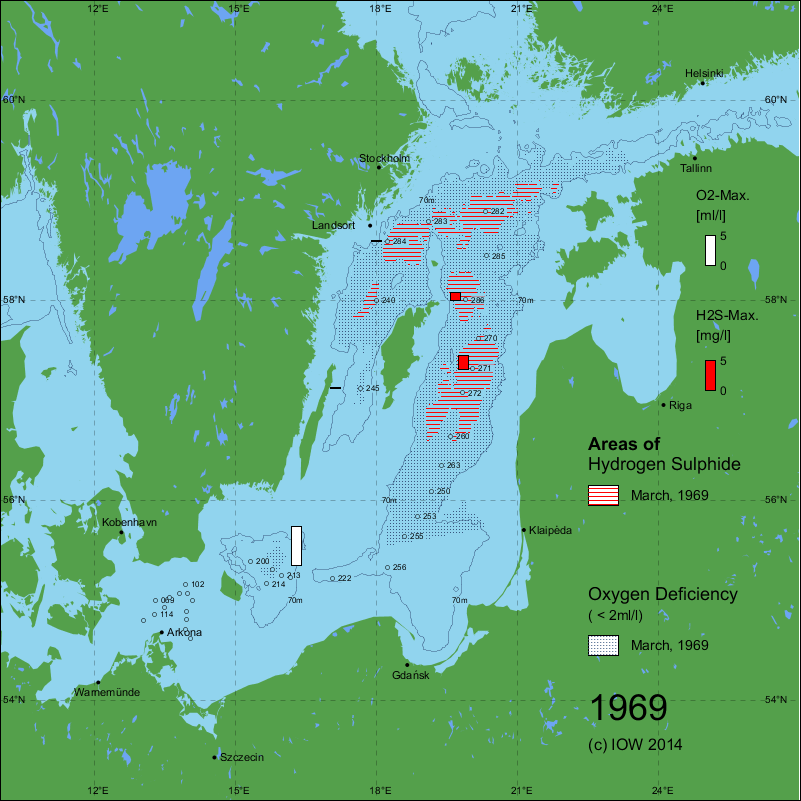
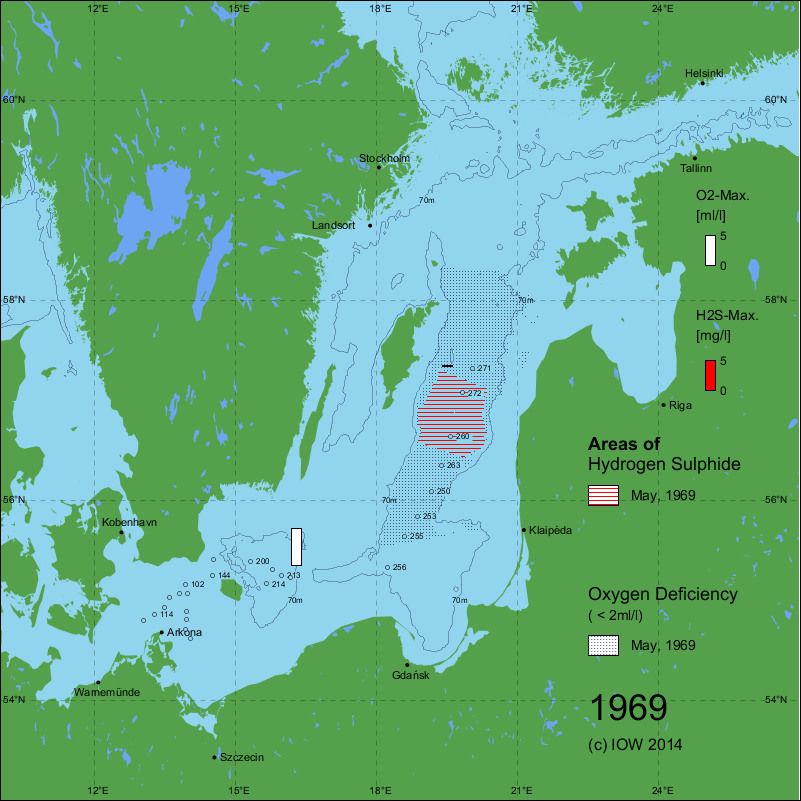
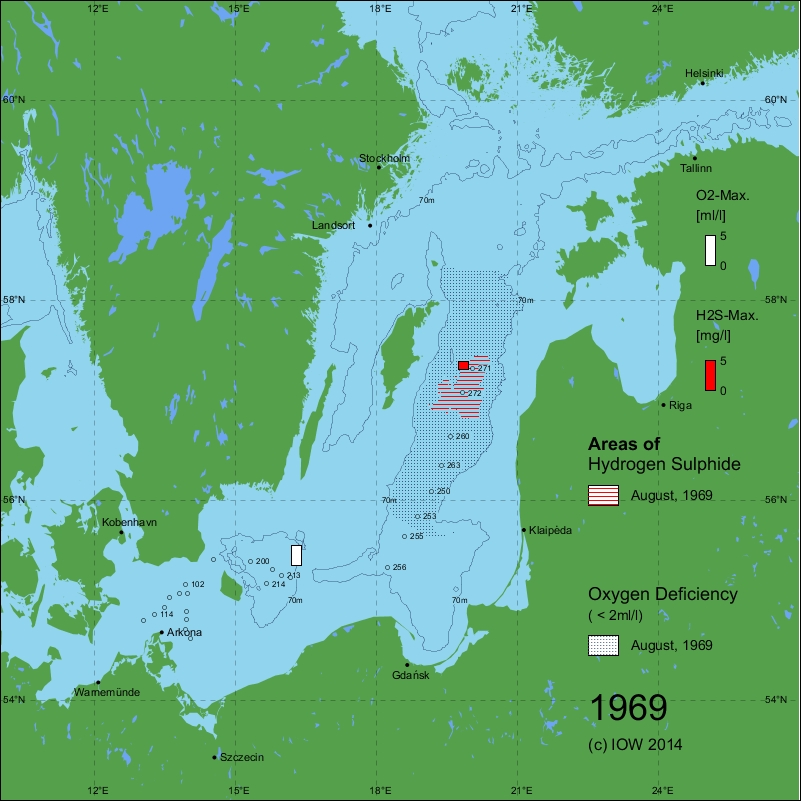
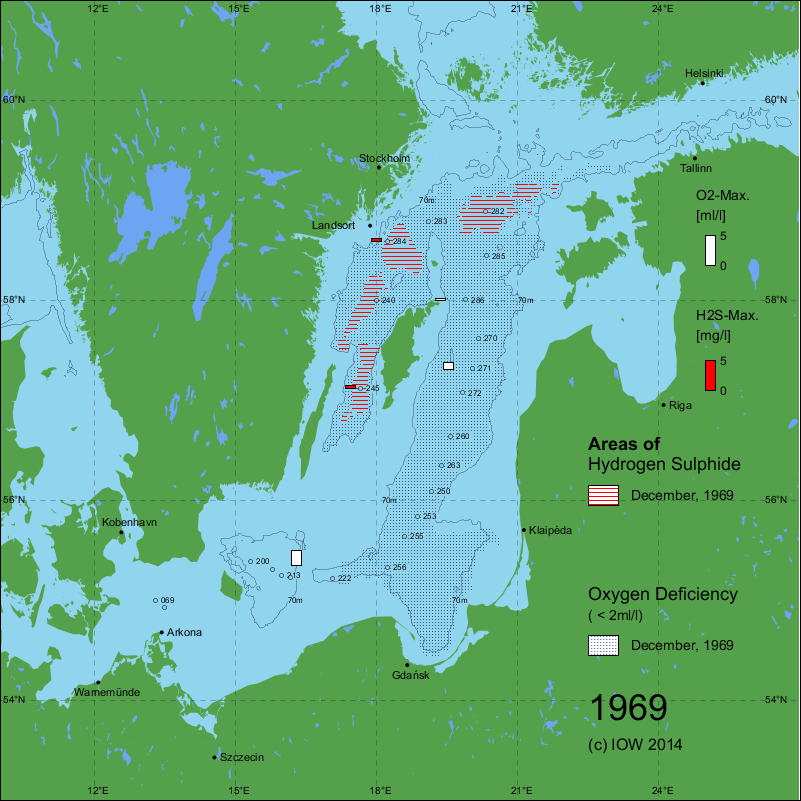
* No H2S map available due to lacking data from the central Baltic Sea
Contact persons:
Anoxic zones 2025
November 2025

August 2025

May 2025

March 2025

February 2025

Documentation 1969 - 2015
Susanne Feistel, Rainer Feistel, Dietwart Nehring, Wolfgang Matthäus, Günther Nausch, Michael Naumann: Hypoxic and anoxic regions in the Baltic Sea, 1969 - 2015. Meereswiss. Ber., Warnemünde, 100 (2016) doi: 10.12754/msr-2016-0100. mebe100_2016-hypoxic-and-anoxic-regions.pdf